@GGPoker 1) G. Nolet
2) J. Vieira
3) T. Kramer
4) N. Astedt
5) T. Schwecht
6) A. Kirichenko
7) "jinx36"
8) "Un3rdogg"
9) G. Tamasian
Nickname: OnlyOOPfans
I can’t help but think (and feel) that the world is generally very sad right now. Injured really.
Yesterday I was in Utah with family. Three generations. We played sports, enjoyed good food, saw friends, and just messed around all day. One of the best days in recent memory for all of us. This is where I grew up. It took me back to my childhood. Allowing me to embody those psychological states and feel the comparative difference between then and now.
The hollowing and sadness of the modern world seems to stem in part from our phones, social media, and the ferocious need to be seen and relevant in every moment. We have mistakenly idolized a specific kind of dysfunction: a manic, sleepless hyper-vigilance that needs to be omnipresent.
Everyone I know who’s unplugged for a week, returns reporting life-changing levels of improved life satisfaction. I’ve never met anyone who didn’t return feeling spry and vibrant and clear-eyed about the corrosive nature of current social culture. The science supports them feeling that way. They were in a dopamine deficit from the hyper-stimulated state of the world so everything felt gray.
So why don’t we unplug more and more often? We’re all kind of trapped in a prisoner's dilemma. Most want to move to the mountains and be relieved of it all but are terrified that if they unplug, they’ll be invisible. Real life consequences of reduced power and status. So we stay plugged in and drink the poison. This hypervigilant state keeps us in chronic fight or flight (anxiety). Simultaneously, our addiction creates a dopamine deficit (the emptiness/grayness feeling) and a background hum of anxiety.
Mammals are biologically hardwired to co-regulate: physical touch, eye contact, proximity and in-person vibes. Things which release oxytocin and activate the vagal nerve's parasympathetic system. Screens eliminate all of this goodness.
There are small wins to be had here. More in-person time. A day off technology per week. A block of 4 hours. One hour before bedtime. I hope that there’s a collective awakening that we’re all being mined for engagement. Then we get trapped. And then trap each other.
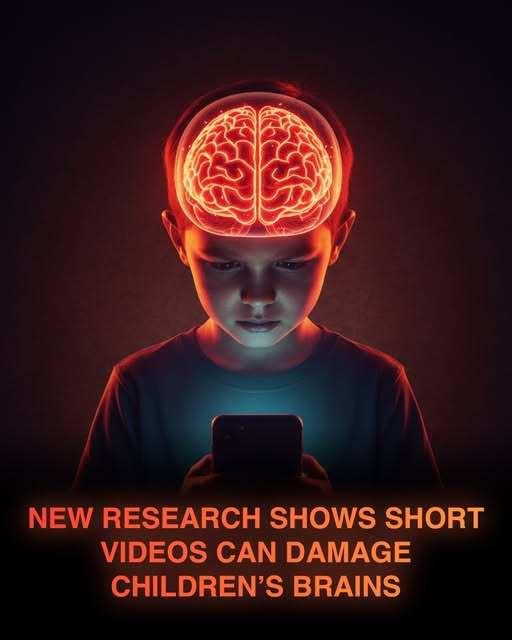
Experts warn: short videos quietly rewire children’s brains.
Platforms such as TikTok, Instagram Reels, Douyin, and YouTube Shorts have evolved from occasional diversions into pervasive elements of children's daily routines, profoundly influencing how they unwind, connect with peers, and develop perspectives.
Platforms such as TikTok, Instagram Reels, Douyin, and YouTube Shorts have evolved from occasional diversions into pervasive elements of children's daily routines, profoundly influencing how they unwind, connect with peers, and develop perspectives.
Evidence links intensive engagement to diminished inhibitory control and attentional capacity, impaired sleep patterns, and elevated social anxiety among certain youth. The rapid succession of content, combined with nocturnal exposure to bright displays and fluctuating emotional stimuli, complicates disengagement, adversely impacting mood, cognitive retention, and academic outcomes. Children in earlier developmental stages, with immature self-regulatory skills and emerging self-concepts, show heightened susceptibility to habitual scrolling, heightened social comparisons, and abrupt encounters with distressing or unsuitable material lacking contextual framing.
A particularly concerning pattern emerges among youth already facing anxiety, ADHD, or challenges in emotional regulation: they often gravitate toward high-tempo content for stimulation, yet prolonged exposure may exacerbate the very difficulties that hinder cessation.
Persistent digital immersion can displace essential unstructured activities—such as reverie, free play, and familial interactions—vital for cultivating tolerance of monotony, emotional management, and intrinsic concentration. In response, authorities and educational institutions are implementing digital wellness protocols, enforcing smartphone limitations during instructional hours, and advocating for platform reforms featuring robust age verification and enhanced protective settings.