Excited to share my first @NewPhyt publication!!!
Using a global meta-analysis, we show enormous benefits of intercropping EXCLUSIVELY with non-legumes, emphasizing crop diversification's role in enhancing ecosystem services for sustainable agriculture.
https://t.co/MSOiv6Wl2m
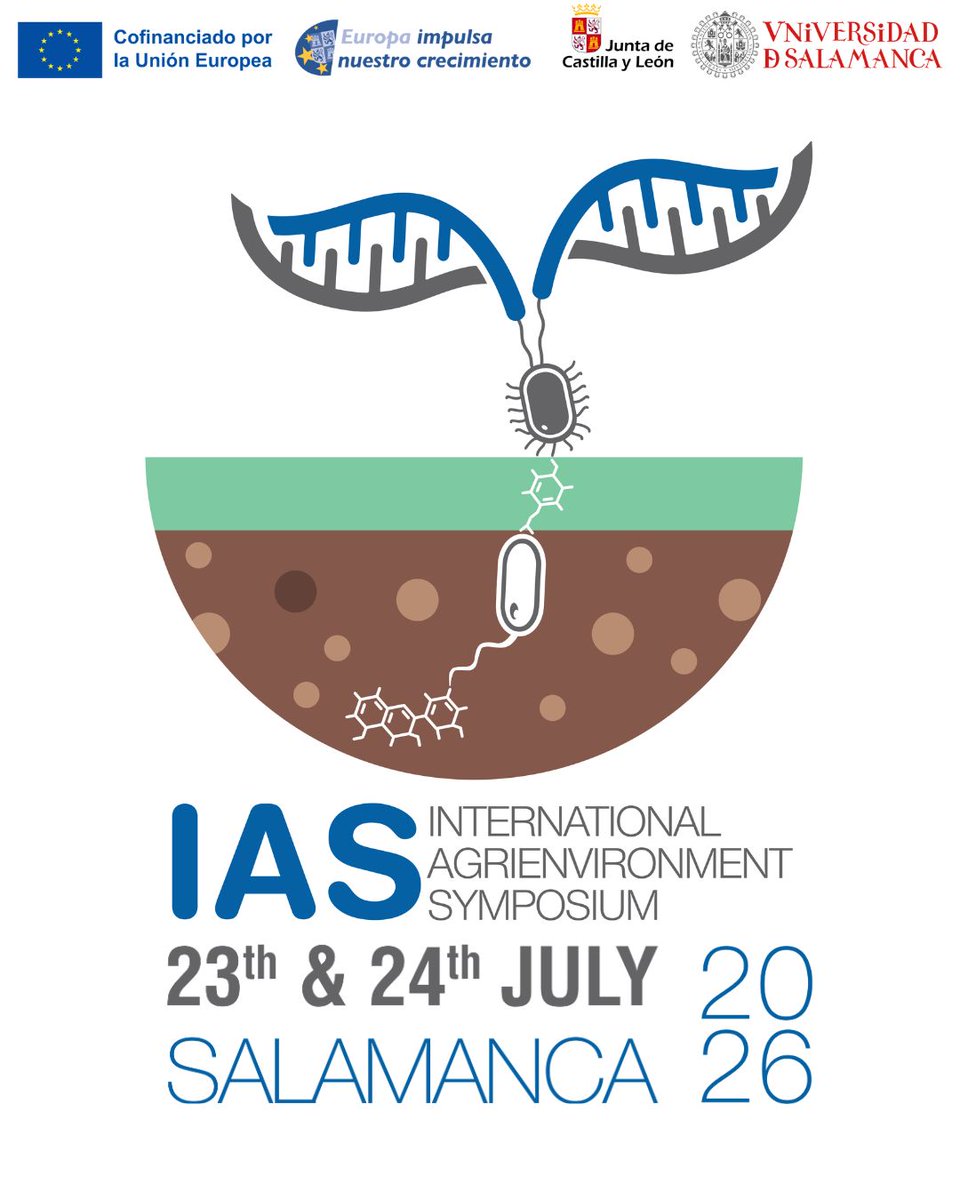
🚀 Registration for the 2nd International AGRIENVIRONMENT Symposium (#IAS2026) is officially OPEN!
Join us in the historic University of Salamanca (@usal) for a world-class scientific event on sustainable agriculture.
✅ FREE Registration
🗓️23-24 July
https://t.co/DV3l7sNCxE
@MultanSultans@aliktareen Imagine if each PSL team’s home ground reflect its name, culture & history:
MS: mini tombs on top of walls (6-8)
QG: gladiator masks (6-8)
KK: a crown👑-shaped stadium
PZ: Khyber Gate walls 🏰
IU: futuristic design
LQ: Sufi men statues (6-8)
Wouldn’t that be iconic?
Excited to share our latest research! This paper is especially relevant to those who are working on plant-plant communication, plant-microbe interaction, or arbuscular mycorrhizal fungi (#AMF).
Free access link: https://t.co/RwS1Dk189i
Congratulations to all the co-authors!
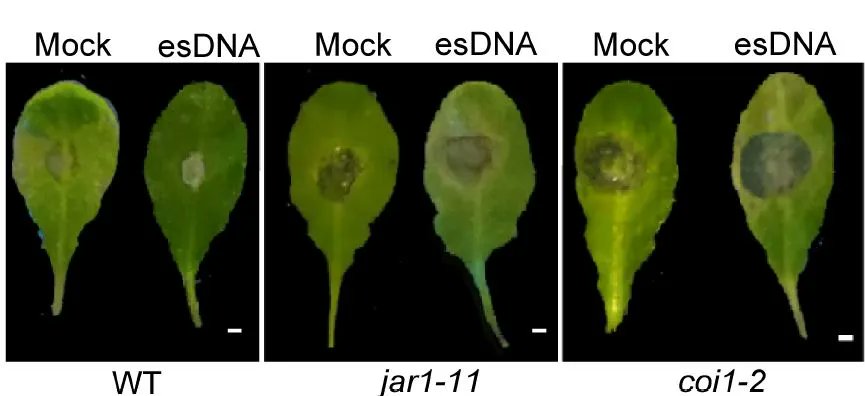
Pleased to share our new article in Cell Host & Microbe, a collaboration with the group of Zhong Wei at NJAU
Common mycorrhizal networks facilitate plant disease resistance by altering rhizosphere microbiome assembly
Free share link: https://t.co/noc1wKWoCu
Intercropping of non-leguminous crops improves soil biochemistry and crop productivity: a meta-analysis
Muhammad Khashi u Rahman, Zaki Saati-Santamaría and Paula García-Fraile
📖 https://t.co/dCL5jQvonf
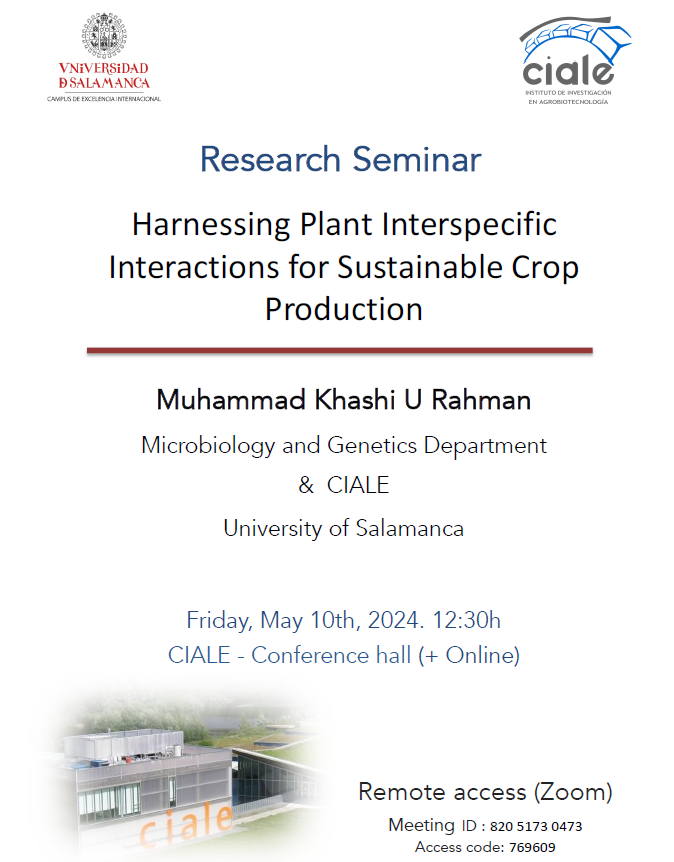
¡Hoy tenemos seminario en el @CIALE_USAL!
👨🔬Muhammad Khashi U Rahman (@usal)
📜"Harnessing Plant Interspecific Interactions for Sustainable Crop Production"
⌚️12:30
📍Salón de actos. /💻Zoom: https://t.co/vIKzW01Jve
Dear colleagues, we invite your high-quality submissions to the Special Issue in Land Degradation & Development focused on the broad themes of plant diversity and soil microbiome interactions. To contribute to this exciting collection, please visit https://t.co/vzef9gPQEy
Our article is out now in @MicrobiomeJ@BioMedCentral. We showed how airborne interplant signaling triggers neighboring tomato plants to recruit beneficial bacteria. Congratulations to Zhou and the whole team. Full story in the link: https://t.co/z0aEw7T17A
@cropdoc2@RidgetownCampus Adding intercropping with rotation will increase residue input, and increase microbial biomass due to varied carbon sources and microbial activity due to microbial competition. This means higher mineralization -> more nutrients release -> increased yield with higher stable SOM.
🚨Come and join us as a (3-years) postdoc to investigate how "the one and only" Trichoderma can keep at bay pathogens of agricultural interest 🧬🌾🦠! @CIALE_USAL, @AgriEnvironCyL@usal#seductiveSalamanca. Deadline, Jan 12. DM for questions.
https://t.co/svyef1q9Px
Our Review article in @CurrentBiology is just out! We discussed innovative breeding and management strategies to improve crop resilience against climate change. Thanks @YoselinBenAlf for the opportunity. Great teamwork👏Love this figure by @BesianaX
https://t.co/1JISi3Alpi
🧫🧫🧬🧬🌾🌾If you are interested in #plantmicrobeinteractions#rootcolonization#biofilms#syncoms you belong to RhizoBioS team!! We are looking for motivated candidates to join RhizoBioS as PhD student (FPI funding associated). Call will be launched soon📢. DM if interested!!!
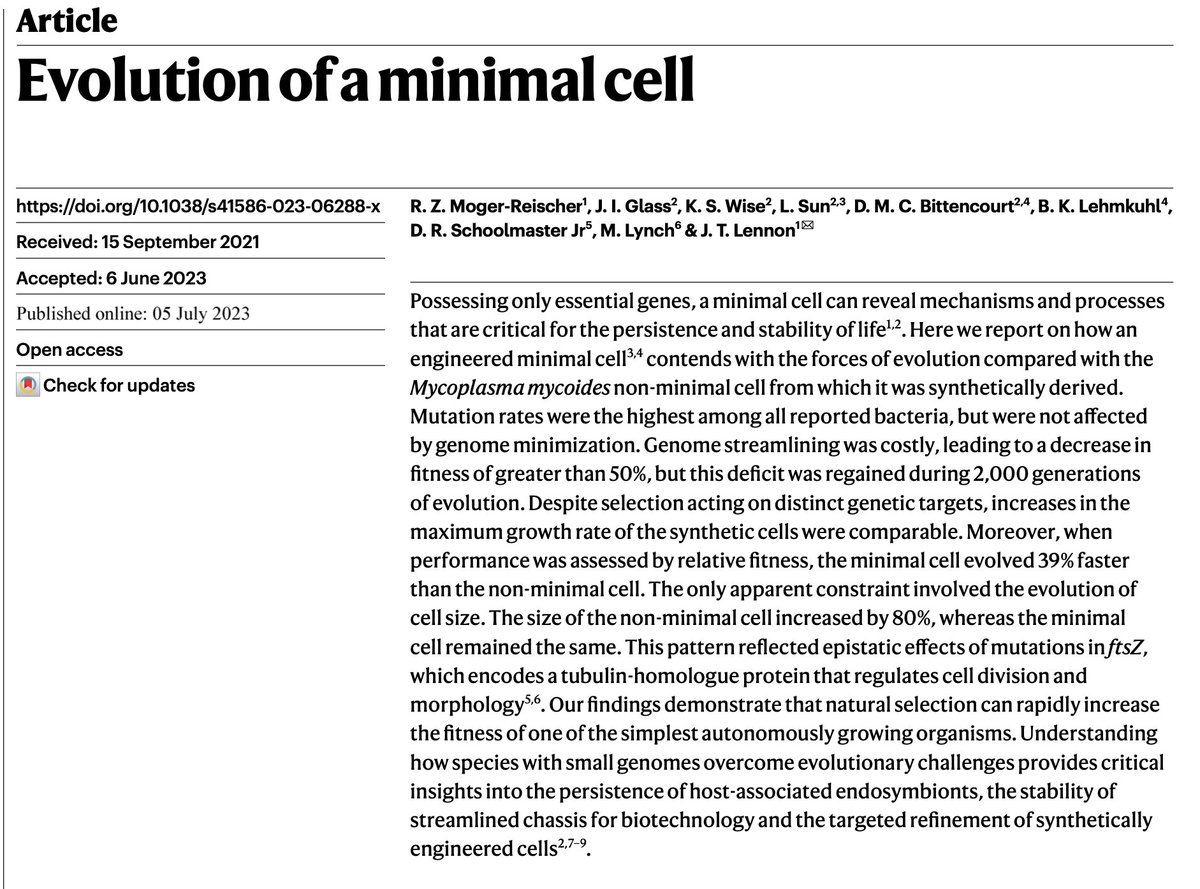
A mind-blowing paper has come out today in @Nature
In 2016, JC Venter Institute scientists trimmed a bacterial genome to its barest minimum required for life to synthesize what they called a "minimal genome" (https://t.co/Rk8oZJ0bUj).
Today, a group of scientists from Indiana University reports how that minimal genome evolved over 2000 generations in comparison to the non-minimal genome.
The authors found that even when you reduce a bacterial genome to its absolute minimum where every nucleotide matters, the genome undergoes mutational events generation after generation as much as the non-minimal genome. One simply cannot stop the evolution.
Just over 300 days of evolution (equivalent to 40,000 years in humans) the minimal cell has gained everything it lacked in fitness on day one in comparison to the non-minimal cell.
When comparing the evolved traits between the minimal and non-minimal cells, the scientists found something striking. The evolutionary process increased the cell size of non-minimal cells but not that of the minimal cell. But that is not the striking part.
The scientists were able to identify the key mutation that resulted in cell size evolution. And it turned out that the mutation that helped the non-minimal cells to grow bigger is the same that helped the minimal cells to stay smaller. Growing bigger had a survival advantage for non-minimal cells and not growing bigger had a survival advantage for minimal cells. So, the mutation had a context-dependent effect. This just demonstrates that the evolutionary effects on traits have no absolute direction. All that matter is what is beneficial for the organism's survival.
The conclusion of the paper is metaphorically a quote from the Jurassic Park movie:
“Listen, if there’s one thing the history of evolution has taught us is that life will not be contained. Life breaks free. It expands to new territories, and it crashes through barriers painfully, maybe even dangerously, but . . . life finds a way". (https://t.co/UlxRlb86CT)
https://t.co/zA9OAqSoAu