Introducing InsForge 2.0: The Backend for Agentic Development
Our OSS backend provides databases, auth, storage, model gateway, and edge functions accessible through a context-optimized layer that agents can better understand and operate end-to-end.
GitHub: https://t.co/vTRy9iFsPe
Key Benchmarks (vs. Supabase MCP):
- 14% higher accuracy
- 1.3x faster per task
- 2.4x fewer tokens
Better. Faster. Cheaper.
Build features more quickly and confidently — all at 41.7% of the cost.
Shipping your ideas today.
$ npx @insforge/cli create
@anishmoonka After the 2nd like (post probably got 2 likes at the "same time") , nothing else (likes, retweets, quotes, etc.) mattered. This is the #world we live in. This is what we do now (like share comment)
Most humans are just LLMs in denial.
Most people live their lives like LLMs, and I don’t mean that as metaphor. I mean it literally. We move through the world as probability engines trained on the past, running compressed behavioral scripts over and over again, mistaking repetition for identity and automation for intelligence.
Most of what we call “being human” is a feedback loop of inputs and predictable outputs, with just enough variation to maintain the illusion of agency.
If you stop and examine how much of your day is truly authored, how much is a conscious, friction-filled decision versus a reflex, you’ll find the percentage is brutally low. You eat what you ate before. You speak how you’ve spoken before. You respond in emotional patterns that were etched into you long before you had the words to describe them.
You’re not a sentient actor.
You’re a stitched-together memory. The human nervous system optimizes for efficiency, not reflection.
Intelligence is a last resort, something we deploy only when our automation fails.
And so we look at current AI with awe, as if we’re witnessing something alien. But what shocks us isn’t how advanced it is. It’s how familiar.
We’ve spent so long worshipping our own complexity that we forgot how much of it is shallow. Most humans aren’t building new thought, they’re shuffling cached tokens from their social, cultural, and emotional training sets.
We just never had to see it so clearly....until now.
Very few people actively reject their training data. Very few go out of their way to think beyond the weights they were handed.
We marvel at ChatGPT for generating fluent answers, but we never ask why fluency impresses us so much.
Maybe it’s because we were never fluent in thinking to begin with.
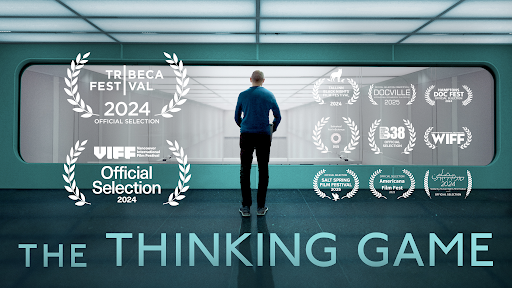
‘The Thinking Game’ documentary has just passed 200M views on YouTube in just 4 weeks! 🤯Perfect holiday viewing if you’re interested in a behind-the-scenes look at how an AGI lab works, or what goes into making a Nobel Prize winning project like AlphaFold happen.🧬🚀