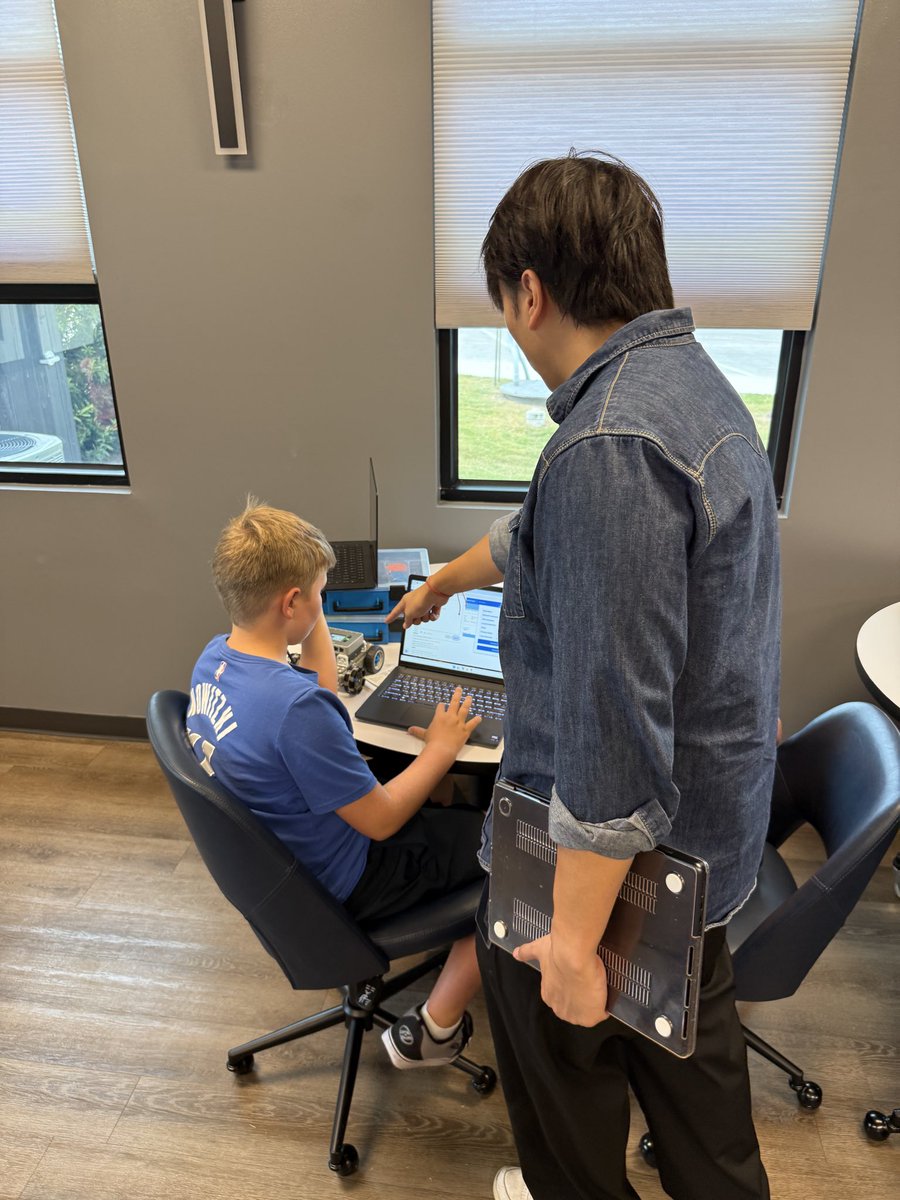
GT Summer Camp Week 1 is a hit at GT Georgetown 📣
The kids are working hard on Timeback and developing their skills from Music and chess to Robotics as well 🤖
@gtschool@gtmom@loganmay
Capability was never the bottleneck, four vendors racing into K-12 proves that much. The real test is whether any of them keep the model off the grading path. Narrating hints around a deterministic answer key instead of grading itself and understanding where the problems actually lie🧪
@emollick Kimi K3 closing in on the frontier is genuinely exciting!! However that compulsive tweak loop at max effort reveals what's missing: a mechanical stop rule, not more intelligence. Without a governor, more capability just means looping longer. 🧠 🔂 🔂
Showcase day at Gauntlet AI gives each builder one moment on stage. I was given two.
The first presentation covered the workflow I built to direct AI agents through real production work. Deep research before planning, planning before code, evaluation before implementation. That discipline is how I shipped every project in the program, not just demos, deployed software.
The second was our team project, Director.
Director is an autonomous computer use agent powered by multiple frontier models. It tracks your face, follows your hands, listens to your voice, then operates the computer to carry out what you asked. You speak, it works.
The name is not an accident. My entire engineering philosophy lives inside it. The AI is the actor. I am the director.
I stood on that stage twice, presenting systems I built alongside people I deeply respect. The technology changed. The habit of showing up prepared never did.
Gauntlet streamed the full showcase, Director demo included. Watch it here: https://t.co/vLAIHDa7m3
If you are curious how Director works under the hood, ask me in the comments. I could talk about this build for hours.
#AI #AgenticAI #ComputerUse #GauntletAI #BuildInPublic
A 'mastered' badge 🏆 in most ed tech means high accuracy, including lucky guesses. Real mastery gating SHOULD check HOW a student got there: multiple attempts, multiple representations and at least one unassisted correct or it doesn't count!
@brianzhan1@HenryYin_ Learned this the hard way building an AI math tutor! keeping the LLM as the director but grading with deterministic SymPy made everything downstream trustworthy. It also made the AI parts dramatically better. The verifier ends up being what unlocks the model.
@coolcatteacher@mrswansonai In your testing, were the misses random or clustered on judgment calls (argument structure, whether the feedback was even valid) vs. mechanics? That split would tell teachers exactly where to double-check.
A single 𝗖𝗟𝗔𝗨𝗗𝗘.𝗺𝗱 file just hit 192k GitHub stars.
(derived from Karpathy's coding rules)
Andrej Karpathy observed that LLMs make the same predictable mistakes when writing code: over-engineering, ignoring existing patterns, and adding dependencies you never asked for.
If you've used AI coding assistants, you've hit all of these.
But here's the thing:
If the mistakes are predictable, you can prevent them with the right instructions.
That's exactly what this 𝗖𝗟𝗔𝗨𝗗𝗘.𝗺𝗱 does. You drop one markdown file into your repo, and it gives Claude Code a structured set of behavioral guidelines for your entire project.
This is a big deal.
- Built entirely around prompt engineering for AI coding assistants
- No framework, no complex tooling, just one .md file that shapes behavior
Developers are moving past "use AI to write code" and into "engineer the AI's behavior so the code is actually good."
The Claude Code ecosystem is growing fast, and the best tools in it aren't always software. Sometimes they're just well-crafted instructions.
100% open-source.
Link to the GitHub repo: https://t.co/fBDKwa3Uuo
@emollick Same blind spot I hit building tools: swap the backend model in an agent loop and OpenRouter never sees that call, it's direct API. So the graph tracks routing behavior, not who's actually winning inference share.