Antidote to fear of death from the great white heron. As always, find this #birddivination as a solo print and part of the deck of 100, along with the story and process behind them, at https://t.co/xpo04XE701
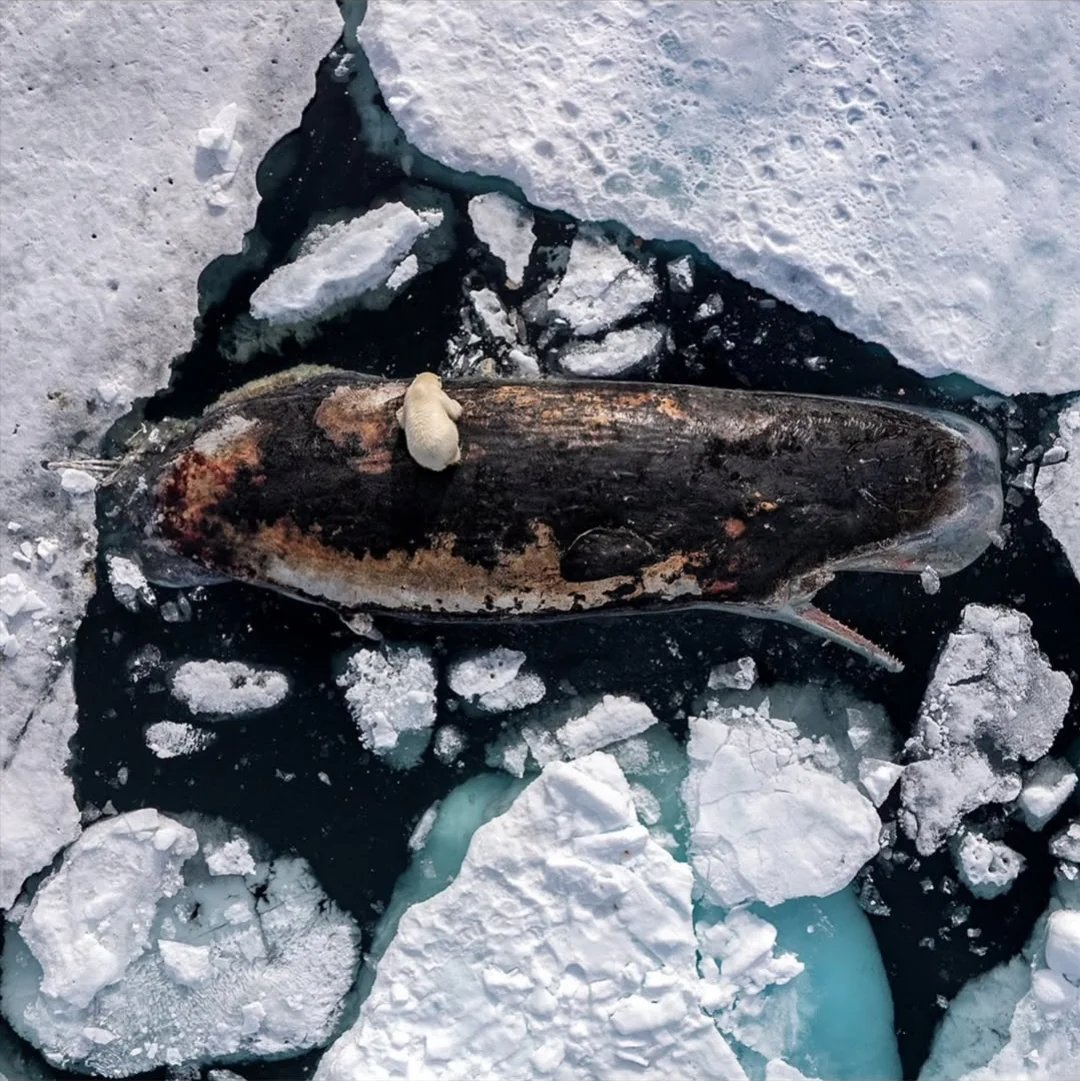
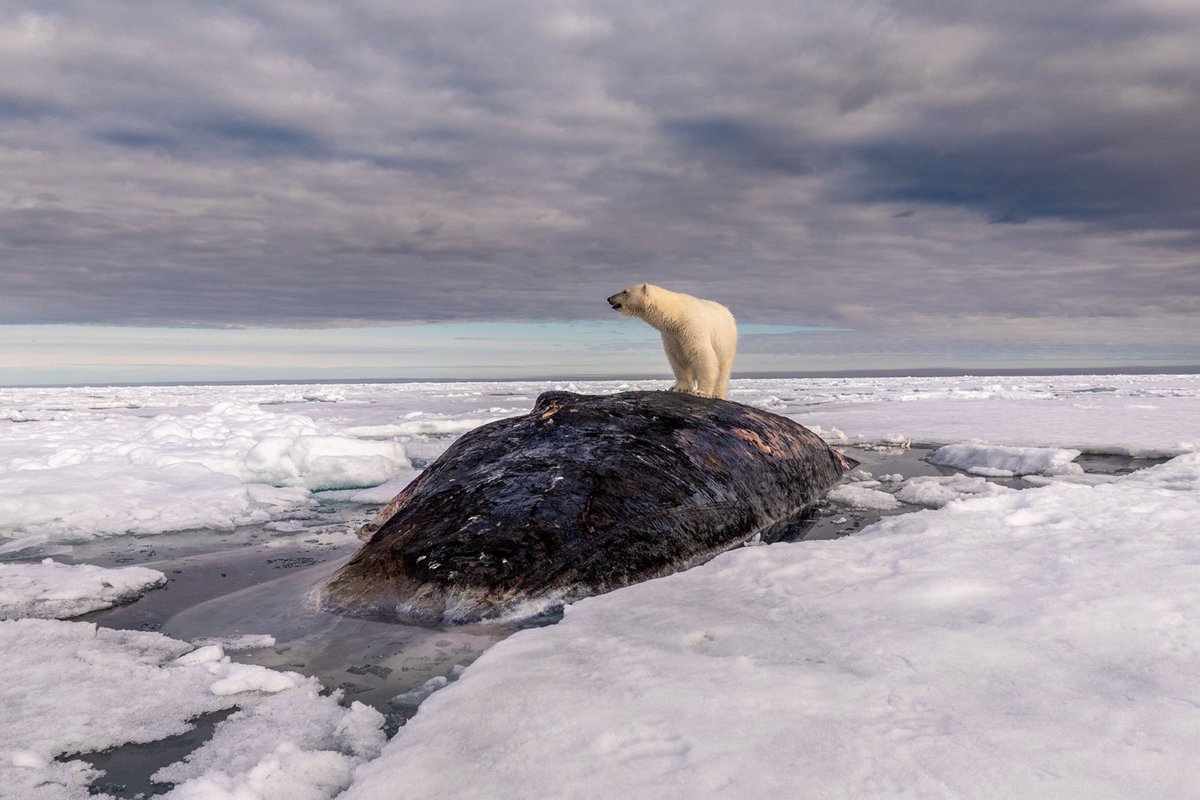
Largest predator in the world being eaten by the largest land predator
Photographer Roie Galitz spent two days observing the scene from a small boat, capturing it by drone to reveal a scale difficult to grasp from sea level. At around 350 kilograms, the polar bear is dwarfed by a sperm whale weighing more than 40 tons.
Winston Churchill fought his depression with bricks. He'd lay them for hours at his country home in Kent. He joined the bricklayers' union. And in 1921 he wrote about why it worked. It took psychology another 75 years to catch up.
He called his depression the "Black Dog." It followed him for decades. His method for fighting it back was as basic as it sounds: laying brick after brick, hour after hour.
Churchill spelled out his theory in a long essay for The Strand Magazine. People who think for a living, he wrote, can't fix a tired brain just by resting it. They have to use a different part of themselves. The part that moves the eyes and the hands. Woodworking, chemistry, bookbinding, bricklaying, painting. Anything that drags the body into a problem the mind can't solve by itself.
Modern psychology now calls this behavioral activation. It's one of the most-studied depression treatments out there. Depression sets a behavior trap. You feel bad, so you stop doing things, and doing less means less to feel good about. Feeling worse makes you do even less. The loop tightens until you can't breathe inside it.
Behavioral activation breaks the loop from the action side. You schedule the activity first, even when every part of you doesn't want to. Doing it produces small rewards: a wall gets straighter, a painting fills in, a messy room gets clean. Those small rewards slowly rewire the brain. Action comes first, and the feeling follows.
Researchers at the University of Washington put this to the test in 2006. They studied 241 adults with major depression and compared three treatments: behavioral activation, regular talk therapy, and antidepressants. For the people who were most severely depressed, behavioral activation matched the drugs. It beat the talk therapy. A 2014 review of more than 1,500 patients across 26 trials backed up the result.
Physical work like bricklaying does something extra on top of this. It crowds out rumination, the looping bad thoughts that grind people down during the worst stretches of depression. Bricklaying needs both hands and gives feedback brick by brick: each one is straight or crooked. After an hour you can see exactly how much wall you built. No room left for the mental chewing.
The line George Mack used in his post, "depression hates a moving target," is good poetry. The science behind it is sharper. Depression hates a brain that has somewhere else to be.
10 @TedLasso leadership lessons:
1 believe in yourself
2 winning is an attitude
3 all people are different people
4 see good in others
5 forgive first
6 stay teachable
7 be curious
8 optimists do more
9 be honest
10 doing right thing is never wrong thing
Only one chance in this lifetime…
Like watching sunset at the beach from the most foreign seat in the cosmos, I couldn’t resist a cell phone video of Earthset. You can hear the shutter on the Nikon as @Astro_Christina is hammering away on 3-shot brackets and capturing those exceptional Earthset photos through the 400mm lens. @AstroVicGlover was in window 3 watching with @Astro_Jeremy next to him.
I could barely see the Moon through the docking hatch window but the iPhone was the perfect size to catch the view…this is uncropped, uncut with 8x zoom which is quite comparable to the view of the human eye. Enjoy.
Starlink just crossed 10,000 satellites.
Falcon 9 added 29 more. Booster landed for the 27th time. Casual.
300,000 collision-avoidance maneuvers last year. Zero crashes.
Low Earth orbit running like clockwork.
@SpaceX
Evolution has rendered the human nose roughly 200,000 times more sensitive to the aroma of rain than a shark's is to blood in water.
Though sharks are legendary for detecting trace amounts of blood across vast ocean distances, humans possess an even more extraordinary olfactory feat on land: an acute sensitivity to petrichor, the earthy scent released when rain hits parched ground.
This distinctive fragrance arises primarily from geosmin, a compound produced by soil bacteria, which the human nose can perceive at concentrations in the parts-per-trillion range.
On a per-unit basis, this makes our detection threshold for the smell of impending rain about 200,000 times lower than a shark's for blood—an astonishing evolutionary refinement.
This heightened ability likely originated as a critical survival adaptation for our ancestors. In eras without reliable water sources, sensing an approaching storm from afar enabled early humans to find fresh water, locate fertile areas, and make timely decisions about movement and shelter in challenging landscapes.
What we now experience as a soothing, nostalgic scent was once an essential environmental cue guiding migration and habitation. Today, this enduring sensory prowess stands as a remarkable reminder of our evolutionary legacy, affirming that the human nose ranks among nature's most exquisitely tuned detectors.
[Polak, E. H., & Provasi, J. (1992). Odor sensitivity to geosmin: An exercise in sensory psychology. Perception & Psychophysics]
“Move Fast and Break Things” vs “Move Slow and Forge Things”
“Move fast and break things” was a something we invented at Facebook to get a bunch of entitled Ivy League kids to grind for us. It worked.
Then, all of Silicon Valley mistakenly confused correlation with causation and adopted this mode for themselves without questioning it.
In a world of AI, those that continue to pray at this altar will be the first to lose their jobs.
Moving fast and breaking things is exactly the low hanging fruit that AI will automate.
Learn to move slow and forge things. Make things that can stand the test of time. Learn discipline and process and you’ll have a job forever.








![Rainmaker1973's tweet photo. Evolution has rendered the human nose roughly 200,000 times more sensitive to the aroma of rain than a shark's is to blood in water.
Though sharks are legendary for detecting trace amounts of blood across vast ocean distances, humans possess an even more extraordinary olfactory feat on land: an acute sensitivity to petrichor, the earthy scent released when rain hits parched ground.
This distinctive fragrance arises primarily from geosmin, a compound produced by soil bacteria, which the human nose can perceive at concentrations in the parts-per-trillion range.
On a per-unit basis, this makes our detection threshold for the smell of impending rain about 200,000 times lower than a shark's for blood—an astonishing evolutionary refinement.
This heightened ability likely originated as a critical survival adaptation for our ancestors. In eras without reliable water sources, sensing an approaching storm from afar enabled early humans to find fresh water, locate fertile areas, and make timely decisions about movement and shelter in challenging landscapes.
What we now experience as a soothing, nostalgic scent was once an essential environmental cue guiding migration and habitation. Today, this enduring sensory prowess stands as a remarkable reminder of our evolutionary legacy, affirming that the human nose ranks among nature's most exquisitely tuned detectors.
[Polak, E. H., & Provasi, J. (1992). Odor sensitivity to geosmin: An exercise in sensory psychology. Perception & Psychophysics]](https://pbs.twimg.com/media/G9GjQ_8WcAA-Fzd.png)




