History of Pathology Society: Dedicated to the Study of the Pathologic Sciences and to the people and events who widened the sphere of medical knowledge
A treat for the lover of kidneys! Malpighi, the 1st to describe the glomerulus “minimae glandulae” did so in his De renibus but with no drawings. These seemed to have been lost to posterity but no longer.
https://t.co/d4PADotanw
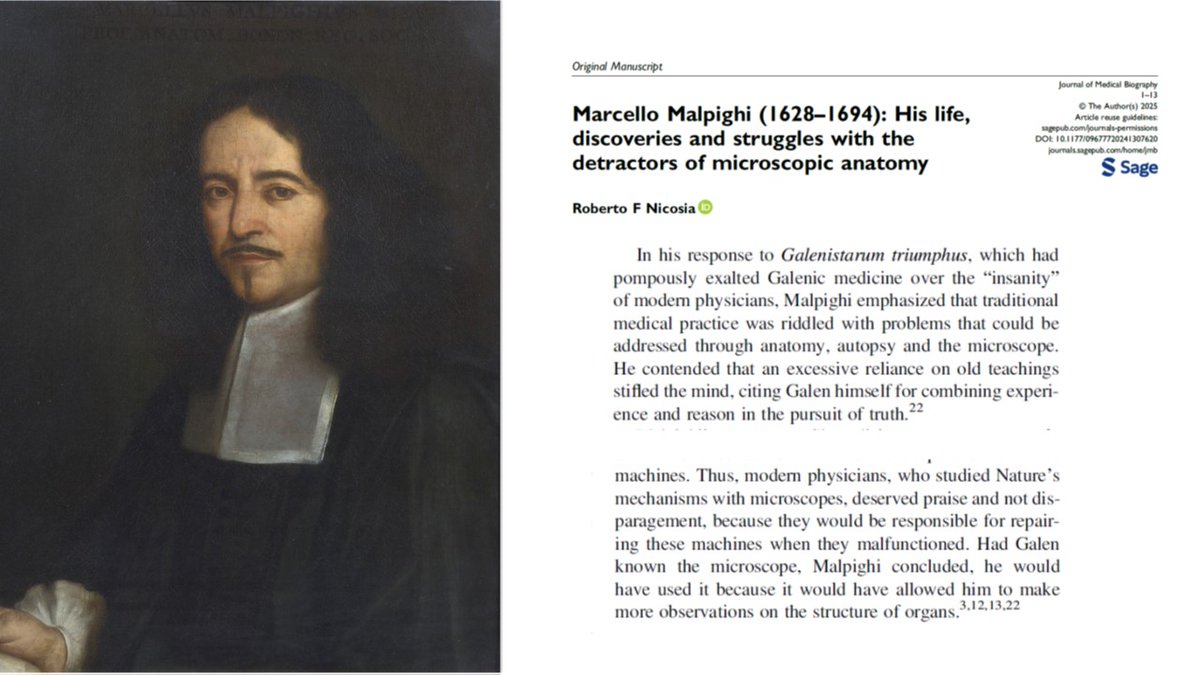
The 400th anniversary of Malpighi, in 2028, is being celebrated by one of our members, Santo Nicosia, with several manuscripts. The 1st covers his life, discoveries and also struggles with colleagues who could not evolve from Galen’s teaching!
https://t.co/yin3ZYbuwS
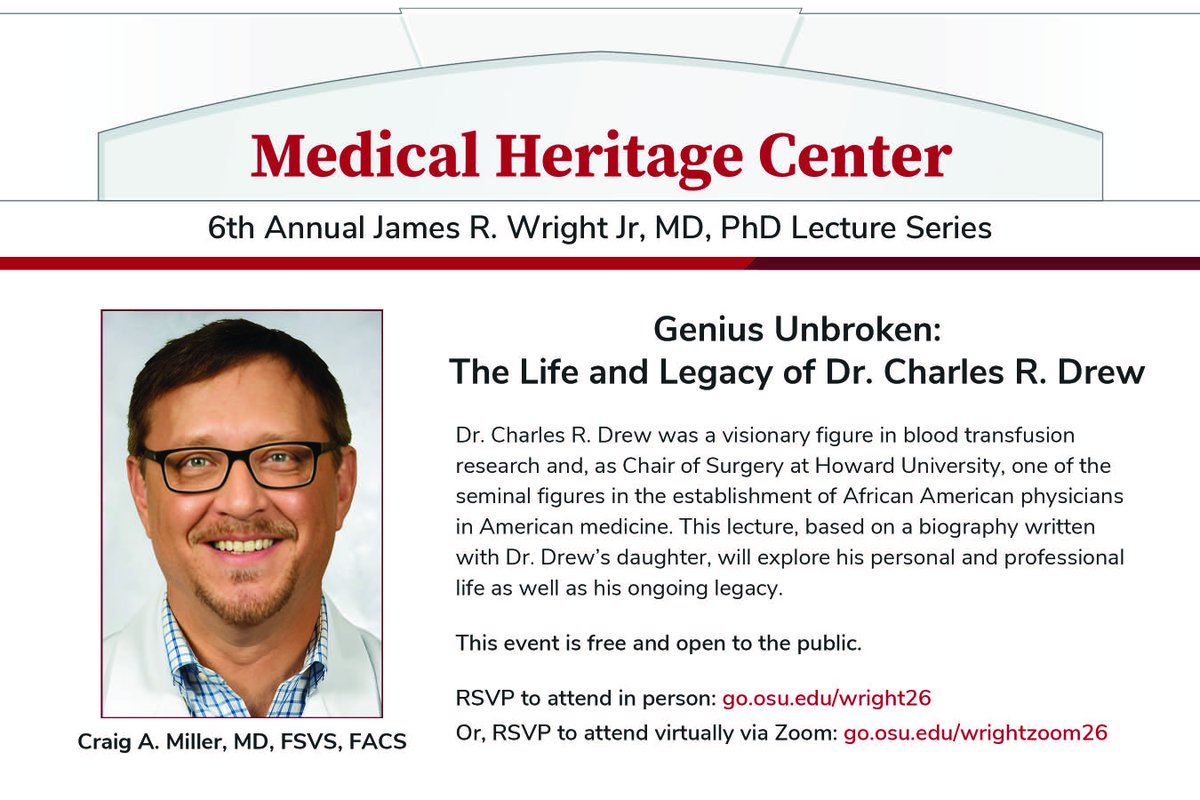
Dr. James Wright, current president of the American Osler Society and past president of our Society, with a named lecture series.
The lecture- Genius Unbroken: The Life and Legacy of Dr. Charles R. Drew will take place Thursday April 9th.
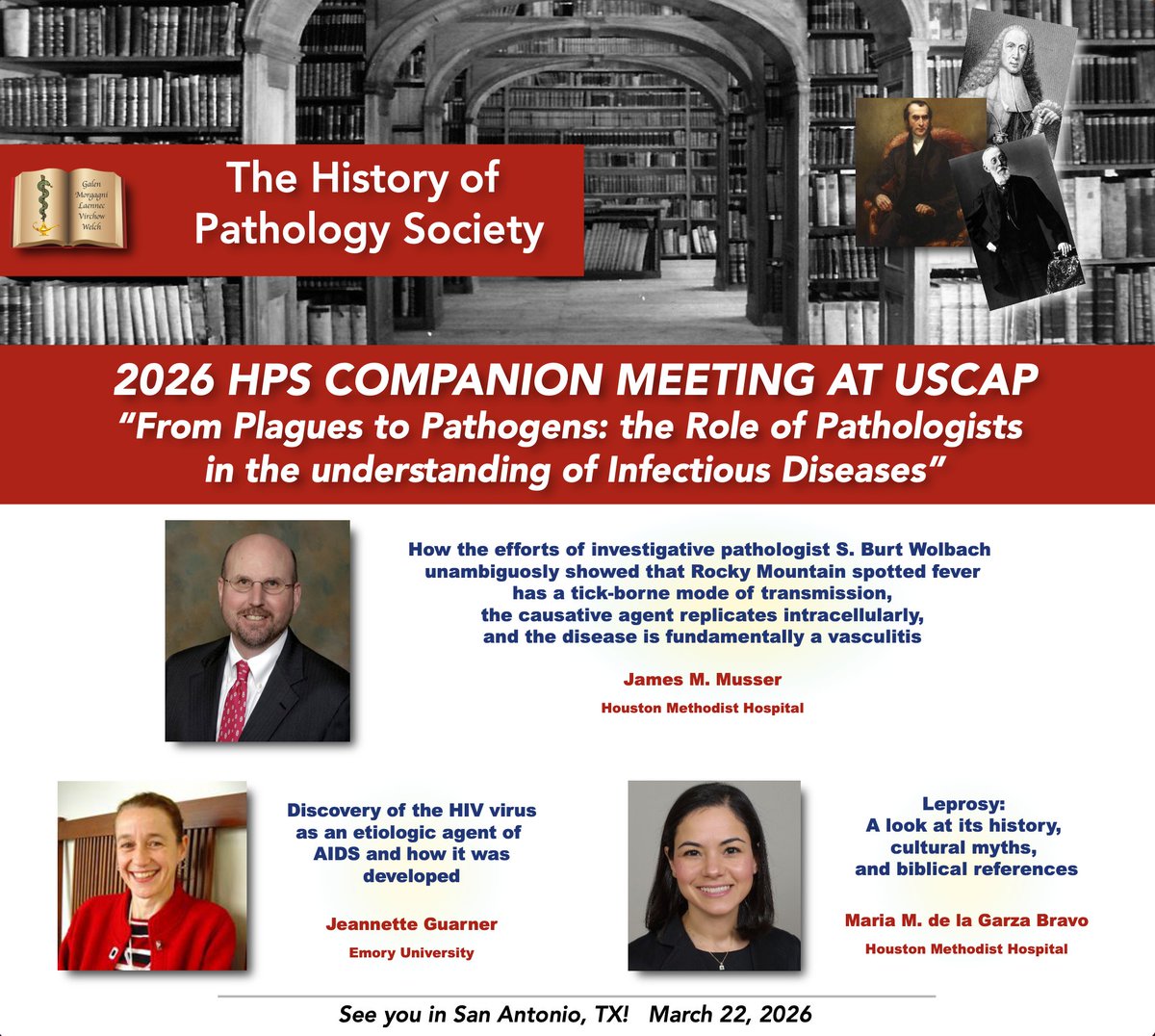
Thank you to our speakers, Drs Jim Musser, Jeanet Guarner and Miguelina de la Garza, for a great HPS Companion meeting "From the Plagues to Pathogens".
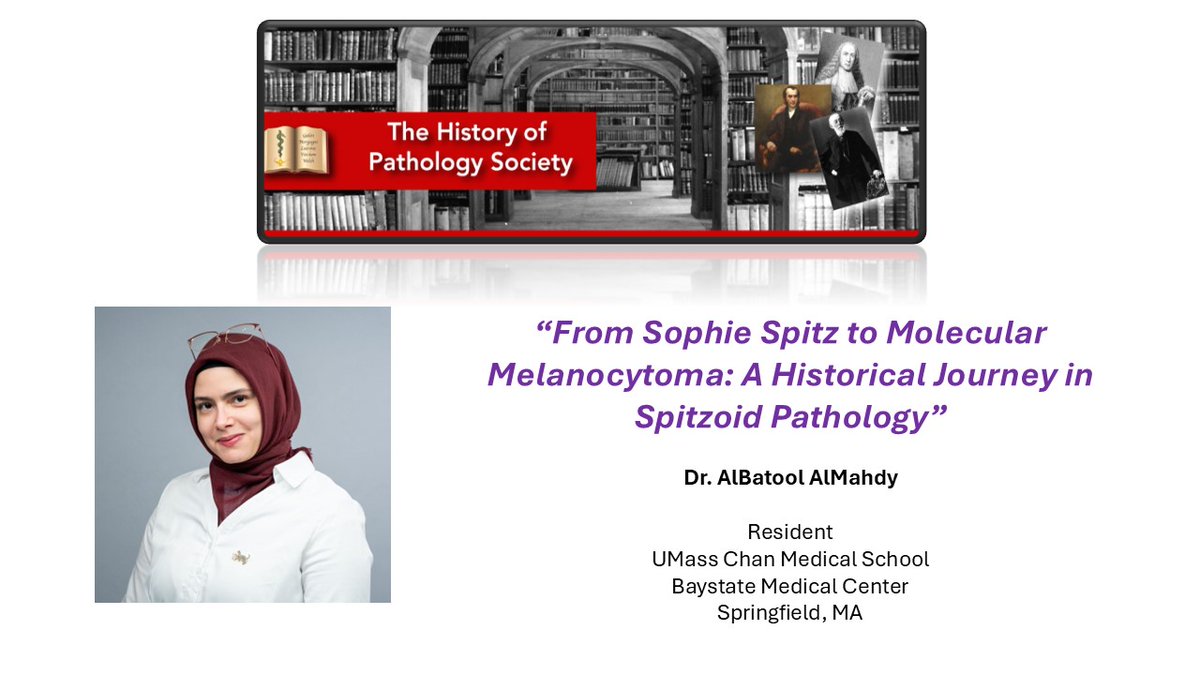
Congratulations to Dr AlBatool AlMahdy, our Azar Award winner, who kicked off our meeting with her excellent presentation.
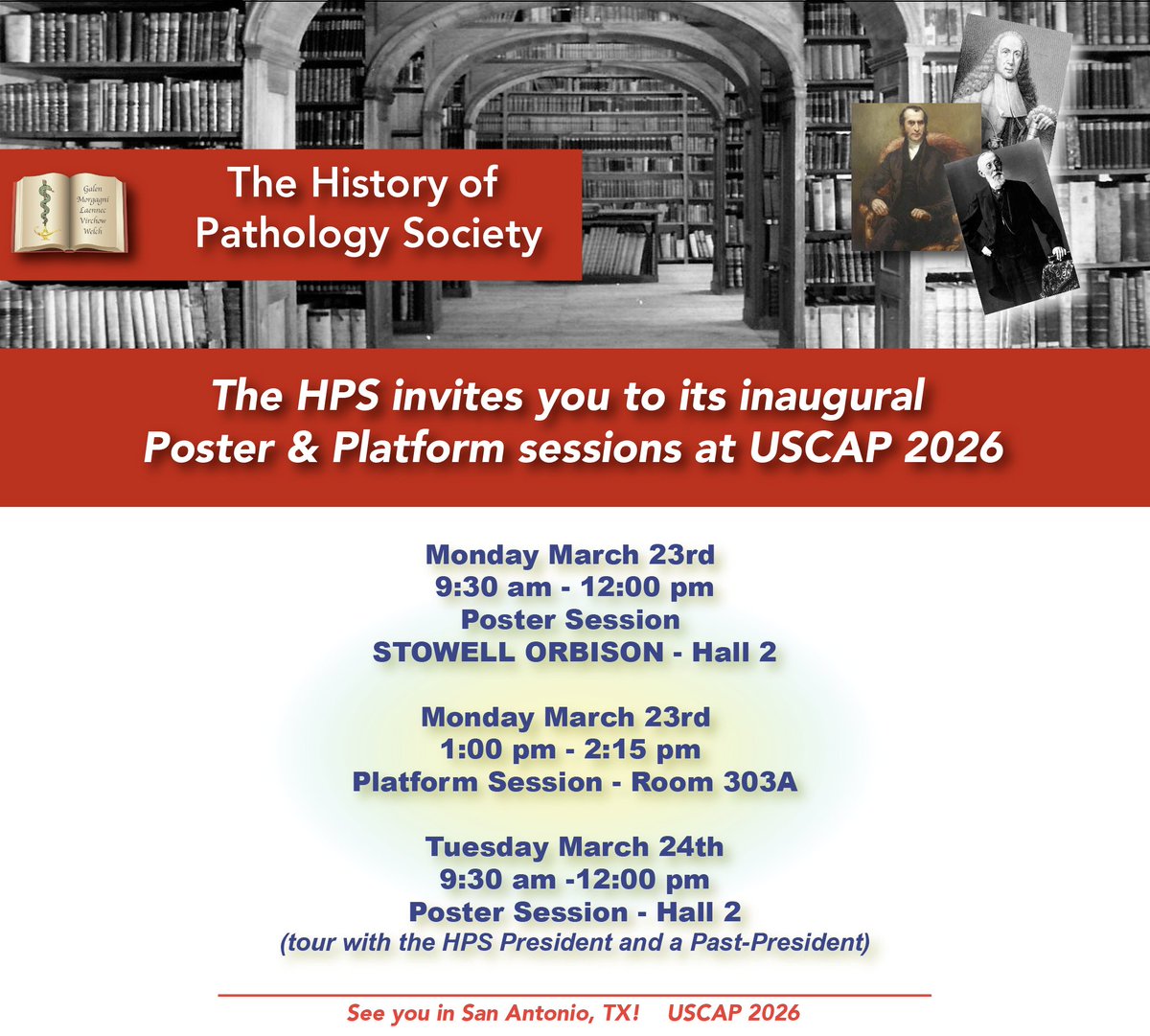
A first at USCAP annual meeting! History of Pathology is now an official category for posters and platforms. Over 25 abstracts will be showcased at the Stowell Orbison, Platform session and a Poster session with a walking tour. Join us for this inaugural moment!
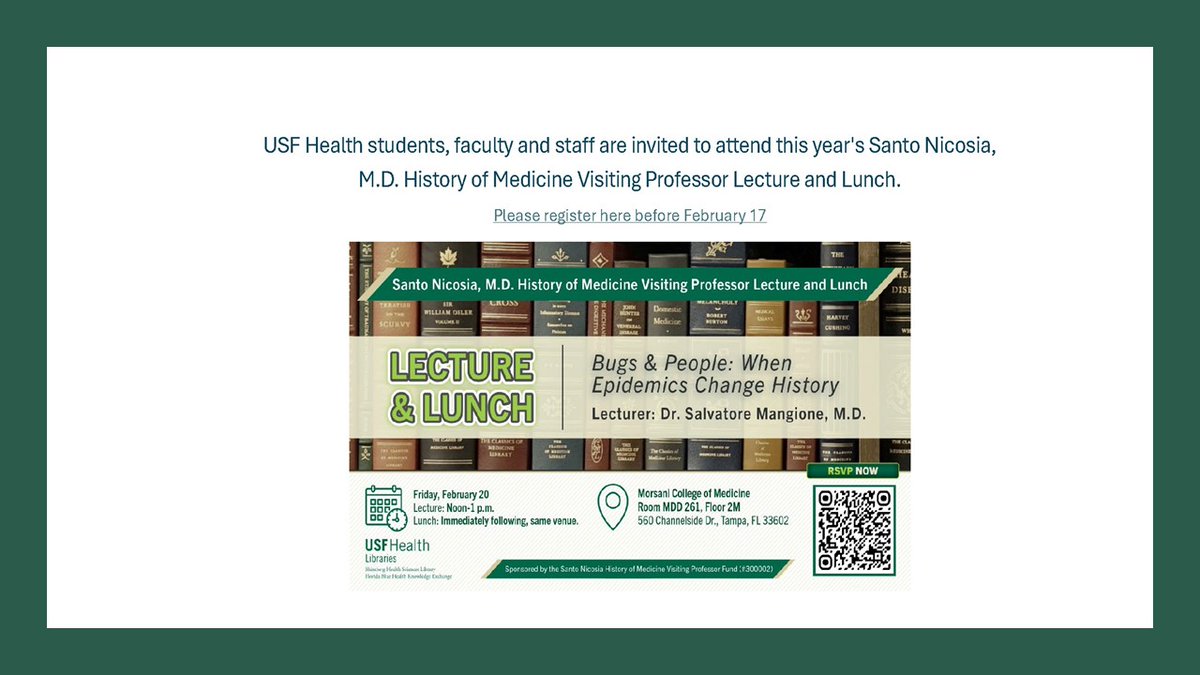
Our own Dr Santo Nicosia, founding member of the society, had a lecture named after him. This year, the lecture will take place Feb 20th in person. The guest speaker is Dr. Salvatore Mangione “ Bugs and People: When Epidemics Change the History”.
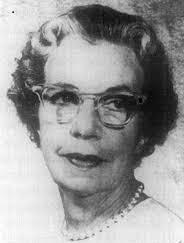
Dr Edith Potter, the name behind Potter’s sequence of renal agenesis, laid the foundation to perinatal pathology. During her career, she performed over 10,000 perinatal autopsies investigating deaths of babies. Read more about her by Dr Dunn https://t.co/wSGi6W3WjJ
Tuberculosis, still a lethal infection worldwide, is the oldest documented human disease dating back to Ancient Egypt. Rampant during the Industrial Revolution, TB affected many composers and musicians of the Romantic era, Frédéric Chopin the best example. Alexandre Dumas wrote:
Congratulations to our 2026 Azar Award winner Dr AlBatool AlMahdy, resident at UMass Chan Medical School, for best abstract by a trainee “From Sophie Spitz to Molecular Melanocytoma: A Historical Journey in Spitzoid Pathology”. Looking forward to her presentation at USCAP 2026.
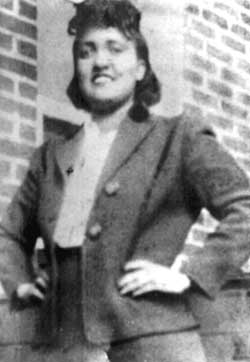
A photo of Henrietta Lacks in the late 1940s. Henrietta's cancer cells are the source of the HeLa cell line, the first immortal human cell line, one of the most ground-breaking and controversial scientific discoveries of the 20th century. #histmed#historyofmedicine
Rudolf Virchow - 'The Father of Modern Pathology'. Virchow was an anthropologist, pathologist, prehistorian, biologist, writer, editor, and politician. He was renowned for his advancement of public health and for discrediting humourism #histmed#historyofmedicine
Santiago Ramón y Cajal (1852-1934), the Spanish neuroscientist, pathologist, and histologist. His investigations of the microscopic structure of the brain made him a pioneer of modern neuroscience. He received the Nobel Prize in Physiology or Medicine in 1906 with Camille Golgi.
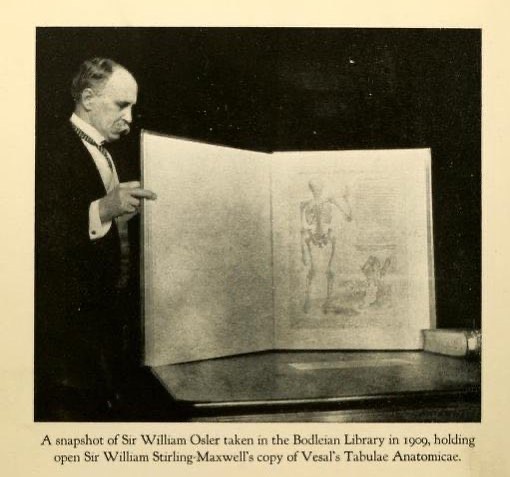
A photo of Sir William Osler taken in the Bodleian Library in 1909, holding open Sir William Stirling-Maxwell's copy of Vesal's tabulae Anatomicae. #histmed#historyofmedicine#pastmedicalhistory
Coming soon. Our 3rd online fall meeting October 1st at 3pm CT. We are grateful to host Dr Thomas Cummings from Duke University. His talk "November 22, 1963". Do you remember what happened on that date?
Join us via zoom https://t.co/HTF7JcOmAA
Coming soon. Our 3rd online fall meeting October 1st at 3pm CT. We are grateful to host Dr Thomas Cummings from Duke University. His talk "November 22, 1963". Do you remember what happened on that date?
Join us via zoom https://t.co/HTF7JcOmAA
1901 Alzheimer would meet a 50-yr old patient for unusual behavioral symptoms and loss of memory. 1906 examining her brain, he described plaques and neurofibrillary tangles. But he did not do it alone. Perusini a neuroscientist would copublish their first series of cases in 1909