Bonny Brice Talla donated part of his liver to save his mother, Jenette Laurance.
A tribute to every living and deceased organ donor. Their generosity gives others hope and a second chance at life.
Image: Manipal Hospitals, CC BY 3.0.
In the year 79 CE, a volcano decided to remind the inhabitants of the Roman Empire that civilization is a flimsy thing before the powers of nature.
New episode of History on Fire wherever you listen to podcasts
Acute on chronic exhaustion: possibly the most relatable diagnosis in medicine. 😴
Management: sleep, caffeine and cancelling anything that can safely wait.
📷 Image credit: Med School Life (@medschool_life on Instagram)
Ötzi the Iceman died violently 5,300 years ago, but his preserved body still offers remarkable medical clues—from worn teeth and infection to arterial disease and possible prehistoric treatments.
Read more:
https://t.co/20fUGswYD3
#HistMed
ECG challenge 🫀
A 74-year-old presents after a brief blackout. What’s the rhythm, and what clue gives it away?
Illustrated ECG and fictional vignette for teaching. #ECG#MedEd
Experts are calling it the biggest breakthrough in pancreatic cancer treatment for decades - a daily pill that appears to shrink and possibly even eliminate tumours in some patients with one of the deadliest and hardest-to-treat cancers. https://t.co/hGqyVBKt70
Edward Jenner’s work on cowpox and smallpox helped establish vaccination and laid foundations for immunology.
Image: John Raphael Smith, Edward Jenner on a tree, c. 1800. Wikimedia Commons (public domain).
A clear view of the bones that shape the face. This skull illustration comes from Johannes Sobotta’s Atlas and Text-book of Human Anatomy, published in the early twentieth century.
Image: Sobotta (1909), via Wikimedia Commons (public domain).
Ignaz Semmelweis (1818–1865) showed that handwashing could dramatically reduce deaths from childbed fever. His findings were resisted during his lifetime, but his work became a landmark in infection prevention.
Image: via Wikimedia Commons (public domain).
A remarkable study of the structures beneath the skin. This anatomical illustration is by Antonio Scarpa (1752–1832), from his 1801 work on diseases of the eye.
Image: Saggio… (1801), scan via Historical Medical Books, University of Virginia; public domain.
A hand and a wedding ring—and a new way of seeing inside the body.
On 22 December 1895, Wilhelm Conrad Röntgen made this famous X-ray image of his wife Bertha’s left hand: one of the first radiographs of a human body.
Image: via Wikimedia Commons (public domain).
Thomas Linacre (c.1460–1524), physician to Henry VIII, was the first president of the Royal College of Physicians, founded in 1518.
Portrait traditionally identified as Linacre, copied by William Miller, 1810; via Wikimedia Commons (public domain).
#HistoryOfMedicine
A coronal section of the thorax and abdomen from Johannes Sobotta’s Atlas of Human Anatomy, first published in 1904. The detail in this anatomical illustration is remarkable.
#Anatomy#HistoryOfMedicine
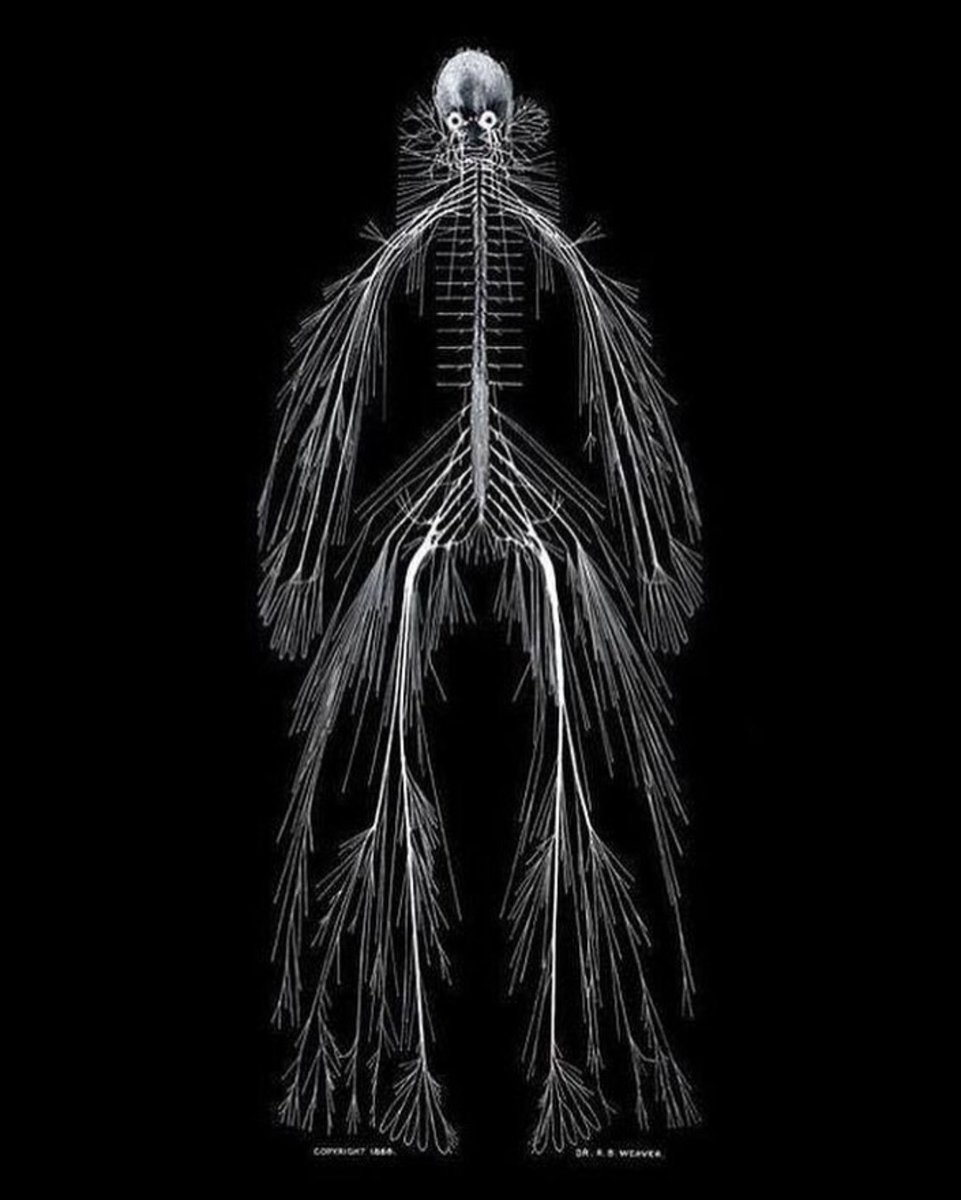
In 1888, Rufus B. Weaver created a complete dissection of the human nervous system, later known as “Harriet”. The story is remarkable, but surviving evidence does not establish that Harriet Cole consented to the use of her body.
Read: https://t.co/MWE5u94paQ
@purecity_life Yes, the comparisons were crucial. The first estimate was about 4,000 deaths; later comparisons with previous winters showed around 12,000 excess deaths. Alongside the medical inquiry, that evidence made it much harder to dismiss the smog as a one-off fog. Thanks for reading.
My first article in almost a year is out: The Great Smog of London, 1952—how a public health disaster changed policy and our understanding of air pollution.
Read it here: https://t.co/dzNPV152yp
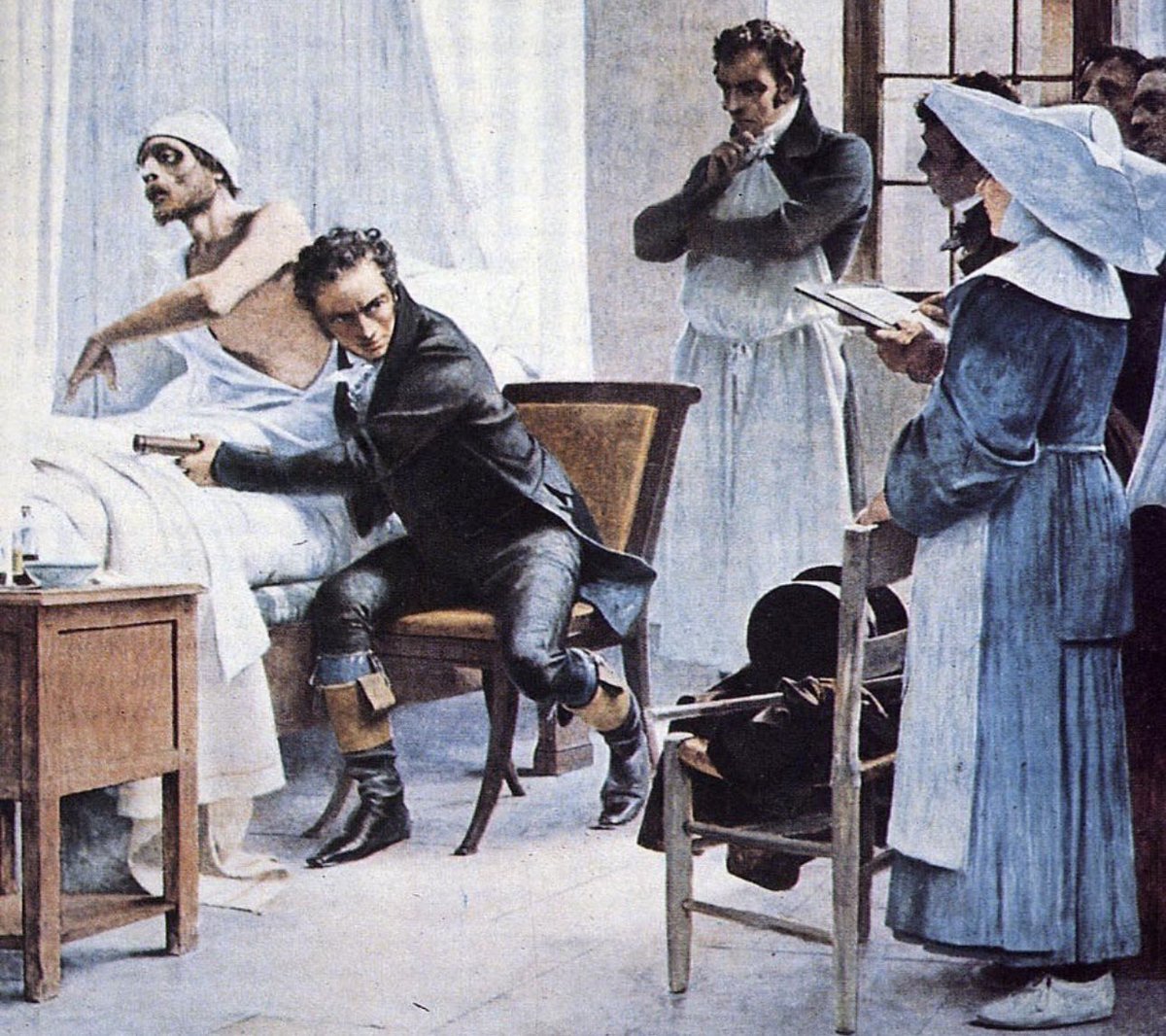
In 1816, René Laënnec used his stethoscope to examine a patient at Paris’s Necker Hospital. Théobald Chartran later depicted the scene—a moment in the history of clinical diagnosis.
#HistoryOfMedicine
Image: Chartran, via Wikimedia Commons (public domain).
After several months offline, Past Medical History is back!
I’ve finally restored the website, and all my old articles and content are available again.
Thank you so much for your support and patience while I worked on bringing it back.
https://t.co/zTRmC4G8Px