Bonny Brice Talla donated part of his liver to save his mother, Jenette Laurance.
A tribute to every living and deceased organ donor. Their generosity gives others hope and a second chance at life.
Image: Manipal Hospitals, CC BY 3.0.
A stark fact: more than half of researchers who do scientific and medical journal peer review now use AI to do it.
A 2025 survey of 1,645 researchers found that 53% of those who peer review now use AI tools in that role, and 59% of those users have it draft the review itself.
The danger isn't that AI reviews are sloppy. It's that they agree. In one study, GPT-4 commented on novelty at about a tenth the rate of human reviewers, and sided with them more readily when they recommended rejection. Frontier models also converge, so three reviewers using three different tools can still produce what is essentially the same conservative critique. A handling editor, reasonably, reads that agreement as evidence.
Dr Shishir Rao (Deep Medicine, University of Oxford, @raodyrao) joins Professor James Rudd (@jhfrudd) on the Heart podcast to talk through how widespread AI-assisted reviewing has become, what it costs science, how to detect it, and what journals could do about it.
📄 Paper: https://t.co/o3WJxQJ8jB
🎧 Apple: https://t.co/gJ8UHsSGXB
🎧 Spotify: https://t.co/5iewKETQuR
🎧 Podbean: https://t.co/9F5mjz6QJO
▶️ YouTube: https://t.co/AUxUzf3gqq
#PeerReview #AcademicTwitter #CardioTwitter
Acute on chronic exhaustion: possibly the most relatable diagnosis in medicine. 😴
Management: sleep, caffeine and cancelling anything that can safely wait.
📷 Image credit: Med School Life (@medschool_life on Instagram)
Could CAR-T therapy help treat stiff person syndrome? A phase 2 study reports encouraging early results, including improvements in mobility. The findings are promising, but larger studies and longer follow-up are needed.
https://t.co/QLzKy7YRMv
Ötzi the Iceman died violently 5,300 years ago, but his preserved body still offers remarkable medical clues—from worn teeth and infection to arterial disease and possible prehistoric treatments.
Read more:
https://t.co/20fUGswYD3
#HistMed
A great view can still mean difficult tube delivery. With a hyperangulated blade, visible anterior subglottic structures may signal the Kovacs sign. Withdraw and de-rotate. https://t.co/A8TuCEU3jd
A new ultrasensitive blood test has shown promise for identifying advanced tau pathology in Alzheimer’s disease (AD) and may offer a more scalable way to assess disease stage and severity.
In a cross-sectional study, a plasma immunoassay for endogenously cleaved microtubule-binding region tau (eMTBR-tau) accurately identified advanced tau pathology in the brain and performed comparably to a more complex mass spectrometry method. This “scalable immunoassay could broaden research access and support clinical evaluation,” the authors wrote. https://t.co/dvNaxLvYkI
Complete heart block (third-degree AV block). The P waves march through regularly, while the QRS complexes follow a slower, regular escape rhythm. There’s no fixed relationship between them. The asterisk marks where a P wave is expected within the T wave.
ECG challenge 🫀
A 74-year-old presents after a brief blackout. What’s the rhythm, and what clue gives it away?
Illustrated ECG and fictional vignette for teaching. #ECG#MedEd
Experts are calling it the biggest breakthrough in pancreatic cancer treatment for decades - a daily pill that appears to shrink and possibly even eliminate tumours in some patients with one of the deadliest and hardest-to-treat cancers. https://t.co/hGqyVBKt70
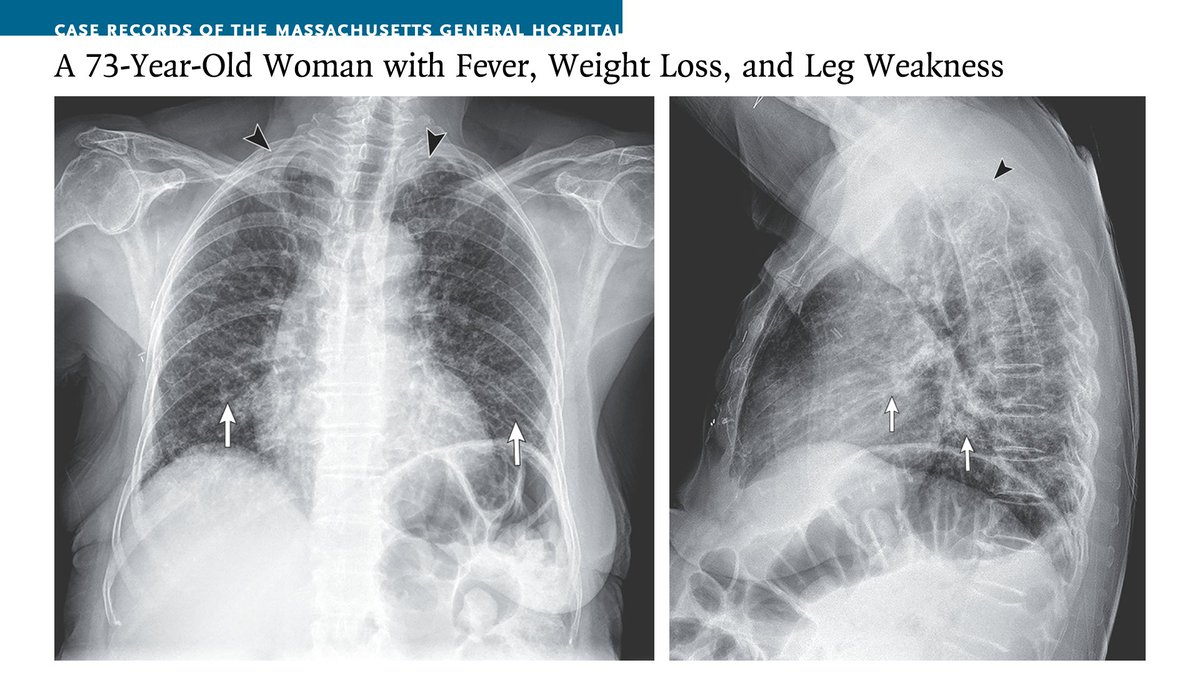
Case Record of the Massachusetts General Hospital (@MassGeneralNews): A 73-year-old woman with a history of ductal carcinoma in situ of the right breast, which had been treated with mastectomy of the right breast and radiation therapy 20 years earlier, presented to the emergency department of the hospital with fever, weight loss, and weakness in the legs. 🔗 https://t.co/DIxumV4tvX
Chest radiography (seen in figure) showed biapical pleural and parenchymal scarring, findings that most likely reflect previous tuberculosis, as well as diffuse bilateral reticular opacities, without focal airspace consolidation, lymphadenopathy, or pleural effusion. Evidence of a previous mastectomy of the right breast was present, with surgical clips seen in the right axilla.
Read the full case details in “A 73-Year-Old Woman with Fever, Weight Loss, and Leg Weakness,” a Case Record of the Massachusetts General Hospital, by M.P. Janjigian et al.: https://t.co/DIxumV4tvX
One X-ray view gives you one angle. A second, perpendicular view can help localise a finding and reveal what’s hidden on the first.
AP and lateral views are often used together, but the right views depend on the body part and clinical question. #Radiology#MedEd
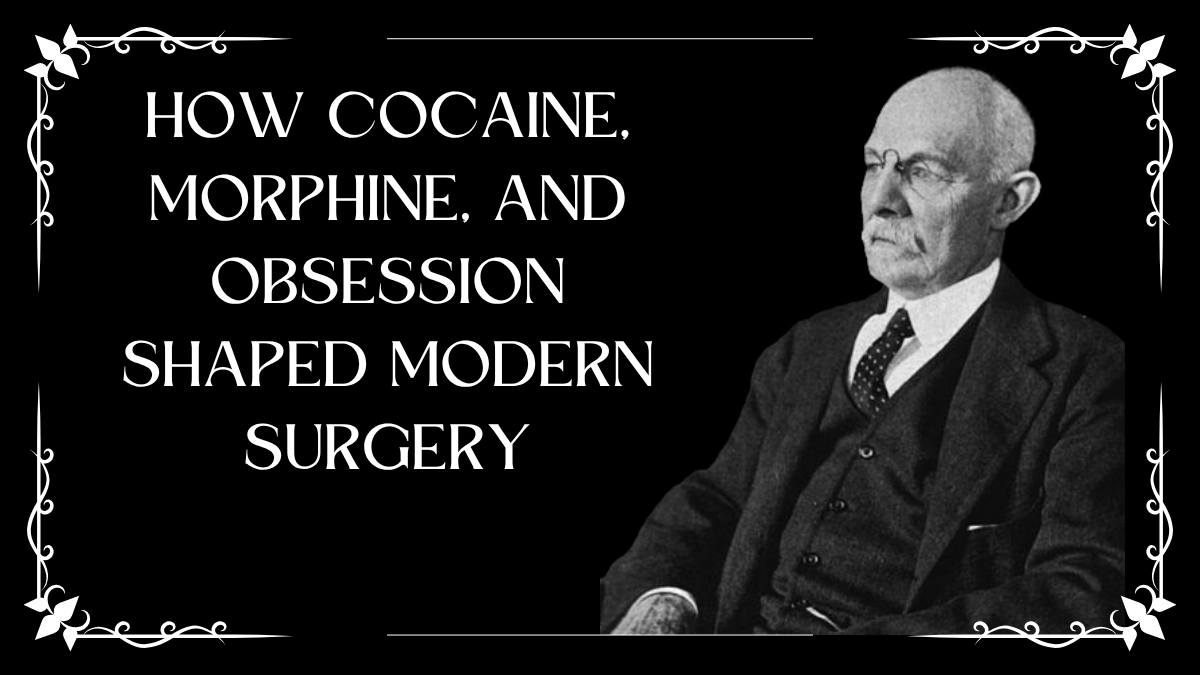
William Halsted transformed surgery with precision, sterility, and discipline — but he was also addicted to the very drugs he helped pioneer.
A story of genius, obsession, and the price of progress.
https://t.co/z6YIUr28Q4