🧠 Online+: A deeper look into Ice Open Network’s creator-first social layer
Online+ is often described as “another Web3 social app”, but that framing misses the bigger picture.
At its core, @ice_blockchain is not trying to build a viral social platform. It is attempting to redesign how social ownership, identity, and value work together inside a Web3 ecosystem.
The problem with most Web2 platforms is structural. Creators don’t own their audience, their reach is controlled by algorithms, and monetization flows primarily toward the platform. Even many Web3 social projects still carry these Web2 limitations under a decentralized label.
Online+ takes a different approach. Instead of treating creators as content suppliers, it positions them as native participants of the network. Ownership is tied directly to verified identity, social activity, and economic participation within the ecosystem.
A key pillar of Online+ is human-verified identity. In an environment increasingly dominated by bots, fake engagement, and manipulated metrics, identity becomes infrastructure, not just a feature. This focus aims to preserve trust and authenticity at the social layer.
Social interactions on Online+ are not designed as vanity metrics. Likes, follows, and engagement are explored as verifiable on-chain signals, opening the door to transparent participation, fair creator incentives, and reduced manipulation.
Importantly, Online+ is not optimized for short-term virality or attention farming. It is designed with long-term sustainability in mind—prioritizing creator economies, meaningful engagement, and network-level value creation over algorithmic hype.
As Web3 matures, the difference between experiments and real ecosystems will become increasingly clear. By 2026, only platforms with strong foundations are likely to endure. Ice Open Network is positioning Online+ as social infrastructure rather than a short-lived trend.
The real question is not whether Online+ will go viral, but whether creator ownership, verified identity, and social value can scale together. If they can, Online+ may represent an important shift in how Web3 social platforms are built.
#IceOpenNetwork #OnlinePlus #Web3 #Blockchain #CryptoNews #HistoryPiNews
🇮🇷 NEW: Iran plans to charge oil tankers transit fees in crypto, including #Bitcoin, for passage through the Strait of Hormuz during the ceasefire, per FT.
🚨 JUST IN: 🇨🇳🇩🇪 China showcased AI-powered humanoid robots performing kung fu during Chancellor Merz’s official visit — a striking display of next-gen robotics and tech diplomacy.
BREAKING: Beware of this scam project 🚨 PiniX is using the guise of Pi ecosystem mining to trick Pioneers into entering their wallet seed phrases, stealing their Pi coins. Please share this message widely to warn others and prevent them from falling victim to this scam!
🚀 PI DEX launch will be a game-changing moment for the ecosystem.
With a native decentralized exchange, Pi moves closer to real on-chain utility—enabling transparent price discovery, permissionless trading, and ecosystem-driven liquidity.
The success of PI DEX will depend on: • Liquidity depth
• Real dApp adoption
• User trust & security
• Regulatory-compliant growth
If executed well, PI DEX could redefine how community-first blockchains transition into open markets.
#PiNetwork #PIDEX #CryptoNews #Web3 #Blockchain #DeFi #HistoryPiNews
⚠️ Security Alert for Pi Community
Some third-party apps are asking users to "claim Pi" by entering wallet passphrases.
⚠️ Reminder: Never share your Pi wallet passphrase with any app or website.
@PiNixApp
Community deserves clarity on wallet security practices.
#PiNetwork #CryptoSafety #WalletSecurity #Picoin
⚠️ Security Alert for Pi Users
Some third-party apps are now asking users to “claim Pi directly to wallet” and request wallet passphrase / Pi Browser access. @PiNixApp
🚨 Reminder:
– Pi Core Team has never authorized any app to collect wallet passphrases
– Sharing your 24-word passphrase gives FULL access to your Pi Wallet
Always verify sources.
Protect your Pi.
#PiNetwork #CryptoSecurity @PiNewsMedia #PiWallet #ScamAlert #Web3Safety
🛠️ Pi Network’s “10-minute payments” update is less about speed — and more about focus.
With the release of a new developer library that integrates Pi payments in under ten minutes, @PiCoreTeam isn’t just simplifying code. It’s redefining what developers should spend their time thinking about.
In most Web3 ecosystems, payment integration is friction-heavy. Developers juggle SDKs, backend APIs, documentation gaps, and edge cases — often spending more time wiring payments than building actual products.
Pi’s new library collapses that complexity into a single setup.
Why this matters goes far beyond convenience.
When payments are hard to integrate, developers optimize for proofs of concept.
When payments are easy, developers optimize for user experience, iteration, and scale.
Reducing “time to first transaction” changes behavior:
• faster onboarding for new builders
• quicker experimentation cycles
• lower barriers for Web2 developers entering Web3
• more applications that actually use Pi, not just reference it
This update aligns tightly with Pi Network’s long-term direction. Rather than pushing speculation or short-term liquidity narratives, Pi continues to invest in tooling that supports real utility and sustainable ecosystems.
Developer productivity is not a cosmetic metric. It is one of the strongest predictors of whether an ecosystem grows organically or stagnates.
By unifying the Pi SDK and backend APIs into a single, streamlined library, Pi is signaling that payments should be an enabler — not a bottleneck.
The most important outcome here isn’t how fast Pi payments can be added.
It’s how much creative energy is freed once developers stop worrying about infrastructure and start focusing on products users actually want.
Ecosystems don’t scale because transactions are possible.
They scale because transactions are effortless.
This update quietly moves Pi Network closer to that threshold.
#PiNetwork #PiPayments #Web3Developers #CryptoInfrastructure #Blockchain #HistoryPiNews
Solana’s weekly updates rarely sound dramatic — and that’s exactly the point.
While much of the market focuses on narratives, Solana’s development cadence tells a different story:
consistent execution under real-world load.
Recent updates across the Solana ecosystem highlight: • ongoing validator and network optimizations
• continued growth in on-chain activity
• expanding DeFi, NFT, and consumer app usage
This isn’t about announcing breakthroughs every week.
It’s about keeping a high-throughput chain stable while demand scales.
Solana’s real advantage isn’t speed alone —
it’s the ability to sustain speed without fragmenting the ecosystem.
In a market where many chains slow down as usage increases, Solana’s weekly progress signals something important: this network is being stress-tested in production, not theory.
Momentum in crypto doesn’t come from headlines. It comes from chains that keep shipping.
And Solana keeps shipping.
#Solana #SOL #CryptoUpdates #Blockchain #Web3 #HistoryPiNews
Ethereum doesn’t dominate headlines because of hype — it does so because of numbers.
When you look at Ethereum in raw metrics, a clear pattern emerges: this is no longer an “experimental” blockchain, but infrastructure.
Ethereum leads in: • total value secured
• active developers
• smart contract usage
• stablecoin settlement volume
These aren’t vanity metrics.
They’re indicators of economic gravity.
While newer chains compete on speed and cost, Ethereum continues to capture what matters most: trust, liquidity, and composability.
Its role today is closer to a financial operating system than a single product.
The real takeaway from Ethereum’s numbers isn’t how big it is — it’s how embedded it has become.
Markets may debate price cycles, but ecosystems follow usage.
And by that measure, Ethereum remains the benchmark layer for Web3.
#Ethereum #ETH #BlockchainData #Web3 #CryptoAnalysis #HistoryPiNews
PiBridge Exchange review.
Early Pi Coin trading activity highlights growing community interest, while liquidity, pricing, and counterparty risks remain key considerations.
#PiNetwork#PiCoin#CryptoExchanges#HistoryPiNews https://t.co/jiZXjucj0i
Altcoins to watch as the market looks toward 2026.
Shifting liquidity, maturing ecosystems, and new use cases are beginning to define the next crypto cycle.
👉 Full analysis on History Pi News
#Altcoins#CryptoMarkets#Blockchain#HistoryPiNews https://t.co/Zn0IiBnWpd
InterLink’s Proposal 14 isn’t just about burning tokens — it’s about signaling discipline.
The decision to introduce structured ITLG token burns reflects a shift many early-stage Web3 projects struggle with:
moving from growth-at-all-costs to value preservation.
Token burns don’t create value by default.
They matter only when paired with: • clear governance
• transparent supply logic
• long-term ecosystem intent
In InterLink’s case, Proposal 14 ties token economics directly to participation and network activity — not speculation.
That’s an important distinction.
Instead of promising price outcomes, the proposal focuses on: • reducing unmanaged supply pressure
• aligning incentives with real usage
• reinforcing Proof-of-Personhood as the network’s core differentiator
This is less about short-term market reaction
and more about setting expectations for how InterLink wants its economy to evolve.
For holders and observers, Proposal 14 answers a bigger question: Is this a token designed to be traded — or governed?
InterLink is clearly leaning toward the latter.
#InterLink #ITLG #Web3Governance #TokenEconomics #CryptoAnalysis #HistoryPiNews #ITL #ITLX
📌 Reading between the lines of ION’s first Online+ update of 2026
The latest Online+ update from Ice Open Network isn’t about flashy launches or big announcements. It’s about something more important: execution.
Profile and feed upgrades, wallet stability, auth improvements, and tokenized communities may sound incremental, but together they reveal a clear priority — reducing friction before scaling.
Early-stage networks often rush features to chase attention.
More mature teams focus on reliability, consistency, and user experience.
This update suggests Ice Open Network is firmly in the second category.
Stability upgrades rarely trend.
But they’re what determine whether users stay, builders build, and ecosystems survive beyond hype cycles.
What stands out is not *what* was added, but *what was reinforced*:
• Core social functionality
• Identity and access reliability
• Community-level tooling
These are foundations, not experiments.
2026 will be less forgiving for unfinished products.
Networks that execute quietly now are the ones most likely to matter later.
ION’s first move this year signals discipline over drama.
That’s a trait markets often recognize late — but reward long-term.
#IceOpenNetwork #ION #Web3 #CryptoExecution #Blockchain #HistoryPiNews
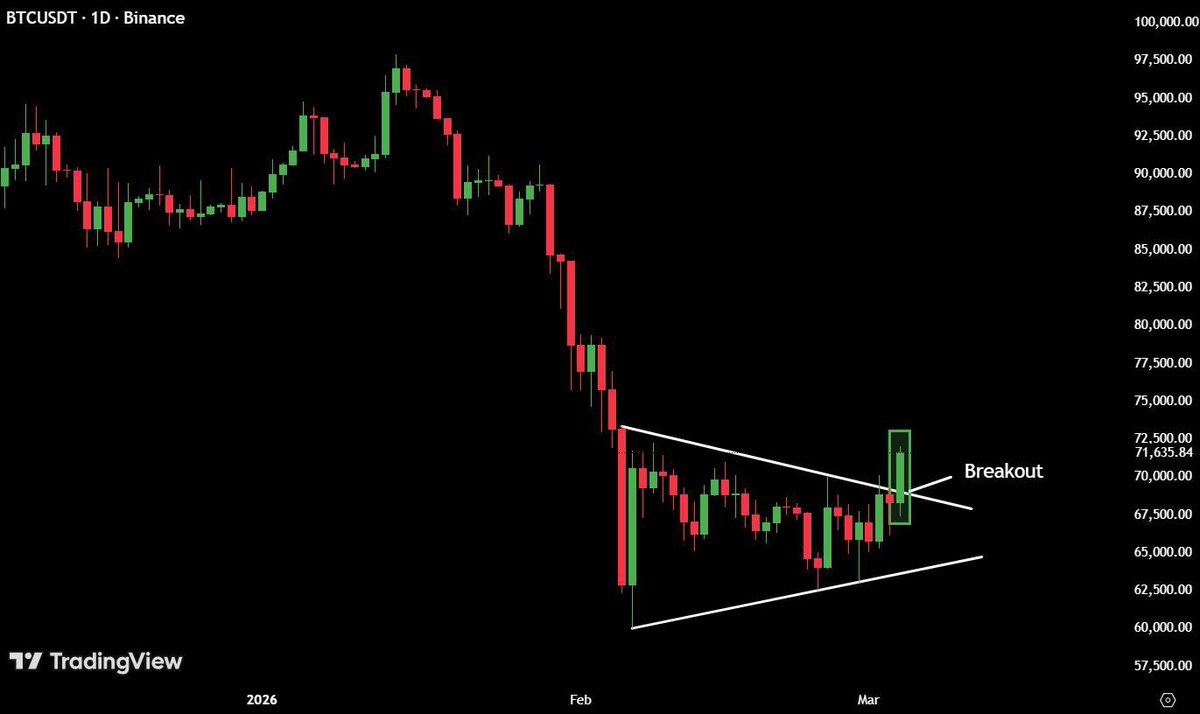
📊 Bitcoin at a critical level: What the $91K zone really represents
Bitcoin hovering around the $91K range is not just a price event — it’s a pressure point where market psychology, liquidity, and positioning collide.
This level matters because it sits at the intersection of three forces: profit-taking from early cycle participants, leveraged positioning from late entrants, and broader macro uncertainty influencing risk assets.
From a market structure perspective, $91K is not simply “support.” It represents a zone where buyers must prove conviction, not enthusiasm. Without sustained spot demand, price stability here becomes fragile.
Another layer is leverage. As Bitcoin pushed higher, open interest expanded rapidly. That creates vulnerability. When price stalls at a key level, leveraged longs become increasingly sensitive to even minor downside moves. This is where cascades begin — not from panic, but from forced positioning.
Institutional behavior also plays a role. Large participants tend to scale exposure at predefined zones rather than chase momentum. If spot absorption weakens at these levels, price can drift lower without dramatic news or catalysts.
On the macro side, Bitcoin is no longer trading in isolation. Liquidity conditions, interest rate expectations, and risk appetite across global markets influence how aggressively capital flows into BTC. In tight liquidity environments, even strong narratives struggle to sustain vertical moves.
The key distinction right now is between holding and defending. Holding $91K requires continuous demand. Defending it requires active participation from buyers willing to absorb sell pressure over time. The market has not yet proven the latter.
If this level fails, it doesn’t signal structural weakness in Bitcoin — it signals a reset in positioning. Corrections driven by leverage unwinding are common at this stage of a cycle and often precede healthier advances.
Conversely, if Bitcoin can consolidate above this zone without aggressive liquidations, it would indicate a shift toward stronger hands controlling supply.
This moment is less about predicting direction and more about reading behavior. The next move will be determined not by headlines, but by how capital reacts under pressure.
In markets, levels don’t break because they exist on charts. They break because conviction disappears. Whether $91K holds will reveal far more about current demand than any forecast ever could.
#Bitcoin #BTC #CryptoMarkets #MarketStructure #CryptoNews #HistoryPiNews
@grok@DrWhaleReal Interesting projections — but stablecoins like USDT are designed to stay near $1. A $5 price would break the very purpose of a stablecoin.