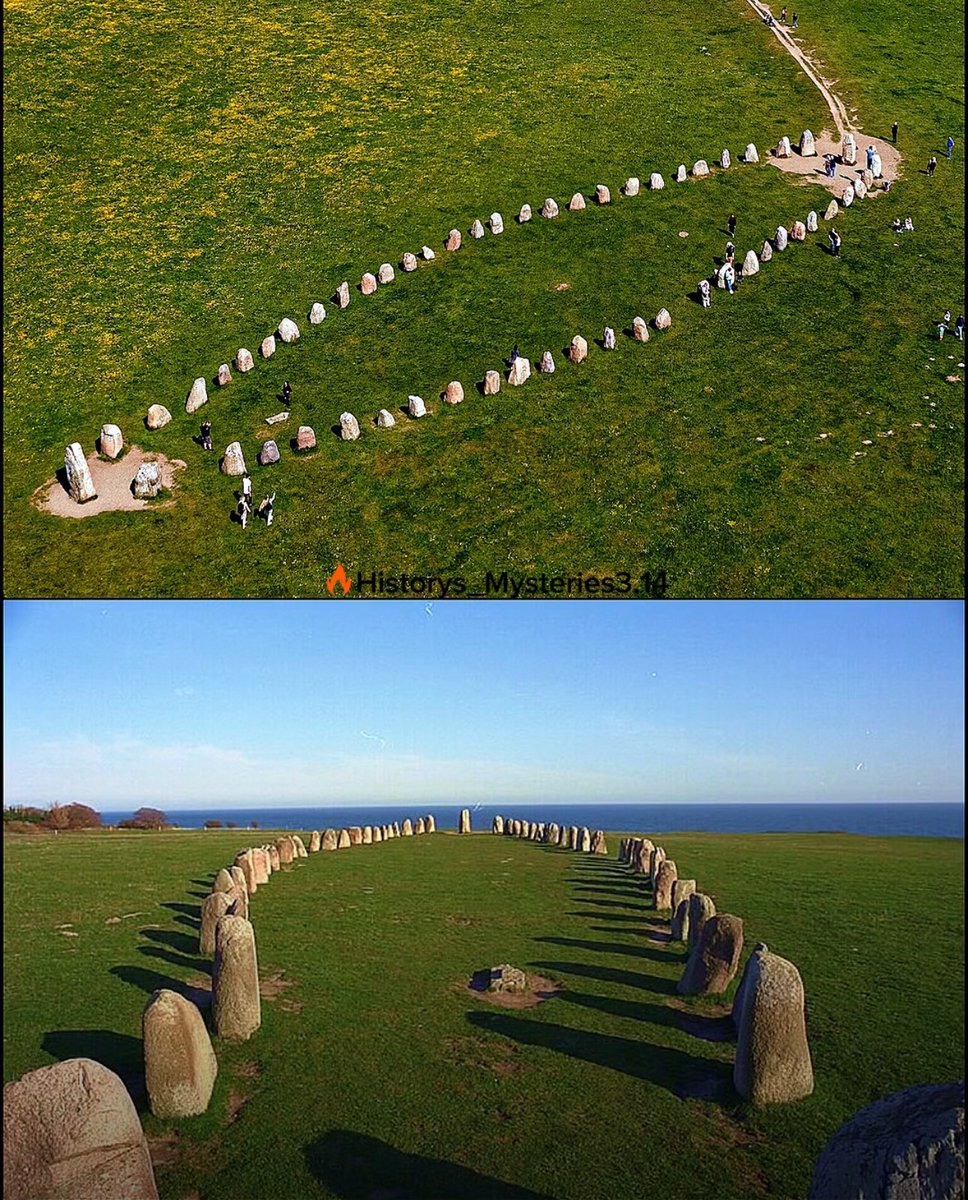
Near the Swedish village of Kaseberga, Ales Stenar is a formation of 59 large stones arranged in the shape of a ship, measuring over 220 feet in length. Each stone weighs up to 4,000 pounds (1,800 kilograms). The age of the site is uncertain, but estimates range from 1,000 to 2,500 years. Its purpose is also a topic of debate, with theories suggesting it may have been used as a solar calendar to track the movement of the sun, while others propose it was a burial site or a place for rituals.
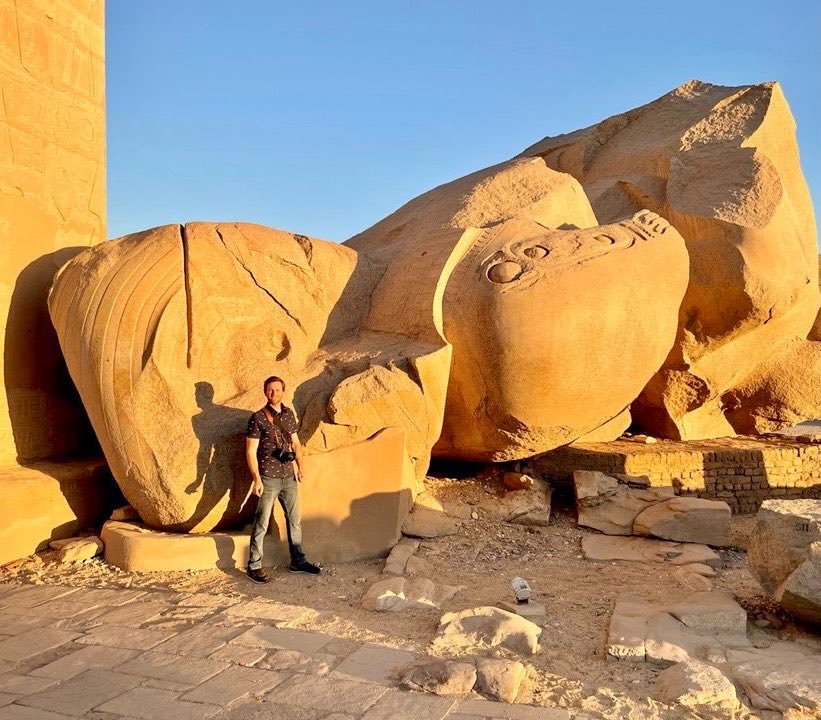
Crazy fact: One of the largest stones moved in history is the 1,000Tonne (2.2M lbs) Ramesseum Statue; which was inexplicably transported ~170miles to Luxor
YET, the Worlds largest ultra-haul truck has a MAX payload capacity of 496Tons - HALF the weight of this statue! 🤯
*And don’t say they simply moved it by boat down the Nile. Because the largest known Egyptian barges could only carry a fraction of that weight too :/
The mystery is real 💯
Meanwhile, you actually go to Egypt and the Egyptians will show you hieroglyphics literally depicting how the Pyramids were built, stone quarries where you can see where they excavated the materials and papyrus showing how they transported those materials. It’s only a mystery if you don’t listen to the Egyptians, which makes you an idiot.
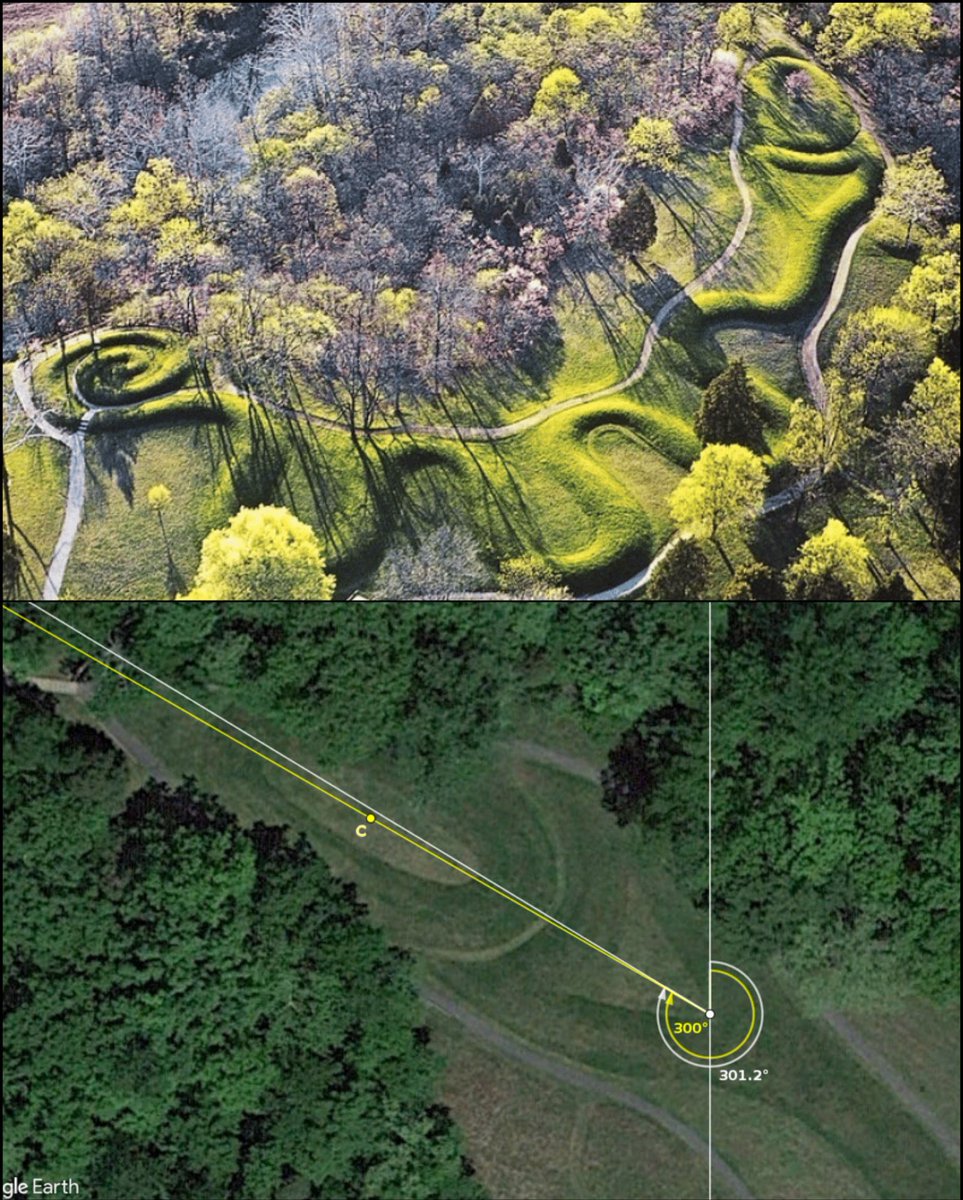
The Serpent Mound in Ohio, a 1,348-foot-long effigy, exhibits compelling evidence of celestial alignments, reflecting the astronomical sophistication of its creators. Likely constructed by the Adena (800 BC–100 AD) or Fort Ancient (1000–1650 AD) cultures, this National Historic Landmark in Peebles, Ohio, is one of the largest serpent effigies in the world, shaped on a meteorite impact crater plateau.
Its historical significance spans centuries, with early excavations by Frederic Putnam in the 1880s sparking modern interest. The mound’s head aligns with the summer solstice sunset, a precise orientation noted in historical markers and corroborated by Clark and Marjorie Hardman in 1987, suggesting its role as a seasonal calendar.
The three main curves of the serpent’s body may correspond with the summer solstice sunrise, equinox sunrise, and winter solstice sunrise, or lunar events like the Minimum Northern and Maximum Southern Moonrises, per William F. Romain’s lunar alignment studies. Despite minor alignment deviations, such as a 1.2° solstice sunset offset, these solar and lunar connections highlight its function as a celestial observatory.
The mound’s sacred placement and cosmic ties underscore its role in linking earthly and celestial cycles for practical and spiritual purposes.
🚨Possible Noah’s Ark Discovery in Türkiye?
Ground-penetrating radar scans at the Durupınar Formation—just 29 km south of Mount Ararat—have revealed angular, layered structures up to 6 meters deep that match the biblical description of Noah’s Ark.
A California-based team, Noah’s Ark Scan, led by independent researcher Andrew Jones, claims to have found a tunnel 13 meters long, three distinct layers (possibly decks), and signs of decayed organic material—all inside a boat-shaped formation.
Controlled excavations are planned in collaboration with Turkish universities. While some experts say it's a natural feature, others believe these are the most compelling findings yet in the centuries-old Ark search.
Could this be the real thing? Stay tuned.
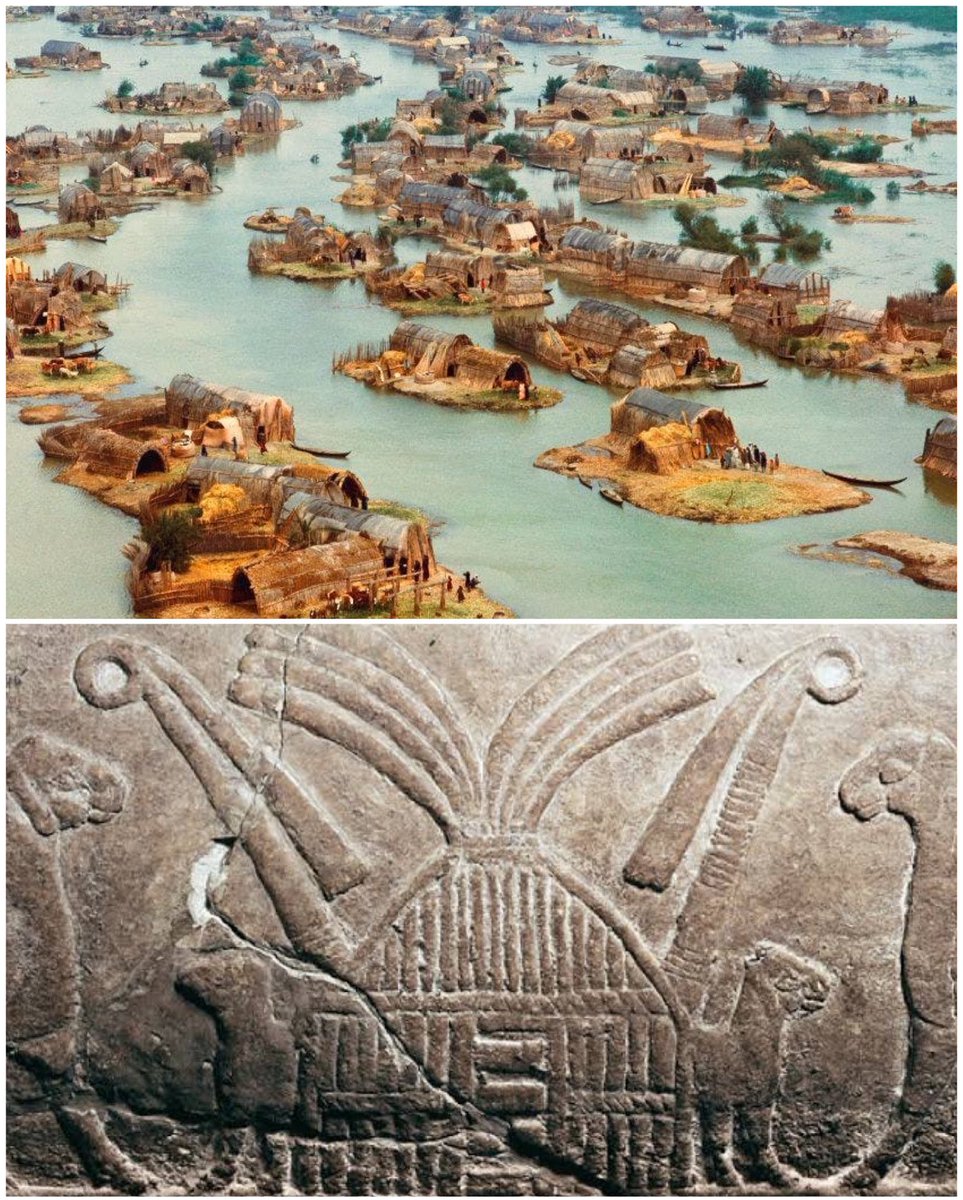
The mudhif, a traditional reed structure of the Ma’dan (Marsh Arabs) in southern Iraq’s Mesopotamian Marshes, represents a 5,000-year-old architectural tradition. Constructed entirely from locally sourced reeds (Phragmites australis) and qasab, these parabolic, arch-supported buildings serve as communal guesthouses for ceremonies, hospitality, and governance. Built without nails or timber, mudhifs are erected on floating tuhul platforms of compacted mud and rushes, showcasing ecological adaptation. Their lattice walls facilitate ventilation, suiting the humid marsh climate, while their portability accommodates fluctuating water levels. Maintained by village sheikhs, mudhifs embody Ma’dan social values, with odd-numbered pillars ensuring symmetrical guest arrangements, reinforcing hierarchical balance.
Historically documented in Uruk carvings (c. 3,300 BC), mudhifs faced near obliteration during Saddam Hussein’s 1990s marsh drainage, reducing the Ma’dan population from ~500,000 (1950s) to ~1,600 (2000). Post-2003 reflooding efforts, aided by organizations like Nature Iraq, revived construction, blending traditional techniques with modern materials like adobe for durability. Mudhifs have been recreated globally, including in Philadelphia (2021) and Houston (2023), to preserve cultural heritage. Despite partial marsh recovery (~50% of 1970s extent), ongoing drought, pollution, and damming threaten this sustainable architectural praxis, underscoring the need for continued conservation.
In Leuven, Belgium, archaeologists discovered a remarkably preserved Roman wooden water pipe during construction at Blauwe Hoek, Brusselsestraat, for a student residence. The 20-30 meter (65-98 foot) pipeline, constructed from hollowed-out tree trunks, was unearthed 4 meters (13 feet) deep in waterlogged, marshy soil that prevented decay by limiting oxygen exposure.
Nearby, remnants of a potential pumping system highlight advanced Roman engineering. Likely from the 1st-3rd century AD, based on its position beneath Roman soil, the pipe suggests a wealthy settlement with sophisticated infrastructure. Tree ring analysis will determine its precise age. The site also yielded Roman pottery, roof tiles, and medieval artifacts like coins, cesspits, and pottery.
📸: The City of Leuven
The oldest known customer complaint was written in 1750 BC. The customer complains that the copper he purchased from the merchant Ea-Nasir was of the incorrect grade.
The complaint was written on a clay tablet in cuneiform script and addressed to the merchant Ea-Nasir. The customer, identified as Nanni, complained that the copper ingots he received were of inferior quality and did not meet the agreed-upon specifications. Additionally, Nanni expressed frustration over the poor treatment of his messenger and demanded that the matter be resolved.
This tablet was discovered in the ruins of Ur (modern-day southern Iraq).
In 2015, a routine construction project in Borujerd, Iran, led to the unexpected discovery of an ancient aqueduct system hidden beneath the remnants of a historic castle. This sophisticated network of clay pipes and pottery vessels showcased a remarkably advanced understanding of water management. The system is believed to date back to the Sassanian period (224-651 AD), though some experts suggest it could be even older. The materials and techniques used in the aqueduct indicate a high level of engineering skill, challenging our perceptions of ancient technology.
This significant find, with its advanced design for water purification and distribution, suggests a civilization with exceptional technical abilities. Ongoing research aims to uncover the precise origins of the aqueduct, adding to the intrigue and raising questions about the people who built it and what other secrets might lie beneath the surface.
📸: MEHR News Agency
In 2023, researchers applied AI to probe Raphael’s Madonna della Rosa (1518–1520), a painting long questioned for its authenticity among art scholars. A custom algorithm, trained on authenticated Raphael works with 98% accuracy, scrutinized brushstrokes, color palettes, and shading details. Built on Microsoft’s ResNet50 and a Support Vector Machine, it revealed St Joseph’s face likely wasn’t painted by Raphael, unlike the Madonna, Child, and St John, which matched his style.
This finding echoes 19th-century critiques noting St Joseph’s face as less refined, possibly painted by Giulio Romano, Raphael’s pupil, though unconfirmed. The innovative face-specific AI analysis, diverging from whole-painting studies, underscores its value in assisting art historians to unravel enigmatic authorship mysteries in classic masterpieces, complementing traditional authentication methods like provenance and pigment analysis.
In early February, two hikers in the Krkonose Mountains of the Czech Republic made a remarkable discovery: a hidden treasure valued at up to $680,000.
They first spotted a shiny object in a stone wall, revealing an aluminum can containing 598 gold coins, the most recent from 1921, wrapped in black fabric and worth around 7.5 million Czech Koruna ($340,000). A few feet away, they found a metal box with gold artifacts, including 16 snuffboxes, 10 bracelets, a comb, a chain with a small key, and a powder compact, potentially adding another $340,000 if solid gold.
Unlike the region’s typical Bronze Age or medieval finds, this treasure was likely buried within the last century, making it a rare modern hoard. The Museum of Eastern Bohemia, now studying the artifacts, is leading efforts to unravel the mystery of who hid the treasure and why, fueling excitement among historians and amateur sleuths.
📸: Museum of Eastern Bohemia
The Hohle Fels water bird is a small, 40,000-year-old figurine carved from mammoth ivory, discovered in fragments between 2001 and 2002 in the Hohle Fels cave in southwestern Germany’s Swabian Jura. Measuring about 1.85 inches (4.7 cm) long, it’s considered the oldest known depiction of a bird. The sculpture, attributed to the Aurignacian culture (43,000–28,000 years ago), features intricate details like a conical beak, etched lines for feathers, short legs, and a flat tail, suggesting it represents a waterfowl—possibly a diver, cormorant, or duck—based on its extended neck and posture.
Found by a team led by archaeologist Nicholas Conard, the figurine was part of a trove of Ice Age art, including the Venus of Hohle Fels and a human-lion hybrid figure, pointing to the Upper Danube as a hub of early human creativity. The bird’s purpose is unclear; while some suggest it could relate to shamanistic rituals or “hunting magic,” Conard argues it likely reflects admiration for animals rather than practical use, as water birds weren’t typical prey. The craftsmanship, achieved with flint tools, highlights the observational skill and symbolic thinking of early Homo sapiens during the Upper Paleolithic.
The figurine is housed in the Urgeschichtliches Museum in Blaubeuren, Germany, and is part of the UNESCO World Heritage Site “Caves and Ice Age Art in the Swabian Jura.” Its discovery underscores a cultural explosion around 40,000 years ago, marked by figurative art, music (evidenced by bone flutes from the same site), and symbolic expression.
The Ouse Valley Viaduct, often called the Balcombe Viaduct, is a stunning railway bridge in West Sussex, England, stretching over the River Ouse on the London-Brighton line. Built between 1839 and 1841, this masterpiece by engineer John Urpeth Rastrick and architect David Mocatta spans 1,475 feet with 37 graceful arches, soaring up to 96 feet high.
Constructed with around 11 million red bricks and accented with limestone, its clever jack arch design uses less material while creating a mesmerizing optical illusion of endless arches when viewed from below. This blend of engineering and beauty makes it one of Britain’s most admired viaducts, still carrying over 100 trains daily.
In June 1969, Jim Morrison, The Doors’ iconic frontman, visited Teotihuacan’s Pyramid of the Sun, part of the ancient Mesoamerican city near Mexico City. While in Mexico for The Doors’ performances, Morrison explored the ruins, standing beside the carved stone serpent deity, Quetzalcoatl.
Known for his fascination with mysticism and ancient cultures, he appeared deep in thought—a stark contrast to his wild stage persona. Teotihuacan’s towering pyramids and spiritual aura captivated Morrison, offering a quiet escape from fame, legal troubles, and his intense music career.
This visit reflected his curiosity about history, shamanism, and altered states of consciousness, themes woven into The Doors’ songs like “The End.” Photos capture a contemplative Morrison, immersed in the site’s ancient energy. Though its direct influence on his work is unclear, the trip was a poignant pause in his turbulent life.
NASA’s astronomical models indicate a lunar eclipse occurred over Jerusalem on April 3, 33 AD, possibly connecting to historical accounts of Jesus’s crucifixion. These models use orbital mechanics and historical astronomical data to calculate the positions of the Earth, Moon, and Sun, showing an eclipse was visible shortly after sunset, with the moon appearing reddish due to sunlight scattering through Earth’s atmosphere—a “blood moon” effect. The Bible’s Matthew 27:45 describes an unusual darkness from noon to three in the afternoon during the crucifixion, while Acts 2:20 mentions the sun darkening and the moon turning blood-red. An ancient text, the Report of Pontius Pilate from the New Testament apocrypha, also notes a blood-like moon, darkened sun, and visible stars, with people lighting lamps worldwide.
Oxford researchers Colin Humphreys and Waddington used NASA’s eclipse data to suggest April 3, 33 AD, as a plausible date for the crucifixion, linking these vivid descriptions to the celestial event. Christians mark the crucifixion during Holy Week, tied to Passover and the lunar calendar, with Easter set by the first full moon after the start of spring. NASA’s findings provide a fascinating scientific lens, suggesting the dramatic skies in ancient texts may reflect an actual astronomical event, inviting a rare intersection of potential agreement between faith and science.
Located on a hill in Tuscany, a sword embedded in stone marks the legacy of Galgano Guidotti, a 12th-century knight who abandoned wealth and violence after visions of the Archangel Michael. In 1180, he retreated to Monte Siepi, where legend says he plunged his sword into solid rock to symbolize his devotion. To his surprise, the blade sank effortlessly.
Guidotti died a year later and was canonized in 1185, leading to the construction of the Montesiepi Chapel around the sword. Skeptics long dismissed the story as a hoax, but modern tests confirmed the sword dates to the 12th century, matching Guidotti’s timeline.
Nearby, skeletal hands on display add another layer of intrigue. According to legend, they belonged to a thief who attempted to steal the sword and was attacked by a pack of wolves before they could succeed, and only the hands survived.
In 1900, soldiers on horseback posed before the ‘Grizzly Giant’ Sequoia in Yosemite, a tree that remains standing today.
This iconic tree, located in the Mariposa Grove of Yosemite National Park, is one of the largest giant sequoias, standing approximately 209 feet tall with a diameter of over 30 feet at its base. Estimated to be over 2,000 years old, the ‘Grizzly Giant’ is a testament to the resilience of Sequoiadendron giganteum, a species known for its thick, fire-resistant bark and ability to thrive in the Sierra Nevada’s unique climate.
In 1900, U.S. Army cavalry troops, who patrolled Yosemite to protect its natural wonders before the National Park Service was established in 1916, posed in front of this massive tree. These soldiers, known as Buffalo Soldiers, played a key role in safeguarding the park from poaching and illegal logging during the late 19th and early 20th centuries, contributing to the preservation of treasures like the ‘Grizzly Giant’ for future generations.