Amazing startups by Gen-Z are popping up in India from every corner of the country. Here's one from Assam that's shipping a beautifully designed solar chargeable portable smart power unit. Usable for events, defense, health etc. They already have Assam govt as a customer.
You may think it's simple, but India doesn't have companies making many such simple things we need. India needs a lot more of these companies. Companies that just don't simply buy stuff from abroad and rebrand, but make at least a good portion of it in India and invest in R&D doing that.
This news never made it in India. India's ISRO developed (partly) and launched NASA-ISRO NISAR satellite found something very interesting in Antarctica 6 days ago.
I'm not getting into the details of what was discovered. The point of this post is something more important:
@isro has 8M followers. It's account is dormant since July 18th. Isn't this a huge waste of information space?
> If we are so poor in our own narrative,
> If even orgs like ISRO can't run an active social media (which many youngsters will do for free if given an internship),
> If GoI isn't pushing India's achievements to reach the Gen-Z continuously,
> If Indian media only cover the issues in India, not elsewhere, and not the good stuff happening,
Then this information and communication gap is captured by adversaries and hostile actors, using our issues like they don't happen elsewhere, to program our own young against the govt, our institutions like ISRO, and our entire country.
Because these young people do not have a past barometer to judge events. They have never seen or experienced India's past. They do not have much understanding of the world.
They simply believe India is the worst place if told like that pointing to issues that happen, easily believe everything bad only happens in India, and whatever bad happens is only because of the Govt.
This is why they are being used for regime change by the DS world over nowadays easily manipulating them using Meta platforms, Reddit, and Telegram.
And a country like India is letting them get used by creating an information and communication vacuum which can be filled by adversaries.
What I am saying is whatever communication from top levels, information on reforms, and narrative about a minister's achievements that came now, after things got bad, could have come before and on a continuous basis.
So @Meta@instagram and @facebook are randomly and repeatedly showing posts of random people whom I have never followed, don’t even know the existence of, as much as 15-20 times a day in my feed. There is one thing common in these posts, ALL of them are supporting the cockroaches. Even if you press ‘not interested’, it doesn’t matter. The feed is flooded with these posts. Meanwhile, the govt is happy with the fed news that @narendramodi’s video has been seen 3.3 M times! But what about this blatant propaganda that is repeatedly reaching the feeds of millions of impressionable minds?
India should ban social media for young children too.
I believe young children should read physical books, play in the dirt under the sun and stay away from social media!
Nothing is more important than the welfare and future of our youth!
We have decided to set up fast-track courts to ensure swift and stringent punishment for those involved in paper leaks. Have directed the concerned authorities and officials to take all necessary steps in this regard. This continues our series of steps for safeguarding the interests of students.
Those who try to harm the future of our youth will not be spared.
देश के युवाओं का हित और उनका भविष्य हमारी सर्वोच्च प्राथमिकता है।
पेपर लीक के सभी मामलों में दोषियों को जल्द से जल्द कठोर दंड देने के लिए, केस के त्वरित निस्तारण के लिए फास्ट ट्रैक कोर्ट्स का गठन किया जाएगा। इस संबंध में निर्देश दे दिए गए हैं कि संबंधित विभाग आवश्यक कार्रवाई सुनिश्चित करें।
विद्यार्थियों के हितों को सुरक्षित करने के लिए, सरकार द्वारा लिए जा रहे निर्णयों की श्रृंखला में ये एक महत्वपूर्ण कदम है।
युवाओं के भविष्य के साथ खिलवाड़ करने वाले किसी भी व्यक्ति को बख्शा नहीं जाएगा।
Dam? Protest.
Data Centre? Protest.
Factory? Protest.
Airport? Protest.
Roads? Protest.
What The Heck Is A Government Supposed To Do Then, Sing Songs & Slogans For 5 Years?
Truth: Sonam Wangchuk had made just one prototype of a heated tent, just one!
He didn't provide heated tents to our army.
Be informed: don't be a Chinese cockroach!
International media in the last 30 days: "India Hunger strike", "protests in India", "Floods in India."
🇮🇳India in the last 30 days:
July 19, 2026: Indian Gen-Z team wins 4 gold medals (top rank) at International Chemistry Olympiad and medals at the International Biology Olympiad.
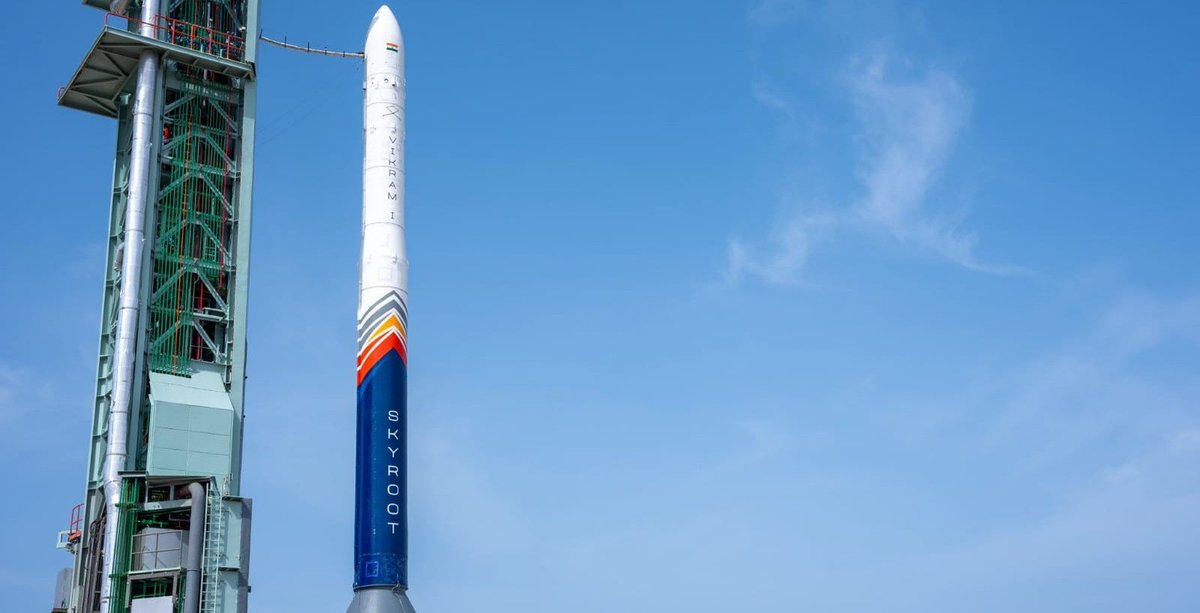
July 18, 2026: Young Indians working at Skyroot Aerospace successfully launch Vikram-1, India’s first privately developed orbital-class rocket, from Sriharikota, placing payloads into Low Earth Orbit.
July 17, 2026: PM Modi flags off India’s first indigenous hydrogen-powered passenger train (10-coach set) from Jind station, Haryana, on the Jind-Sonipat route as an inaugural service.
July 14, 2026: DRDO completes successful military field trials of an indigenous scalable fiber-based Quantum Key Distribution (QKD) system for secure strategic communications.
July 13, 2026: Lucknow-Kanpur Expressway (63 km), India’s first barrier-free expressway with satellite-based tolling, opens to traffic.
July 12, 2026: Young Indian team wins 5 gold medals at the 56th International Physics Olympiad (IPhO 2026) in Colombia, securing joint world #1 rank.
July 11, 2026: RM Rajnath commissions INS Mahendragiri, the sixth Project 17A stealth frigate, in Visakhapatnam (~75% indigenous content).
Early–mid July 2026: Vimag Labs (Bengaluru) secures its 5th Indian patent for the Virtual Magnet Synchronous Motor (VMSM), a software-defined rare-earth-free electric motor platform.
Early July 2026: ISRO announces plans for a new Satellite Earth Station campus near Ledo in Assam to strengthen space communication in the Northeast.
Early July 2026: IIT Gandhinagar team wins a grant for developing indigenous liquid cooling plates for AI data centres, EVs, and high-performance electronics.
June 26, 2026: Nuclear heat-based hydrogen production facility (copper-chlorine thermochemical cycle) commissioned at Kalpakkam using Fast Breeder Reactor process heat.
June 24, 2026: ISRO successfully conducts hot test of semi-cryogenic engine power head at 175 tonnes thrust level.
June 24, 2026: RDSO (with ARAI) successfully conducts full-scale crashworthiness testing of LHB coaches for enhanced passenger safety.
June 21, 2026: PM Modi commissions three indigenously built warships in Kolkata: INS Dunagiri (Project 17A stealth frigate), INS Sanshodhak (hydrographic survey vessel), and INS Agray (ASW shallow water craft).
June 15, 2026: DRDO successfully flight-tests the indigenous Long Range Land Attack Cruise Missile (LRLACM) from Odisha; all objectives met.
June 10–11, 2026: DRDO conducts successful Phase-2 Ballistic Missile Defence (BMD) trials and anti-ship missile tests, demonstrating capabilities against long-range ballistic threats including ICBM-class.
Mid-June 2026: India’s defence production reaches a record ₹1.78 lakh crore in FY 2025-26.
Mid-June 2026: Maiden flight of the indigenous C-295 military transport aircraft highlighted as a major self-reliance milestone in aviation (with 40 aircraft under production in India).
June 13, 2026: First batch of women cadets trained at NDA commissioned into the defence forces. Marking the start of an women empowered era in defence.
VImag Labs blew my mind.
They've built what they call a Virtual Magnet Synchronous Motor (VMSM).
Traditional permanent magnet motors rely on rare earth magnets inside the rotor. These magnets are imported and expensive.
Instead of using permanent magnets, VImag's rotor contains windings that are electronically excited and precisely controlled through software. As current is induced and managed in the rotor, it behaves like a "virtual magnet" allowing the rotating magnetic field from the stator to drive the motor just like a conventional permanent magnet synchronous motor.
This means that the motor delivers the benefits of a permanent magnet design without actually needing rare earth magnets.
Their current prototype is rated for 6 kW continuous power, with a peak output of 10 kW and 48 to 58 Nm of torque. The initial target market is EVs (everything from two wheelers, three wheelers, buses, and trucks). They may also use them in compressors and ceiling fans.
The upsides are:
1. Lower cost.
2. Lower weight.
3. Smaller size.
4. Ability to control magnetic field.
5. Improved efficiency over PMSM.
6. Indigenous manufacturing and supply chain resilience.
The company has been working on this tech since 2020.
🚨 Bengaluru-based Vimag Labs has been granted a fifth patent for their magnet-free electric motor.
This is fully indigenous and uses just copper, steel and standard electronics.
I taught JEE physics for years. That paper breaks strong kids in three hours.
This exam is five hours of theory and five hours of lab work, and these five did close to perfect scores on it.
Let me tell you what actually happened.
The International Physics Olympiad is the world championship of school physics. It was the 56th edition. Held in Bucaramanga, Colombia, from July 5 to 12.
381 students. More than 85 countries. Every one of them the best physics student their country could find.
India sent five kids.
All five came back with gold.
Their names are Kanishk Jain from Pune. Riddhesh Anant Bendale from Indore. Rishit Garg from Dwarka in Delhi. Shresth Suraiya from Mumbai. Svarit Joshi from Ahmedabad.
We know a hundred cricketers by their nickname and not one of these boys. :)
That clean sweep put India at joint World Number One. Tied with China, Russia, Kazakhstan, South Korea and Taiwan.
Those are countries that pour serious money and national pride into science education. We are standing level with them.
Now here is what the exam actually was.
Two papers. Each five hours long.
The theory paper had three problems. One on the thermodynamics of paramagnetic cooling. One on the photoionisation of ozone. One on the dynamics of electron positron pairs.
The experimental paper was another five hours in a lab, working through heat transfer and thermodynamic processes in fluids.
That means you get given equipment you have never seen, and you have to design your own experiment, take your own readings, handle the errors, and reach a real answer.
Not multiple choice. No shortcuts. No pattern recognition. You either understand physics or you sit there for five hours.
HBCSE says the Indian students were near perfect on theory and excellent on the practical too.
Now, this was India's 27th appearance at the IPhO.
Across all those years, about 44 percent of Indian students have won gold, 41 percent silver, 10 percent bronze.
In the last ten years, every single Indian student has come home with a medal. 62 percent gold, 38 percent silver.
Not one kid has gone and come back empty handed in a decade.
Five golds in one year has happened only twice. This year, and in 2018.
So who built this.
The programme is run by HBCSE, the Homi Bhabha Centre for Science Education. It sits under TIFR, which sits under the Department of Atomic Energy.
They run the whole funnel. A national exam, then a national olympiad, then a brutal selection and training camp, and out of everyone in the country, five kids get on a plane.
The team was led by Professor Anwesh Mazumdar of HBCSE-TIFR and Dr Leena Joshi from St Xavier's College, Mumbai.
The scientific observers were Professor Ananda Dasgupta from IISER Kolkata and Nisha Kelkar from Gogate-Joglekar College in Ratnagiri.
Yes. Ratnagiri. A college in a small coastal town in Maharashtra.
This is public education doing something the private coaching industry could never do on its own.
The coaching industry is very good at one thing. Teaching you to solve a known problem fast.
That is what JEE and NEET reward, and I say that with love because I was part of that world.
But an olympiad paper does not have a known type. There is no shortcut chapter. There is no formula sheet that saves you. You have to sit with a problem you have never seen and think.
That is a completely different muscle. And a government funded centre has been quietly building it in Indian teenagers for 27 years.
So yes, be proud. Loudly.
HBCSE also shared that around 64 percent of India's olympiad medallists go on to do a PhD.
But only about 32 percent of medallists end up settling in India.
I do not say that to spoil the moment. These kids owe the country nothing. They earned every option they have.
But it should tell us something. We are excellent at finding this talent. We are excellent at training it. We are still not great at giving it somewhere worth staying.
Congratulations Kanishk, Riddhesh, Rishit, Shresth and Svarit. This is one of the best things an Indian did this year and most of the country will never hear about it.
BJP
Infrastructure made - 100
Infrastructure fail - 3
Success rate - 97%
Congress
Infrastructure made - 00
Infrastructure fail - 00
Success rate - 100%
RT because Godi Media won't tell you this
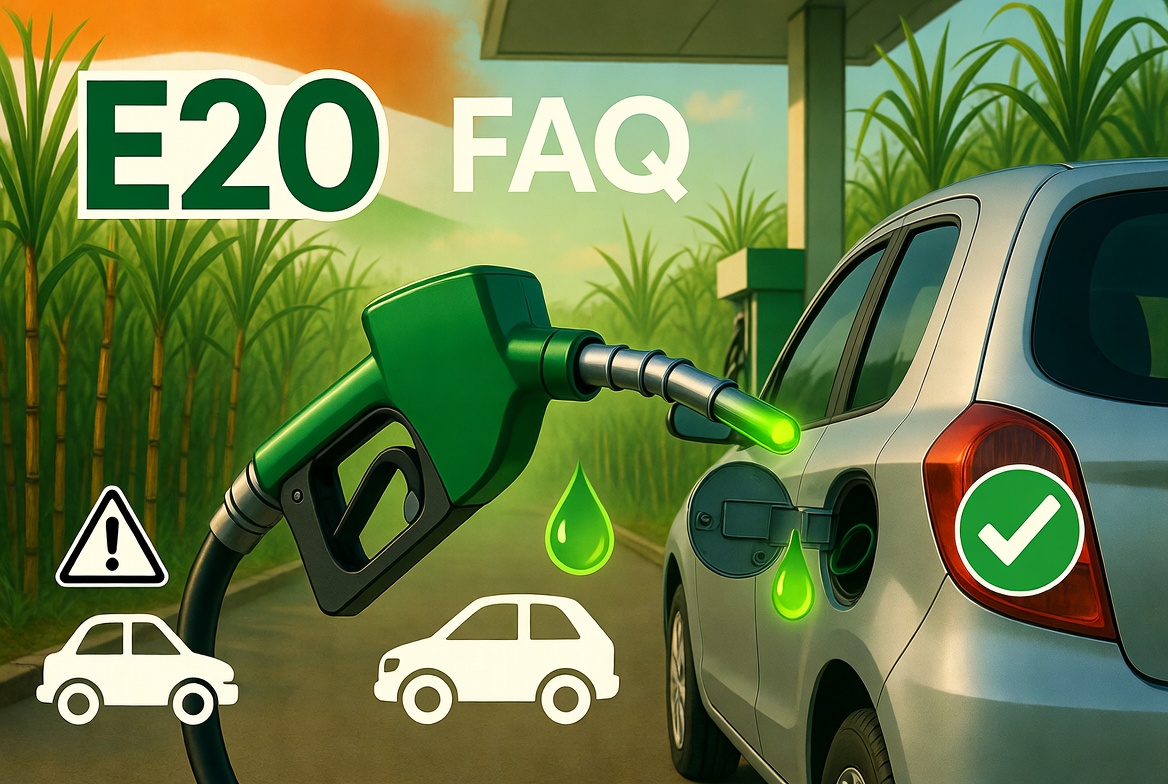
The govt shifted the country's baseline fuel to E20, but left the actual vehicle owners entirely in the dark. Since the Ministry should have circulated a clear, honest blueprint to prevent panic & confusion, let me do their job for them :))
E20 & Flex-Fuel Consumer FAQ:
Q1: Is my current car/bike compatible with E20 fuel?
Vehicles built AFTER April 2023: Yes. Your engine, fuel lines & gaskets are fully E20-compliant.
Vehicles built BEFORE April 2023: Materially Vulnerable. These engines were optimized for a maximum of 10% ethanol (E10). While the car will run on E20, the higher solvent properties of ethanol can accelerate the degradation of legacy rubber hoses, plastic seals & older aluminum fuel lines over time.
Nuance: Many manufacturers (e.g., Honda since 2009 models, Skoda post-2020 BS6) confirm their older vehicles are materially compatible with E20 & will not void warranties. Some pre-2023 cars may experience accelerated wear on rubber/plastic parts over time due to ethanol's solvent properties, but it is not an immediate failure for most. Long-term risks (corrosion, degradation) exist for legacy components.
Q2: Why exactly does my vehicle’s mileage drop with blended fuel?
This is a fixed law of thermodynamics, not a mechanical malfunction. Pure gasoline has a high energy density (~44 MJ/kg). Pure ethanol contains roughly 35% less thermal energy per unit volume (~27 MJ/kg).
Because the fuel blend has less net energy density, our engine must burn a higher volume of fuel to produce the exact same mechanical power. Expect a 3% to 10% drop in mileage on standard engines running E20.
Q3: Is there a way to upgrade my older vehicle for E20?
Yes. The automotive industry is addressing the compatibility gap for pre-2023 vehicles. Maruti Suzuki & some aftermarket suppliers have developed/are rolling out E20 retrofit/upgrade kits. These kits primarily replace vulnerable components like fuel lines, rubber seals, gaskets & certain hoses with ethanol-resistant materials.
Typically covers Maruti models up to 10-15 yrs old. Estimated cost: ₹4-6K for the kit (depending on the model) + labour charges at a service centre. Total cost is usually < ₹10K.
Q4: What is the difference b/w 1G & 2G Ethanol, & what are we using?
1G (First-Generation): Made directly from food crops & cash crops (sugarcane molasses, maize, & surplus rice). Currently, over 99% of the ethanol in India is 1G.
2G (Second-Generation): Made from agricultural waste & non-food biomass (like paddy straw/stubble).
Why it matters: 1G strains water resources. 2G is superior because it turns waste into fuel w/o impacting food security, but it is currently highly expensive & complex to scale commercially.
Q5: Is ethanol-blended petrol actually "better" for my car or the country?
For your car: It acts as a high-octane oxygenate. It helps the fuel burn more cleanly & uniformly, which reduces engine knocking & lowers toxic tailpipe emissions like CO.
For the country: It is a massive economic hedge. India imports ~85-90% of its crude oil. Blending saves billions in FX reserves & channels those payments back into the domestic agricultural economy.
Q6: Will using E20 fuel void my motor insurance policy?
No. The Ministry of Petroleum & Natural Gas & the govt have explicitly clarified that all motor insurance policies remain 100% valid. Insurers cannot reject standard accident/damage claims based on the % of ethanol flowing through your engine.
Q7: Minister Nitin Gadkari recently approved E85 & E100 regulations. Can I use these in my current car?
Absolutely not. The govt officially finalized the regulatory framework for E85 (85% ethanol) & E100 (100% pure ethanol).
These fuels are strictly designed for a new class of vehicles called Flex-Fuel Vehicles (FFVs). Mass-market manufacturers like Maruti Suzuki (with the WagonR FFV prototype), Toyota, MG, Hyundai & Hero MotoCorp are launching these vehicles specifically to handle high-concentration ethanol. Pumping E85/E100 into a regular, non-flex-fuel petrol car will cause immediate engine & fuel system failure.
Q8: What is "Phase Separation" & how do I prevent it?
Ethanol is hygroscopic, meaning it acts like a sponge for atmospheric moisture. If your vehicle sits completely idle for weeks, the ethanol will pull water into the tank. If the moisture level crosses 0.5%, the water & ethanol will separate from the petrol & settle as a sludge at the bottom of your tank.
Prevention: If you plan to leave your vehicle unused for an extended period, keep the tank as full as possible/ensure you top it up with fresh fuel regularly to keep the mixture stable.
Q9: Can a petrol pump deliberately manipulate the E20 blend? How do I check it on the spot?
You cannot use a standard Density Meter (lactometer equivalent) to catch extra ethanol. Because the density of petrol (~740 kg/m^3) & ethanol (~789 kg/m^3) are relatively close, an extra 10% of hidden ethanol gets easily masked within the daily allowable temperature-density variance chart. A density test only catches water/heavy kerosene adulteration.
To catch exact ethanol percentages, you must exploit ethanol’s chemical property of hygroscopy (its intense attraction to water). You can buy a cheap, graduated testing cylinder (often sold as an Ethogage).
How to execute the test: Pour exactly 10 ml of water into a 100 ml graduated cylinder. Fill the rest of the cylinder with the pump's petrol up to the 100 ml mark (giving you 90 ml of fuel). Shake it vigorously for 1 minute & let it settle for 3 minutes.
How to read the data: Because ethanol completely abandons petrol to bind with water, the fluid layer at the bottom will expand: If it is perfect E20 Petrol: The bottom line will rise exactly to 28 ml (10ml water + 18ml extracted ethanol). If the pump is cheating (Over-blending), the bottom line will shoot way past 28 ml. If it hits 35 ml, they are dumping illegal quantities of ethanol into your tank.
I have no affiliation with any political party. My only allegiance is to Bharat. Thank you. 🙏🙏