After a few months of tracking, here is my analysis of the late 2021 #Aggah / #GorgonGroup campaign.
Part 1 related to the infection chain and the campaign overview: https://t.co/J6Oc7EeJt4
Part 2 focusing the #AgentTesla v3 technical malware analysis: https://t.co/Z0ITtheddW
Our OffensiveCon talk on stateful baseband emulation (and how improper string handling led to baseband RCE) is available on YouTube: https://t.co/n8KqwHZ966. It has been a pleasure; awesome conference, brilliant people. Slides and paper: https://t.co/BW0FxUaZoD
This is a good resource on how to use https://t.co/G2rWITSL0S to find bugs in Microsoft's Defender Malware Protection Engine 🔥:
https://t.co/A8yiVyKAp0 by Manuel Feifel
New blogpost! Want to see how we exploited @Synology network-attached-storage devices at Pwn2Own Ireland?
RCE to root via out-of-bounds NULL-byte writes, click the embed for a fun little writeup of CVE-2024-10442 🔎🎉
https://t.co/VOhC5NSCat
In case you weren't at #nohat2024 but still wanna nerd over RPC, authentication and what's in between, we summarized everything to a blogpost as well. Slides and PoC are on our Github as well.
https://t.co/Flu2HlvVth
We've updated our blog on abusing file deletes to escalate privileges. We've also released PoC to demonstrate this. The exploit offers a high degree of reliability and eliminates all race conditions. It has been tested on the latest Windows 11 Enterprise. https://t.co/9D5Npp20rf
Got my first CVE (CVE-2024-41908) during my Master's project on fuzzing. The affected product, Siemens NX, has an out-of-bounds read vulnerability (CVSS 7.8).
Given the complexity and the size of the app, it was my biggest challenge so far.
Details here : https://t.co/SgD0gDAM02
A few months back we submitted two exploit chains to the first ever Pwn2Own Automotive competition.
We just released a blogpost (part 1 of 2) detailing the bugs we abused to remotely exploit the Phoenix CHARX industrial EV charger and win $60,000 🔥🔥
https://t.co/HmRCIzJm0E
Wrote a blogpost summarizing all of the features we've added to Lucid in the last few months: Snapshots, Code Coverage Feedback, and more. In the blogpost we actually get all the way to fuzzing a Linux kernel syscall which includes a setup description. https://t.co/XvVQN8HJ8m
Do you know what that means?
You can now play with all 3 IDA GPTs without being a paid customer:
- https://t.co/rRZrZL6vPX
- https://t.co/FewKFovhGR
- https://t.co/KXVAsv4Ckz
Take the time to read our new #PluginFocus article. In this blog post, Arnaud Gatignol (@_anyfun) and Julien Staszewski (@_0perator) from the @thalium_team introduce ida kmdf, a tool that helps with your KMDF driver analysis. Read more 🌐 https://t.co/X7OFto3GI4
#idapro
There is now a programmatic way for you to record slices of execution with TTD in your own application 🔥
Check out the LiveRecorderApiSample that demonstrates how to use the API:
https://t.co/mdj7zvTSxU
Is remote code execution in UEFI firmware possible?
Yes it is.
Meet #PixieFAIL: 9 vulnerabilities in the IPv6 stack of EDK II, the open source UEFI implementation used by billions of computers.
Full details by @fdfalcon and @4Dgifts in our new blog post:
https://t.co/g4Bg2GK4Y8
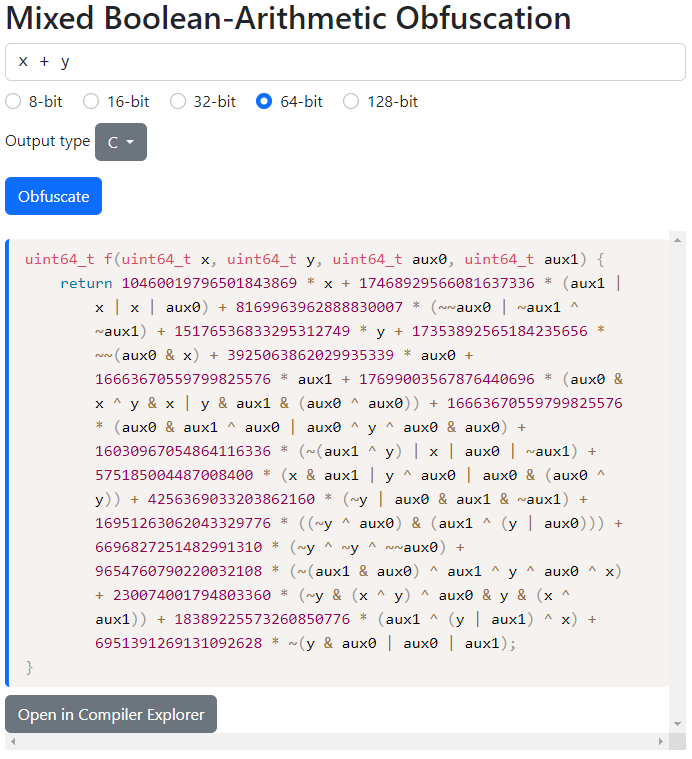
Great series of blog posts by @justuspolzin that makes Mixed Boolean-Arithmetic obfuscation very accessible: https://t.co/75z3cK5s5y. There is even a web interface available to play with! https://t.co/PrVVxy42h2
Following up on his #SSTIC talk earlier in June, Valentino found a critical RCE affecting the Steam client. Read more about the internals of the Remote Play protocol 📷 and several vulnerabilities in our latest blog post!
https://t.co/2yWvIqQO6K
We’ve got some cool stuff today! A #PluginFocus article by Baptiste Verstraeten from the @thalium_team. He introduces #Symless - a nifty tool aiming to simplify the process of retrieving & defining structures, classes, and virtual tables 🌐 https://t.co/8iZX8Kjcll
#IDAPython