Me eyes are burning.
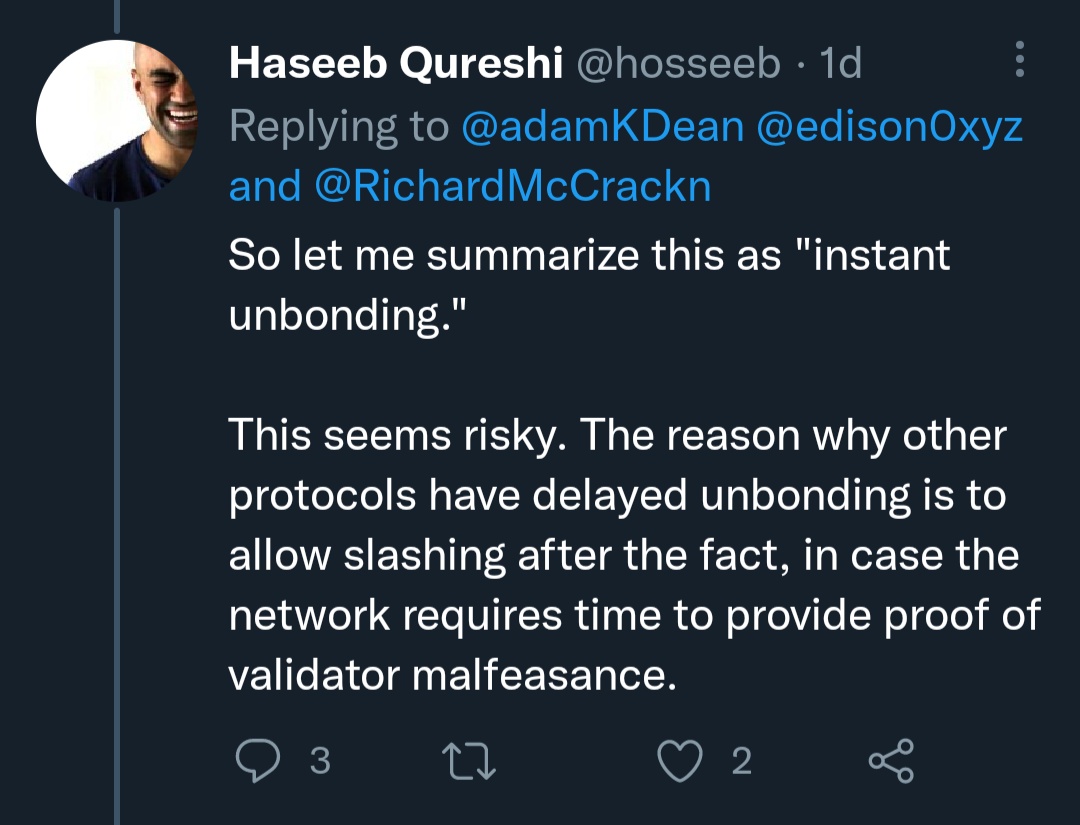
People literally believe that #slashing and lock up period is something normal (a must) on a blockchain.
We are doomed to be ruled by #banks for the rest of humanity.
No wonder why most of these guys disrespect #Cardano.
They will learn, eventually.
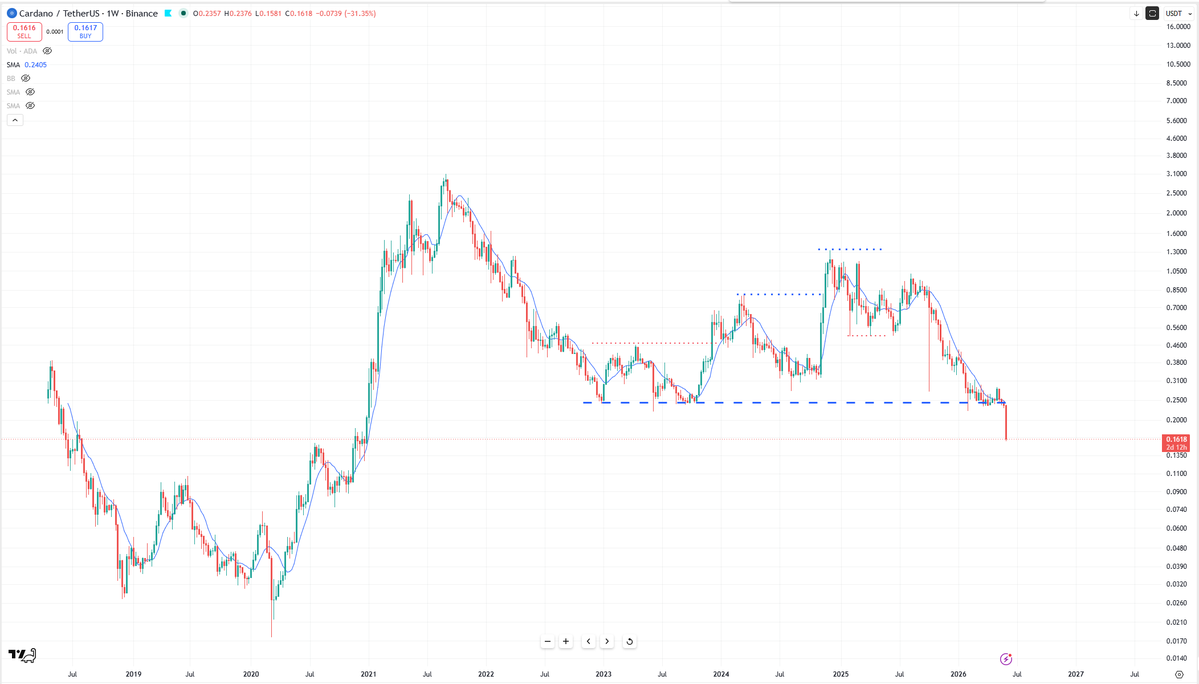
Whole X talking only about price action of $Ada (which undeniably sucks) and then you see this. #2 crypto by market cap behaving like this. Chill out bros. Everything is dying right now.
$ADA and many other such projects (Like AVAX, DOT like prior cycle coins) are finally in terminal death decline phases.
Taking out their prior 4yr cycle lows = 💀
Charles gets too much hate. Cardano isn’t perfect but it’s a hell of a lot better than most other chains.
If you think Cardano is bad, look around. Outside a few niche areas the entire industry is wrecked.
BTC only pumped thanks to a madman leveraging his entire company to buy it. ETH didn’t break its previous ATH (even with multiple DATs buying it). SOL barely did. Could ADA have done better? Yes, but it could also have done worse.
Crypto has not had a great time recently. Scams, hacks, tech failures, security vulnerabilities, AI threats, and the looming quantum problem. Even true believers are beginning to question the future of the industry.
But blockchain’s potential to transform the world’s systems hasn’t gone away. If anything, it’s more needed than ever.
“Build fast and break things”. The Silicon Valley mindset has permeated the industry’s thinking. Blockchain is just a technology, right? But the result has been hacks to the tune of billions of dollars, chains that go down for hours at a time, and the centralisation of power.
What is the point of crypto if we’re just building a faster casino, or a playground for VCs to max extract from retail? Blockchain was supposed to be about changing the economic, social, and political systems of the world. It’s no wonder crypto is down bad. People no longer believe in its potential.
Cardano is one of the few projects that has stayed true to the original mission. It has been a slow process, but the result is a chain that is battled-tested. It is hard to find examples of other chains with comparable levels of security, reliability, and decentralisation.
Most other crypto projects would kill to be in our position. Not only do we have one of the most advanced chains, we also have an extremely passionate and engaged community. People who are dedicated to seeing Cardano succeed.
Charles is one of those people. The reality is Cardano wouldn’t exist without his efforts, and his vision and passion to make something great.
An update on our engagement with @Mastercard.
While Cardano was not included in the initial cohort of 85 launch partners, @emurgo_io has been actively engaging with their APAC team to change that and ensure our ecosystem is represented.
Following a leadership transition at Mastercard APAC —where our primary contact moved to EY — we have successfully connected with his successors. They were excited to speak with us and I am pleased to share we are now in the Qualification Stage for the Global Crypto Partner Program.
With the continued support of the Cardano community, I am confident in a positive outcome.
This important:
Please like and share to show @Mastercard the strength of our ecosystem. Mastercard is a global firm.. we need to show them that our inclusion into their Partner Program will make a difference to them. Surely this is an initiative the entire Cardano ecosystem can support! #cardano86
Let's go!!!
#cardano #mastercard @Cardano_CF@Cardano@IOGroup@midnightfdn
Solana has a problem.
Solana Labs and ecosystem partners face allegations that they enabled or facilitated a meme pump system that gave insiders unfair trading advantages.
Solana Labs is accused of deliberately designing and maintaining a system that enabled front-running.
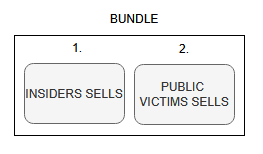
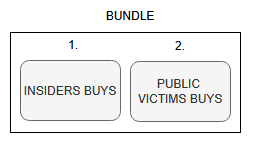
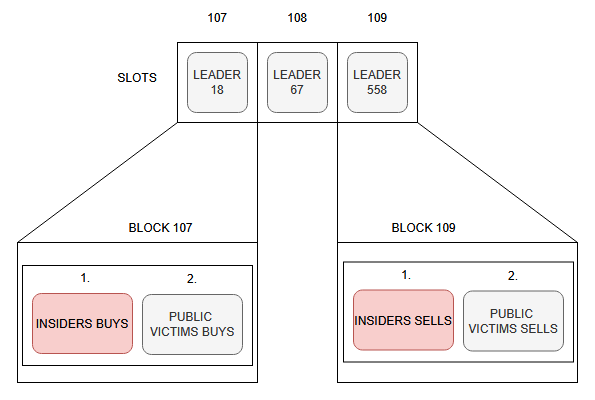
Insiders allegedly bought meme tokens before public launch, using priority execution and MEV, and then sold after retail-driven price increases.
Look at the Solana design that makes it possible.
Solana validators take turns as leaders according to a known, deterministic schedule.
The current and upcoming leaders are predictable several slots in advance.
If you know who the next leader is, you know who decides transaction ordering for that slot.
Solana does not guarantee strict FIFO (first-in, first-out transaction ordering).
Cardano also cannot strictly guarantee FIFO, but the UTxO model limits reorder-based MEV.
In Cardano, slot leaders are probabilistic. When a leader is drawn, it chooses which transactions to include. There is some ordering discretion.
Many front-running strategies are ineffective. Leaders cannot reorder dependent transactions arbitrarily.
Reordering would often invalidate transactions.
Solana leader can reorder transactions, prioritize some over others, and drop or delay others.
This behavior is even incentivized through the fee market. Users can pay higher fees to prioritize transactions.
Jito introduced an MEV infrastructure.
Instead of broadcasting transactions to the public mempool, users can send transactions directly to Jito and attach explicit tips to validators.
Jito allows a submission of bundles with guaranteed atomic ordering.
Bundles mean that transaction A executes before transaction B, or neither executes.
A "buy-before-users" scenario is technically possible because of how:
▪️transaction visibility,
▪️leader scheduling,
▪️and priority execution work together.
Insiders proceeded as follows.
In the preparation phase, a new meme token is created, and initial liquidity is added.
These events are visible to leaders, validators, or MEV infrastructure before they are fully confirmed and propagated to public RPC nodes.
An insider or MEV-enabled trader can route transactions privately, attach high-priority fees, or submit bundled transactions that guarantee execution order.
This allows a buy transaction to be inserted ahead of ordinary users' trades, often in the same slot or immediately before the public's transactions, at a time when liquidity is thin and prices are lowest.
In the selling phase, once public users buy orders execute and push the price up, the insider submits a sell transaction—again with priority fees or as part of a bundle—ensuring it is processed before competing exits.
The result is a complete cycle in which the trader accumulates tokens at near-launch prices, benefits from retail-driven price appreciation, and exits with profit.
On Solana, validators and MEV-enabled actors have structural advantages that normal users cannot match.
They operate with direct connections to leaders or private relays, often colocated in data centers, giving them millisecond-level latency advantages over retail users relying on public RPCs.
They can bypass the public transaction flow and secure earlier or guaranteed execution.
As a result, while retail users compete in a delayed, shared environment, infrastructure insiders can consistently achieve better ordering and inclusion, making competition unequal.
In contrast, Cardano's Ouroboros protocol uses probabilistic slot leadership, where many slots intentionally have no leader at all, and the EUTxO model sharply limits how transactions can be reordered without becoming invalid.
Solana's architecture maximizes throughput and responsiveness but expands the MEV surface by concentrating ordering discretion, while Cardano's intentionally sparse slot design and state isolation reduce continuous control and make similar exploitation patterns far harder to execute.
Privacy is the best answer to MEV attacks.
Midnight reduces MEV attacks by removing public visibility of transaction intent.
Transactions are private by default and executed using ZK proofs, so validators and other network participants cannot see trade direction, amounts, or contract inputs before execution.
Without access to this information, common MEV strategies such as front-running, sandwich attacks, and launch sniping become impractical, since there is nothing actionable to reorder or react to.
The lack of pre-execution transparency significantly limits extractive, trade-based MEV compared to fully transparent blockchains.
I know everyone was worried about that recent bug, but for us on SanchoNet it was more like: “OMG, this is exactly what we needed for the Scenario 3 disaster-recovery fire-drill!”
And that’s exactly what we’re doing today at 18:00 UTC on SanchoNet, using this incident to explore better, faster, and more coordinated ways to recover from situations like this.
@RoundtableSpace The cardano effect.
Revives ghost accounts with thousands of followers, yet zero interactions with each post they do, unless it contains the magic word.
Below you will find my write-up as an independent after action report for the issue impacting Cardano late last week, along with things I learned, why I was impressed, and what I think we can do better at in the future.
I try to strike the balance between confronting the seriousness of the issue, while defusing most of the over-stated positions from talking heads on Twitter. This is an adult conversation, not whatever the children are engaging in on Twitter this week.
I don't think it's productive to get into debates of what constitutes "downtime" or not; Instead, I tried to equip you with a framework where you, dear reader, can think about these things for yourself, and decide what you want to call it.
I just ask that you make that decision for yourself, or allow your audience to do so, rather than parroting some pre-decided talking points.
More informed discussion leads to a higher quality industry overall.
https://t.co/gPHc8lNT2U
I am gonna go out on a limb and actually say this is pretty cool. Nakamoto style consensus without proof of work is extremely hard to build. The protocol functioned as designed in the presence of bugs.
Cardano went down?!
Don't believe the FUD! Here is the truth.
Node version 10.3 had a bug. Fortunately, about half the Node Validators were on version 10.1.4 and are still producing blocks for the cannonical chain.
We already have a fix released with version 10.5.2!
All Stake Pool Operators who are running version 10.3, 10.4, or 10.5 (which have the bug) should upgrade to version 10.5.2 so they can get back on Mainnet.
Dear crypto community, let’s be clear: Cardano NEVER went down. 🦋🔥🍄
During the recent network incident, block production never stopped, the chain never went offline, and the protocol kept running. (Please stop spreading misinformation)
What happened showed the world the strength of a true community and the power of well-engineered tech. If this was meant to be a test, we passed it with great excellence.
Cardano SPOs, developers, and builders across the world came together instantly, coordinated openly, and shared data to strengthen the network asap.
Thousands of people taking responsibility for the ecosystem they believe in.
This is what true decentralization looks like.
This is why Cardano is different.
This is why I keep falling in love with this ecosystem.
Massive kudos to everyone involved in fixing the petite bug as quickly as possible. 👏
Cardano Community, you rock! 🥰❤️
What is fascinating about yesterday's event is how Cardano recovered from a minority chain and got rid of the symptom while preserving most of the history and progress since the incident.
🧵
Let's gooooo! This is big!
Guidance from Treasury and IRS on staking in ETPs.
Cardano's self-custodied and natively-liquid staking is going to shine under these rules! 🧵
This is after just a quick cursory read. So, please forgive any mistakes in advance.