retweets food justice, agriculture, ag policy, dietetics, foraged and food articles i'll want to reference or read later. might've followed you for your lulz.
I've listened to every episode, long enough that I remember when you were dragged for Game of Thrones spoilers in the ads of pod save America. it starts my Saturday mornings. Can we go back to that old release schedule?
@jonlovett
In 1897, the U.S. Army wanted to know if bicycles could replace horses for infantry. So they took 20 Black soldiers of the 25th Infantry – the Buffalo Soldiers – and gave them a mission: ride from Fort Missoula, Montana to St. Louis. 1,900 miles.
The “Iron Riders” carried 60-pound packs, rifles, and one spare tire each. They crossed the Rockies, the Badlands, and the Great Plains on heavy, single-speed bikes with no roads. Private John Findley fixed flats with strips of his own shirt. They drank from cattle tanks and were refused water in Wyoming towns.
It took 41 days. They averaged 52 miles a day. When they rolled into St. Louis, the white newspapers called it a “stunt.” The Army said “impractical” and shut the program down. But the Iron Riders proved it could be done.
Their commanding officer wrote: “No horse could have made it. These men did.”
@LeftSentThis "Nostalgia should not negate your ability to have nuance and embrace an evolved standpoint."
I've read the sentence a few times, and was hoping you could expand upon it.
🔒 UNLOCKED: The ultimate archive of culinary history. We’ve officially opened the doors to our Video Vault exhibit! Inside, you’ll find a treasure trove of short videos—rare footage & stories that shaped how we eat today.
Peek behind the vault doors: ➡️ https://t.co/XAln9EKH4W
A Black man created ranch dressing — and most people never knew.
Kenneth “Steve” Henson, born in Nebraska in 1918, was a plumber who cooked for his crew in Alaska. One day he mixed buttermilk, mayo, herbs, and spices… and ranch was born.
In 1954, he and his wife bought land near Santa Barbara and named it Hidden Valley Ranch. Guests loved the dressing so much they begged to take jars home. By 1957, stores were selling his dry mix. Orders exploded. Factories followed.
In 1972, Clorox bought the recipe and the name for eight million dollars. Ranch went nationwide. By 1992, it was America’s #1 dressing.
But the man behind it? Nearly erased.
Every salad, every wing, every fry dipped in ranch — that’s his legacy. He mattered. He was the blueprint.
. ❤️💛💚🖤
Happy World Tapas Day! 🇪🇸 https://t.co/wQfe9IPLzT
If you think tapas are just small appetizer plates, think again. In Spain, eating tapas is a social ritual called tapeo: moving from one lively bar to the next, sharing bites with friends, and enjoying a drink along the way.
The tradition started with a literal cover. The word tapa means lid, referring to the old custom of placing bread or cured ham over a glass of sherry. Before long, those simple snacks evolved into one of Spain’s most beloved food traditions.
What makes tapas fascinating is how much they vary across the country. In the Basque Country, they become pintxos, elegant bites topped with seafood and held together by toothpicks. In Asturias, local cider and Cabrales cheese inspire heartier dishes like cider-cooked sausages and rich stews. Inland Castile favors slow-cooked meats and bold cheeses, while sunny Andalusia is known for fried fish, gazpacho, and marinated olives.
@Mariners a quiet request to your media team: when you do a game recap and post it to YouTube, can you not reveal the winner in the screenshot? It's a bit of a spoiler for those of us who can't watch the game or listen to it on the radio live. Thank you!
@BioavailableNd Been on the Saccharomyces 10B - Saccharomyces Boulardii
For over a month now. Reduction in generalized anxiety. BM are regular and ummm solid. Overall comprehension at work is much improved. Increased energy at work. Thanks for putting me into it. You’re a credit to society
Pro tip: Whenever your health insurance company denies your care, call and request to speak with the HIPAA compliance director. Then, ask them to provide the names, educational backgrounds, certifications, and medical credentials of all individuals involved in the denial of your claim. You’ll be amazed at how swiftly they reverse the denial.
People claim that this tactic actually works. However, I believe we should be more concerned of these health insurance companies that are amassing millions of dollars in profits while denying patients essential care.
To add a bit of flair, ask for the individual’s name, rank, and serial number, followed by the question: “Are you willing to accept full responsibility for the loss or irrevocable harm caused by your denial?”
It’s time we take action and fight back.
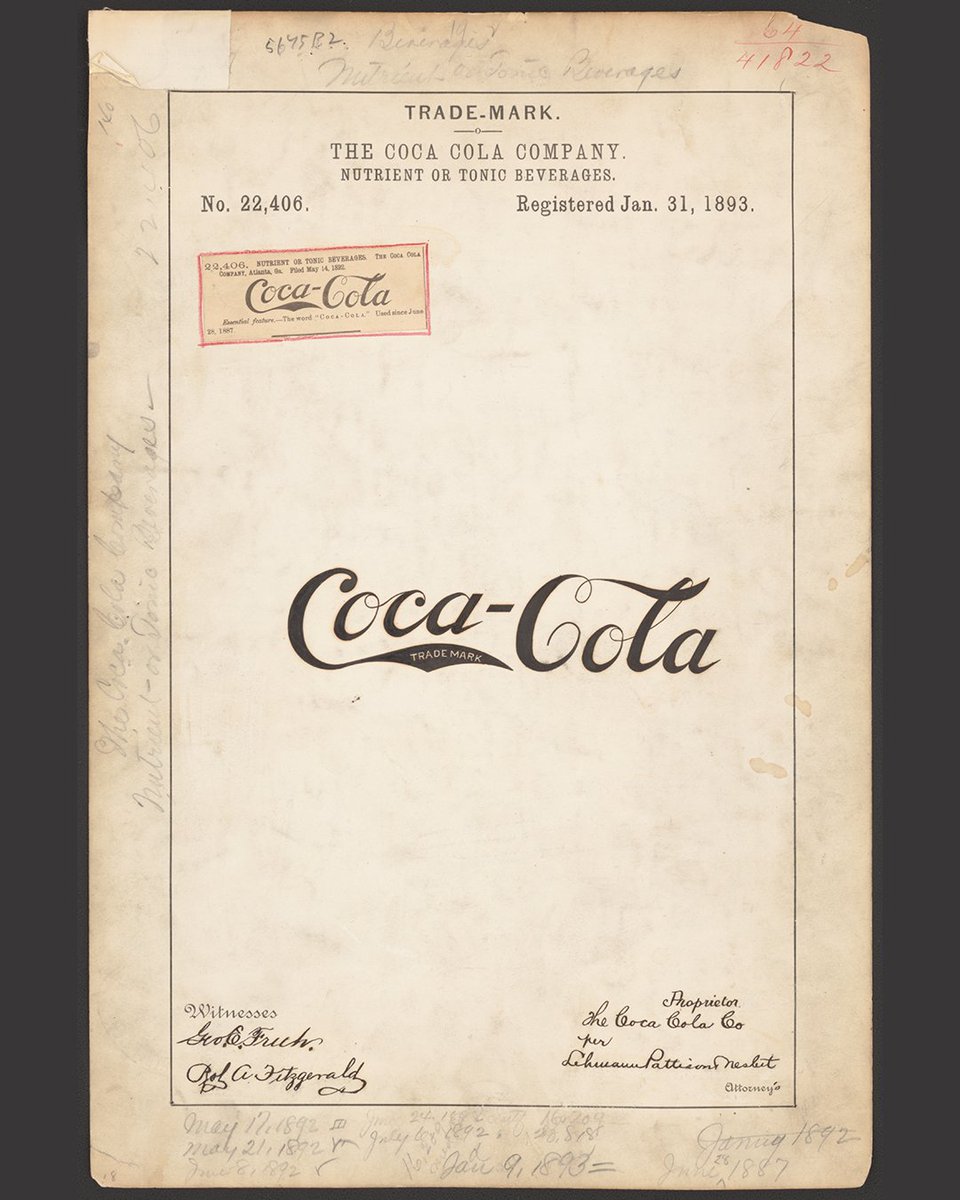
The 1893 Coca-Cola trademark registration, featuring the logo's distinctive cursive, can be found in the Library of Congress Prints and Photographs Division's U.S. Patent Office Trademarks Collection.
On this day in 1886, the very first Coca-Cola was sold at Jacob’s Pharmacy in Atlanta, Georgia.
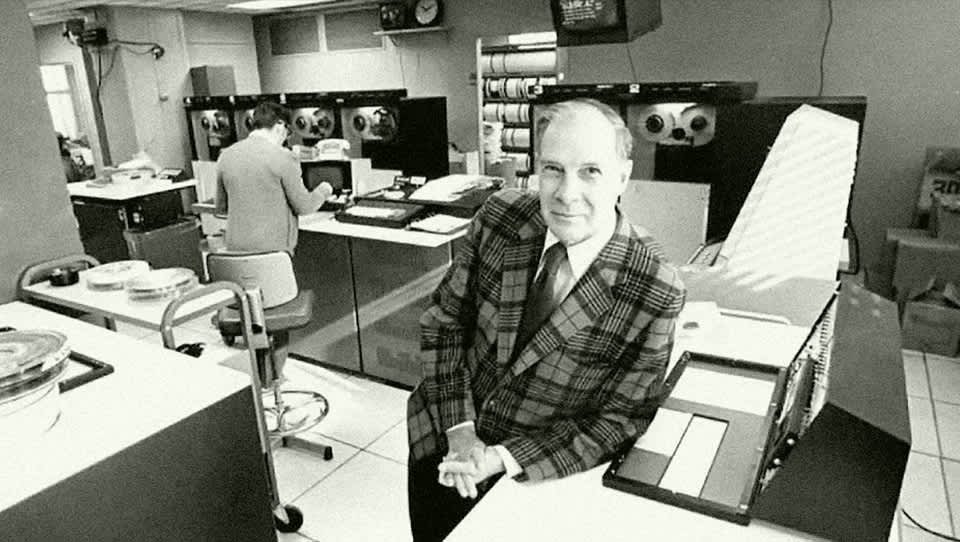
A mathematician who shared an office with Claude Shannon at Bell Labs gave one lecture in 1986 that explains why some people win Nobel Prizes and other equally smart people spend their whole lives doing forgettable work.
His name was Richard Hamming. He won the Turing Award. He invented error-correcting codes that made modern computing possible. And he spent 30 years at Bell Labs sitting in a cafeteria at lunch watching which scientists became legendary and which ones faded into nothing.
In March 1986, he walked into a Bellcore auditorium in front of 200 researchers and told them exactly what he had seen.
Here's the framework that has been quoted by every serious scientist for the last 40 years.
His opening line landed like a punch. He said most scientists he worked with at Bell Labs were just as smart as the Nobel Prize winners. Just as hardworking. Just as credentialed. And yet at the end of a 40-year career, one group had changed entire fields and the other group was forgotten by the time they retired.
He wanted to know what the difference actually was. And he said it wasn't luck. It wasn't IQ. It was a specific set of habits that almost nobody is willing to follow.
The first habit was the one that hurts the most to hear. He said most scientists deliberately avoid the most important problem in their field because the odds of failure are too high. They pick a safe adjacent problem, solve it cleanly, publish it, and move on. And because they never swing at the hard problem, they never hit it. He said if you do not work on an important problem, it is unlikely you will do important work. That is not a motivational line. That is a logical one.
The second habit was about doors. Literal doors. He noticed that the scientists at Bell Labs who kept their office doors closed got more done in the short term because they had no interruptions. But the scientists who kept their doors open got more done over a career. The open-door scientists were interrupted constantly. They also absorbed every new idea passing through the hallway. Ten years in, they were working on problems the closed-door scientists did not even know existed.
The third habit was inversion. When Bell Labs refused to give him the team of programmers he wanted, Hamming sat with the rejection for weeks. Then he flipped the question. Instead of asking for programmers to write the programs, he asked why machines could not write the programs themselves. That single inversion pushed him into the frontier of computer science. He said the pattern repeats everywhere. What looks like a defect, if you flip it correctly, becomes the exact thing that pushes you ahead of everyone else.
The fourth habit was the one that hit me the hardest. He said knowledge and productivity compound like interest. Someone who works 10 percent harder than you does not produce 10 percent more over a career. They produce twice as much. The gap doesn't add. It multiplies. And it compounds silently for years before anyone notices.
He finished the lecture with a line I have never been able to shake.
He said Pasteur's famous quote is right. Luck favors the prepared mind. But he meant it literally. You don't hope for luck. You engineer the conditions where luck can land on you. Open doors. Important problems. Inverted questions. Compounded hours. Those are not traits. Those are choices you make every single day.
The transcript has been sitting on the University of Virginia's computer science website for almost 30 years. The video is free on YouTube. Stripe Press reprinted the full lectures as a book in 2020 and Bret Victor wrote the foreword.
Hamming died in 1998. He gave his final lecture a few weeks before. He was 82.
The lecture that explains why some careers become legendary and others disappear is still free. Most people who could benefit from it will never open it.
It’s a missed opportunity to drink water without leveraging it as a health tool.
- Water + Aloe Vera: supports gut motility and soothes the intestinal lining
- Water + Saffron: supports mood and attention pathways
- Water + Magnesium: relaxes the nervous system and improves sleep quality
- Water + Ginger: improves circulation and digestive fire
- Water + Apple Cider Vinegar: supports stomach acid and reduces bloating
- Water + Pinch of Sea Salt: improves cellular hydration and adrenal function
- Water + Cinnamon: supports blood sugar stability and insulin sensitivity
- Water + Citrus + Salt: supports mineral balance and thyroid function
- Water + Chlorophyll: supports detox pathways and internal deodorizing
Some of the tastiest, meatiest pecans I’ve ever tried grow in northern Mexico. I wanted to use them in a savory dish so I blended them with ancho chiles and charred onion and garlic to make a thick, gorgeous sauce for chicken. It’s absolutely scrumptious! https://t.co/Mjv3ubSWlO
For decades, First Nations people in British Columbia knew their ancestral homes—villages forcibly emptied in the late 1800s—were great places to forage for traditional foods like hazelnuts, crabapples, cranberries, and hawthorn.
A 2021 study revealed that isolated patches of fruit trees and berry bushes in the region's hemlock and cedar forests were deliberately planted by Indigenous peoples in and around their settlements more than 150 years ago. It's one of the first times such "forest gardens" have been identified outside the tropics, and it shows that people were capable of changing forests in long-lasting, productive ways.
Learn more on #InternationalDayOfForests: https://t.co/OURY3O9Jt7
@BrittneyBush are you still on this platform? Just received my ballot invite for kcd in the mail. Also game 6 was on my birthday this year. That is the Heartbreak of baseball
I shared this in my newsletter yesterday, but today, I want to share it right here in the belly of the beast. I’m asking all of you to go on an extreme crash diet.
This is not a crash diet for your nutrition…those don’t work. This is a diet for your mind. It will work.