Conflict diagnosis should not be treated as an unquestioned starting point.
Like every professional discipline, it should remain open to review, evidence, and revision.
Because sometimes, the path to sustainable peace begins not with changing the solution
but with rethinking thed
If peace processes repeatedly struggle to resolve certain conflicts, perhaps the question is not only:
How was peace built?
Perhaps we should also ask:
Was the conflict itself understood through the right analytical framework?
@UNDPPA An important agenda.
But one question deserves equal attention:
Who defines the conflict before peace efforts begin?
Conflict diagnosis often shapes every solution that follows.
How do we know a conflict has been diagnosed correctly?
In medicine, when treatment fails, doctors review the diagnosis.
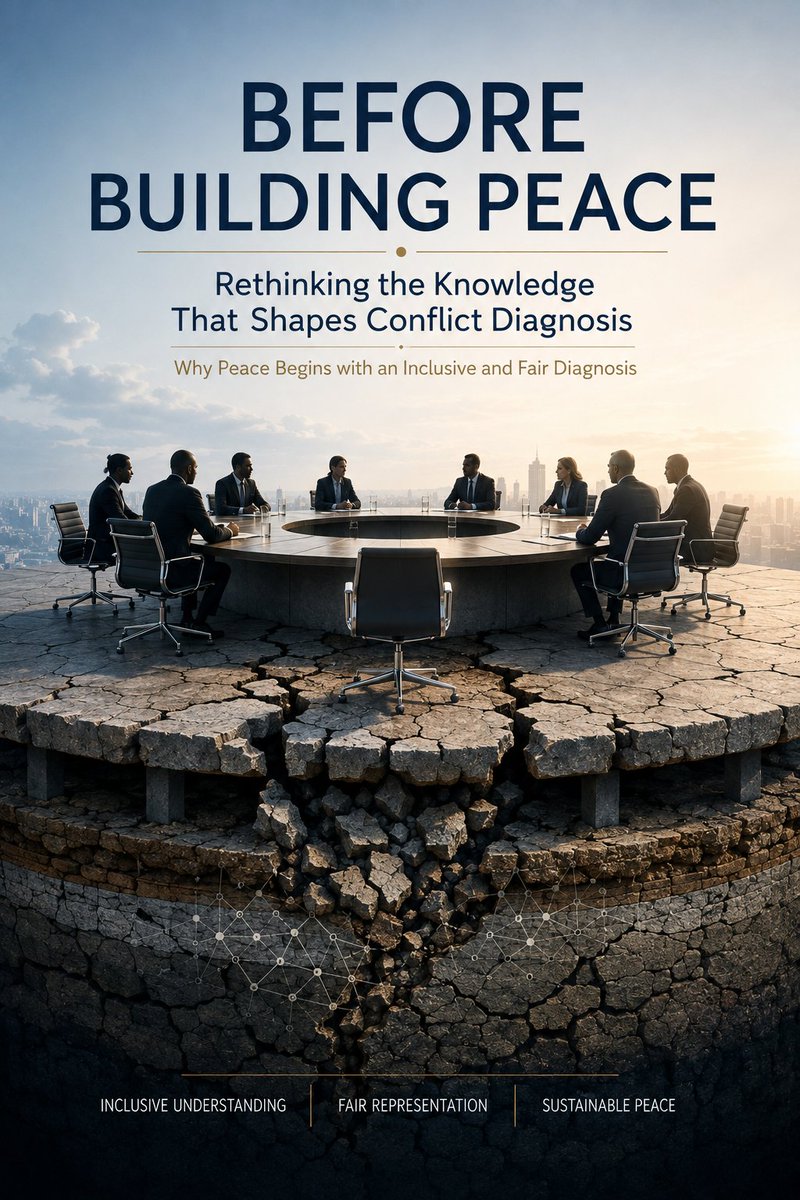
In engineering, when structures crack, engineers return to examine the foundation.
Should peacebuilding be any different?
— Conflict Diagnosis Series | Part IV
Perhaps the first question in every peace process should not be:
How do we negotiate?
But:
Did we correctly define the conflict?
#Peacebuilding#ConflictDiagnosis#Mediation
The issue is not only how we negotiate.
It is also how we understand the conflict before negotiations even begin.
Diagnosis shapes representation.
Representation shapes peace.
A peace agreement can reduce violence.
It cannot automatically resolve political questions that were excluded from the original diagnosis.
A process may succeed procedurally while remaining structurally fragile.
Can negotiations succeed if the diagnosis is incomplete?
Peace processes often fail not because mediators lack skill...
But because negotiations begin from an incomplete understanding of the conflict itself.
Series III: Conflict Diagnosis and Sustainable Peace
Sustainable peace requires more than bringing parties to the table.
It requires asking a deeper question:
Who defined the conflict in the first place?
Because the narrative used to understand a conflict often shapes the future built after it.
When a conflict is misdiagnosed, peace efforts may address symptoms rather than root causes.
Negotiations can produce agreements while leaving the underlying political questions unresolved.
@UNDPPA Sustainable peace begins with understanding conflicts beyond their symptoms — through inclusive dialogue, local engagement, and sound conflict analysis.
Important work by DPPA in advancing mediation and peace efforts worldwide.
Conflict analysis is often presented as a neutral exercise.
Yet every diagnosis carries assumptions: about history, identity, power, and legitimacy.
What is excluded from the analysis may shape the outcome as much as what is included.
A conflict is never only about events.
It is also about interpretation.
The way a conflict is framed determines: who is recognised as affected, who is perceived as a threat, and whose demands enter the political agenda.
Who defines the conflict?
Peace negotiations rarely begin at an empty table.
Before mediators arrive, a diagnosis has already been made.
It decides:
whose voices are heard,
which grievances matter,
and which futures become possible.
Peace begins with a narrative.
This reflection opens Rethinking Peacebuilding — Series I
Before Building Peace:
Revisiting the Knowledge That Shapes Conflict Diagnosis.
I welcome thoughtful discussion from researchers, mediators, and policy practitioners.
Every peace process starts with a diagnosis.
That diagnosis determines who matters, which grievances count, and what political futures become imaginable.