Final Version of our article on UBR-box E3 ubiquitin ligases, protein synthesis and skeletal muscle size now online 🚨 | @AJPCellPhys@CraigAGoodman1@DrAdamPSharples |
https://t.co/mi4R2NZ6Vd
Review in this area recently published here: https://t.co/rbpjBc7q6I
#Myotwitter
A scorched-earth approach to aging research by Rich Miller 🔥
Pretty much everything gets criticised, from the hallmarks of aging to cell senescence, epigenetic clocks, and cellular rejuvenation.
But Rich makes some very good points. I particularly like the Rolex analogy regarding aging clocks.
If you’re working in aging science, please read it and thank me later! It's an entertaining and much-needed critical perspective.
For the record, I was a reviewer of this paper, and suggested a little more nuance and balance. My suggestions didn't make it to the final version, though. Why be balanced when you can just burn everything in your path! 🔥
https://t.co/I7BUNoK2W2
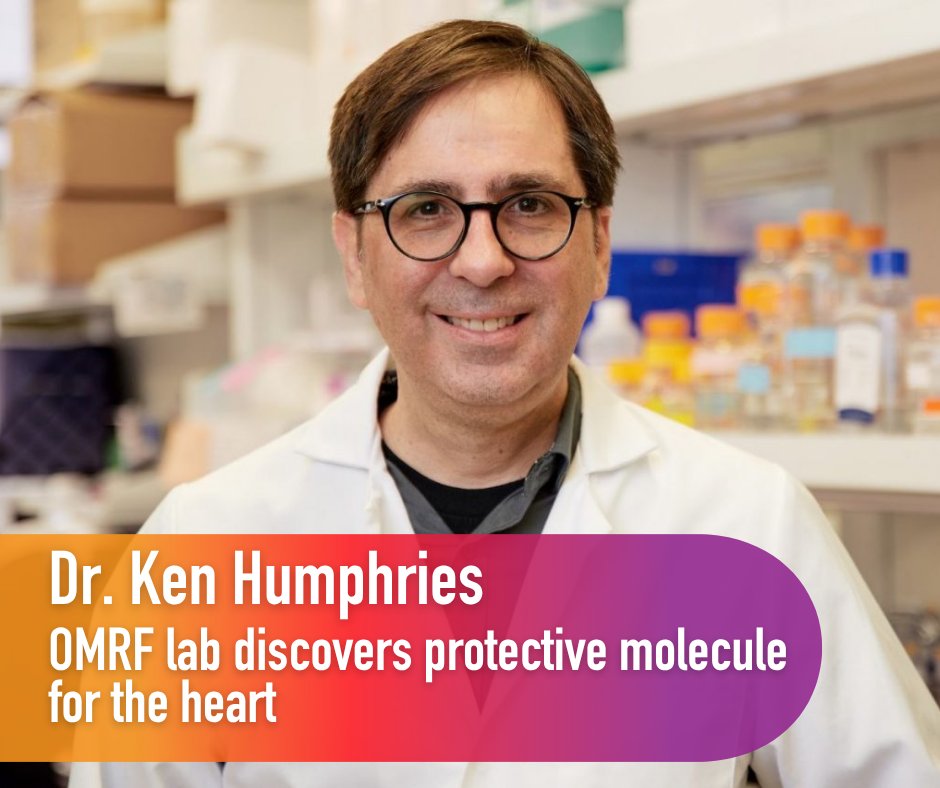
A discovery from Dr. Ken Humphries' lab points the way toward a potential therapeutic target for diabetic heart disease, a condition that affects millions of Americans. 🫀
Read more: https://t.co/1Xu3peWJA3
An integrative multi-omic analysis of skeletal muscle in response to disuse and recovery resistance training in resistance trained and untrained young adults
https://t.co/r3GdwITIWi
Policy decisions shape what physiology research can achieve. Our new guide explains how the U.S. research system works, why it matters, what is at risk and the policies to know: https://t.co/E2bIem42TM #SciPol#Advocacy
As someone studying exercise-induced epigenetic memory, my first thought was: "we call this exercise". Mechanical loading deforms muscle fibres and nuclei. Do loading and unloading leave lasting mechano-epigenetic signatures that shape adaptive capacity with ageing?
The measurement, training and function of glycolysis is much less researched than mitochondrial biogenesis. Next week Kenneth M. Humphries will give the 26th HyperMet DFG Research Group talk on PFKFB2. Join here: https://t.co/86wSZK99Z2
Congratulations to the CMR's @CaldowMarissa, @GordonSLynch and Team for their new paper, "Tomatidine Exposure During Early Myogenesis Promotes Hypertrophy of C2C12 Muscle Cells Through Increased Nuclei Accretion"
@CellAgAustralia#myotwitter
https://t.co/5jUuznz6LG
I have it pretty easy thanks to my brilliant wife, and I’ve got into work patterns that protect our family time.
Yet, I’m also often wondering how we can make academia better for all aspects of what life can give us.
As a new assistant professor, I thought I needed to hide my family responsibilities
“I do not need to disguise the demands of motherhood to prove I am a serious scientist,” this academic learned. #AcademicChatter https://t.co/tZtr4yRHwJ
We are excited to share the currently confirmed speakers for the 2027 Advances in Skeletal Muscle Biology Conference.
We hope you are saving the date, see you March 17-19, 2027 in Gainesville, FL!
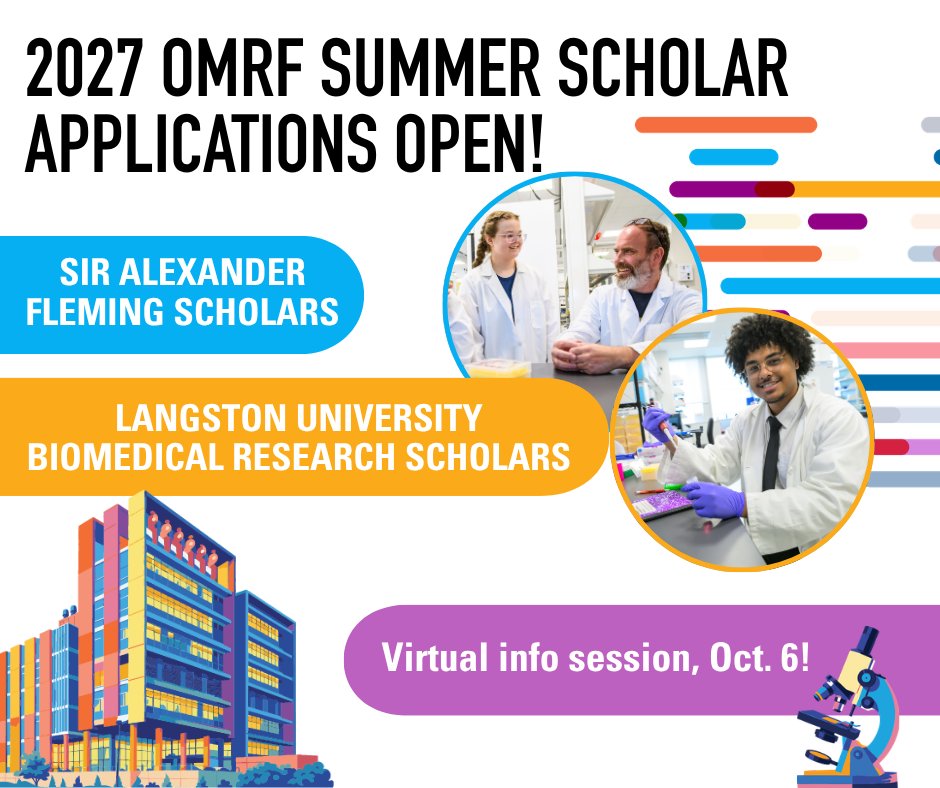
Applications for our 2027 summer scholars are now open! ⭐🧬🔬
We’re looking for motivated, curious students to spend their summer at OMRF. During this 8-week, paid research experience, scholars work on individual projects in cutting-edge labs, guided by OMRF scientists.
An integrative multi-omic analysis of skeletal muscle in response to disuse and recovery resistance training in resistance trained and untrained young adults https://t.co/CXbZwGgSZv
Our latest @MolMetab - a Clock/Ampk connection!
The Circadian Clock Component NPAS2 is modulated by AMPK and Regulates Substrate Utilization and Mitochondrial Function in Human Skeletal Muscle.
Great collaboration w/team @karolinskainst@Metabolcenter
https://t.co/fPCpxhwW0Y
LATEST FREE PAPER : 60 g/h of CHO spares muscle but not liver glycogen using during HIT training. Congrats Sophie Hannon on latest PhD publication and all-co-authors on a great collaboration @Hearris
https://t.co/TGGY8fgNwh