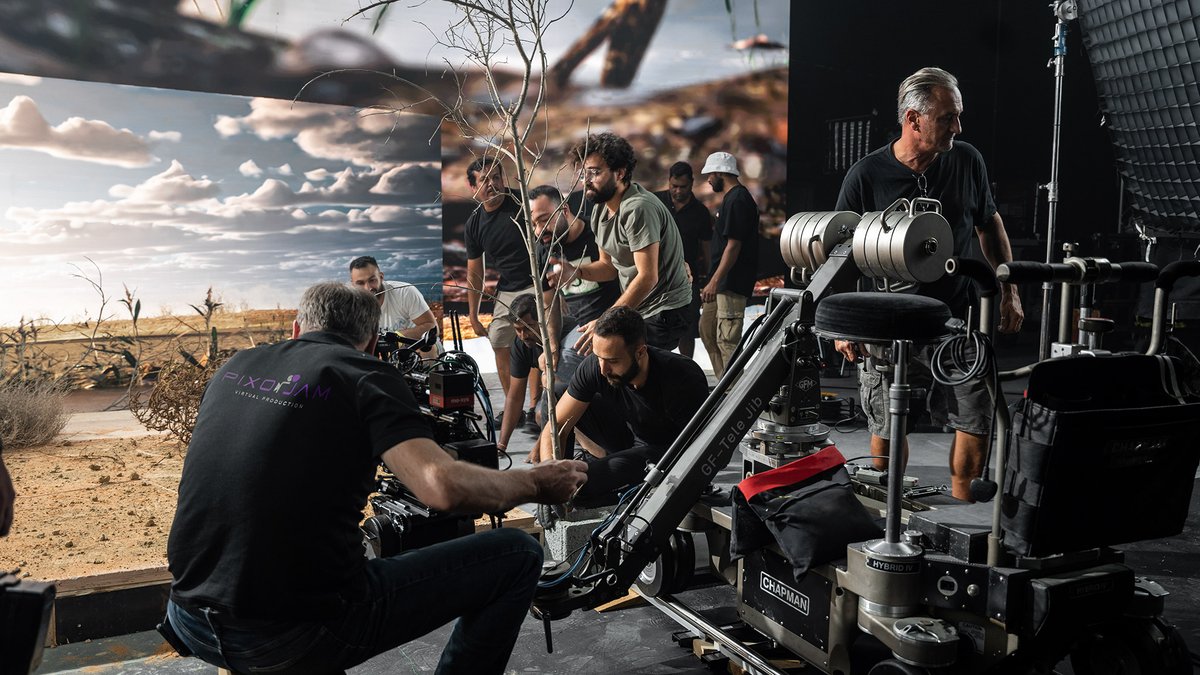
One of the best parts of production is seeing specialists from different disciplines solve the same challenge together.
Different perspectives.
One shared objective.
That's how great work comes to life.
A strong set does more than look good.
It gives camera, lighting, art direction, and performance something to respond to.
When the environment is working properly, every department can push the image further.
A location can look perfect on paper.
Then weather, access, permits, timing, and continuity start changing the production.
That is why the best workflow is not always the obvious one.
A lot of production decisions happen before anyone gets to set.
Location, lighting, camera movement, workflow.
Getting those choices right early usually makes the shoot smoother later.
One of the biggest differences with virtual production is being able to adjust the environment without stopping the shoot.
Lighting, backgrounds, and camera perspective can all shift in real time while the production keeps moving.
A strong virtual production workflow is not only about the LED wall.
It is about how the wall, camera, lighting, and performance work together during the shoot.
That coordination is what keeps the final frame consistent.
The more ambitious a production becomes, the more variables need to be controlled before the shoot begins.
Lighting. Timing. Camera movement. Environment behavior.
Virtual Production shifts that complexity into planning instead of last-minute fixes.
Changing the environment should not interrupt the production.
In film production and virtual production, consistency depends on how much can be controlled in advance.
Production defines the outcome.
In film production and virtual production, what happens on set is usually the result of decisions made long before it starts.