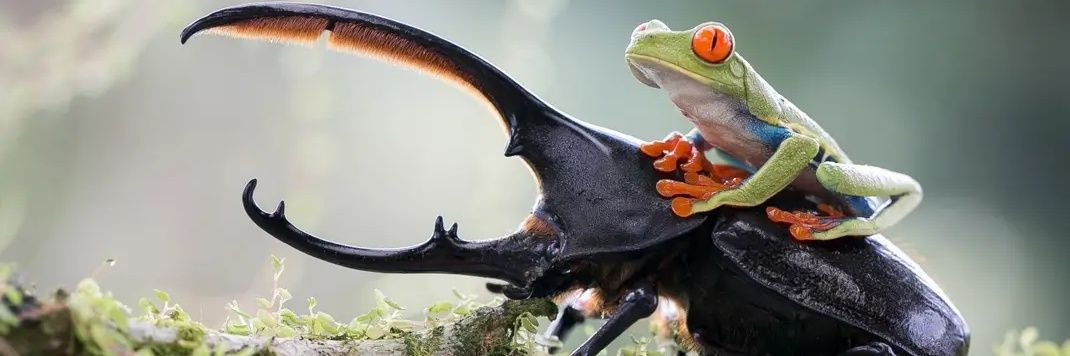
Wasps don’t kill their prey. They paralyze them, seal them in a chamber alive, and let their babies eat them fresh when they hatch. Nature invented something far more terrifying than anything in a horror movie and nobody talks about it 😳
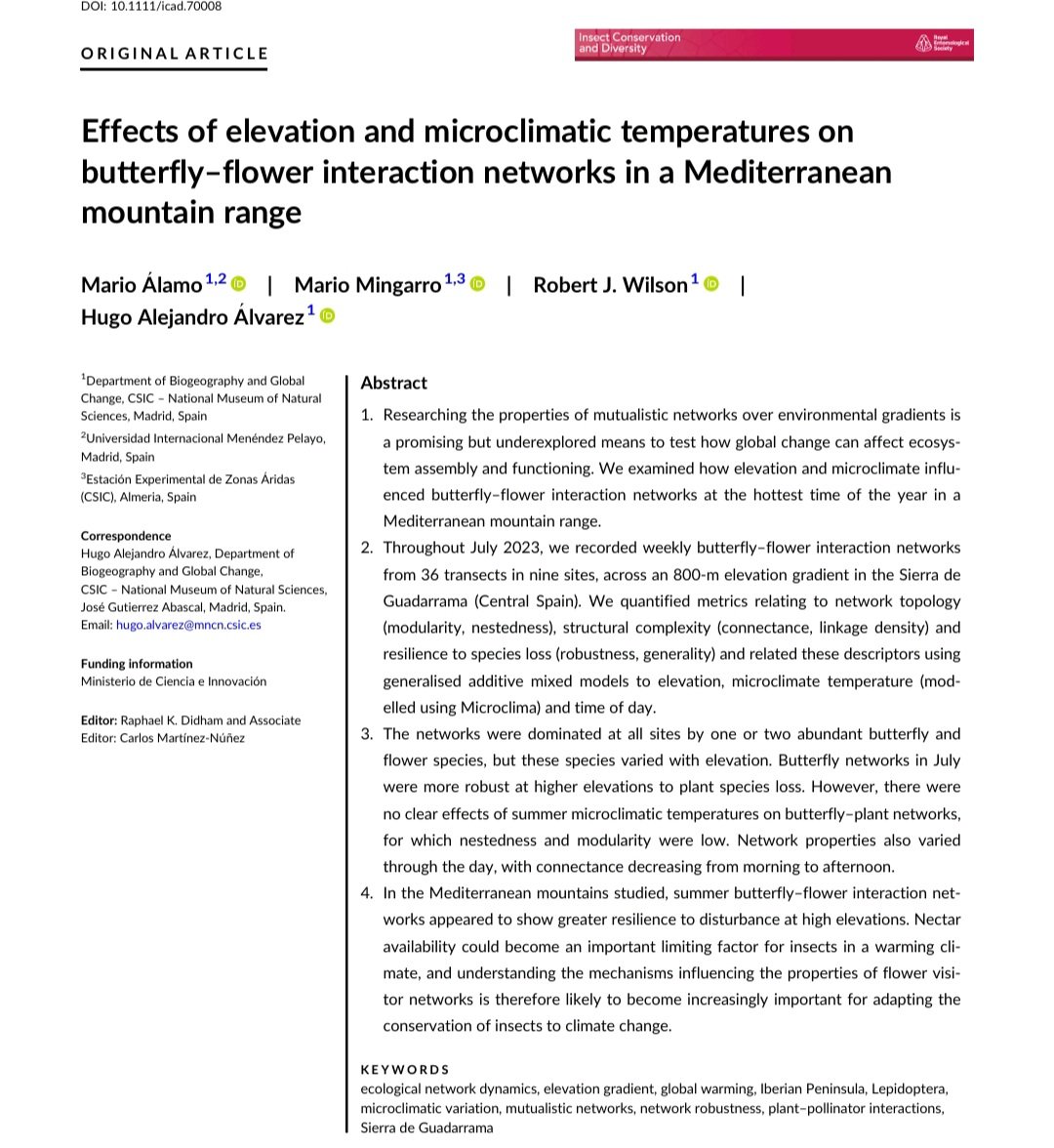
3/ As elevation increases, networks become more robust to species loss.
Why? Species interact with more partners (higher linkage density), reducing dependence on any single plant resource.
https://t.co/Lnq4a66sOg
🚨📄 Paper alert:
https://t.co/M98eu6apPk
We have found that elevation—not just temperature—reshapes butterfly interaction networks in Mediterranean mountains.
Across an ~1000m gradient, network structure, robustness, and species roles shift in surprising ways 🧵 👇
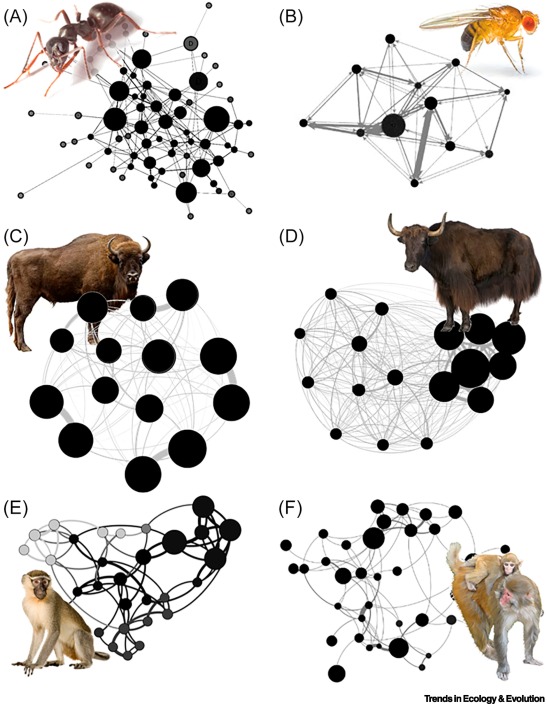
2/ these butterfly networks show low nestedness and low modularity.
This suggests simplified, resource-limited systems dominated by generalist interactions rather than tightly structured communities
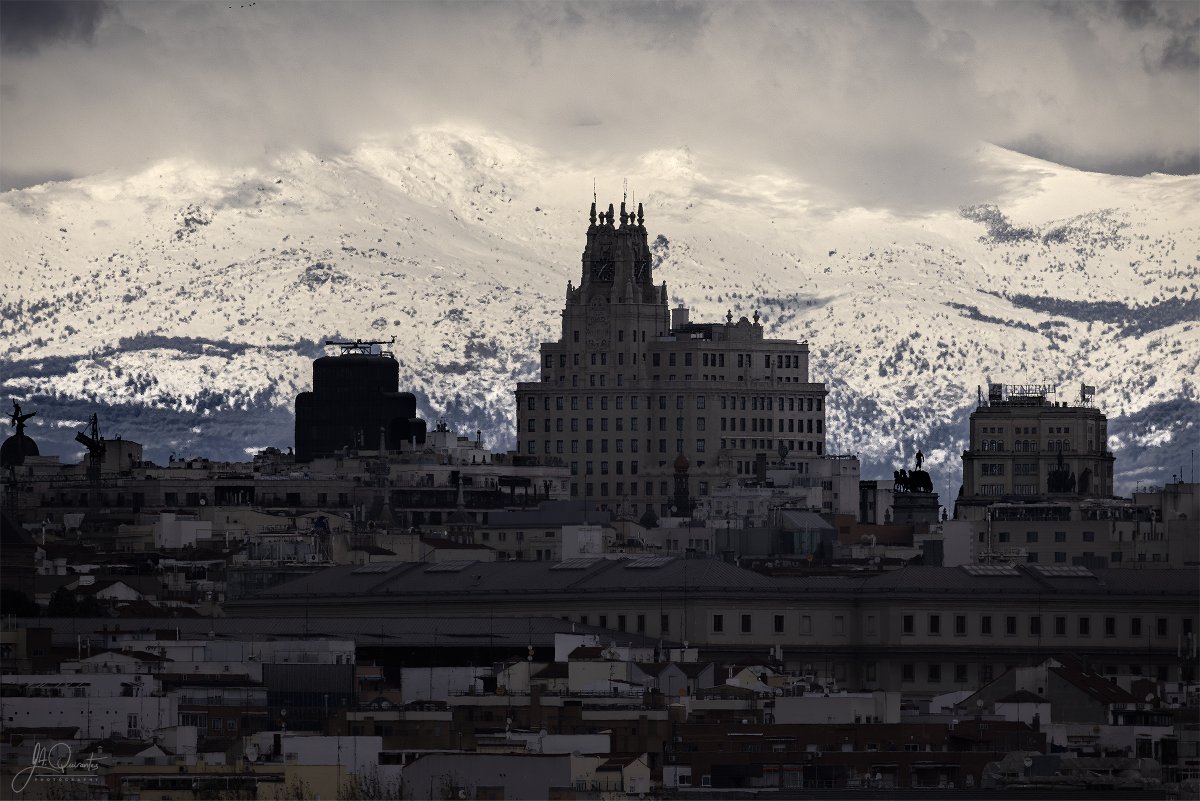
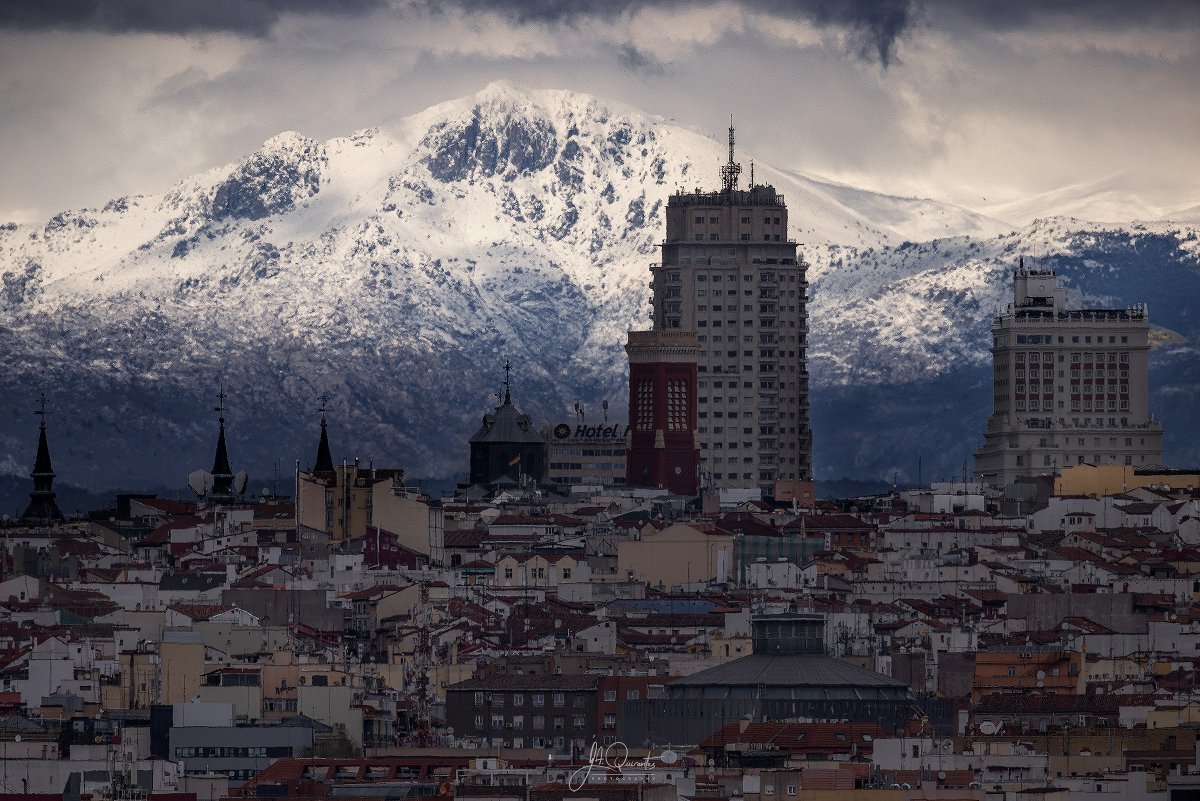
Gran contraste esta mañana entre la ciudad de Madrid en sombra y las cumbres de la Sierra de Guadarrama soleadas y cargadas de nieve. En dos de ellas el pico de la Maliciosa (2227 m) es el protagonista, en la otra el macizo de Cabezas de Hierro (2381 m) queda cubierto por nubes.
"Don't be afraid!"
Randy Schekman says that the most successful scientists are willing to take risks. He uses 2024 chemistry laureate David Baker as an example of how embracing risk can lead to significant rewards.
Before Baker transitioned to researching structural biology he studied systems of protein transport in yeast. Prior to that, he earned a bachelor's degree in philosophy and social science, demonstrating that no career change is too drastic.
Schekman was awarded the 2013 medicine prize jointly with James Rothman and Thomas Südhof for their discoveries of machinery regulating vesicle traffic, a major transport system in our cells.
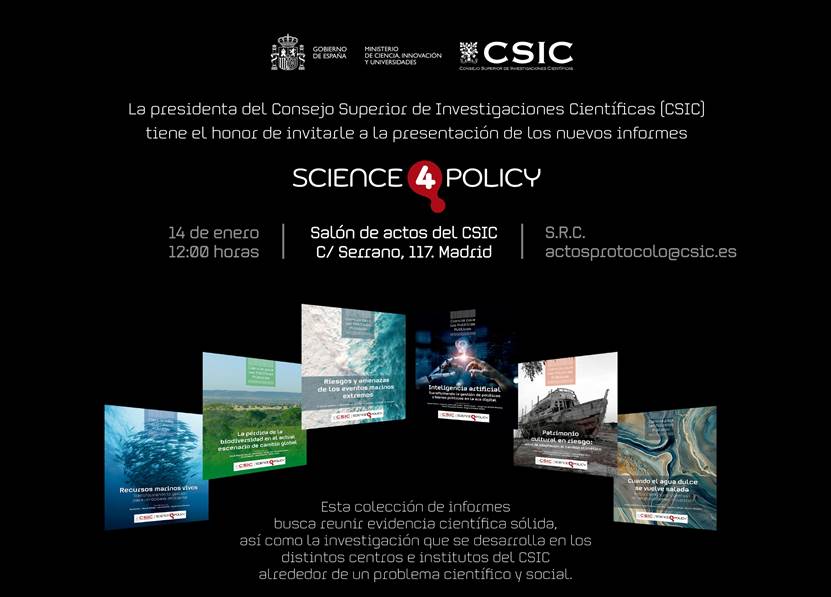
📢Seis nuevos informes sobre seis retos con impacto social. La sede del #CSIC acoge hoy la presentación de una nueva entrega del programa #Science4Policy
🔴Síguelo en directo (12 h): https://t.co/Mo0Ehj2Cj7
In 1929, Alexander Fleming published his paper outlining the antibacterial properties of penicillin, and began the era of antibiotics.
Read the Nobel Prize laureate's full article online: https://t.co/fPKDufTlbD
#OpenAccessWeek
Insect levitation with ultrasound: capturing 360° views to automate measurements and create 3D models. More fun devices from KIT to join the DiversityScanner family 🦋🔬 https://t.co/B9pSl9n3au @mfnberlin @leeselab@myrmoteras @Brent_C_Emerson @TokeHoye
BREAKING NEWS
The 2024 #NobelPrize in Physiology or Medicine has been awarded to Victor Ambros and Gary Ruvkun for the discovery of microRNA and its role in post-transcriptional gene regulation.
Pieris rapae on its way to be again the most abundant species in the Spanish Butterfly Monitoring Scheme. There are still many transects to be uploaded to the system, but we can already see how well our volunteers have worked one more year.