The UK used to build millions of social homes, but stopped – instead, we spent decades getting rid of them. The inequality and poverty created by that decision means we're all living worse lives, but at least it shifted billions to landlords.
IMPORTANT PLS SHARE. It's rumoured the English £9,250 tuition fee cap may be raised this pm for the 1st time in 8yrs, as University's finances are strained. As student finance misunderstandings abound, I've bashed out a few notes to help...
1. Higher tuition fees WON'T change what most pay each year. For most, they're paid for you by the student loans company and you repay afterwards only if you earn over the threshold. The amount you repay each year (9% over the threshold) solely depends on what you earn not on what you borrow.
2. Increasing tuition fees will only see those who clear the loan in full over the 40yrs pay more. That is generally mid-high to higher earning university leavers only, so the cost of increasing them will generally be born by the more affluent. Most lower and middle earning university leavers will simply pay 9% extra tax above the threshold for 40yrs (and higher tuition fees won't change that)
3. The rise is tuition fees is likely to be trivial compared to the changes the last govt made for 2023 starters. 2023 starters had their repayment thresholds dropped to £25,000 (from £27,295/yr) and had the time they had to keep repaying for (unless cleared) extended to 40years from 30years.
So these higher annual repayments for longer, increased by over 50% the amount many graduates will eventually have to pay back for going to university. Yet they were almost stealth changes because people can't intuitively feel the seismic impact.
Changing tuition fees is a more obvious rise, but in reality has far less of an impact on the amount most will repay (though combined with the 2023 changes it does certainly up the cost).
4. The biggest practical problem for students isnt tution fees (even if raised) its the fact maintenace loans aren't big enough. English maintenance loans have not kept pace with inflation. I'd urge the govt to couple the tuition fee loans with bigger living loans - if not it is a real risk to social mobility, with those from the poorest backgrounds likely to be worse affected.
I could write more, but will stop here, hopefully this gives an idea the issues are less straightforward than many feel.
Vaccines account for 40% of the decline in infant mortality over the last 50 years.
Infant mortality rates have plummeted over the last 50 years. Globally, they’ve fallen by over two-thirds, from around 10% in 1974 to less than 3% today.
A recent study — published in The Lancet by Andrew Shattock and an international team of researchers — estimates that 40% of this decline has been driven by increased access to crucial vaccines.
The chart shows the actual reduction in infant mortality rates with vaccination (in blue) and the researchers’ estimates for a hypothetical scenario in which vaccines wouldn’t have been rolled out (in red).
Based on these figures, vaccines are estimated to have saved 150 million children over the last 50 years.
(This Daily Data Insight was written by @_HannahRitchie.)
Electric car now cheaper than petrol: Vauxhall e-Corsa vs Corsa. Same deposit, lower monthly payment. If you have off road parking, it will have much lower running costs as well - a steal for the right buyer.
Campaigners have set out their demands to improve living and working conditions at HMP #Wandsworth, which they described as 'miserable and filthy'.
Full story via @myldn: https://t.co/URbmu8OkIQ
#Tooting
@nickhillman@ywworking I have to agree, I remember you making this kind of point when I worked for you Nick. Now as a civil servant I've read examples in my area of conclusions in academic papers that don't follow on from the paper... And it does make the core arguments feel less credible.
This is a REALLY good tool, that busts the myth that the biggest problem facing deprived areas is that there talented young people leave. Let's take the case of Hartlepool... 🧵
🚨BREAKING🚨
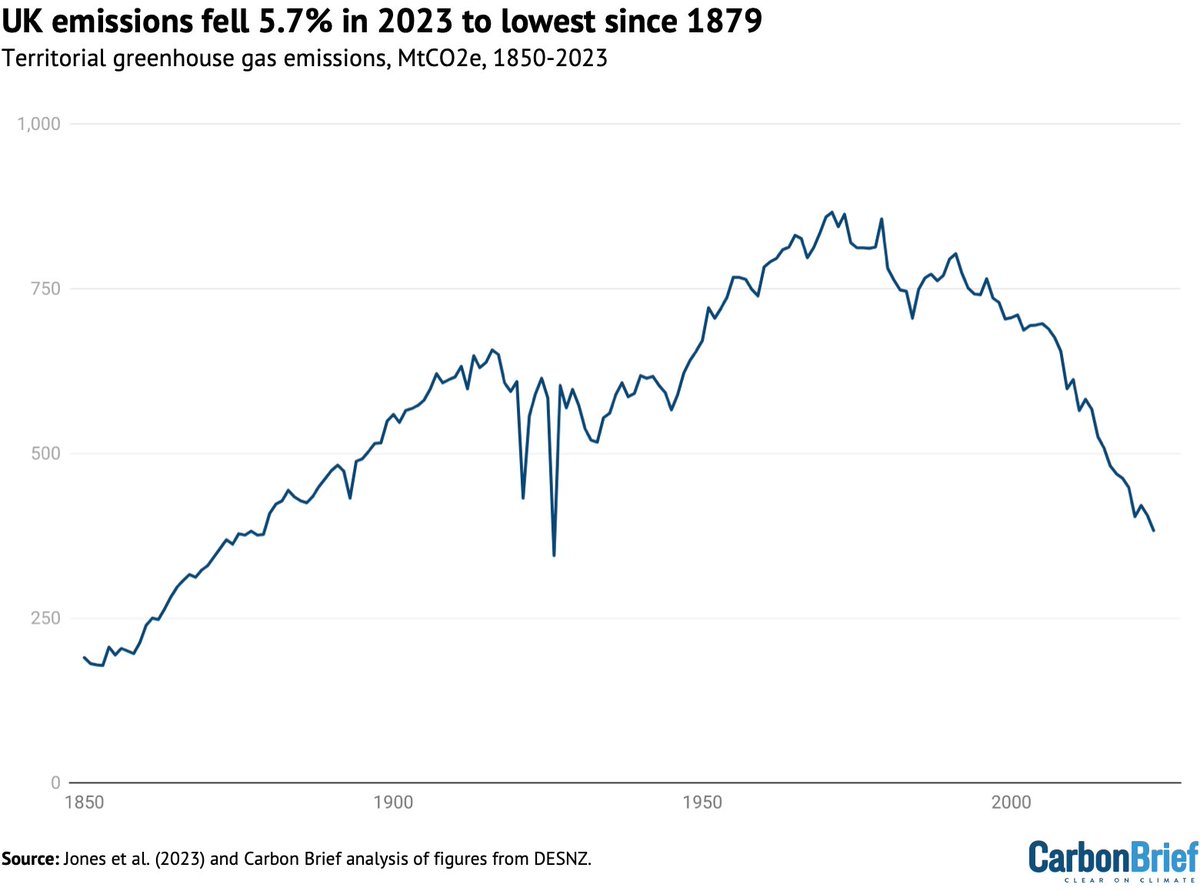
UK emissions in 2023 fell to lowest since 1879, new @CarbonBrief reveals
💷Emissions now 53% below 1990, as GDP up 82%
❤️🔥Drop in 2023 largely unrelated to policy
⛰️Coal now lowest since 1730s (!)
🚗Transport is largest sector, then buildings
⚡️Power now likely emits less than farms🐄
1/
https://t.co/6P4luE8k0U
🧵Citizens assemblies are back in the news. Can see people kicking off about them.. again so here goes:
1. Having worked with CAs for years can attest they are a good thing as they help break democratic logjams - issues where everyone knows change needs to happen but 1/6
Navalny.
So many thoughts have been expressed in the time that it has taken me to collect my own, that I'm not sure what this is worth. By the key words are Navalny's own: не сдавайтесь. Don't surrender.
/1
Important paper showing the gains to mothers and society from WFH. A 10% increase in WFH is shown to increase mothers employment by 1%. This is particularly true in professions which are more family unfriendly, like finance and marketing. Two implications:
1) WFH is driving faster economic growth by increasing the labor-supply of mothers. This is a huge benefit to society, and likely one reason for the post-pandemic surge in US economic growth.
2) WFH supports children's development by allowing parents to spend more time with them. This provides individual family benefits, and also wider social and economic benefits.
So the big-name CEOs and Politicians claiming WFH is damaging growth have got it 100% wrong. WFH is likely powering the current economic boom by increasing labor supply and productivity, while also improving personal and family time.
Paper: https://t.co/Izk1XjpQIK