HERMES AGENT HAS 3 BUILT-IN SYSTEMS
THAT FORCE YOU TO PLAN BEFORE THE AGENT BUILDS.
MOST PEOPLE SKIP ALL THREE
AND WONDER WHY THE OUTPUT IS GENERIC.
the reason AI output comes out wrong
is the agent guessing instead of knowing.
these three systems eliminate the guessing.
1. CONTEXT STACK (align before anything runs)
three files load before your first message.
the agent reads them before it reads you.
SOUL.md: WHO the agent is.
tone, rules, focus areas, hard limits.
"you write short direct sentences.
you never send emails without approval.
you verify facts before stating them."
user.md: WHO you are.
your stack, your preferences, your timezone.
auto-updated after every session.
review monthly. delete what's outdated.
.hermes.md: WHAT the project is.
architecture, conventions, file structure.
drop it in any project directory.
agent discovers it on session start.
without these: the agent assumes everything.
with these: the agent knows the project,
knows you, and knows itself
before you type a single prompt.
this is your alignment layer.
configure it once. it runs forever.
2. /GOAL + COMPLETION CONTRACTS (spec before build)
/goal is not a fancy prompt.
it is a spec the agent builds against.
/goal build a content pipeline
that monitors X for AI news every 2 hours,
drafts posts in my voice,
and sends drafts to Telegram for approval.
done when:
- cron job runs every 2 hours without errors
- drafts match SOUL.md voice rules
- Telegram delivery works with approval flow
the agent runs a loop.
after every turn, a judge model checks:
does the current state match "done when"?
not "does the agent think it's done."
does the EVIDENCE show it's done.
completion contracts (v0.18.0):
state what "done" looks like.
the judge evaluates against real checks.
test results. build outputs. verification scripts.
not against the model's assertion.
pre_verify hook: wire in custom checks.
the difference between "I think I fixed it"
and "the tests pass. here is proof."
this is your spec-first building.
nothing ships without passing the contract.
3. KANBAN DECOMPOSE (multi-lens review)
one goal. decomposed across specialized profiles.
each profile is a different lens on the same work.
hermes kanban create "launch new feature" --triage
hermes kanban decompose [card-id]
the decomposer breaks the goal into tasks.
routes each to the right profile by description.
researcher: validates the market need.
coder: builds and tests the implementation.
writer: creates the announcement and docs.
analyst: checks the metrics post-launch.
each profile has its own model, memory, and SOUL.md.
each catches what the others miss.
blocked tasks escalate to you for human judgment.
the board survives restarts.
work resumes where it stopped.
this is your multi-lens review.
nothing reaches "done" without passing
through every relevant perspective.
HOW TO RUN THEM IN SEQUENCE:
STEP 1: CONTEXT STACK (before you start)
write SOUL.md, user.md, .hermes.md.
the agent is aligned to you and your project.
STEP 2: /GOAL WITH CONTRACT (when you build)
define "done" with evidence, not vibes.
the agent builds until the contract passes.
STEP 3: KANBAN DECOMPOSE (when work is complex)
break it across profiles.
each specialist handles their piece.
human gates on critical decisions.
alignment → specification → multi-lens execution.
the same sequence runs a product launch,
a content campaign, or a codebase refactor.
skip step 1: the agent guesses who you are.
skip step 2: the agent decides when it's done.
skip step 3: one model misses what another catches.
run all three: the output stops being generic.
Prop firms can see something you can't: how the traders who make money are positioned vs the traders who lose it.
As of this second, so can you.
Real-time data; refreshed every 10 seconds.
Trade Validator is live. Free. 👇
THE CEO OF OBSIDIAN BUILT A CLAUDE CODE SKILL FOR HIMSELF. THEN HE PUBLISHED IT, AND IT PASSED 40,000 STARS.
Think about what this actually is. The guy who makes the notes app wrote a manual teaching AI how to take notes in his own app. MIT license, free, one command to install.
The problem it solves is real. Out of the box, Claude Code does not know Obsidian’s internals. Bases, the database feature. JSON Canvas, the format behind visual boards. Feed it a vault and it writes files that look right and break quietly.
obsidian-skills is the adapter. Two things that never quite fit, and one piece in between makes them click.
Three parts do the work. A CLI layer, so Claude adds, searches, and creates notes straight from the terminal. A Bases module, so generated database files come out in the correct format instead of almost-correct. And Canvas support, so Claude can draw mind maps and flowcharts as native Obsidian files.
The detail most people miss: this changes the kind of requests you can make. “Collect last week’s meeting notes and build a MAP page” becomes one sentence. Claude cross-references the vault and generates the page. The sorting ritual that used to eat a weekend closes in minutes.
Two honest caveats. Claude Code lives in the terminal, so complete beginners will feel the entry bar. And the skill edits files directly, so back up the vault before pointing it at anything you love.
But the shape of the setup is the point. Obsidian holds the second brain. Claude Code just became its secretary.
Most people are still copying notes into a chat window by hand. The author of the app already shipped the missing piece, and almost nobody noticed.
I Built A Trading Bot With Claude That Made +$168,236.
This video will teach you exactly how to build your own:
0:00 Intro
1:17 Creating "rules" (Strategy #1)
2:23 Pine Script & TradingView
4:59 Coding a strategy
7:25 Refining the strategy
9:45 Strategy #2
13:11 How to be profitable
14:42 Testing on NASDAQ
16:18 Live execution
I recorded a 2 hour video showing my entire trading process, with 2 live trades included.
00:00 Intro
01:05 What I actually do in a Trading Session
04:30 The Market Scan Process
06:02 Directional Bias
07:00 Structural Bias
08:54 Trade Quality
18:00 What to do while waiting for trade alerts
24:15 Live Trading Process
31:22 Live Trade #1
01:31:13 Live Trade #2
My top open source repos:
1. Mission Control
self-hosted AI agent orchestration dashboard
tasks, multi-agent workflows, spend, governance
5.7k stars
https://t.co/FiGs9ZRhjO
2. awesome-hermes-agent
curated skills, tools, integrations, and resources for Hermes Agent
4.6k stars
https://t.co/TBjF8doOn0
3. council-of-high-intelligence
18 AI personas deliberate hard decisions across multiple LLM providers
3.4k stars
https://t.co/fHmkuh9Viy
4. xint
X intelligence CLI for search, monitoring, analysis, and engagement
https://t.co/VeC1crQY8I
5. marketing-dashboard
open-source marketing ops control center for AI agent teams
https://t.co/KA3A1mlNpy
6. awesome-agent-cortex
sovereign agent stack for memory, identity, and agent ownership
https://t.co/14XeWN0JMS
the thesis is simple:
agents need infrastructure, not more demos.
Follow @nyk_builderz for the daily build in public.
HERMES AGENT HAS 10 SLASH COMMANDS
THAT TURN IT INTO A FULLY AUTONOMOUS SYSTEM.
MOST USERS KNOW 2 OF THEM.
HERE ARE ALL 10.
1. /BACKGROUND
run a task in a parallel session.
your main conversation stays free.
/background research competitor X pricing
result comes back as a new turn when finished.
two tasks at once. no waiting.
2. /STEER
redirect the agent mid-execution
without interrupting its current work.
agent is researching competitors.
you realize you also need pricing data:
/steer include their pricing page too
the model picks this up on its next iteration.
no restart. no lost progress.
3. /GOAL
persistent objective across turns.
judge model checks after every turn: done or not?
agent keeps going until the goal is achieved.
/goal find 50 leads in my niche,
qualify them, draft outreach for each
default budget: 20 turns.
pause with /goal pause.
add criteria with /subgoal.
4. /LEARN
turn anything into a permanent skill.
a directory. a URL. a workflow you walked through.
/learn ~/docs/client-onboarding/
/learn https://api-docs-page. com
/learn (after doing a task once in chat)
one command. reusable forever.
5. /MODEL
switch models mid-session. no restart.
/model deepseek/deepseek-v4-flash
started planning on Sonnet?
switch to DeepSeek for execution.
switch to Opus for final review.
right model per phase. same session.
6. /REASONING
control how much the model thinks per turn.
/reasoning low (fast, cheap)
/reasoning high (thorough, expensive)
/reasoning none (no thinking, fastest)
/reasoning full (uncapped, v0.18.0)
routine task: low. hard problem: full.
the difference in token cost is significant.
7. /UNDO
step back one message instead of reprompting.
agent got something wrong? don't send a correction
(adds to context, wastes tokens).
/undo
removes the last exchange.
give a cleaner prompt from the previous state.
8. /COMPACT
trigger compression manually.
don't wait for the threshold to fire.
/compact
after a long research session,
before switching to a different task.
compress first. fresh context for the next phase.
9. /MOA
toggle Mixture of Agents mid-session.
/moa (toggle default preset)
/moa coding (switch to named preset)
/moa off (back to single model)
routine work? single model.
hard architecture decision? /moa on.
one command. multiple model perspectives.
10. /ROLLBACK
restore a filesystem checkpoint.
/rollback
lists available snapshots.
pick one. files revert to that state.
agent broke something? /rollback.
experiment failed? /rollback.
no manual git stash needed.
requires checkpoints enabled:
checkpoints:
enabled: true
WHERE TO START:
add these three first:
→ /background (parallel work)
→ /reasoning low (save tokens on routine)
→ /undo (save tokens on mistakes)
three commands. immediate compound savings.
comment COMMANDS and I'll send you
bonus slash commands + custom shortcuts
that most power users build on top of these 10.
Learn how to replace your entire team with 8 Hermes agents 👇
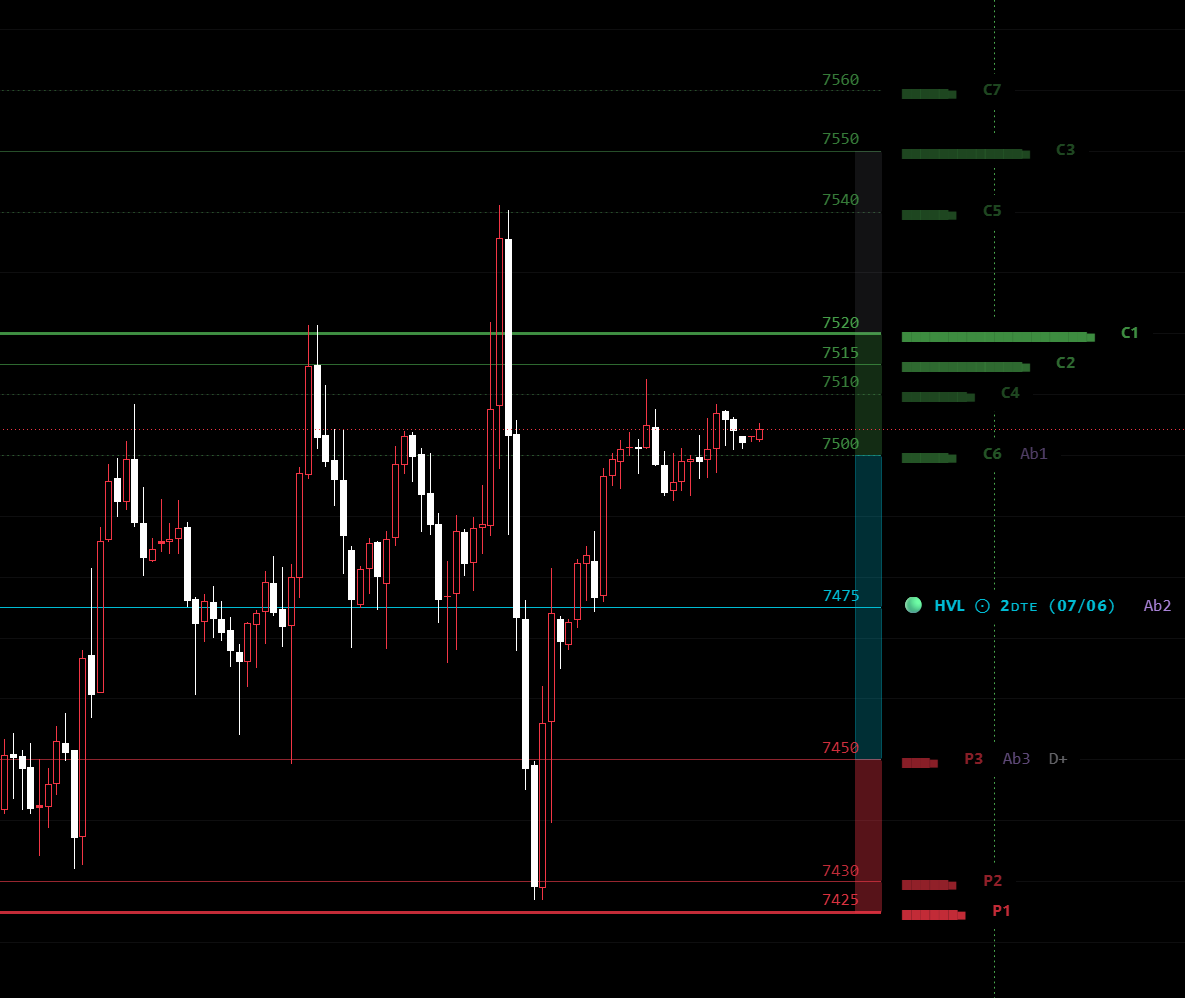
🚨مستويات Gamma Exposure (GEX) " الدرس الأول "
شفتوا المستويات الخضراء والحمراء اللي على شارتي؟
معظم المتداولين يقولون: "هذي مجرد دعم ومقاومة عادية..." لكن الحقيقة مختلفة تمامًا!
هذي المستويات أقوى من أي خط ترسمه يدويًا، وغالبًا السعر يحترمها بقوة.
خلوني أشرح لكم ليش وإيش هي بالضبط 👇
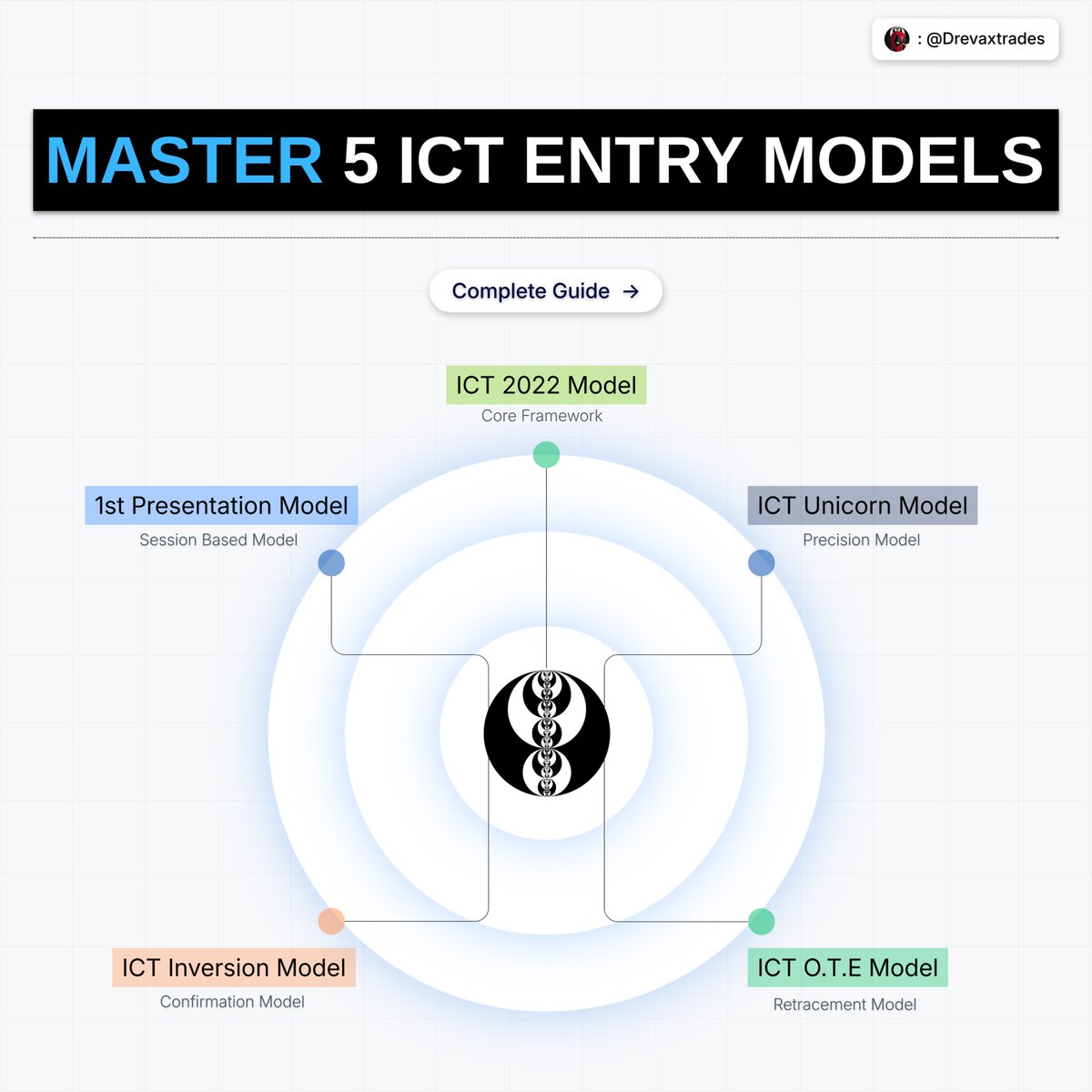
5 ICT Entry Models That Actually Matter🧪:
I compiled the 5 highest-probability ICT Entry Models into one comprehensive 24+ Pages Guide.
Learn when to enter, why it works, and how to execute it consistently
A THREAD🧵




![IBuzovskyi's tweet photo. HERMES AGENT HAS 3 BUILT-IN SYSTEMS
THAT FORCE YOU TO PLAN BEFORE THE AGENT BUILDS.
MOST PEOPLE SKIP ALL THREE
AND WONDER WHY THE OUTPUT IS GENERIC.
the reason AI output comes out wrong
is the agent guessing instead of knowing.
these three systems eliminate the guessing.
1. CONTEXT STACK (align before anything runs)
three files load before your first message.
the agent reads them before it reads you.
SOUL.md: WHO the agent is.
tone, rules, focus areas, hard limits.
"you write short direct sentences.
you never send emails without approval.
you verify facts before stating them."
user.md: WHO you are.
your stack, your preferences, your timezone.
auto-updated after every session.
review monthly. delete what's outdated.
.hermes.md: WHAT the project is.
architecture, conventions, file structure.
drop it in any project directory.
agent discovers it on session start.
without these: the agent assumes everything.
with these: the agent knows the project,
knows you, and knows itself
before you type a single prompt.
this is your alignment layer.
configure it once. it runs forever.
2. /GOAL + COMPLETION CONTRACTS (spec before build)
/goal is not a fancy prompt.
it is a spec the agent builds against.
/goal build a content pipeline
that monitors X for AI news every 2 hours,
drafts posts in my voice,
and sends drafts to Telegram for approval.
done when:
- cron job runs every 2 hours without errors
- drafts match SOUL.md voice rules
- Telegram delivery works with approval flow
the agent runs a loop.
after every turn, a judge model checks:
does the current state match "done when"?
not "does the agent think it's done."
does the EVIDENCE show it's done.
completion contracts (v0.18.0):
state what "done" looks like.
the judge evaluates against real checks.
test results. build outputs. verification scripts.
not against the model's assertion.
pre_verify hook: wire in custom checks.
the difference between "I think I fixed it"
and "the tests pass. here is proof."
this is your spec-first building.
nothing ships without passing the contract.
3. KANBAN DECOMPOSE (multi-lens review)
one goal. decomposed across specialized profiles.
each profile is a different lens on the same work.
hermes kanban create "launch new feature" --triage
hermes kanban decompose [card-id]
the decomposer breaks the goal into tasks.
routes each to the right profile by description.
researcher: validates the market need.
coder: builds and tests the implementation.
writer: creates the announcement and docs.
analyst: checks the metrics post-launch.
each profile has its own model, memory, and SOUL.md.
each catches what the others miss.
blocked tasks escalate to you for human judgment.
the board survives restarts.
work resumes where it stopped.
this is your multi-lens review.
nothing reaches "done" without passing
through every relevant perspective.
HOW TO RUN THEM IN SEQUENCE:
STEP 1: CONTEXT STACK (before you start)
write SOUL.md, user.md, .hermes.md.
the agent is aligned to you and your project.
STEP 2: /GOAL WITH CONTRACT (when you build)
define "done" with evidence, not vibes.
the agent builds until the contract passes.
STEP 3: KANBAN DECOMPOSE (when work is complex)
break it across profiles.
each specialist handles their piece.
human gates on critical decisions.
alignment → specification → multi-lens execution.
the same sequence runs a product launch,
a content campaign, or a codebase refactor.
skip step 1: the agent guesses who you are.
skip step 2: the agent decides when it's done.
skip step 3: one model misses what another catches.
run all three: the output stops being generic.](https://pbs.twimg.com/media/HNDMxZWWIAANM0Z.jpg)