Help patients understand why it's so important to protect their heart before, during and long after cancer treatment with #CardioSmart’s infographic. 👇
Check out the CardioSmart Hub for more: 🔗 https://t.co/I3XzaqLPpp #NationalCancerSurvivorsDay
#EbolaOutbreak Update | The DRC & Uganda | as of 07 June 2026 🇺🇬
Find the latest figures on the Bundibugyo Ebola virus disease reported in the DRC and Uganda.
---
#EbolaOutbreak | Situation Ebola au 07 juin 2026 | RDC et Ouganda
Retrouvez les derniers chiffres de l'épidémie de la maladie à virus Ebola Bundibugyo en République démocratique du Congo et en Ouganda.
🔗 Read the situation report | Rapport de situation : https://t.co/ZvAkeeX99z
#SécuritéSanitaire #RiposteEbola #AfricaResponds #HealthSecurity #EbolaResponse @MinSanteRDC@MinofHealthUG
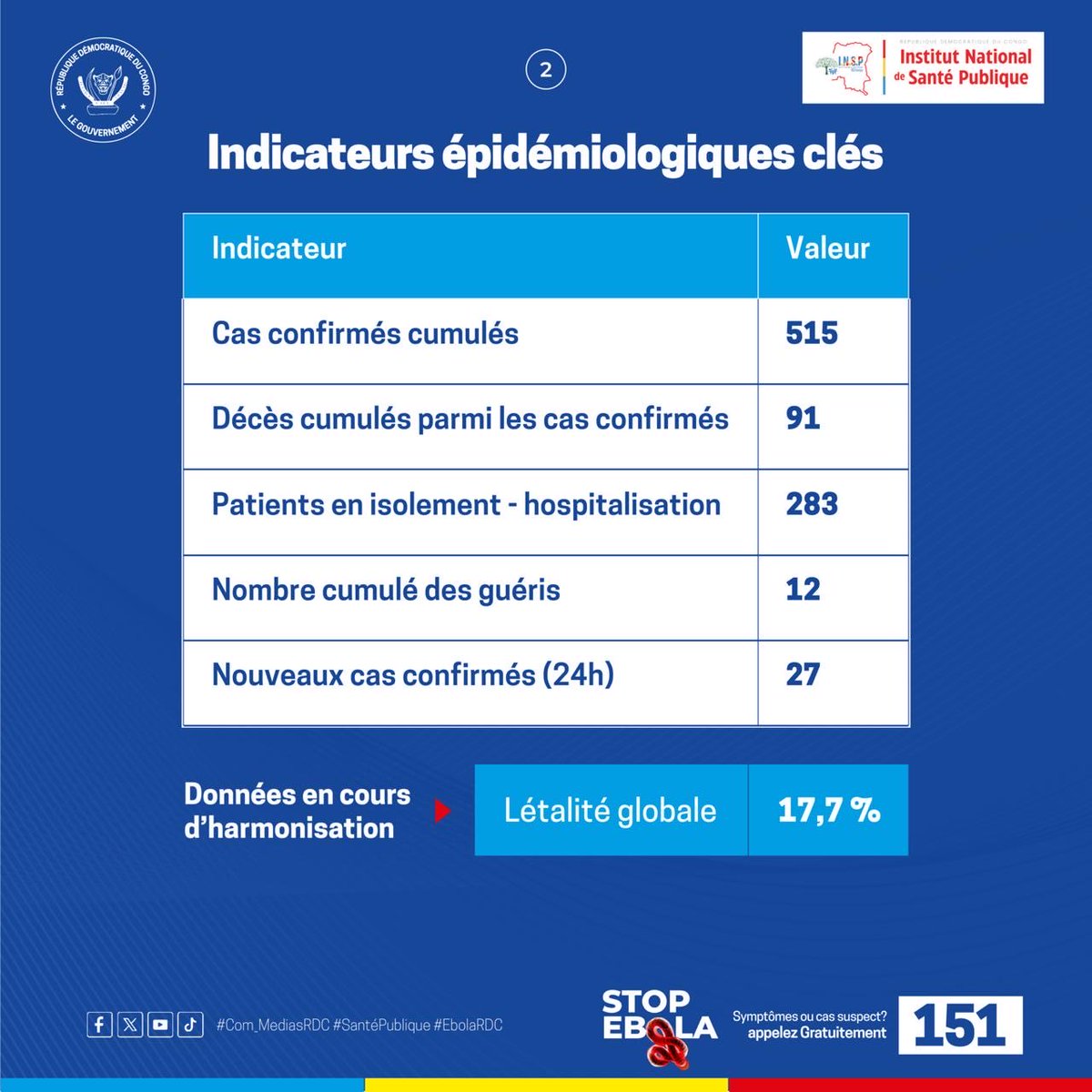
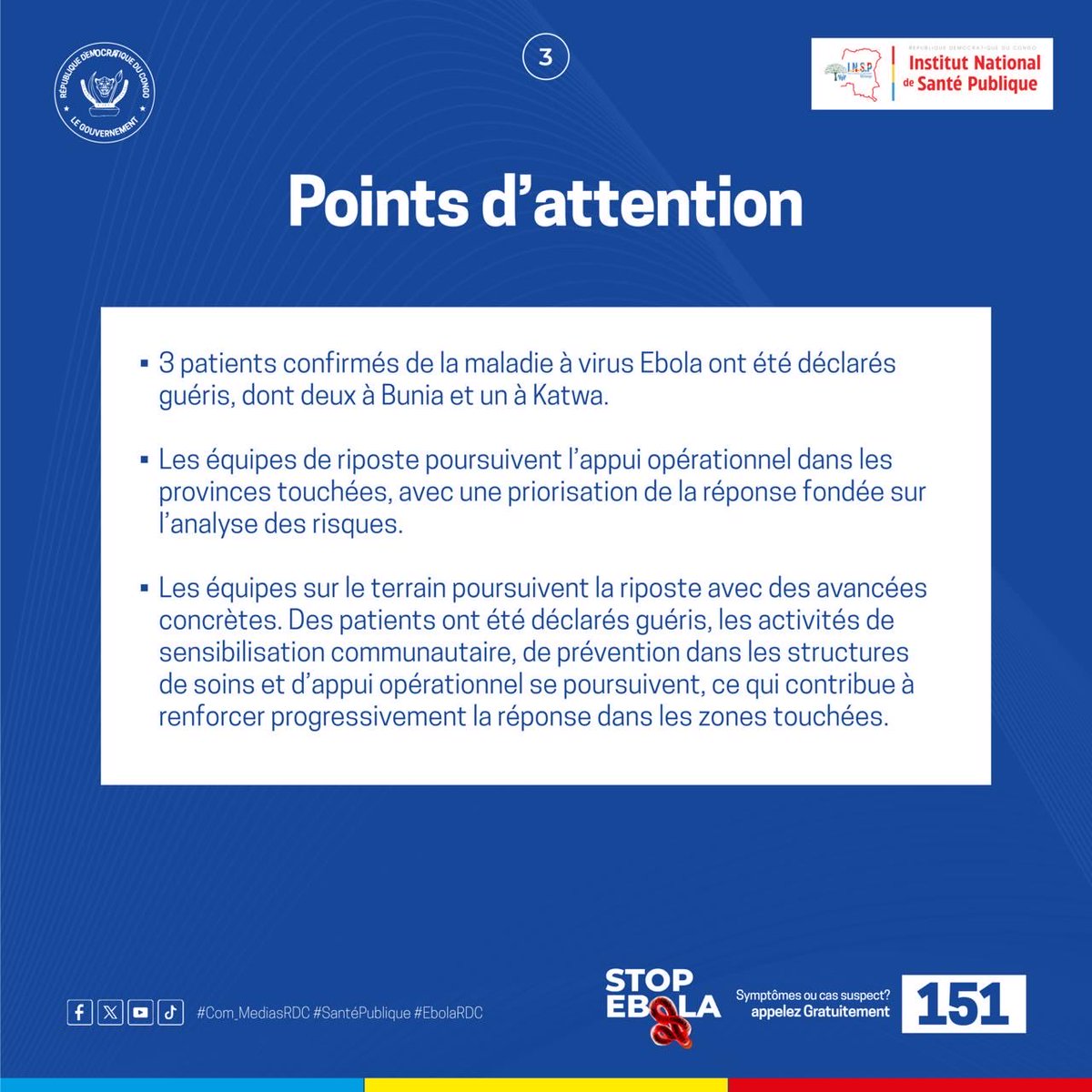
🚨 Ebola RDC – Situation au 6 juin 2026
515 cas confirmés cumulés (+27 en 24h)
91 décès
283 patients hospitalisés ou en isolement
12 guéris
Taux de létalité : 17,7 %
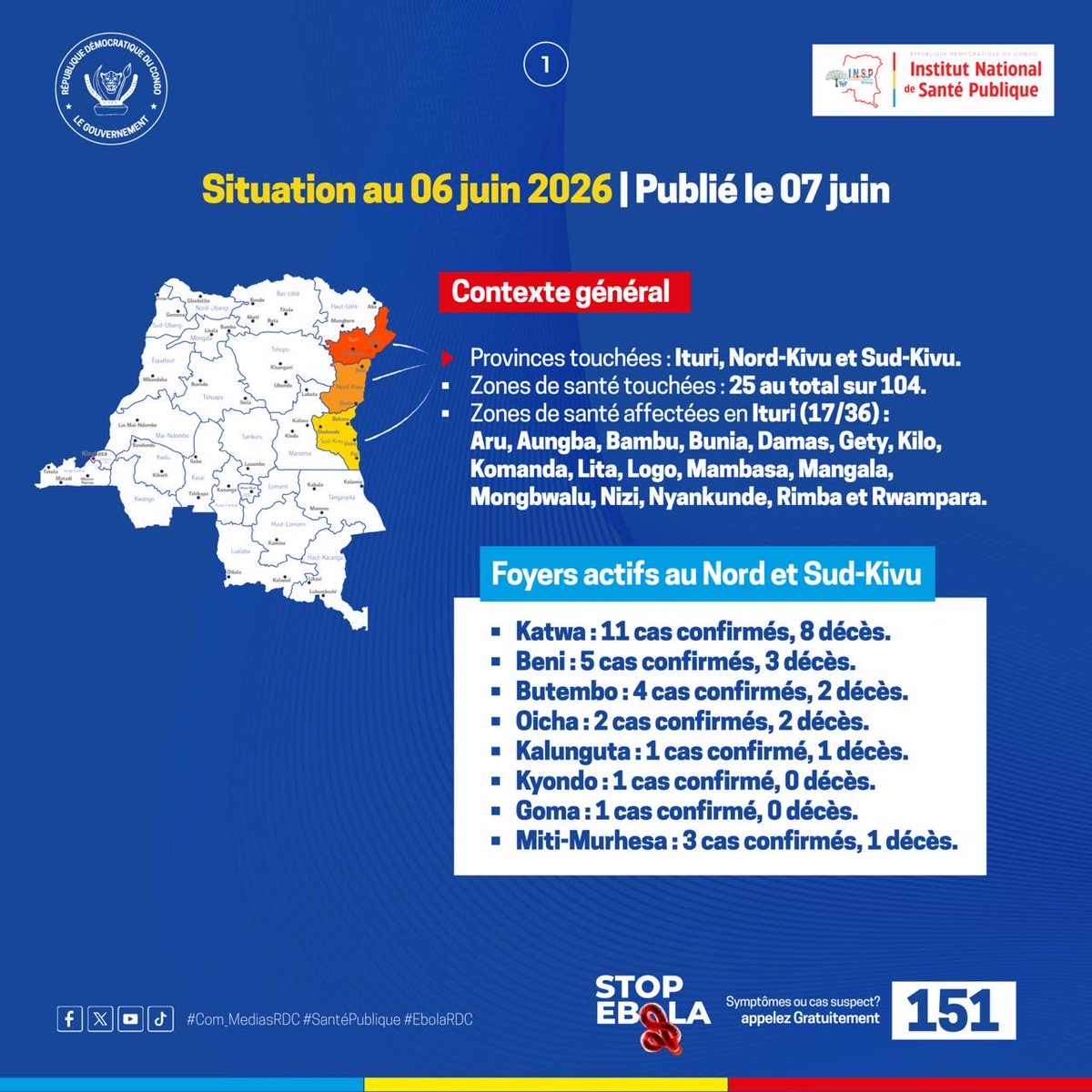
📍 25 zones de santé touchées dans trois provinces :
Ituri (épicentre de l’épidémie)
Nord-Kivu
Sud-Kivu
🔎 Éléments marquants
Les activités de prise en charge, de prévention et de sensibilisation communautaire se poursuivent dans les zones affectées.
Les équipes de riposte renforcent leur intervention en privilégiant une approche basée sur l’analyse des risques.
Les actions de prévention dans les structures de santé et l’appui opérationnel continuent d’être intensifiés.
⚠️ L’Ituri demeure le principal foyer de l’épidémie, tandis que les foyers du Nord-Kivu et du Sud-Kivu restent sous surveillance rapprochée.
📞 En cas de symptômes ou de suspicion, appelez gratuitement le 151.
💌 Why Are Doctors Leaving Their Careers So Early?
A paper I came across this week made me stop for a second. Doctors are leaving medicine, indeed, and it's concerning how early some of them are leaving. In a national survey of 971 clinically inactive physicians, the mean age of doctors who had left clinical practice was 48.1. That’s nine years younger than a similar cohort in 2008. And 11% said they never practiced at all after graduate medical education.
Late 40s is not the end of a medical career. Not after that much training, that much sunk time, and that much personal cost.
So what were the reasons? Hassle factor, stress, unrealistic patient demands, and lack of professional satisfaction were the biggest ones. Overwork and frustration with health-system structures kept coming up too. None of that reads like a motivation problem. It reads like people getting worn down by the shape of the job itself.
The gender side of it is hard to ignore as well. Women made up 63.9% of respondents, were more likely than men to say they left to care for children or other family members, and among doctors no longer practicing, the median clinical career was 9 years for women versus 12 for men.
We talk about workforce shortages as if the answer is mostly at the front end: train more people, open more posts, widen the pipeline. But if fully trained doctors are leaving in their 40s, and some never enter practice at all, then the problem sits much further downstream too. You can’t keep talking about recruitment while ignoring what clinical work has become for the people already inside it.
If we want doctors to stay, the job has to feel worth staying in. That means less pointless friction, less admin disguised as care, better support for family life, and a lot more of looking into why good people are walking away, so we can fix the issues from within. Otherwise, we’ll keep calling it a workforce problem when really it’s a retention problem we’ve been watching in plain sight.
P’Fella ❤️
A flight with @WHO health supplies for the #Ebola response in the #DRC, including personal protective equipment for health workers and other supplies for infection prevention and control activities, is on its way from our Global Health Emergencies Logistics Hub in Dubai. Another flight from the global hub will depart early next week.
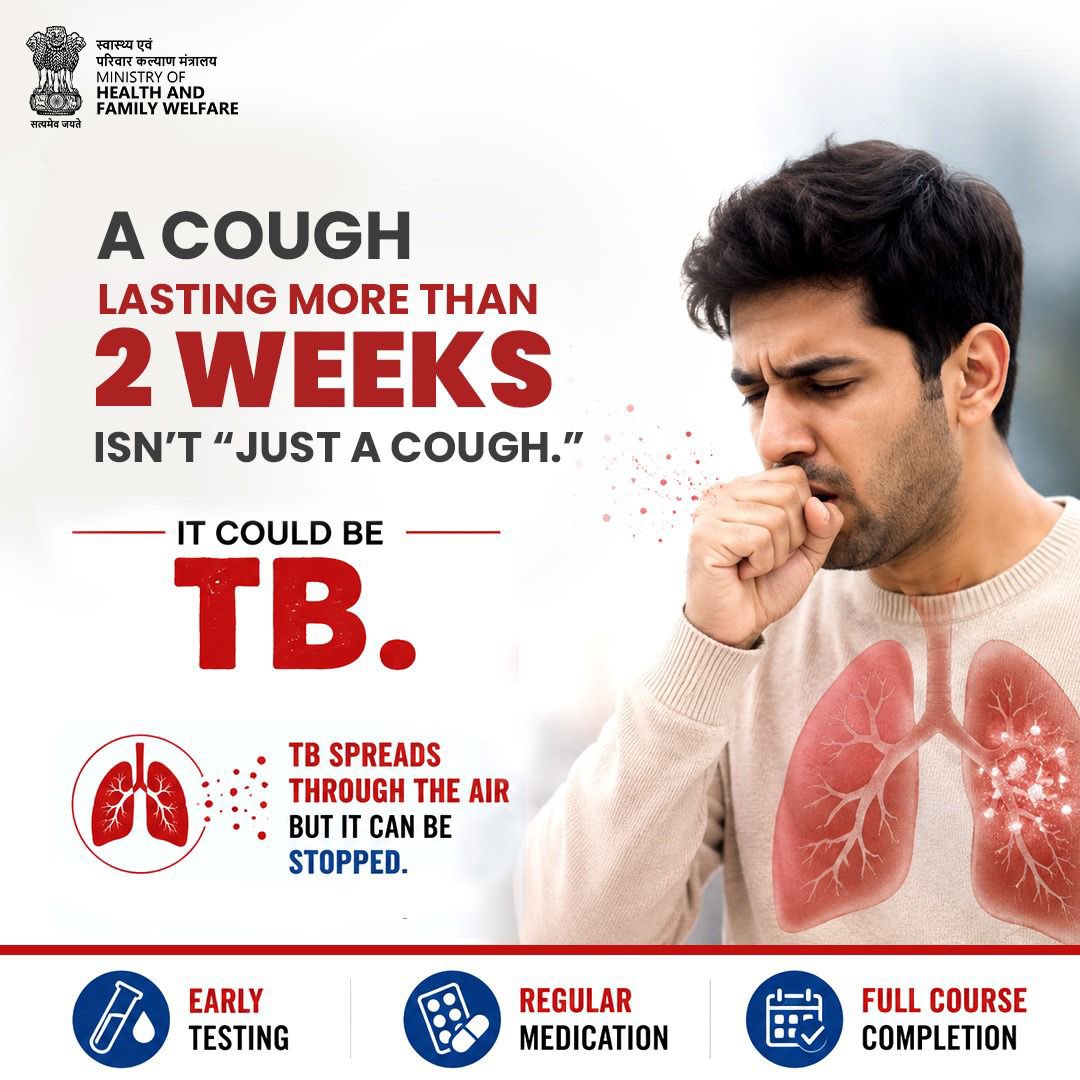
A cough lasting more than two weeks, fever, weight loss, or night sweats could indicate TB.
TB is curable, and early detection is key to stopping its spread. Free testing and treatment are available.
Don’t delay, get tested, complete your treatment, and help build a TB-Free India.
#TBMuktBharat
#EndTB
Your awareness is the first line of defence.
No Ebola disease cases have been reported in India as of 3 June 2026. However, travellers from Ebola-affected countries are advised to remain alert for symptoms and seek guidance promptly if they feel unwell.
For information, guidance and assistance, call MoHFW’s 24x7 Health Helpline: 1075
#Ebola #HealthAdvisory #PublicHealth
Join us for a WHO/AFRO Press Briefing on the #Ebola Bundibugyo virus disease outbreak.
Hear from health leaders on the latest developments and the actions being taken to stop transmission and protect communities.
🗓️ 4 June 2026
⏰ 10:00–11:00 GMT
📍 Live on WHO/AFRO social media channels
One month has passed without a reported death from the hantavirus outbreak on the MV Hondius, with confirmed cases holding steady at 13. The situation is stable, and the global risk remains low. WHO will continue close coordination with affected governments through the completion of the quarantine period for all passengers and crew.
Ebola disease is a severe, often fatal illness transmitting from animals to humans and between humans.
Here’s what you need to know about how it spreads, the symptoms, and how to prevent infection.
#Ebola can spread through breastfeeding.
If you have symptoms of #Ebola, call the Ministry of Health toll free line immediately for appropriate assistance.
#MOHatWork | #FightEbolaUG26
Join us this Thursday for an important briefing on health emergencies across the continent. The briefing will provide updates on the #EbolaOutbreak in the DRC and Uganda, including ongoing response actions and regional coordination efforts.
📅 Date: 04 June 2026
🕓 Time:
* 16:00 | EAT (GMT+3)
* 15:00 | SAST (GMT+2)
* 14:00 | CAT (GMT+1)
* 13:00 | WAT (GMT)
🔗 Register to participate: https://t.co/itEMNCs5qQ
#HealthSecurity
The relationship between sitting and the disease isn’t that direct.
But there is a connection between inactivity and cancer, as study after study clearly shows. Excess weight is the main thread tying the two together. (Fast fact: It’s estimated that obesity is responsible for 4% to 8% of all cancer diagnoses.)
Sitting is a correlate of obesity — and having obesity is a risk factor for certain types of cancer. The real takeaway in all of this is the importance of being active and managing your weight.
And while the focus here is on cancer risk, it should be noted that sedentary habits also increase your chances of heart disease, Type 2 diabetes and other health issues that can cut your life short.
Avoiding cancer may be as simple as getting off your butt and moving around.
Research shows that sitting for long periods of time during the day increases your chance of developing certain types of cancer, including:
Colon cancer
Uterine (endometrial) cancer
Lung cancer
Prostate cancer
Rethink how you go about your day in the office to break up your time in a chair. Try to get out of your seat and move around for at least five minutes every hour.
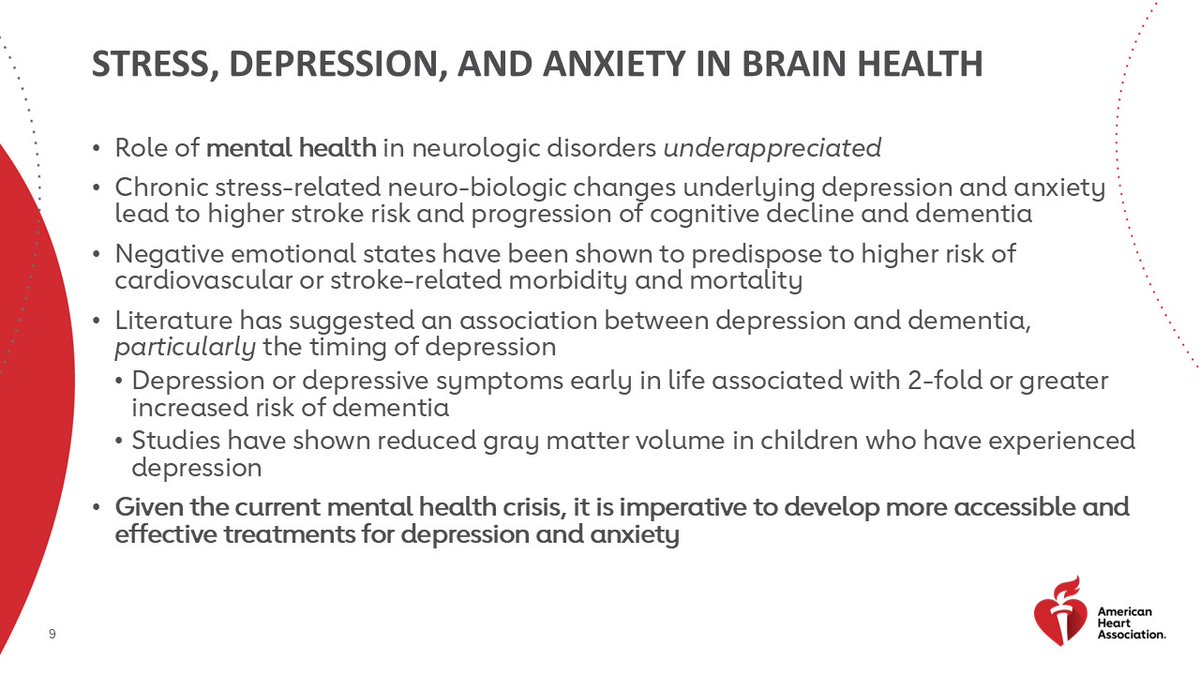
Depression and anxiety are not isolated conditions.
This paper examines how the timing of depression across the life course may influence dementia risk and brain structure, reinforcing the need for earlier intervention.
#Ebola can spread through sexual contact. The virus can remain in semen for upto 6 months after recovery, even when a person feels well.
Men who have recovered from Ebola should follow your health worker's guidance until the virus is no longer detectable.
Men are advised to:
1. Abstain from sex until cleared by the health worker
2. Use condoms consistently and correctly
#MOHatWork | #FightEbolaUG26
🏃 Physical activity can help support better health for people living with #KidneyDisease.
If you are not currently active, speak with your doctor about the types of exercise that may be right for you.
Learn more 💡
https://t.co/5J0joalTCb
#WorldKidneyDay #OurKidneysOurPlanet #KidneyHealthForAll