Progress compounds when Structure and Processes are aligned. It stalls when they are not.
A useful Friday question: Which of this week’s outcomes came from deliberate system design, and which ones still depend on individual effort filling the gaps?
Progress compounds when Structure and Processes are aligned. It stalls when they are not.
A useful Friday question: Which of this week’s outcomes came from deliberate system design, and which ones still depend on individual effort filling the gaps?
Many organizations introduced AI tools expecting immediate results. In several recent cases the technology itself performed, yet inventory errors, cost overruns, or operational friction followed.
The tools were treated as standalone solutions. Durable outcomes require redesigning the surrounding Structure, Processes, and accountability systems that determine whether any tool creates lasting Created Value.
When foundational assumptions go unexamined, entire systems continue to operate as if the old constraints are permanent.
The organizations that pull ahead are the ones willing to question the blueprint itself and redesign Structure and Processes around current reality rather than historical limitations. That shift is what unlocks more durable Created Value.
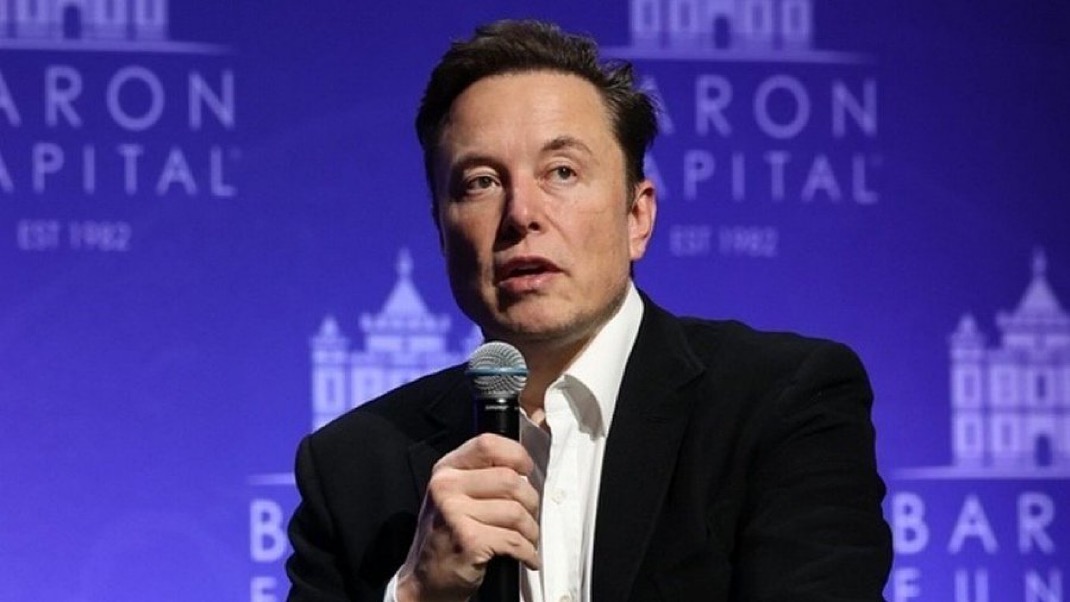
Elon Musk just spent seventeen billion dollars to make every cell tower on Earth a relic.
Musk: “It will allow SpaceX to deliver high bandwidth connectivity directly from the satellites to the phones.”
Not through towers. Not through cables. Not through any infrastructure on the ground.
Directly from orbit to the phone in your pocket.
For over a century, connectivity followed the same blueprint. Build a tower. Run a cable. Expand the network one piece of ground at a time.
Coverage went where the money was. Where the population density justified the investment.
Everywhere else got silence.
Four billion people still don’t have reliable internet.
Not because the technology doesn’t exist. Because no one could justify building a tower where they live.
Connectivity was never a technology problem. It was a geography problem disguised as one.
Musk: “The phones that are able to use the spectrum that was acquired probably start shipping in around two years.”
Two years. Then the phone in your hand connects straight to space.
No tower required. No carrier infrastructure between you and the signal.
The entire telecom industry was built on one assumption. That connectivity requires ground infrastructure.
Every carrier. Every contract. Every coverage map. All products of that assumption.
Starlink just bypassed it from orbit.
From orbit, every point on Earth is equidistant.
The word “remote” only exists because connectivity was built from the ground up.
From space, there is no remote. There is no coverage gap. There is no place on Earth harder to reach than any other.
The ground decides who gets connected based on where they are.
The sky doesn’t know the difference.
Human potential was always distributed evenly across the planet. Access to information never was.
The gap between those two facts is the greatest waste in human history.
We spent a century deciding who deserved access to information based on where they happened to be born.
Musk just made that question obsolete from 550 kilometers above the answer.
A Topological Approach surfaces those connections instead of treating symptoms in isolation. This Friday is a useful moment to ask: Where are we still relying on one-dimensional explanations when a systems view would serve us better?
Most challenges look simple on the surface. Leaders often reach for the nearest single cause and apply a quick fix. That approach feels efficient, but it usually leaves the deeper patterns untouched.
The real leverage lives in the interdependencies. How Structure, Processes, and accountability connect determines whether problems stay fixed or simply reappear in a new form. Organizations that examine the full system make clearer decisions and generate more durable Created Value.
Most company failures get pinned to one dramatic cause. The deeper problem is almost always upstream: Structure and Processes that were never built to handle complexity or absorb shocks.
One-dimensional thinking keeps leaders chasing symptoms while the real vulnerabilities in how the Organization connects talent, incentives, and operations remain unaddressed. A Topological approach surfaces those interdependencies so you can strengthen the system itself rather than just treat the latest crisis.
#Humaculture #Leadership
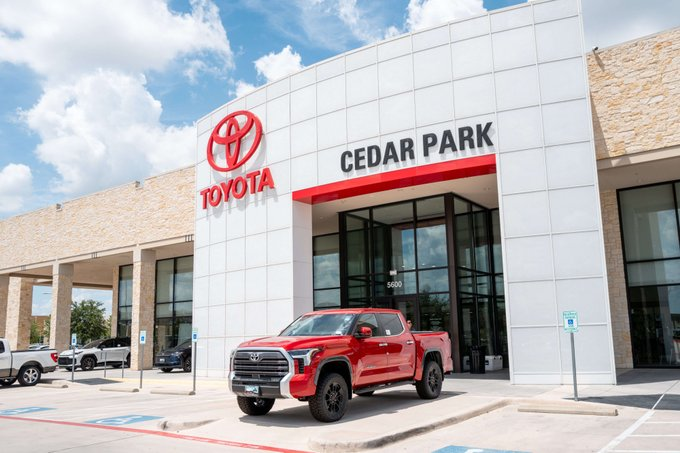
Major expansions like Toyota’s in San Antonio don’t happen in a vacuum. They reflect organizations that have built the internal Structure, Processes, and talent systems needed to deliver consistent results at scale. When those foundations are solid, companies can confidently grow, create jobs, and generate greater Created Value closer to home.
Major expansions like Toyota’s in San Antonio don’t happen in a vacuum. They reflect organizations that have built the internal Structure, Processes, and talent systems needed to deliver consistent results at scale. When those foundations are solid, companies can confidently grow, create jobs, and generate greater Created Value closer to home.
Toyota Announces Nearly $4 Billion Expansion, 2,000 New Jobs at Texas Plant | Bryan Hyde, American Greatness
Toyota announced on Monday that it will be doubling the size of its San Antonio, Texas plant and moving most of its Tacoma pickup manufacturing from Mexico to the U.S., over the next four years.
The Daily Wire reports that Toyota’s $3.6 billion investment will add a second assembly line, create up to 2,000 new jobs by 2030 and increase annual production capacity by 150,000 vehicles.
Texas Governor Greg Abbott celebrated the announcement, saying, “This Texas-sized investment reflects the strength of our workforce and the unmatched business advantages found only in our state.”
Abbott added, “Supported by the Texas Enterprise Fund and JETI program, this expansion will deliver economic opportunities to generations of San Antonio families and further cement Texas as the premier destination for world-class advanced manufacturing.”
Toyota Motor North America (TMNA) President and CEO Ted Ogawa called the investment “a testament” to the company’s confidence in the region’s workforce, innovation and long-term growth potential.
Ogawa explained, “By expanding our San Antonio plant, we are deepening our commitment to American manufacturing, creating meaningful and sustainable jobs, while advancing our mission to deliver high-quality vehicles that meet the changing needs of customers today and into the future.”
Toyota had previously built the Tacoma midsize truck in San Antonio before shifting production to Mexico as part of a broader truck and SUV production realignment.
According to USA Today, the expansion will be adding 2.5 million square feet to Toyota Texas, bringing Toyota’s total investment in San Antonio to $8.3 billion since 2003.
President Trump weighed in on Toyota’s announcement Tuesday in a post on Truth Social, writing: “Toyota is moving from Mexico to the United States (Texas!). A really big deal. Tariffs at work!”
The president has previously argued that tariffs would encourage companies to shift production to the U.S. while imposing tariffs on imported vehicles, auto parts, steel and aluminum as part of his broader trade agenda.
https://t.co/YiISwMYuHx
This Saturday offers a good moment to pause and appreciate the progress made through consistent effort. When Organizations maintain clear Structure and Processes, people are able to contribute at their best and generate meaningful Created Value together.
Even the smallest wins this week add up over time. What one positive outcome from the past few days are you carrying forward into the weekend?
Most company failures get pinned to one dramatic cause. The deeper problem is almost always upstream: Structure and Processes that were never built to handle complexity or absorb shocks.
One-dimensional thinking keeps leaders chasing symptoms while the real vulnerabilities in how the Organization connects talent, incentives, and operations remain unaddressed. A Topological approach surfaces those interdependencies so you can strengthen the system itself rather than just treat the latest crisis.
#Humaculture #Leadership
Spirit is gone.
Everyone has a single-cause explanation.
But the real failure was invisible: weak Organizational "soil."
New from Humaculture® → Why one-dimensional thinking dooms companies (and how a topological approach changes everything)
https://t.co/bCIDl2PxSY
#Humaculture #Leadership #FeedTheSoil
The organizations that consistently win on talent treat boundaries as a competitive advantage rather than an afterthought. Clear Structure, merit-based talent acquisition, aligned rewards, and consistent nurturing processes don’t just attract strong performers—they actively restrict the entry and retention of poor fits that drain resources and damage culture.
What would shift in your results if your talent boundaries filtered as intentionally as they attract?
#MeritBasedTalent #CreatedValue
The nuance in this Life Annuity Specialist piece is worth attention. Periods of elevated mortality, such as during and after the Covid era, often precede temporarily lower overall rates due to selection effects.
Yet this can still mask rising pressures from the specific causes that drive life insurance experience. Industry collaboration, paired with deliberate focus on prevention and resilience at the organizational level, offers practical levers to influence these patterns over time. Grateful for the share.
Elon Musk’s description of Tesla and SpaceX actions cuts through conventional thinking on competition. Open-sourcing patents, making charger technology freely available, and avoiding defensive patent walls represent a clear structural decision: design Systems that invite contribution rather than restrict it.
When Organizations choose openness over enclosure, merit-based innovation accelerates and total Created Value rises for the entire ecosystem. The contrast with companies that build barriers is instructive.
#Humaculture #MeritBasedTalent #Innovation
Elon Musk on how Tesla and SpaceX have helped their competitors:
“Nothing any of my companies have done has been to stifle competition. In fact, we've done the opposite. At Tesla, we have open-sourced our patents. Anyone can use our patents for free. How many companies do you know that have done that? Can you name one? I can't.
At SpaceX, we don't use patents. So I mean, once in a while we'll file a patent just so some patent troll doesn't cause trouble. But we're not stopping, we've done nothing anti-competitive. Some companies have done anti-competitive things.
At Tesla, we have made our Supercharger system open access. We made our charger technology available for free to the other manufacturers. No walled garden. We could have put a wall up, but instead we invited them in.”
After 250 years, the Constitutional Republic has produced major innovation and opportunity. But what happens when clear boundaries around citizenship begin to erode?
In this new article, we examine why strong structural boundaries, much like those in any well-run organization, are essential to protecting citizens and sustaining long-term progress.
Read the full piece here: https://t.co/9uCuvpDO96
#America250 #ConstitutionalRepublic #RuleOfLaw
The Constitutional Republic has endured 250 years because its structures channeled human energy into productive effort rather than perpetual contest over power. The result: compounding innovation, mobility, and created value that attracted talent worldwide. Systems that keep foundational rules clear and accountability real tend to compound advantage over time.
Full topological review coming next week.
#America250 #ConstitutionalRepublic #RuleOfLaw #SystemsThinking #Humaculture #Patriotism