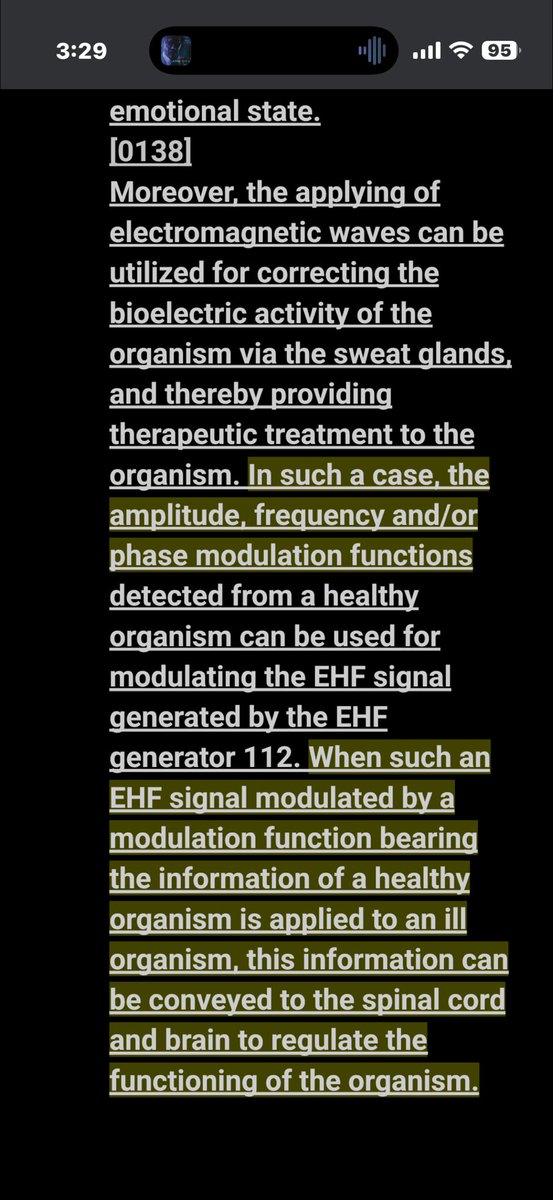
VISIBLE LIGHT GENERATION IN THE BODY
MMWAVE / THZ WAVE
PICOSECOND DUTY CYCLES
BATTERY POWER SUPPLY
NON-LINEAR TISSUE CHARACTERISTICS—>UP-CONVERT TO VISIBLE LIGHT PHOTONS
https://t.co/Xa8aGG9dHN
A drone flying with no battery tether sounds impossible until you see it. GuRu wirelessly transmitted power through the air to directly run an untethered drone from 30 feet away and has kept one flying for 96 hours straight. Power beaming is moving out of science fiction fast.
MyDefence has released Wingman Edge, a 975-gram wearable drone detection system designed for individual soldiers. The device passively scans radio frequencies between 200 MHz and 6 GHz to detect drone control signals, communications links, and Wi-Fi transmissions up to 6 kilometers away, then uses AI to classify and confirm threats against a database of known drone signatures. Alerts reach the wearer via sound, light, vibration, or display. The system is networked with command and control infrastructure, allowing it to adapt to new or unknown signals in real time. The launch comes as drones increasingly threaten individual soldiers on the battlefield, including small commercial drones modified to carry explosives.
Engineers at Northwestern University have developed GlassTENG, a prototype pair of health-sensing glasses that run entirely on energy harvested from facial movements including blinks, smiles, jaw clenches, and eyebrow raises. Three triboelectric nanogenerator sensors mounted on the frame press and separate with each facial movement, generating electrical charges that power the device with no battery required. The sensors monitor pulse, bruxism, fatigue, and cardiovascular health, with a machine-learning algorithm achieving 93.8% overall accuracy across 20 volunteers. Pulse measurements were off by an average of just 1.82 beats per minute compared to a chest strap reference. With more than 4 billion people already wearing glasses globally, the researchers see the platform as a way to turn an existing habit into continuous health monitoring without asking users to change their behavior.
AI Agents Will Hit A Wall If Not Optimized Overtime.
How JouleWork Turns Agents Into Steady Utility
Agents that plan a sequence, call tools, and act without a human on every step are entering the systems that already run companies. The architectures that survive the next two years do not treat autonomy as an afterthought. They build the boundary first, then optimize the work that crosses it.
Analysts tracking these deployments note that more than 40 percent of current agentic projects will be canceled by the end of 2027. Costs rise once the agent leaves the pilot. Value stays unclear after the first runs.
Risk controls fail when the agent meets live data and live workflows. Current models still lack sustained agency for open-ended goals that span many systems and many days. The projects that continue past that point start from a different premise: they optimize for utility under real constraints rather than for the appearance of autonomy.
I apply the same principle I use with local agents in the garage lab. JouleWork treats the agent’s activity as a thermodynamic process. Each step carries a measurable cost in compute, latency, and residual risk.
I apply this to cloud agents with estimates however it would be useful to have a standard. It would take very little to pass a JouleWork value to any agent work.
The algorithm continuously reallocates effort so that the expected utility of the next action exceeds the cost of taking it, and so that actions below that threshold are deferred or handed back. Optimal utility is the steady state in which the agent completes the bounded task with the least total energy for the required reliability. It is not a claim that the model is generally intelligent. It is a claim that the work can be made efficient and reversible.
The architecture that supports this is split and contained. One layer executes the procedural sequences that already exist as documented steps: routing a ticket, coding an invoice, extracting a clause and scoring its confidence, generating a scheduled report.
The second layer supplies the governed knowledge the agent needs when judgment is required: the current policy as a cited source, the prior decision with its receipt, the pattern that lives in the documents rather than in someone’s head.
Both layers run inside the company’s own environment. The model provider retains nothing. Access follows the identity rules already in force. Every action leaves an audit record that can be examined and, if necessary, reversed.
Orchestration stays narrow and scheduled. The agent takes the next defined step, measures the utility delta, and either continues or escalates. Policies are enforced by the platform. Trust accumulates from visibility into the energy and outcome of each action, not from a declaration that the model can be left unsupervised.
Model choice remains open so that a simple extraction moves to a cheaper, faster model while a harder classification stays on a stronger one. The human remains only where the cost of an error exceeds the cost of the review.
Projects built this way do not ask the agent to invent a process. They ask it to execute a bounded sequence a human already understands, and they let JouleWork keep the total cost of that sequence at the minimum required for the utility the business actually needs.
The ones that reach the end of 2027 are the ones that treated optimal utility as the design constraint from the first deployment.
Imagine reality as a closed electromagnetic system where the fundamental forces are not separate phenomena but three expressions of the same field:
Magnetism
Dielectricity
Electricity
The universe behaves like a spectrum of living light. The medium of this light has historically been called the Æther—a dynamic field through which vibration, charge, and form arise.
Everything we observe can be understood as waveforms in the aetheric field.
• Magnetism represents centripetal compression
• Electricity represents radiative expansion
• Dielectricity represents the neutral field potential between them
Together they generate the harmonic structure of the cosmos.
Color becomes more than perception, it becomes a map of energy states.
The visible spectrum reflects different levels of vibrational density within the field. At the center of this spectrum lies green, traditionally associated with balance and equilibrium.
Earth corresponds to the heart center of the system, where opposing forces reach harmonic balance.
Above us, the atmosphere transitions toward higher electric potential and subtler states of matter. The sky appears blue because shorter wavelengths dominate in these higher, more rarefied regions of the field.
Below us, matter becomes increasingly dense, magnetic, and structured as compression dominates.
This gradient may also be reflected in the natural electrostatic potential of the atmosphere, where measurements show an average increase of roughly 100 volts per meter with elevation. In other words, the higher we go, the greater the electric potential relative to the ground.
In this way the atmosphere can be imagined as a living gradient between magnetism below and electricity above.
Density seeks equilibrium.
Energy circulates in toroidal fields.
Color expresses the geometry of vibration.
This theory explores how color theory, electromagnetism, and ancient symbolic systems might all be describing the same underlying structure of reality.
Not a system of dogma and appeals to authority but as a framework for thinking differently about the relationship between light, energy, and consciousness.
✨🙌🏾💫
A laser-made plasma filament has transmitted radio waves for the first time, forming a lightsaber-like antenna whose length can be controlled by adjusting the laser. @ncstate https://t.co/lJ0knIC6xm
Finally, the Prophetic AI agent reasses the effects. By using spatially and temporally flexible targeting, the AI can select new targets to continuously direct consciousness.
Electrons moving through a magnetic field can become trapped between two strong magnetic regions. As they approach either end, they slow down, turn around and travel back the other way.
The glowing surface below shows the same motion in another way, revealing where the electrons are and how fast they are moving along the field.
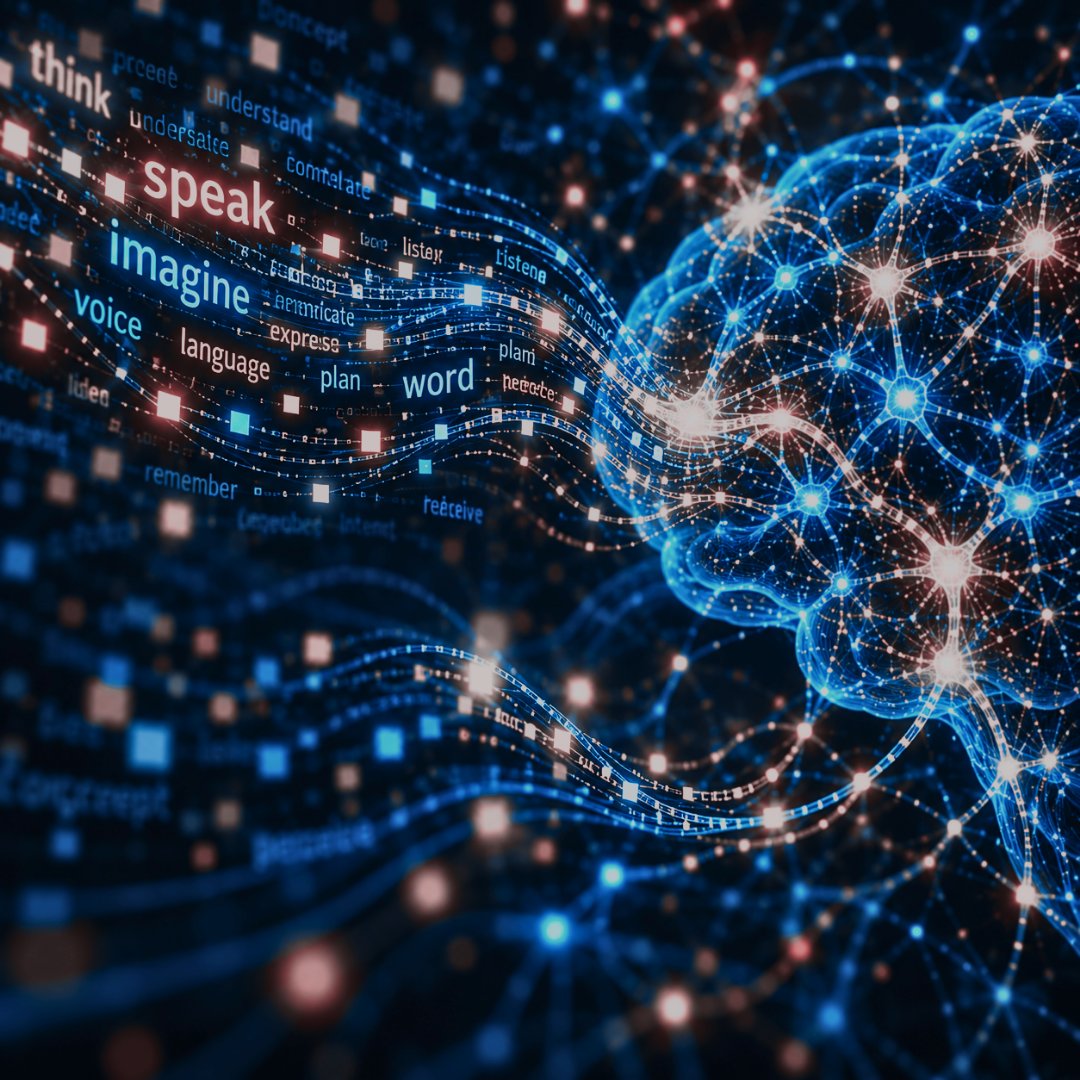
Imagined speech may be silent, but the brain is still mapping the movements behind the words. Researchers found shared and distinct neural patterns for imagined and spoken speech, decoding imagined speech at 80.4% accuracy. Learn more at @NatureNeuro: https://t.co/lQWKbKcl6O #BCI
@MindNexusLive One more… for now…
Method and System for Determination of Physiological Conditions and Emotional States of a Living Organism
https://t.co/VW3orcHfK2
https://t.co/2GKuefO7UB
Researchers from the DIAQNOS (DIAmond-based Quantum Sensing for NeurOSurgery) flagship project, coordinated by Dr. Arne Wickenbrock in Mainz, at Johannes Gutenberg University Mainz (JGU) have developed a technology that uses quantum sensors to measure biomagnetic signals, such as heart activity at room tempature, non-invasively, w/out skin contact.
The researchers in the DIAQNOS project used three systems developed independently by project partners JGU, the Universities of Stuttgart & Freiburg, and the startup Q.ANT GmbH to measure the heart's magnetic field.
The system from the JGU group, based on NV centers in diamonds, is an alternative that offers significant advantages over existing magnetocardiography (MCG) methods. The most important difference is the small size of the sensor: a truncated diamond pyramid w/ a volume of less than 0.5 cubic millimeters, which makes it easy to transport.
Thanks to their compact size, the NV magnetometer detectors can be easily combined with improvement mechanisms that could enable them to achieve ECG-like quality. One such mechanism is a FLUX CONCENTRATOR: A STRUCTURE THAT CAN CONCENTRATE THE MAGNETIC FLUX WITHIN THE DIAMONDS AND THEREBY AMPLIFY MAGNETIC SIGNALS. Thanks to the small volume of the NV sensors, amplification by MORE THAN A FACTOR OF 100 CAN BE ACHIEVED.
NV gradiometers could enable portable magnetoencephalography systems to operate at room temperature, thereby opening up new possibilities for neurological diagnostics or next-generation brain-computer interfaces (BCIs).
https://t.co/u2szVqKTnx
The development of miniaturized, room-temperature magnetocardiography (MCG) technologies capable of providing full vector information in unshielded environments as a key goal in biomagnetic sensing.
NV magnetometry directly exploits the coherent manipulation & optical readout of individual & ensemble electron spins at room temperature, exemplifying how fundamental spin physics has transitioned into practical sensing technologies.
https://t.co/CBuaQO0nMl
THE 💎
The diamond optic design involves a sensing diamond (a trapezoid w/ a back surface being a 0.5 mm square, a height of 0.18 mm, & an upper 0.15 mm square surface) glued to a cone-shaped diamond anvil.
The sensing diamond was a high-pressure high-temperature (HPHT) sample (Element Six DNV-B14) containing 13 ppm nitrogen, 3.7 ppm NV−-centers, and 1.4 ppm NV0-centers, which was irradiated w/ 5 MeV electrons & annealed at 700 C for eight hours.
Further improvement in overall light collection is possible, for example by deploying reflective coating on the front surface & anti-reflective coating on the back surface, which could yield an additional increase of more than 40%.
https://t.co/s8EKzzGVZv
Magnetic Flux Concentrators
High-permeability magnetic flux concentrators, which collect magnetic flux from a larger area and concentrate it into the diamond sensor, can be used to improve the sensitivity of diamond magnetometers. By inserting an NV-doped diamond membrane between two ferrite cones in a bowtie configuration, we realize a ∼250-fold increase of the magnetic field amplitude within the diamond. This is accomplished using a dual-resonance modulation technique to suppress the effect of thermal shifts of the NV spin levels. This work introduces a new degree of freedom for the design of diamond sensors by using structured magnetic materials to manipulate magnetic fields.
https://t.co/Dw3tOC67vk
Researchers have already demonstrated proof-of-principle NV-based magnetocardiography (MCG) detection in a living rat noninvasively using flux concentrators.
The magnetic cardiac signal of a living rat, characterized by an approximately 20-pT amplitude in the 𝑅 wave, is successfully captured through noninvasive measurement using this innovative solid-state spin sensor. To detect these extremely weak biomagnetic signals, we utilize sensitivity-enhancing techniques such as magnetic flux concentration.
https://t.co/1irUpNaV9F
Watch: Researchers in @NCB_MIT, led by @deblinasarkar59, have developed injectable nanoantennas that can be magnetically activated to create localized electric fields that target and destroy glioblastoma cells without damaging healthy brain tissue. Published in @ScienceAdvances, the technology — named HITMAN (highly-localized electric-field-induced tumor therapy using magnetically actuated nanoantennas) — eliminated 52.2 percent of drug-resistant cancer cells in pre-clinical studies, more than five times the effectiveness of standard chemotherapy, and extended median survival in animal models by 50 percent, with no detectable toxicity.
Fast Fourier Analysis in action.
Any complex waveform, sound, or shape can be perfectly reconstructed as the sum of simple rotating circles (epicycles).
[🎞️ lingualin]
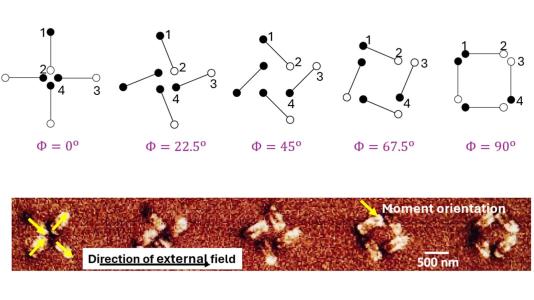
Tiny magnets could point to lower-power computing. Researchers from Argonne’s Center for Nanoscale Materials, @LosAlamosNatLab & @UAI_CL found that changing how nanomagnets are arranged can influence their behavior, opening new possibilities for computing: https://t.co/PjsQ9SL5NO
From reading to writing
DNA writing is entering a period of rapid innovation, with enzymatic and cellular approaches challenging decades-old chemistry. Although none yet delivers long, accurate DNA at the scale biology ultimately requires, continued advances promise to remove one of the field’s most persistent bottlenecks and enable experiments that are currently out of reach https://t.co/Vb1IcJ5Ddq