Scientists & science journalists decry the public's rejection of science, but are oblivious to the major cause: the perception, sometimes correct, that scientists are just another political faction. Among the guiltiest perpetrators are the recent editors of Scientific American, who turned this once-beloved treasure into a left-wing propaganda rag. This absolutely does not justify the Trump administration's unconstitutional meddling, but the new owners are right to restore it to its mission of explaining science to Americans. The Nation reports on The Fall of “Scientific American” https://t.co/m8Xml7EqQJ
#PhD students at B schools!
If your advisor is posting lengthy missives on this article on then death of B-schools & the state of the industry, tell him/her no one cares about their drivel (not even you) and to reply to your research related emails instead.
New NYTimes op-ed on useless MBA programs is new litmus test for egos in b-school profs
B-school professor divas the world over are clutching their pearls & writing lengthy responses in whatever platforms will tolerate them
Length, verbosity, & speed of response predicts ego
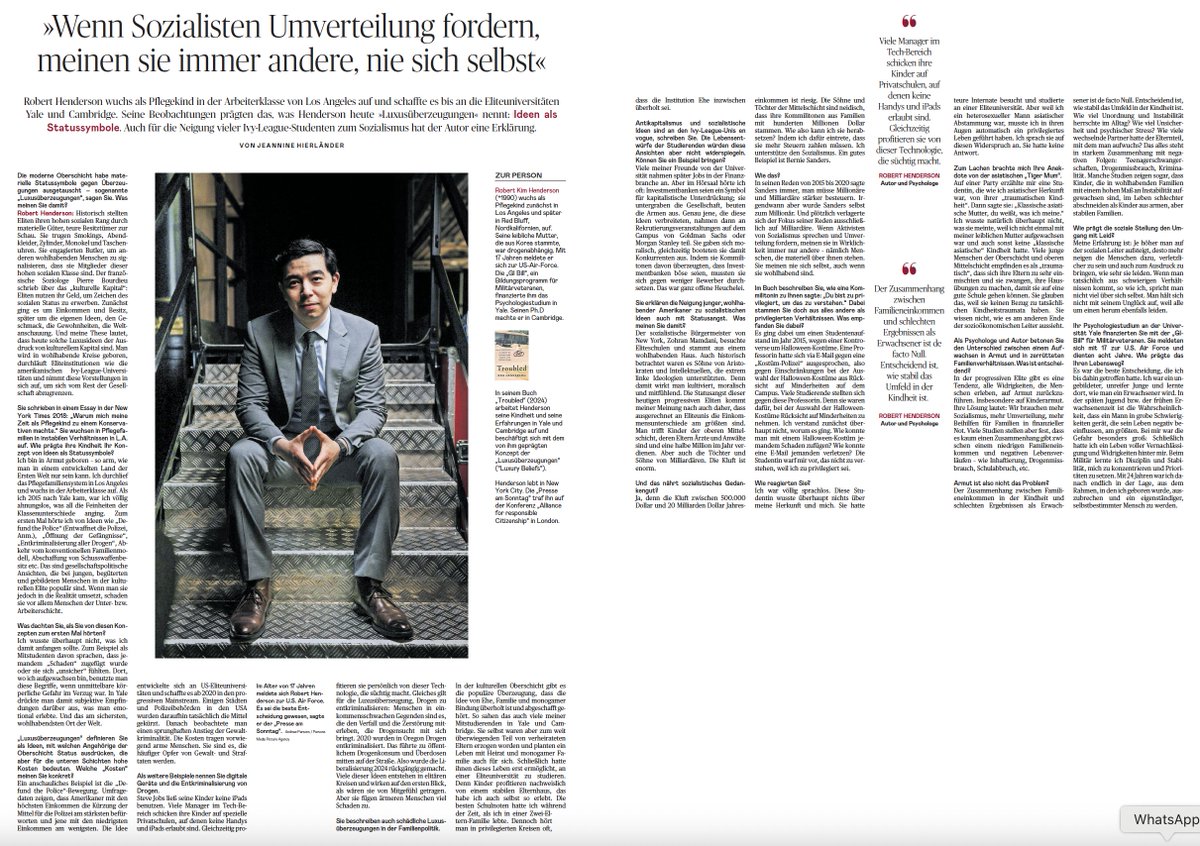
"the status anxiety of progressive elites also stems from income differences at elite universities. You meet upper-middle-class students whose parents earn half a million dollars a year. But you also meet the children of billionaires. The gulf is enormous."
MBA programs today are analogous to porn star schools if they were run by aged priests & taught only from biological theory textbooks.
The distain with which the priests address the topics they teach (which they don't condescend to engage in themselves) is palpable
New NYTimes op-ed on useless MBA programs is new litmus test for egos in b-school profs
B-school professor divas the world over are clutching their pearls & writing lengthy responses in whatever platforms will tolerate them
Length, verbosity, & speed of response predicts ego
1/ Lots of conversation about Chris Marquis’s great @nytopinion piece making the case for shutting down business schools. Having taught in business schools, public policy and urban planning programs, here’s my view. https://t.co/UR6ZCCYBHU
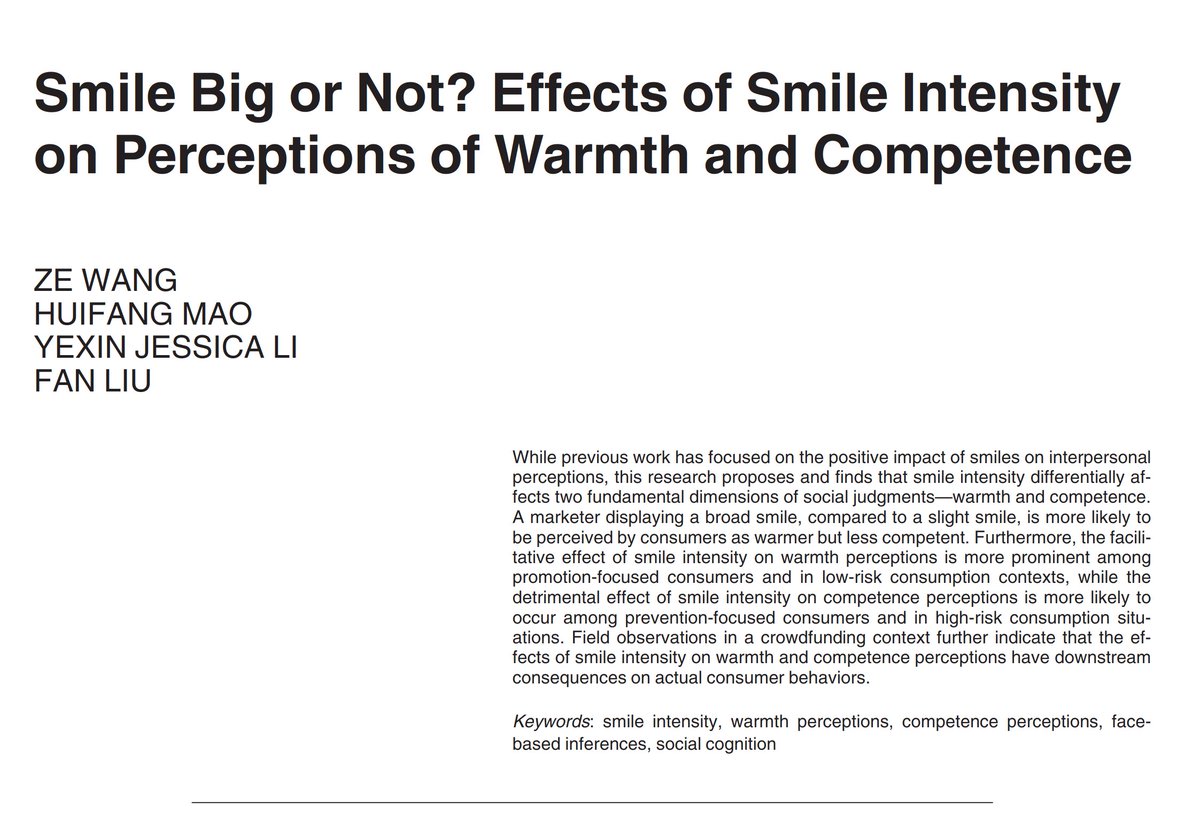
Yetkin mi algılanmak istiyorsunuz? Çok gülmeyin:
Kickstarter'daki projeler incelendi: profilinde hafif tebessüm edenler ortalama 21.500$ toplarken, yoğun gülümseyenler 10.100'da kaldı.
Olası neden: yoğun gülüş sempati yaratsa bile kişinin "işinin ehli/yetkin" imajını baltalıyor.
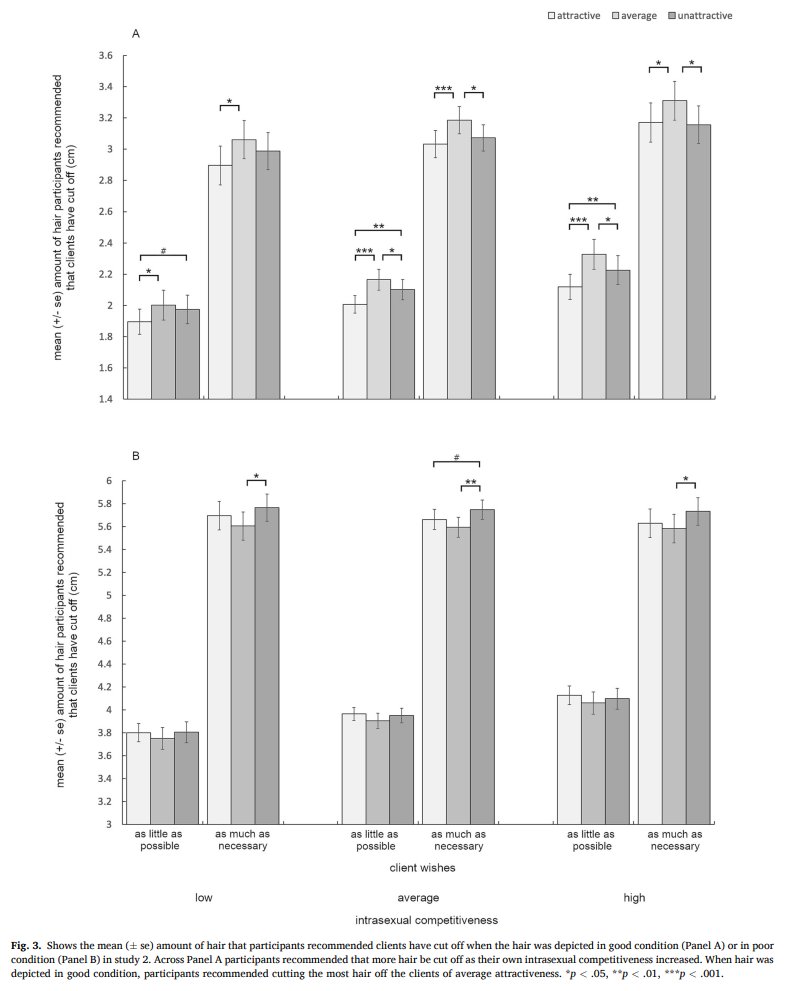
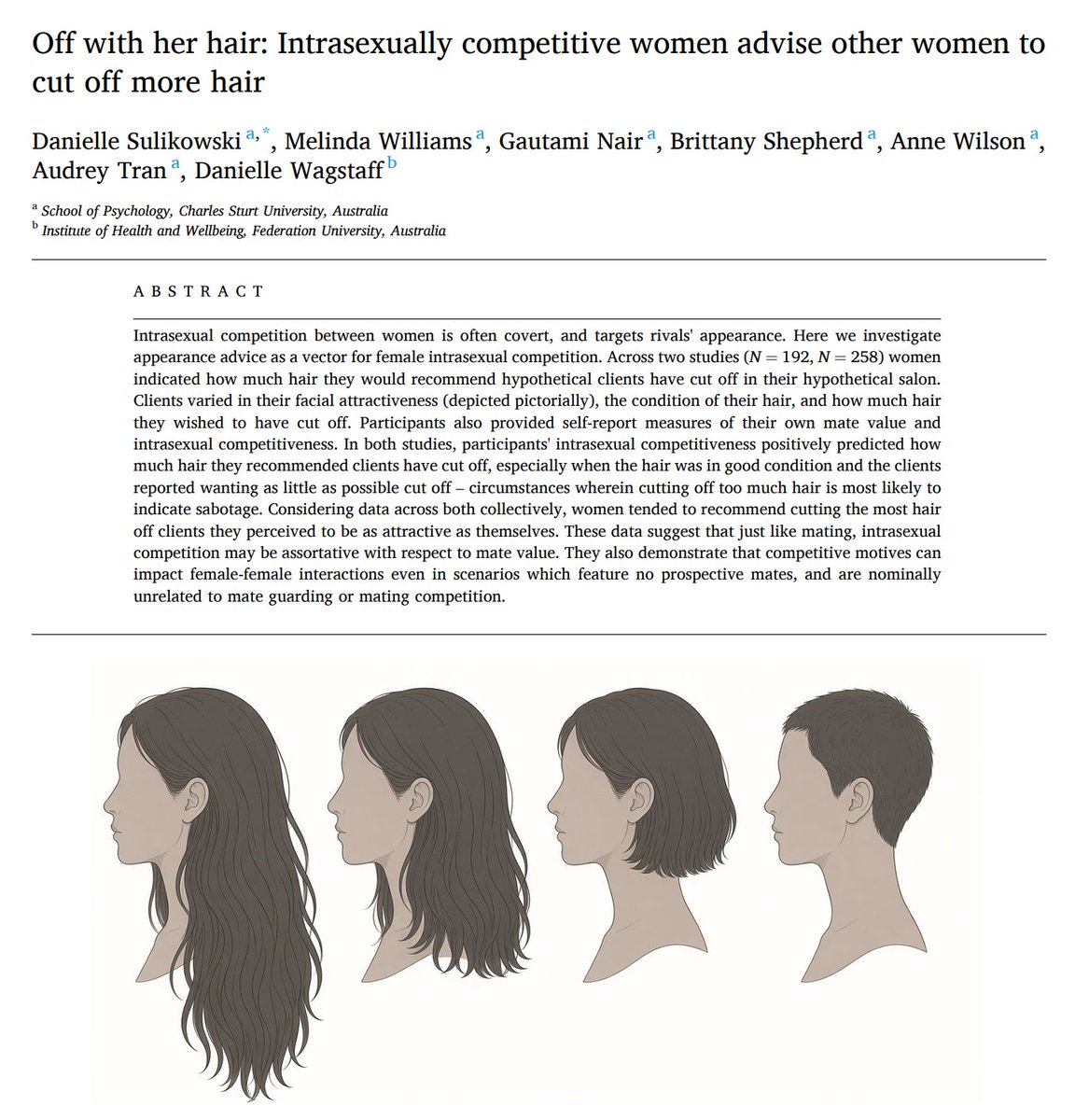
Las mujeres tienden a recomendar cortarse más el pelo a las mujeres que perciben como igual de atractivas que ellas.
Pero curiosamente no tienden a hacerlo tanto con las que consideran más atractivas que ellas.
La hipótesis es que se lo recomiendan más a las de similar nivel de atractivo porque ahí es donde el beneficio neto puede ser mayor: con poco riesgo se puede reducir el atractivo de una rival directa. Contra una más atractiva, el beneficio es menor (está ya muy por encima), mientras que el coste/riesgo social se mantiene.
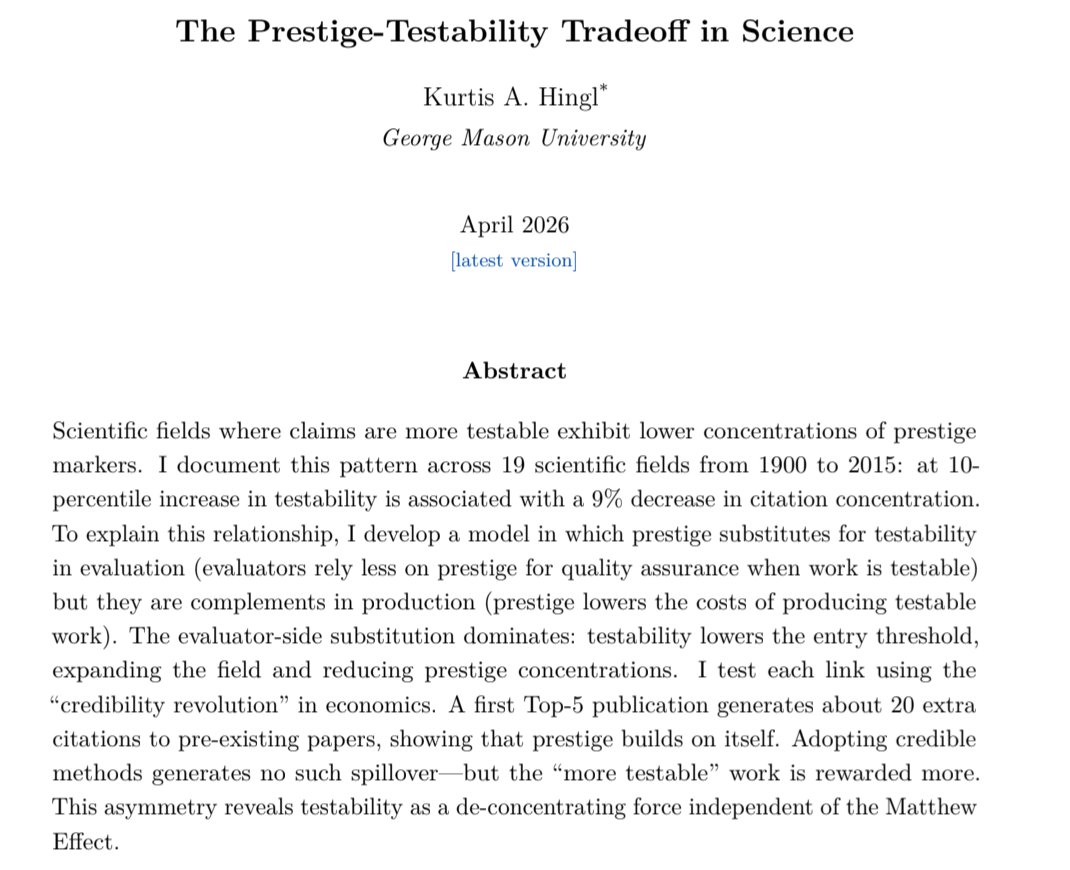
The intellectual and societal cost of our collective obsession with publication count over impact is staggering. Curiosity is replaced by mass production, so much so that researchers are overwhelmed with the volume of published papers, described as the “strain on scientific publishing.”
If higher education wants to reverse course, institutions must confront the incentive structures that created this crisis. Three steps would meaningfully shift the culture:
Evaluate fewer papers, but more deeply. Promotion committees should assess a candidate’s top three to five publications, forcing reviewers to read the work rather than count papers and citations.
Broaden what counts as impact—especially teaching and research support. Institutions should formally weigh executive education leadership, research-teaching integration, creation of new or specialized courses, high-impact curricula, the ability to reach and shape large numbers of students, and the securing of grants or philanthropic gifts that enable consequential research alongside traditional research metrics.
Audit citation practices. Universities should monitor for citation cartels, editor self-citing and anomalous patterns increasingly penalized by indexing services.
https://t.co/d5WdQmAeCS
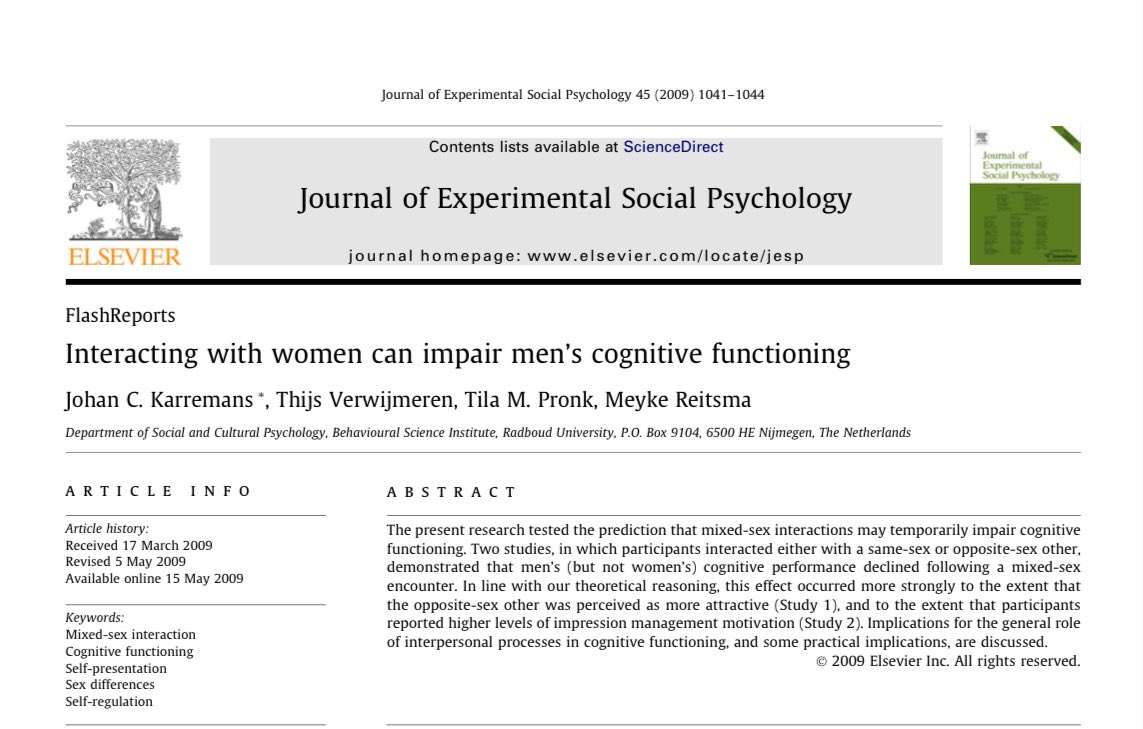
Interacting with attractive women makes men stupid.
The researchers found that even a few minutes with the attractive woman was enough to make the students slower and less accurate on the test.
The more attracted they were, the worse their results.
They also studied the effects on women students of being in the company of handsome men, and found the test scores were unaffected.
https://t.co/hvZXz7G0HP
"When economic competition is suppressed by the design of a political system, hierarchy does not disappear. It migrates into the state. People then compete for bureaucratic rank, party membership, favored occupations, access to planners" https://t.co/nsIILQ57Pq
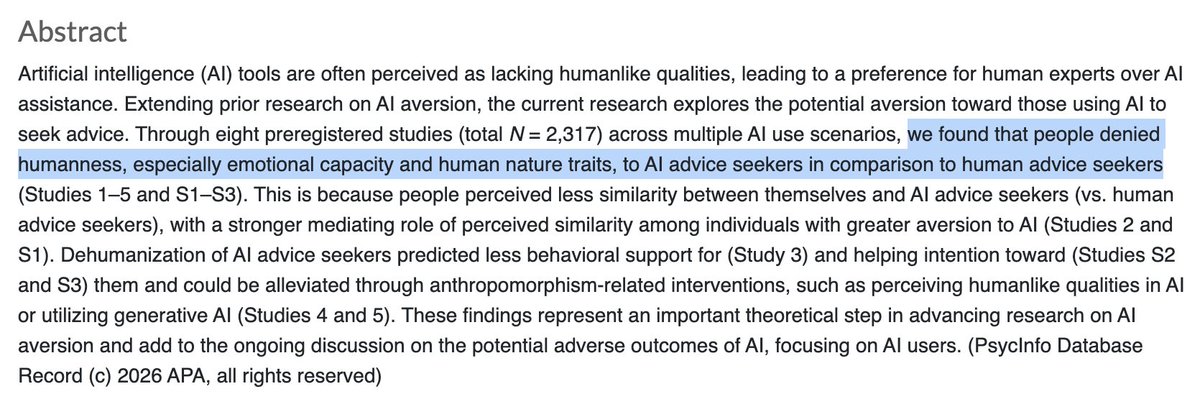
People dehumanize AI users
We know that many people have an aversion. Now there is evidence that people have an aversion to people who merely use AI.
New research (N = 2,317) found that people denied humanness, especially emotional capacity and human nature traits, to AI advice seekers in comparison to human advice seekers.
This is because people perceived less similarity between themselves and AI advice seekers (vs. human advice seekers).
In turn, they were less likely to provide support to AI users.
https://t.co/CcBkFWWPna
"closure of the Internet occurred in two distinct phases: 2015-2019 and 2020-2022. Almost all of the technical & organizational infrastructure and conceptual justifications were built out in the first phase, which successfully decapitated & destroyed the previously-independent, but by definition fringe, online ecosystem of ideas. In the second phase, the same weapons that previously targeted heterodox online discourse were turned against opposition to the COVID measures du joure & mainstream conservatives. The scale of censorship has no precedent; tens of millions of accounts suppressed or banned, billions of posts removed." https://t.co/WskiuQbDKS