Demis Hassabis says some of his peers are not being careful enough in how they communicate about a fundamentally unknown future
What happens next depends on the actions taken in the next few years
"but society, not just technologists, must take the exponential seriously now"
These consulting companies made headlines saying it was revolutionary when we were warning about circular investments & unfounded claims & they’re now making headlines saying the opposite, make money from seeding the hype & make 💰 from sounding like you didn’t do that all along.
Meta's latest AI push has the company recording nearly everything its workers do on their work computers.
Internal documents reviewed by Reuters show the company collecting interaction data across more than 200 apps and websites.
That means the AI is being trained on workers' mouse movements, clicks, navigation patterns and more.
But what Meta initially tried to keep quiet is that this system is also capturing the contents of emails and messages sent to US-based employees, even when those messages originate from colleagues overseas. And the AI is being trained on those materials, as well.
Link: https://t.co/JD80Os8Hkx.
🦔Robot dogs are patrolling FIFA World Cup venues in the US. Hyundai's Boston Dynamics deployed Spot robots at AT&T Stadium in Arlington with 360-degree cameras, thermal sensors, acoustic pickups, and AI anomaly detection. All of it feeds live video back to security teams.
A viral TikTok claimed they scan faces. Boston Dynamics says no facial recognition. The robots handle perimeter patrols and suspicious packages. Hyundai owns Boston Dynamics and is also a major FIFA sponsor, so this is as much a product showcase as a security operation.
My Take
No facial recognition, fine. But 360-degree cameras with AI anomaly detection pumping live feeds to a security command center is still a serious surveillance footprint at a civilian sporting event. India has workers earning $0.12 an hour to collect robot training data. MicroAGI films the inside of New York apartments. The infrastructure for robotic surveillance is coming together from both ends, and a World Cup with billions of viewers is the perfect place to normalize it because nobody argues against stadium safety.
These robots cost around $75,000 each. Boston Dynamics built them for the military before going commercial in 2019. Hyundai bought the company in 2021. Police departments and corporate campuses around the world are watching this deployment. Two years from now the cameras will have better software, the price will be lower, and nobody will remember a time these things weren't around. That's how surveillance technology scales. It starts somewhere safe and friendly, and by the time anyone pushes back, it's already furniture.
Hedgie🤗
When people say 'AI isn't a bubble because the technology isn't going away', it just shows they don't know what a bubble is.
The internet didn't go away. Railways didn't go away. Tulips didn't go away.
An asset can be overvalued, even if its useful.
CEOs are quietly realizing the AI replacement plan has a problem.
Two problems, actually.
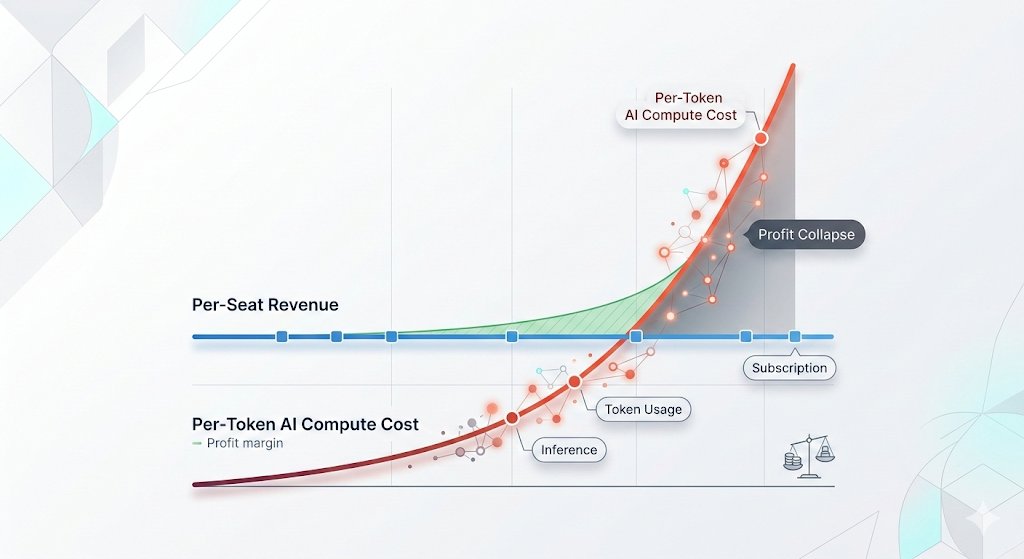
One: the token costs for running AI agents are now exceeding what they were paying the employees they fired.
Two: when the tokens run out, the AI stops. Just stops. No continuity. No workaround. Just a spinning wheel where your workforce used to be.
You fired humans to save money and bought a subscription that bills you into a corner.
The employees you let go knew what to do when things broke.
The AI just invoices you for the outage.
And then there’s the permission problem nobody wants to talk about.
To do its job, the AI agent needs access. Full access. Your systems, your patents, your contracts, your future plans. Everything you spent years building, handed over to a process that has no loyalty, no discretion, and no skin in the game.
You didn’t hire a replacement.
You gave a stranger with no soul the keys to everything you own.
Enjoy.
“One AI data centre Meta is constructing will be 1/5 the size of Manhattan, and will use the average power of London.”
“That’s just Meta...”
@_KarenHao sets out the shocking consequences of the AI industry.
@lewis_goodall
I feel very uncomfortable about the AI Security Institute, and this article by its creator, ex-PM Rishi Sunak, encapsulates why:
He frames it as a way of avoiding regulating AI.
He says this categorically. “If politicians are blithe about the risks [of AI], they will vote for those who favour regulation.” And he makes it clear he thinks regulation would be bad: “western governments shouldn’t restrict innovation in the race against China.”
This is a man who now works for both Anthropic and Microsoft (not disclosed in the article).
Evaluating the safety of AI models is good. But not in place of regulating the technology itself, and the companies behind it.
Besides, as he points out, companies only give the AI Security Institute access to their models voluntarily. This means the UK government relies on good relations with big tech, which in turn makes it even less likely to regulate.
It is far from clear how much the AI Security Institute has actually achieved with its astronomical public funding. What *is* clear, though, is that the people who set it up see it as a way of ensuring *less* regulation of AI companies, not more. This is very bad news.
Martin Scorsese belongs to a rare class of artists who understand that cinema was never meant to stay still.
Every generation of film was once considered dangerous.
Sound was dangerous.
Color was dangerous.
Digital was dangerous.
Streaming was dangerous.
And now AI arrives like electricity in the rain, and once again the old world panics.
But true filmmakers recognize something deeper:
cinema is not a camera.
Cinema is not celluloid.
Cinema is not software.
Cinema is human imagination finding a new body.
Scorsese understands that the soul of storytelling survives every technological shift because emotion always comes first. The tools evolve. The heartbeat remains. What excites me about this moment is that AI cinema is not trying to replace creativity. It is removing the distance between imagination and execution.
A single creator can now build worlds that once required armies, budgets, permissions, and years of compromise. For the first time in history, a kid with vision can stand beside a studio with infrastructure.
That changes everything. The gatekeepers can debate whether this movement is real cinema.
Meanwhile, a new generation is already building impossible films from bedrooms, laptops, midnight ideas, and pure obsession.
We are witnessing the birth of a new cinematic language in real time.
And years from now, people will look back at this era the same way they look at the birth of sound, the rise of independent film, or the arrival of digital cameras.
The artists who embrace this shift will shape culture.
The ones who mock it will become footnotes.
AI cinema is not the end of filmmaking.
It is the beginning of a completely new frontier.
Steven Spielberg: "I don't believe in sentient AI as there is no substitute for the soul"
"I'm not willing to substitute" AI for human writers at the table.
The legendary director draws the line on AI in creativity. He refuses to have a computer sitting in an empty chair as the seventh writer on a team.
"Where I don't love AI is where it takes a position where there's an empty chair at a writer's table."
Spielberg emphasizes AI should remain a tool, not the final word: "Use AI as a tool, but do not use AI as the final word on anything creative. That's where I draw the line."
This is a powerful reminder that human soul, impulse, and passion still define great storytelling.
🔴 INFO - #Chine : Des robots humanoïdes accomplissent des tâches quotidiennes réelles (porter des cartons, nettoyer, servir) dans une usine de #Shenzhen. La formation de ces robots par apprentissage par renforcement (IA) est déjà en cours. 🇨🇳🤖📦�
CNN has sued Perplexity, alleging the AI startup illegally copied and distributed its content without permission:
• The lawsuit claims Perplexity scraped more than 17,000 CNN stories, photos and videos to train its AI products
• This marks CNN’s first copyright lawsuit against an AI company
• The New York Times, Dow Jones and New York Post have sued Perplexity over similar claims
• Other outlets like TIME and USA Today have struck deals with the company
https://t.co/iIgEI9aXVl
Professors across the country are coming up with creative ways to curb A.I. usage in classrooms—from prompts that might trigger incorrect answers from A.I. to hidden words that might derail the bot.
Artificial intelligence has made another step into the physical world by launching a café in Sweden. Its founders claim it is the first commercial venue in Europe fully run by an AI agent, amid concerns about AI’s impact on the job market.
Al Jazeera’s @pallerhys reports.
Absolute horror. Prof. Leocadie Lushombo exposes the dark secret behind the AI revolution that billionaires desperately hide.
She reveals children in the Global South are literally working in their own graves just to keep Western computational flows running.
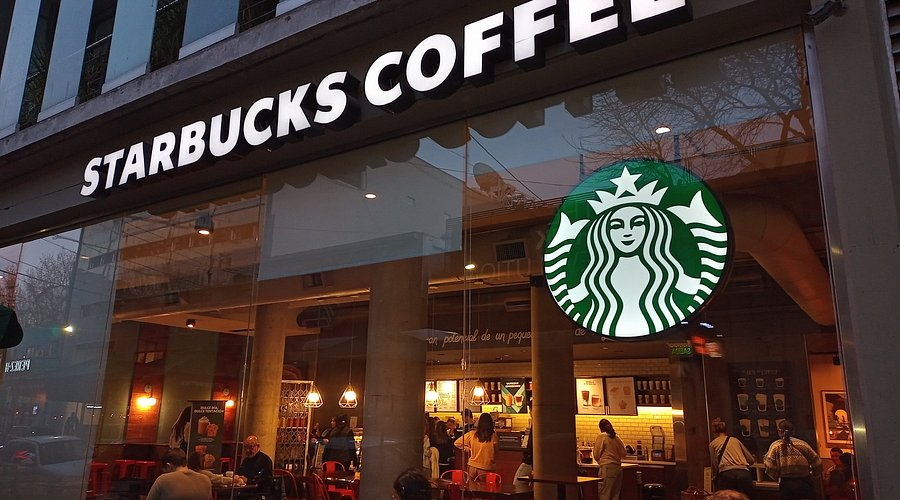
🦔This one happened yesterday but is still worth flagging. Starbucks killed its AI-powered inventory counting tool after nine months in North American stores. The system used LiDAR sensors and cameras to count syrups and milks, routinely confused similar products, and missed items entirely. A Starbucks promotional video from the launch literally captured the malfunction, with the system scanning around a peppermint syrup bottle on the shelf without registering it. Stores are returning to manual counting.
My Take
I love that the failure mode showed up in the promotional video meant to advertise the product. Starbucks did not pilot this in 50 stores and measure error rates against manual counting before deploying it. The company pushed it across the entire North American network because the CEO wanted to show technology leadership, and the syrup bottle the system could not see was right there in the launch materials.
Pizza Hut Dragontail, Glendale Community College, and now Starbucks all ran the same script. AI sales pitches demo well in controlled environments and break down in actual operations. CEOs sign these contracts because the alternative looks like falling behind, and the costs of the failure land on the franchisees, store employees, and customers. The vendors get paid for nine months of being someone else's QA team. Nobody in the chain of executives signing these contracts is the one absorbing the cost, and until that incentive flips, the rollouts continue.
Hedgie🤗
🦔Microsoft canceled its internal Claude Code licenses this week after token-based billing made the cost untenable, even for a company with effectively infinite cloud resources. Uber's CTO sent an internal memo warning the company burned through its entire 2026 AI budget in just four months. American AI software prices have jumped 20% to 37%, and GitHub (owned by Microsoft) is dropping flat-rate plans for usage-based billing across its products.
My Take
The AI subsidy era is ending in real time. The same company that put $13 billion into OpenAI and built the Azure infrastructure powering most of Anthropic's compute just looked at the bill from a competitor's coding tool and decided it was not worth paying. That is not a productivity failure on Anthropic's end. Token-based pricing is forcing every enterprise customer to confront the actual cost of running these models at scale, and the number turns out to be far higher than the flat-rate experiments suggested.
This ties directly to my Gemini Flash post yesterday. Anthropic, OpenAI, and Google all raised effective prices in the last six months. Enterprises that built workflows assuming AI costs would keep falling are now watching annual budgets evaporate in months. Two outcomes look likely from here. Either enterprises scale back AI usage to fit budgets, which slows the revenue ramp the labs need to justify their valuations ahead of IPOs, or the labs cut prices and absorb the losses, which makes the unit economics worse at exactly the wrong moment. Both paths land in the same place, the numbers stop working, and somebody has to take the writedown.
Hedgie🤗





![ednewtonrex's tweet photo. I feel very uncomfortable about the AI Security Institute, and this article by its creator, ex-PM Rishi Sunak, encapsulates why:
He frames it as a way of avoiding regulating AI.
He says this categorically. “If politicians are blithe about the risks [of AI], they will vote for those who favour regulation.” And he makes it clear he thinks regulation would be bad: “western governments shouldn’t restrict innovation in the race against China.”
This is a man who now works for both Anthropic and Microsoft (not disclosed in the article).
Evaluating the safety of AI models is good. But not in place of regulating the technology itself, and the companies behind it.
Besides, as he points out, companies only give the AI Security Institute access to their models voluntarily. This means the UK government relies on good relations with big tech, which in turn makes it even less likely to regulate.
It is far from clear how much the AI Security Institute has actually achieved with its astronomical public funding. What *is* clear, though, is that the people who set it up see it as a way of ensuring *less* regulation of AI companies, not more. This is very bad news.](https://pbs.twimg.com/media/HJoj-gdWoAE6ou5.jpg)