Scenes from Nvidia headquarters as Jensen comes back. The Nvidia employees wanted him back more than anything.
Grateful to the President, everyone in the administration, everyone who signed the petition, everyone who supported Jensen publicly, everyone who called the board, everyone on the board who fought for him, everyone.
This is why America is the greatest country on earth.
Every part of Jensen’s story would have only been possible in America.
And remember that Gandalf the White was even better than Gandalf the Grey in every way.
“Let’s get to work.” 🇺🇸
This is f*cking insane. OpenAI co-founder and former chief scientist Ilya Sutskever, the man who left to start his own superintelligence lab, filmed while GPT-4 was being built:
"The beliefs and desires of the first AGIs will be extremely important
When the time comes to build a highway between two cities, we are not asking the animals for permission"
In 11 minutes, he explains what the first AGI will look like, who it will work for, and why the odds it comes soon are high enough to take seriously
GPT-4 → AGI → Data centers → Superintelligence
He said this on camera years ago. Most of it is already being built
This film is worth more than any $1,000 AI course
Bookmark and watch it today
Then read the harness engineering guide below ↓
talked to a founder who just raised a series a. he spilled the secret.
you paste your website into Explee. it works out who needs the product and emails the right people.
i have been doing it manually forever.
ok. testing it: $30 free
https://t.co/zkIKz8K9ka
질문이 틀렸다.
답이 틀린 게 아니라, 질문이 틀렸다.
위픽레터는 마케터를 위한 매체입니다. 하지만 세상의 일이 직함보다 과업을 중심으로 재편되는 지금, 마케팅 역시 마케터만의 일이 아니라고 생각합니다.
무엇을 문제로 정할지, 누구와 함께할지, 사람을 어떻게 설득할지, 만든 것을 어떻게 세상에 내놓을지. 이런 고민은 창업가, 개발자, 디자이너, 기획자, 예술가처럼 무언가를 만드는 사람이라면 누구나 마주합니다.
그래서 〈질문이 틀렸다〉는 마케터만 만나거나 마케팅 이야기만 나누지 않습니다. 사람과 프로젝트 자체의 재미에서 출발해, 각자가 문제를 발견하고 자기 방식으로 풀어 온 과정을 듣습니다.
대화로 정답보다는 질문을 찾습니다. 성공 비결, 업계 전망, 앞으로의 계획처럼 이미 답이 정해진 질문은 매끄러운 이야기를 얻을 수 있지만, 지금 실제로 붙잡고 있는 문제에는 닿지 못할 때가 있습니다. 사람을 직함으로만 바라보는 순간 질문도 좁아집니다.
지금 하는 질문이 정말 중요한가?
문제를 처음부터 잘못 정의한 것은 아닐까?
다른 질문으로 시작하면 전혀 다른 이야기가 보이지 않을까?
제목의 ‘틀렸다’는 인터뷰이의 생각이나 답을 평가한다는 뜻이 아닙니다. 누군가를 몰아세우거나 논쟁의 승패를 가리는 자리도 아닙니다. 모르는 것을 솔직하게 묻고, 대화 도중 생각을 바꾸거나 처음 준비한 질문을 버릴 수 있습니다.
한편의 대화가 하나의 답으로 정리되지 않아도 괜찮습니다. 대신 인터뷰이와 시청자 모두에게, 대화 전에는 없었던 질문 하나가 남기를 바랍니다.
마케터에게는 익숙한 일을 다르게 바라보는 질문을, 마케터가 아닌 사람에게는 자신의 일을 새롭게 설명할 수 있는 질문을 건네는 것.
답이 틀린 게 아니라, 우리가 던져 온 질문이 틀렸을지도 모른다는 가능성.
그 가능성에서 새로운 이야기를 시작합니다.
-
위픽레터 팟캐스트 시리즈 [질문이 틀렸다]
유튜브 https://t.co/fx1M5m01pu
스포티파이 https://t.co/TI8XJrYr1n
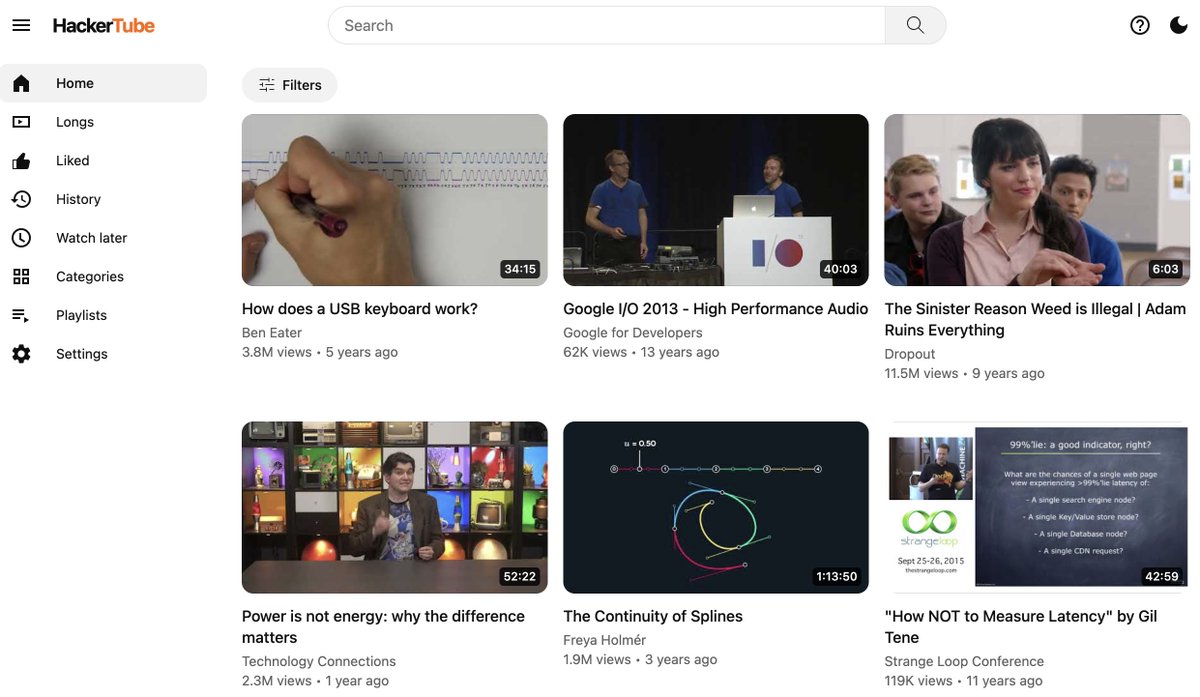
Weekend hack: HackerTube. I was annoyed with YouTube's recommendations so I had Claude filter down 43M comments over 20 years of HN to 6,454 videos that keep being recommended. *Significantly* better viewing experience, ~2 hours with Opus 5.5:
https://t.co/JIhXN7OSh1
- Excellent recs without any logins (state is kept in local browser session)
- Thumbnail is a representative frame from middle of the video instead of the super duper A/B test hyper-optimized user uploads
- Underlying data from the comment analysis as one zip file, point your Claude at it and ask for your own version
- HackerTube Longs ✊
A bit more on the process:
I use Claude Code (desktop app for Mac), Opus 5.5 on Medium effort as my default. I only talk to Claude and have it do everything, the only "manual work" I helped with in tandem was in the browser (reminiscent of MenuGen): 1) I had to create some kind of API key from Google Cloud UI to query YouTube for video metadata, 2) I booted up a VPS box for serving and 3) I bought the domain name. Once the box was up I gave Claude the IP and told it update, secure, harden, deploy and optimize the code, and it did the whole thing.
Many awesome projects that would have normally taken weeks/months even can now be few-shotted for breakfast. What else are we not thinking of.
Un investigador de Anthropic acaba de decirle a una sala llena de doctorandos que su plan de carrera ya no existe.
La charla se titula "El fin del Antropoceno" y los datos son brutales:
→ El cómputo para entrenar modelos se multiplicó por 10 millones en la última década
→ La duración de las tareas que una IA completa sola se duplica cada pocos meses
→ Desde hace 7 meses los modelos resuelven problemas abiertos de Erdős que los matemáticos no habían logrado cerrar
→ En San Francisco, tener "timelines largos" significa pensar que la AGI llega en 10 años
Su proyección: el cómputo de 2030 será 10.000 veces mayor que el de 2025.
Todavía estamos al principio de la exponencial.
Sus 3 consejos para los estudiantes:
1. Usa la IA cada día. Si estás sobre la exponencial, nunca te quedas atrás de ella.
2. Elige proyectos que mejoren cuando el cómputo escala. El resto quedará resuelto antes de que los termines.
3. Deja de planificar tu carrera como si fuera estable. La opción segura ya no compra seguridad, ya no existe.
Y una frase que resume todo:
"Escribir es pensar. Si externalizas tu escritura, externalizas tu pensamiento."
La charla completa aquí ⬇️
A retired NASA engineer who had worked on the Space Shuttle program for 25 years was hired by SpaceX at age 62. He described the first week as the most disorienting experience of his professional life.
At NASA, a design change required 3 meetings, 2 committees, a review board, and 6 to 18 months of documentation. At SpaceX, his new supervisor said "if it works, build it. If it doesn't, change it by Friday."
He sat at his desk after the first day and called his wife. He told her he felt like a man who had been swimming with ankle weights for 25 years and someone just cut them off. He could move. He could decide. He could build something in the morning and test it in the afternoon. The constraint that he had accepted as the nature of aerospace engineering turned out to be the nature of bureaucracy.
Within 6 months he had contributed to more design iterations than he had completed in his last 5 years at NASA. Not because he was working harder. Because the time between having an idea and testing the idea collapsed from months to hours. The same brain. The same knowledge. A different operating system.
He described a specific moment where he proposed a modification to a Raptor engine component. At NASA, the proposal would have entered a queue. At SpaceX, the modification was machined by the end of the day and tested by the following morning. He watched his idea become a physical object in 18 hours. At NASA, 18 hours would not have been enough to schedule the first meeting to discuss whether to schedule a meeting.
He told an interviewer: "I didn't get smarter when I went to SpaceX. I got faster. The intelligence was always there. The system was in the way."
The difference between SpaceX and NASA is not talent. NASA has extraordinary talent. The difference is the time between a thought and a test. SpaceX compresses it. NASA elongates it. The same engineer produces 10x more at SpaceX than at NASA because the bottleneck was never the engineer. It was the meetings about the meetings about the work.
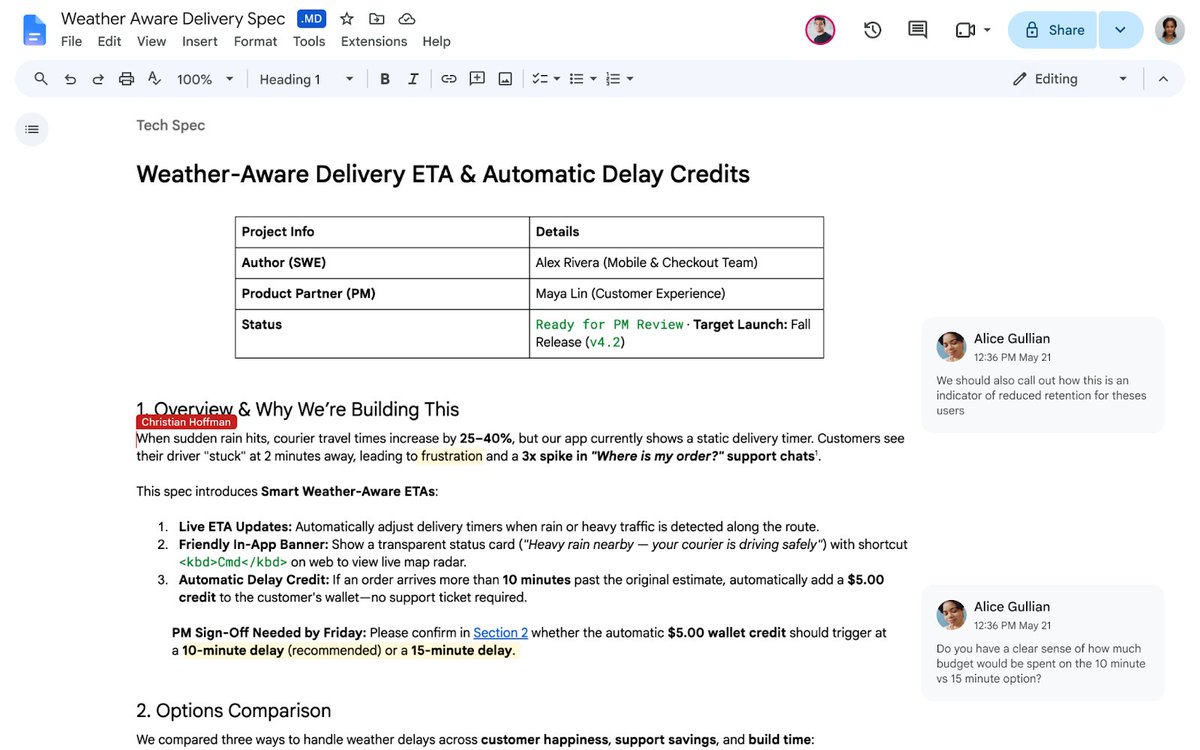
We are making Markdown files work natively across Google Drive and Docs.
You can now preview .md files in Drive, open them in Docs, edit them, comment on them, and collaborate without converting the file into a Google Doc!
스트라우스트룹의 진단은 맞지만 결론은 틀릴 수 있다. 1950년대에도 전문가들은 “컴파일러가 만든 코드는 느리고 믿을 수 없다”며 FORTRAN을 의심했다. 실제로 초기에는 그랬다. 그러나 컴파일러가 개선되자 어셈블리어는 남았어도 그것을 직접 쓰는 일은 대부분 사라졌다. AI도 모든 프로그래머를 없앨 필요가 없다. 10명이 하던 구현을 3명이 AI와 해낸다면, 직업은 남아도 노동은 이미 대체된 것이다.