Accruing the same net #forest C but at higher risk of emission from more mortality? Viewing forest C baselines through a "relative lens" may bring new insights of increasing urgency as global change proceeds unabated https://t.co/O3b9mEUmiv
@occhams_machete@evilanova @lowseverityfire Awesome to hear! My thoughts: a simple, standalone R package that implements the allometrics would be awesome. Like discussed with @SaraGoeking, they could then be easily applied to non-FIA data. Happy to contribute on dev side, just let me know if/ how I can help.
@SaraGoeking @lowseverityfire Sorry for the late response! I haven't tried, but I think it could work (e.g., for plot-level summaries). Right now we are simply summing pre-computed volume columns from the tree table. Did you mean applying FIA's allometrics or summarizing data from pre-computed variables?
@SaraGoeking @lowseverityfire That's correct! If you're using FIA data, rFIA could certainly help here. Happy to put together a quick example if it would help.
However if you're looking to apply FIA's allometrics (taper eqs.) to non-FIA data, rFIA will short unfortunately.
Suicide 🧵 (1/3) Please Read
Friends, when I was 9 my brother took his own life. He was 14 and I found his lifeless body. This event severely impacted my childhood. I still have nightmares every Memorial Day Weekend.
@JefferyBCannon Absolutely! You can set `byPlot = TRUE` and `returnSpatial = TRUE` in the call to any estimator function (e.g., `tpa`), and return the plot level summaries as an sf spatial points object. Alternatively, you can set `grpBy = c("LAT", "LON")`. Let me know how I can help!
Despite the unrelenting march of global change, our planet's terrestrial ecosystems continue to accrue biomass. The rate of that accrual, the factors that drive it, or even its reversal (net C emissions) are central to any #ClimateCrisis solution
https://t.co/bFZkDoUaxw
Our new paper on six 5-needle white pine species in Western US is out. Take-homes:
1) Assessments are based on probabilistic sampling rather than purposively selected sites.
2) Regen of 5-needle white pines is abundant in non-white pine forest types.
https://t.co/8sJanuLTGJ
1/3
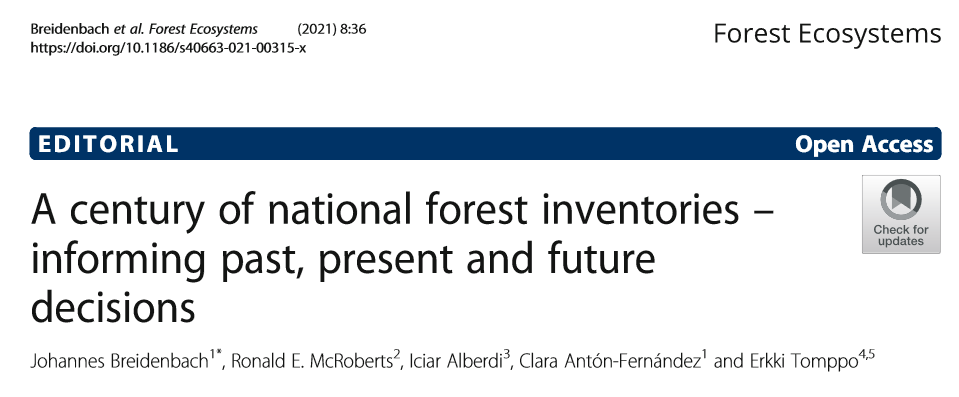
Fresh off the press: Our Editorial gives a gist of the papers published in the Special Issue “A century of national forest inventories – informing past, present and future decisions”: https://t.co/9Bu5X4NadK. Great thanks to fellow Guest Editors, contributing authors, reviewers..
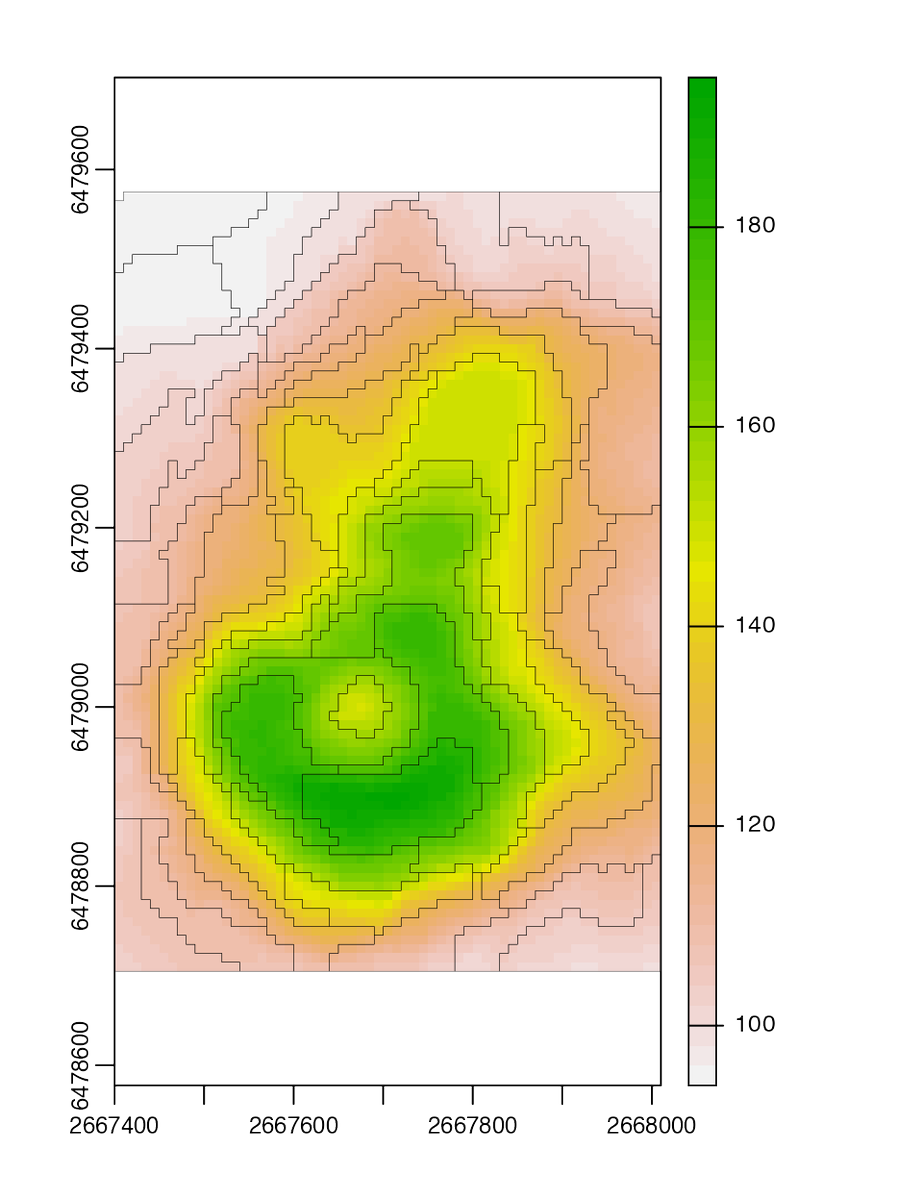
{supercell} - an #rstats package allowing to apply the concept of superpixels to a variety of spatial data.
You can try it by yourself at https://t.co/YdrmVOSxG7.
(This is still WIP - I look forward to your comments and questions.)
#rspatial
New paper out with Aaron Weed, @ZipkinLab, Kate Miller, and Andy Finley in @ESAApplications! Using a multi-region community model, we found trends in bird abundance varied among Northeast US protected forests but not among species within each forest. https://t.co/9IrZwh23DY
Another #USDA_FIA job - This one in Portland, OR, and open until 50 applications are received.
Great for someone who "has an interest in working with a team in managing Big Data, using your project management skills, and investing in partnerships."
https://t.co/Rv91NcQwwY
Congrats @gmdomke on this new report on greenhouse gas fluxes to/from forests and trees of the US!
FIA began decades ago as a timber inventory, and now it's used - and useful - for so much more. #USDA_FIA#WhatFIADataDoes
Forest ecologists (& similar -ologists): FIA is hiring TWO analysts, GS-11/12. Application period April 14-19. These positions offer latitude to do a variety research and reporting on forest conditions & trends at broad scales using FIA data.
Please RT!
https://t.co/h9Ll1PFIVQ
Tackling unresolved questions in forest ecology: The past and future role of simulation models. New synthesis out in @Ecol_Evol, joint work of a large group of folks incl. @ForEco_ETH @ale_collalti @XavierMorinCEFE@anjarammig@gvacchiano @BohnFriedrich https://t.co/93cGPfBwpp
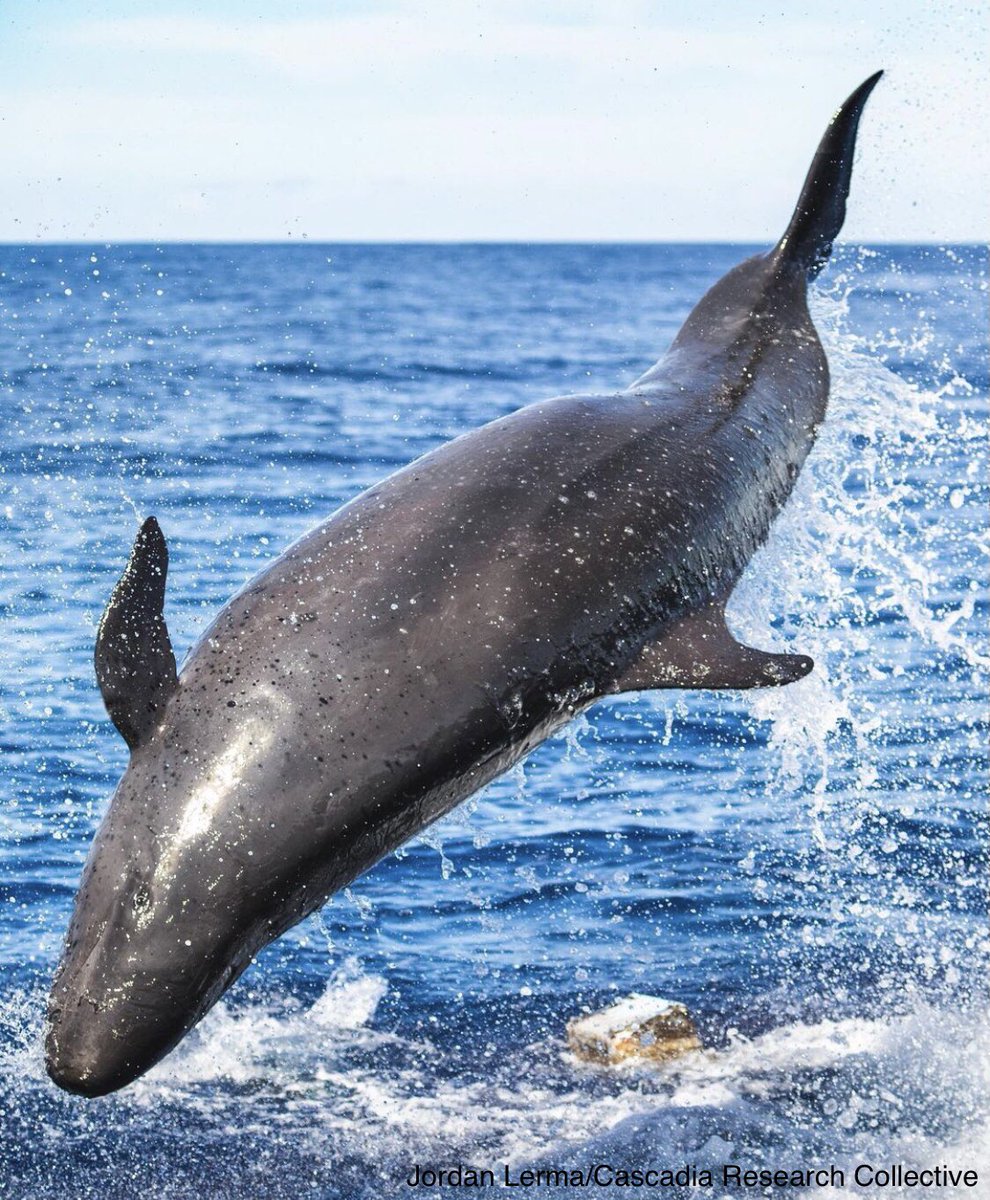
More than excited to announce that I’ve been awarded the NSF GRFP 🎊Very much looking forward to joining @danielequs’s lab at Oregon State next fall and continuing my research with @CascadiaRes!