While we welcome the 13% increase in funding for improved sanitation (VIP toilets), the @cityofjoburg's draft 2026/27 budget is a missed opportunity unless key gaps are addressed.
Our recommendations:
- Ensure swift implementation of planned projects and publish a settlement-by-settlement delivery plan with clear timelines.
- Include communities in planning for new sanitation services in informal settlements.
- Incorporate our community-designed backslab into tender specifications for future VIP toilets citywide.
- Prioritise sanitation provision to ensure that vulnerable communities are safe and healthy.
- We call for increased and ring‑fenced funding, with clearer budget breakdowns, to upgrade, maintain, and transparently manage water and sanitation services in informal settlements.
Read our full response here: https://t.co/Fr878mDuxL
We respond to the @CityofCT's draft 2026/27 waste budget. We welcome the 11% budget increase for basic solid waste collection in informal settlements. We are also pleased to note that for the first time, an explanation of what this allocation funds is provided.
We are however concerned about some developments that could negatively impact waste management in informal settlements.
Read our full budget response here: https://t.co/0lLvsbTi1N
Asivikelane responds to @eThekwiniM draft 2026/27 budget. Although there are increases in disaster management and emergency services funding, it does not specify how much is allocated to informal settlements. There is no funding for disaster prevention programmes, despite the IDP highlighting their importance. While plans to expand early warning systems for floods are mentioned, no details or budget allocations are provided, limiting transparency and accountability.
https://t.co/iNTCEYhLt5
Asivikelane responds to @OfficialBCMM's 2026/27 budget which raised serious concerns for informal settlement residents. We highlight urgent gaps that threaten access to water, sanitation, and dignity. Buffalo City must act now to protect the dignity, health, and safety of informal settlement residents. We urge the Metro to explain these cuts and commit to sustainable service delivery.
Read our full response here:
https://t.co/2fHIftkb6Y
We've published our 2025 impact report! Asivikelane aims to connect residents and government by building relationships. Our hubs bring together various groups – including reformers, donors, communities, private companies, and auditors – to tackle service delivery challenges in cities. We take a look at our impact over 2025 and showcase our contributions to improved access to safe drinking water, dignified sanitation, and regular refuse removal.
Read the full report here: https://t.co/qS8greHSyb
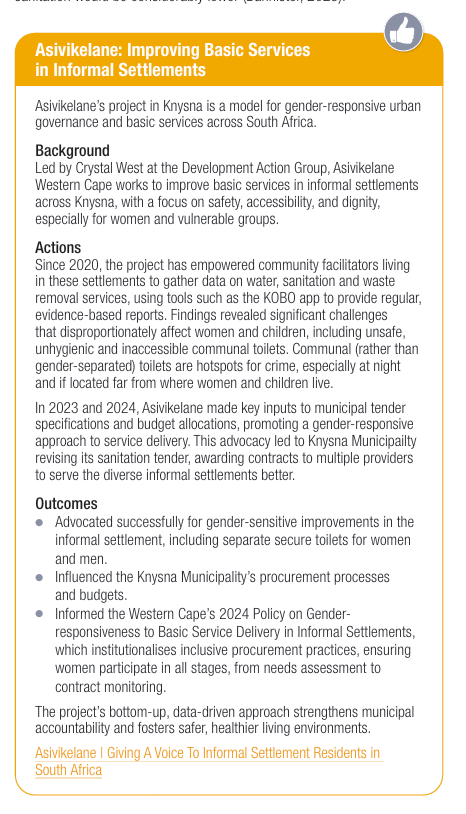
We are excited to see that #Asivikelane was included in the @UNHABITAT New Urban Agenda Platform report: Republic of South Africa: National Progress Report in the Implementation of the New Urban Agenda.
"Asivikelane’s project in Knysna is a model for gender-responsive urban governance and basic services."
Read the full report here: https://t.co/Zb1TrYXWKW
@DAG_activism@OpenBudgets
Mangaung budget response: #Asivikelane welcomes the provision of toilets and taps in informal settlements across @Mangaung_Metro, however many residents still continue to lack access to safe and dignified sanitation.
Based on the draft 2026/27 budget and draft Integrated Development Plan (IDP), Asivikelane has put together a set of recommendations. Read them on our website here: https://t.co/oXyQnTb8I2
#Asivikelane is training community plumbers to fix leaking taps and toilets. They are saving water and improving access to water and sanitation in their communities. Watch our latest video to find out about the impactful work they are doing in @KnysnaMuni.
@DBSA_Bank@DAG__activism https://t.co/sqbSkfwfNj
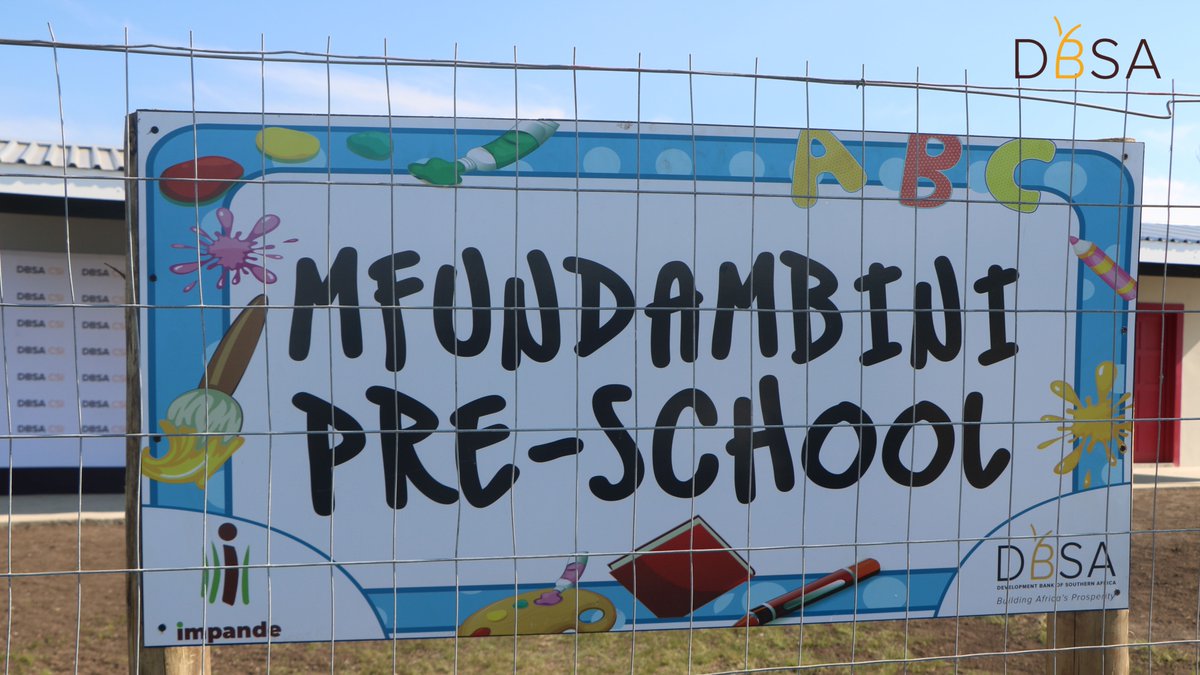
Today, DBSA CSI officially handed over two newly constructed ECD centres in the Eastern Cape; helping create safer and more dignified learning environments for children in underserved communities.
#DBSA#ECD
We welcome the @CityofTshwane's new allocation of R5 million for solid waste collection points in informal settlements.
We are pleased to see specific indicators to implement the City’s Informal Settlements Waste Management Strategy and are proud to be collaborating on its implementation.
We are however concerned that several developments may have a negative impact on waste management in informal settlements.
While the move to increase internal capacity and reduce reliance on contractors is a welcome long-term principle, it is not clear whether the reduction in contractors will negatively affect service delivery in the short to medium term.
The budgets for both solid waste contracted services and household have decreased significantly from the previous year’s budget.
It is not clear if the R14 million allocated for waste containers (more than double the previous year’s allocation) includes provision for informal settlements.
We were excited to be included in the @PARInstitute latest report: Observe, Record, Report: Real-time citizen engagement with public procurement in South Africa. https://t.co/u2fjTbmZ2w
"IBPSA’s Asivikelane initiative elicits regular municipal responses to citizen-reported service failures. IBPSA’s Asivikelane transformed citizen feedback into municipal action during and after the COVID19 period, with monthly dashboards that made it difficult for officials to ignore. Building on this, IBPSA’s 2025 field study in Ekurhuleni, Johannesburg and Tshwane provides empirical support for this trajectory."
We were excited to be included in the @EqCollectiveSA report: Community Action to Advance the Right to Water: Invited and invented participant strategies in South Africa.
This report considers strategies that can be used by rural and other marginalised communities to advance water rights, with a focus on three case studies, one of them being #Asivikelane.
Read the full report here:
https://t.co/nUAgJ2GuWC
Residents in Salvokop and Baghdad informal settlement in @CityofTshwane joined forces with SG Lourens Nursing College students and lecturers to clean up their community. Thank you to everyone involved, you did a great job! #Asivikelane
We hosted a recycling and composting workshop for informal settlement residents in @CityofCT with our partner Thetha Community Organisation.
The training was designed to equip residents with practical knowledge and skills on composting and establishing backyard gardens. The initiative forms part of ongoing community-driven efforts to improve food security, environmental sustainability, and self-reliance within the settlement.
Thank you to the support from @GiftoftheGivers who provided the catering and @Polyco who donated workshop materials.
Budget season is here! Metros across SA have published their draft budgets & IDPs for 2026/27 — and they’re open for public comment.
#Asivikelane residents in @NMandelaBay showed up at participation sessions to call for more funding for basic services in informal settlements.
We are disappointed to see that Nelson Mandela Bay's draft budget and IDP do not prioritize disaster management in informal settlements. View our full written response on our website here: https://t.co/rvovHoliiV
#Asivikelane community plumbers in Hornlee informal settlement worked together with @KnysnaMuni to install 2 new standpipes. The municipality provided the materials while the plumbers put together a task team to dig the trenches, lay the pipes and fit the taps.
This is a great example of collaboration between residents and government, bringing much-needed water points closer to residents' homes!
@DAG_activism
#Asivikelane and our partner Indibano Yabahlali hosted a training workshop for informal settlement residents in Cape Town. We equipped participants with an understanding of local government budgeting processes and empowered them to effectively engage in budget advocacy and planning.
We also conducted compost training designed to equip residents with practical knowledge and skills on composting and establishing backyard gardens. The initiative forms part of ongoing community-driven efforts to improve food security, environmental sustainability, and self-reliance within the settlement.