Kaspa Toccata mainnet process update:
Today we plan to publish the v1.3.0 mainnet pre-release, without activation, for 1–2 days of broader network sanity testing.
Assuming everything looks good, the following release will be v2.0.0, with activation planned for June 30, 4 weeks from today
That's a really good question, but it's hard to answer in a single tweet because our mission is quite extensive, and it requires a lot of background knowledge to really understand what sets Kaspa apart.
Currently, a lot of people see Kaspa as “Bitcoin’s crazy little brother” that improves time-to-finality by leveraging the benefits of DAG-based consensus protocols without accepting their traditional drawbacks, such as decreased decentralization or a limited validator set.
This perception is somewhat accurate, but it falls short of conveying the full picture, because Kaspa’s vision extends far beyond just trying to be a better Bitcoin.
Anyone willing to study Kaspa and its broader vision will discover similarities to nearly all major existing DLT designs: from Bitcoin, to Ethereum, to Solana, Sui, Celestia, and beyond.
My personal view is that “research” in the DLT space is approaching a point of convergence. We increasingly understand how to push distributed systems close to the limits of what physics permits. The frontier is no longer only about raw throughput or faster finality. The attention is shifting toward game theory, incentives, sequencing, MEV, alignment, and how to build systems where the economic incentives of users, builders, miners, validators, applications, and infrastructure providers do not work against each other.
That is why debates like based rollups versus arbitrary sequencing, shared sequencing, MEV mitigation, proposer-builder separation, and execution-layer incentives matter so much. These are not niche technical details. They determine whether a network can remain neutral, decentralized, and aligned while scaling to global usage.
And this is where I think Kaspa is pushing the boundaries in a very important way.
Kaspa is not merely trying to be “fast.” The goal is to build an L1 where speed, decentralization, security, and incentives are aligned at the base layer. A system that does not scale by hiding complexity behind trusted committees, privileged sequencers, centralized validator sets, or opaque coordination mechanisms, but instead tries to preserve the spirit of proof-of-work while extending what an L1 can realistically do.
Because Kaspa arrived later than many other major projects, it does not carry the same degree of technological debt. It can absorb lessons from Bitcoin, Ethereum, rollups, modular blockchains, high-throughput monolithic chains, DAG research, MEV research, and the broader history of decentralized systems, and combine those lessons into something more optimal.
To me, that is what Kaspa is building: not just a faster blockchain, but a more incentive-aligned decentralized infrastructure layer.
But this also creates a different challenge.
Kaspa’s biggest problem today is not its technology. It is the lack of centralized coordination around communicating the vision. And because Kaspa is a grass-roots movement, that responsibility does not belong to a marketing department, or a single leadership team. It belongs to the community.
That also means the community has a different role to play.
There will always be holders who are mainly interested in price, and that is completely fine. But there also need to be people who are here because they want to use the technology to build a different future. People who care about the architecture, the incentives, the open questions, the trade-offs, and the long-term trajectory of decentralized infrastructure.
I am one of those people.
I am not interested in DLTs merely as a way to generate wealth. I am interested in them because I believe they can change the trajectory of humanity as a whole.
For that reason, I want to use this opportunity to announce a regular community hangout where we discuss the current state of development, the open questions, and where we can align our vision together.
The first session will be on Tuesday, June 9th, 2026.
We will talk about the vProgs framework, how the codebase works, what sets Kaspa apart, where we improve on existing solutions, and what still needs to be done. The goal is for this to become a regular, possibly bi-weekly, event where we as a community come together to discuss the future and understand the technology.
Eventually, we can invite people from other projects as well, but the main focus at the beginning will be explaining and communicating how things work under the hood.
There is still a lot of work to be done, and I do not want to waste precious time. So the first sessions may feel a little improvised, but we can improve as we go.
The important thing is that we start.
So mark the date: Tuesday, June 9th, 2026.
Kaspa price action has been disappointing. And the big question has been whether Kaspa will ever be able to compete with the top layer 1's out there... especially since its about to go through the single most important upgrade in its entire history.
Right now... the data is brutal. Big projects like Solana already are operating at scale. It has billions in TVL, massive stablecoin liquidity, real DeFi, active DEX volume, payments, tokenized assets, memecoins, lending markets, and a full application economy.
$KAS has one of the strongest communities in crypto. It also has proof-of-work, fair launch, no VC allocation, no premine, deflationary tokenomics, a capped supply, and BlockDAG technology.
But here is the part people do not want to hear... Kaspa does not have native smart contracts yet. That means no real native DeFi economy, no native stablecoin ecosystem, no major app layer, and no serious TVL on the base layer. And if we are being honest, this is why the Kaspa debate gets so emotional. The believers are not betting on what Kaspa is today. They are betting on what Kaspa could become after the next major upgrade. That upgrade is Toccata.
And this is where things get interesting. The Toccata hard fork is expected to be the biggest upgrade in Kaspa’s history. The activation window is between June 5 and June 20. If it lands properly, this is the moment Kaspa starts moving from a fast proof-of-work payment network toward something much more programmable. That matters because right now, Kaspa’s biggest weakness is utility.
Real ecosystems need builders, liquidity, stablecoins, tokens, apps, infrastructure, and users doing more than just sending coins back and forth. Toccata is supposed to give Kaspa the missing tools to start closing that gap. It'll have native smart contract capabilities, token and asset issuance, privacy and verification features through ZK technology, and a more powerful framework for handling multiple streams of activity. And if this actually works, it changes the entire conversation around Kaspa.
Because right now, comparing Kaspa to Solana or other ecosystems is not even close. And this is why Toccata is so important.
That does not mean Kaspa instantly becomes competitive against larger projects. That does not mean apps magically appear overnight or that liquidity floods in automatically. But it does mean the foundation could finally exist for developers, tokens, DeFi, and Layer 2 activity to become more meaningful. And this is where the risk and opportunity both explode.
If Toccata goes smoothly and developers show up, and if Kasplex, Igra, and other ecosystem layers start pulling in real activity then the next 6 to 12 months could look very different. A major repricing event becomes much easier to imagine.
But if the upgrade disappoints, gets delayed, breaks expectations, or fails to attract real builders, then the market may be forced to reprice the hype back down to reality.
And honestly, that is what makes this moment so important. A lot of crypto projects already had smart contracts and still failed. Kaspa is trying to do something harder. It is trying to keep the proof-of-work, fair-launch, Bitcoin-style purity that its community loves, while also becoming useful enough to compete.
That is a massive challenge but it's also why Kaspa is worth watching. This upgrade could be the turning point where Kaspa finally starts proving whether the thesis is real.
The honest take is that Kaspa is behind today. Very behind. But Toccata could be the moment things change. That is when things either get very exciting, or very uncomfortable. Because after Toccata, the excuses start disappearing.
We will soon find out if Kaspa is just one of the loudest narratives in crypto, or one of the most mispriced ones.
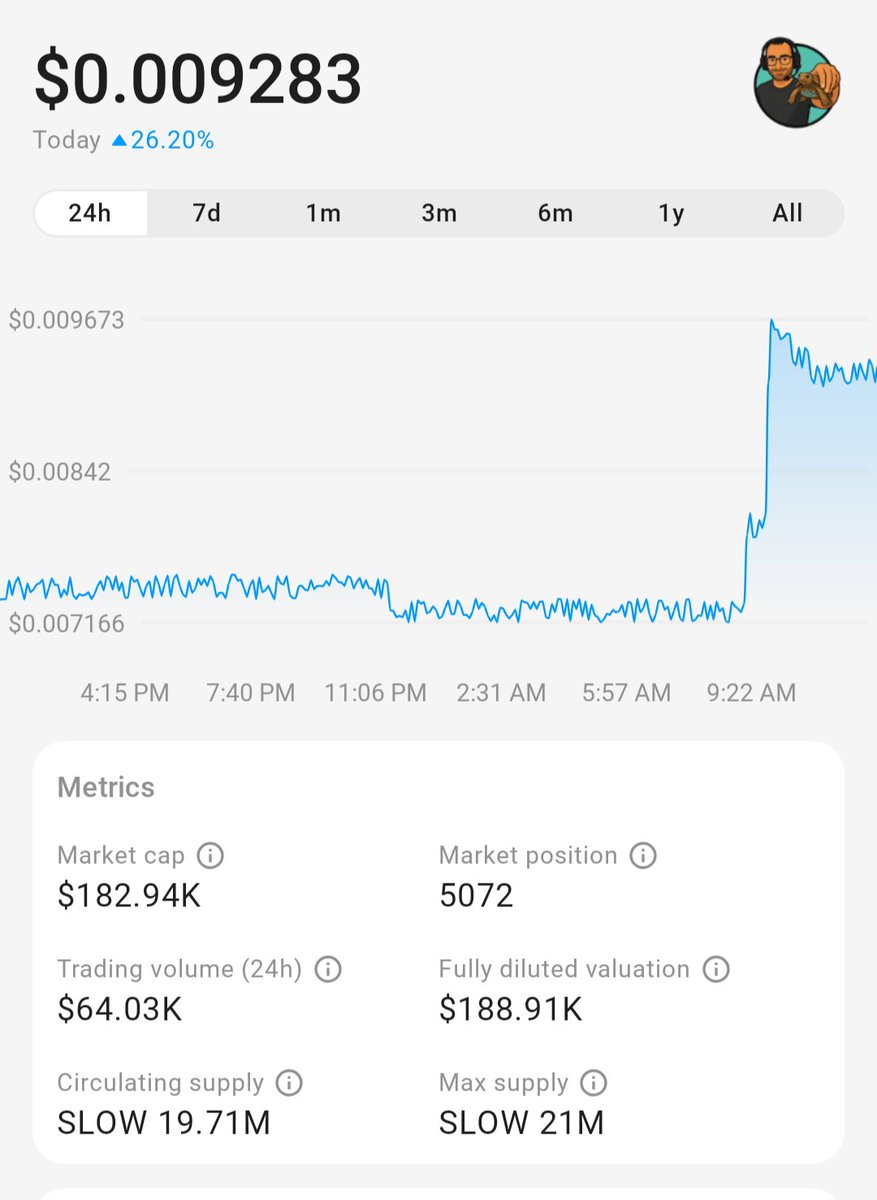
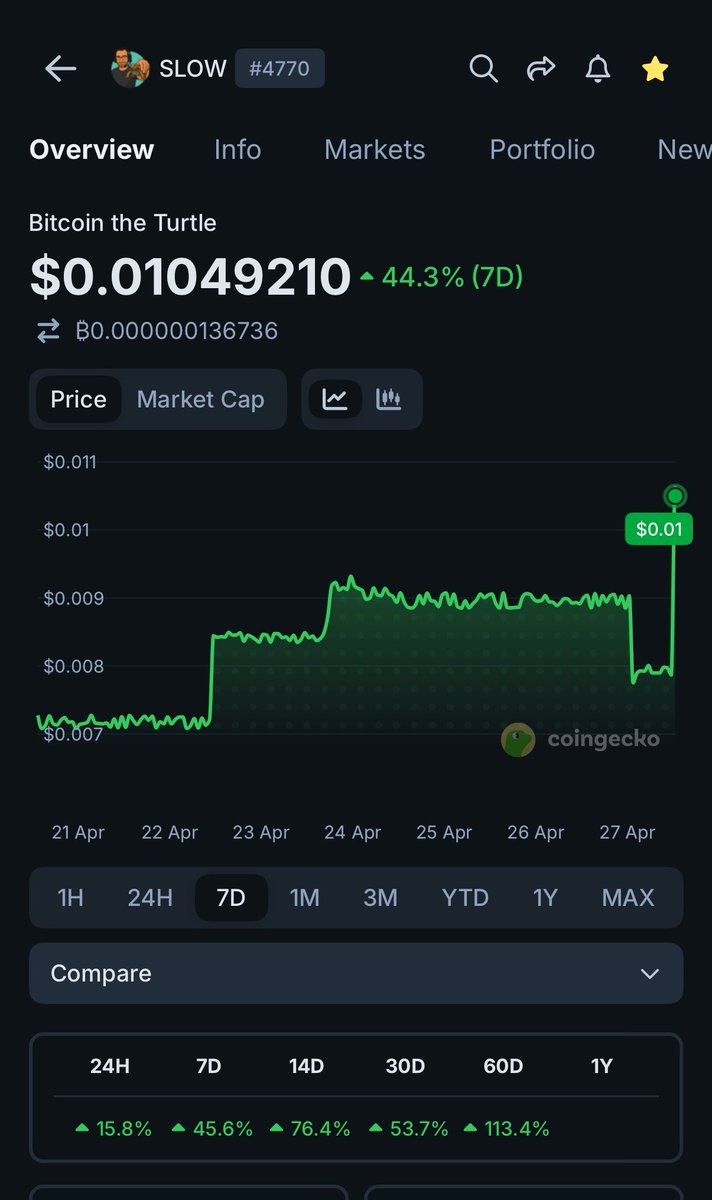
Regardless of how you feel about meme coins $ETH and $SOL would not have gotten the adoption they have today without them. The same will happen with $KAS and I believe $NACHO $KASPY and $SLOW will lead
35 days to the $KAS hard fork.
KRC20s have been quiet for almost a year. That ends.
The Kaspa chain right now is sitting in the same setup BNB chain was in pre-October 2025: quiet, low-attention, primed.
Here's why KRC20 season will be bigger than BNB season was 🧵
$Kas Why Now?
Remember Ethereum?
Back in 2015, it was just a simple transfer network.
Then in 2016, smart contracts arrived, developers flooded in, and by 2017 the price surged over 5,000%.
Kaspa is at that exact same point right now.
Since 2021, it has been a pure transfer network.
In June 2026, the Toccata hard fork brings smart contracts, native tokens, and zero-knowledge proof infrastructure all at once.
An even stronger launch package than Ethereum had.
On top of that:
■ 95% of supply is already in circulation almost zero new selling pressure
■ Market cap is only $1B where Bitcoin was in 2013
■ Not listed on Binance or Coinbase yet that catalyst hasn’t come
■ Fair launch no premine, no VC allocation
■ Trading 82% below its all time high
When Ethereum made this transformation, its market cap was tiny and nobody was talking about it.
A year later, everyone was.
The same story is being written for #Kaspa
I’m not telling you this when everyone is already talking about it.
I’m telling you while everyone is still silent.
The difference is:
You’re reading this while it’s still early.
Fast, secure, and simple: swap Kaspa (KAS) in Ledger Wallet!
No need to move your assets to an exchange. Approve your swap directly on your Ledger signer and keep your private keys offline 🔐
Head over to Ledger Wallet now to swap KAS.
Grosse nouvelle pour Kaspa ! 🔥
Ledger vient d’ajouter le swap natif de KAS directement dans Ledger Wallet.
Plus besoin d’envoyer tes KAS sur un exchange : tu swaps directement depuis ton Ledger, tu valides sur le signer, et tes clés privées restent hors ligne tout le temps 🔐
🔹Plus simple
🔹Plus rapide
🔹Beaucoup plus sûr (self-custody réelle)
Un vrai pas en avant pour l’adoption grand public.
$KAS #Kaspa #Ledger
Don’t underestimate $SLOW its the founder of Kaspa per turtle named bitcoin. Meme coins will start ripping on $KAS with the new hard fork coming out in June.