On 10 July @ICReferendums launched its final report; just a week later the pertinent topic of the role of referendums in parliamentary democracy was debated in the House of Lords. https://t.co/jt1SBBl2kL
The @ICReferendums is calling for an inquiry into the regulation of political advertising across all media, and for a searchable database of online political advertising to increase transparency and accountability of campaigns https://t.co/c1OjGoGuOW #ReferendumReform
NEW BLOG: Making referendums fit for a parliamentary democracy: Lords debate responds to recommendations of the @ICReferendums. @Jess_Sargeant and Basma Yaghi offer a summary of a recent House of Lords debate on the role of referendums.
https://t.co/xQxpRzjY77
This piece by @RSAMatthew draws heavily on the on the conclusions of the Independent Commission on Referendums, which he concludes 'has some well thought through proposals on regulation' https://t.co/u1Jinerfoa
We welcome @CommonsCMS 's report & recommendations that concur with our own:
- Imprints for online campaign material
- Faster spending returns for large orgs
- Categories for digital campaigning in spending returns
- public register of political adverts
https://t.co/90HJ33xUEN
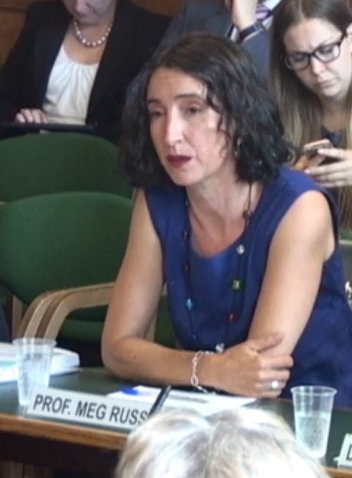
NEWS: Meg Russell and Alan Renwick give evidence to the Public Administration and Constitutional Affairs Committee on the Independent Commission on Referendums final report. Read a summary here:
https://t.co/eIOJk8c06n
Interesting blog by @ja_sheldon on the lessons of 1979 referendums for a possible further referendum on Brexit. It highlights the work of @ICReferendums and the need for careful thought on the rules for future referendums. #referendumreform
https://t.co/UhpEFoCUky
Meg Russell @ICReferendums says citizen's assemblies, or longer process of deliberation among the public, must be considered before holding referendums. She says pre-legislative referendums are undesirable and referendums should be post-legislative. Live https://t.co/eztaZLMynz
.@CommonsPACAC asks what recommendations @ICReferendums has made to improve regulation of online campaigning. @alanjrenwick says we need
- imprints on online material
- a repository of online ads to end ‘dark ads’
- a inquiry into paid political advertising across all media.
He also talks about the need to extend restrictions on governments publications during referendum. Supporting @CommonsPACAC and @ElectoralCommUK recommendation. The restrictions should also be narrowed in scope to cover campaigning.
Meg Russell points out that if there is a void left about would happen in the event of a vote for change, parliamentarians have to fill that void. And that puts them in a very difficult position.
Meg Russell @ICReferendums says that referendums should not be seen as quick fix solutions to immediate political problems. It is unfair to throw difficult questions at the public, simply because politicians don’t know
how to resolve them. Watch live https://t.co/eztaZLMynz
.@CommonsPACAC asks how we could organise citizens’ assemblies. @alanjrenwick talks about @UKAssemblies and how they were run. They should not replace existing mechanisms of decision making but can provide an insight into informed public opinion.
Meg and Alan say that the Commission does not support referendums on moral issues as they can be damaging for those whose rights are at stake. Moral issues are dealt with free votes in the UK but citizens’ assemblies can also facilitate public input on these issues.
.@alanjrenwick talks about the 2018 Irish abortion referendums where it went through a number of clear stages including a citizens’ assembly, various parliamentary committees and a public vote.
.@CommonsPACAC asks whether referendums have undermined public trust in representive institutions. Meg says that in some cases (1997 Scottish devolution, 1998 GFA) they can be positive experiences, giving legitimacy to decision.