ICT4Peace is independent, policy and action-oriented. Since 2003 we promote peace and security in cyberspace and protect lives and human dignity through ICTs
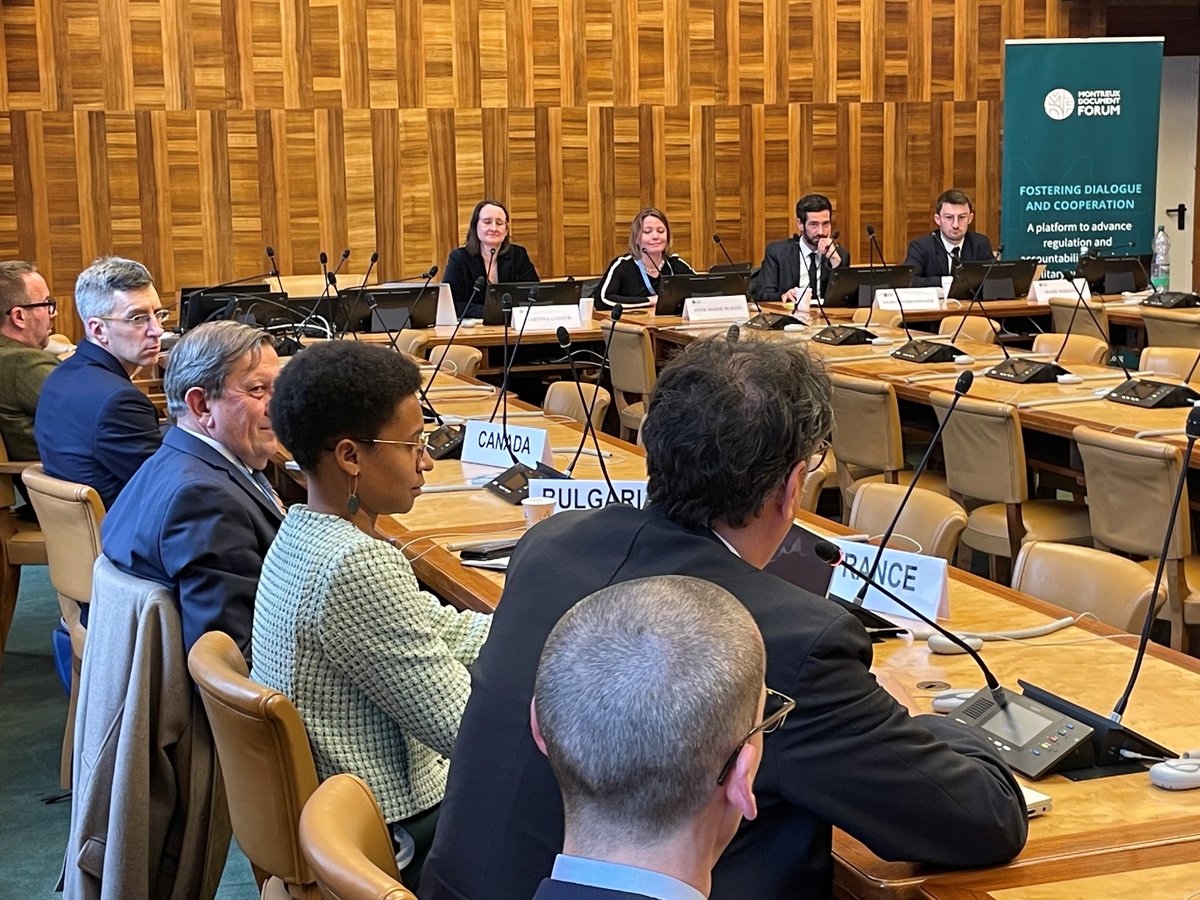
On Monday, DCAF held a Montreux Document Forum side event at the United Nations in Geneva on the topic of Private Military and Security Companies's #cyber operations in situations of #armedconflict. The event explored #legal implications under #humanrights#law & #IHL and reflected on the role of multilateral multi-stakeholder initiatives like the Pall Mall process in regulating this emerging industry.
Thank you to the three panelists for their insightful remarks and valuable analysis: @AMBuzatu from the @ict4peace, @TRodenhaeuser from the @ICRC, and @DersoirMahe from @francediplo_EN, as well as to the @SwissMFA for moderating the panel.
Concluye nuestro 'Curso Introductorio sobre Derecho Internacional en el Ciberespacio: Posicionamiento Nacional de México🇲🇽', organizado por el Programa de Ciberdiplomacia de la Sección de Ciberseguridad de
@OEA_CICTE@OEA_Cyber, en colaboración con @SRE_mx y @ict4peace.
Durante la última jornada, los participantes abordaron temas clave como:
✅La atribución de ciberoperaciones y las posibles respuestas en el marco del #DerechoInternacional.
✅La cooperación internacional ante incidentes transfronterizos.
✅Los principios humanitarios aplicables a los conflictos en el ciberespacio.
Agradecemos a los +25 representantes de distintos sectores de México🇲🇽 esta valiosa experiencia de cooperación internacional, que refuerza las capacidades nacionales para definir posiciones jurídicas propias y participar activamente en los debates globales sobre ciberseguridad, paz y estabilidad en el entorno digital 🌐🌎.
📣 GNI is pleased to welcome Sanjana Hattotuwa Ph.D. to our Academic Constituency, in addition to OONI (Open Observatory of Network Interference) and Factum, who join our growing NGO Constituency.
https://t.co/v5gDD92IDM
Launch of Toolkit: From Boots on the Ground to Bytes in Cyberspace. This toolkit is a one-stop resource for Private Security Companies (PSCs) of all sizes looking to navigate the complex world of ICTs and their impact on human rights. https://t.co/DSyxtD0gJl
#NEW— We interviewed Dr. Sanjana Hattotuwa (@sanjanah) on the state of misinfo and disinfo in Sri Lanka, the role of social media platforms, & how legal mechanisms that are created to counter hate speech actually enable hate in the country.
Read: https://t.co/iS5qpGu99F
Achermann studies public discourse online. She is the co-founder, and managing director of the Public Discourse Foundation. Achermann brings a wealth of experience from her work in Switzerland and beyond, tackling online harassment and promoting safer digital spaces.
#Switzerland is honored to have organized the #UAPeaceSummit, bringing together 100 delegations from around the world to discuss #Peace.
The goal of the summit was to inspire a #PathToPeace in #Ukraine and together, we took the first steps on this journey.
Pope Francis urges G7 leaders to ban autonomous weapons systems https://t.co/4TP0jc10vJ A necessary message as Canada, France, Germany, Italy, Japan, UK & US downplay concerns over removing human control from use of force & won't commit to negotiate new law @hrw@BanKillerRobots
In her first interview for ASPI's "Asia Inside Out" podcast, @AsiaSocietyCEO Dr. Kyung-wha Kang speaks with @rorrydaniels about the diversity of Asia and @AsiaSociety's big mission.
New ICT4Peace Publication by Drifa Attladottir: “Navigating the Quantum Wave – A Policy Maker’s Guide for Responsible Governance of Quantum Technologies” https://t.co/yTyRvrelBi
ICT4Peace – OAS Course on “Protection of critical infrastructure and critical information infrastructure against cyber attacks” in Costa Rica https://t.co/CzIZQvVBkk
Anne-Marie Buzatu of ICT4Peace moderated high-level panel on “The role of the Private Sector during Hybrid Conflict” at European Cyber Agora https://t.co/6wEBaCxK1Q
I am deeply troubled by reports that the Israeli military’s bombing campaign includes AI as a tool in the identification of targets, resulting in a high level of civilian casualties.
AI should be used as a force for good to benefit the world; not to contribute to waging war on an industrial level, blurring accountability.
Why is it important to map the tech used to facilitate slaughter in Gaza & link it back to the companies/people who contributed?
It's not because these systems matter, in a vacuum. It's because we MUST ensure that "AI" is not used to facilitate computational escape from culpability. And that every institution involved is held to account for its role.
"Lavender has played a central role in the unprecedented bombing of Palestinians, especially during the early stages of the war. In fact, according to the sources, its influence on the military's operations was such that they essentially treated the outputs of the AI machine 'as if it were a human decision.'"
https://t.co/d5clGROV2j