The First Oral Carbapenem Arrives - Tebipenem pivoxil (Utebzi): what it is, where it earns its place, and where it absolutely does not
https://t.co/5vfN0TR5se
A hospital chain bought a 104-bed hospital in a poor Black neighborhood, drained its drug-discount eligibility to fund wealthy suburban hospitals, then closed its ICU.
An ER doc who worked there called it laundering money through the poor hospital.
The program that let them do it? 340B. Built for the poor. Captured by the suits.
🧬 Autonomous AI drug discovery is quietly shifting from “chatbot science” toward something much more practical: knowledge-graph–driven scientific reasoning.
A new preprint, “A Framework for Autonomous AI-Driven Drug Discovery” (bioRxiv 2024/2026 update), proposes an architecture where LLMs are not treated as magical inventors, but as orchestration layers sitting on top of biomedical knowledge graphs, centrality algorithms, and iterative hypothesis refinement.
DOI: 10.1101/2024.12.17.629024
The core idea is the “focal graph”: instead of feeding an LLM raw papers or giant omics matrices, the system compresses biological relationships into graph structures linking:
genes
pathways
diseases
drugs
biomarkers
phenotypes
The framework then uses graph-theoretic prioritization (including PageRank-like centrality analysis) to identify biologically influential nodes before the LLM begins reasoning.
That distinction matters.
Most current “AI scientist” narratives assume LLMs themselves generate biomedical insight. But biology is sparse, noisy, and heavily confounded. Pure language models struggle with causal grounding.
This paper implicitly argues that the future stack is probably:
structured biological memory (KG/RAG) + algorithmic prioritization + LLM planning
—not LLMs alone.
The interesting implication is not just target discovery.
This architecture could theoretically support:
multi-omics hypothesis generation
fibrosis signaling prioritization
aging pathway interaction maps
drug repurposing
biomarker compression
adaptive clinical-trial stratification
In other words: LLMs become scientific coordinators, while the graph becomes the real substrate of biological reasoning.
Importantly, this is still a preprint and not peer reviewed. The framework is more conceptual/prototypical than a proven end-to-end autonomous drug discovery engine, and wet-lab validation remains limited.
But the direction is important.
The next generation of biomedical AI may not look like “ChatGPT discovers a drug.”
It may look more like: a continuously updating biological operating system that ranks mechanistic plausibility faster than humans can read papers.
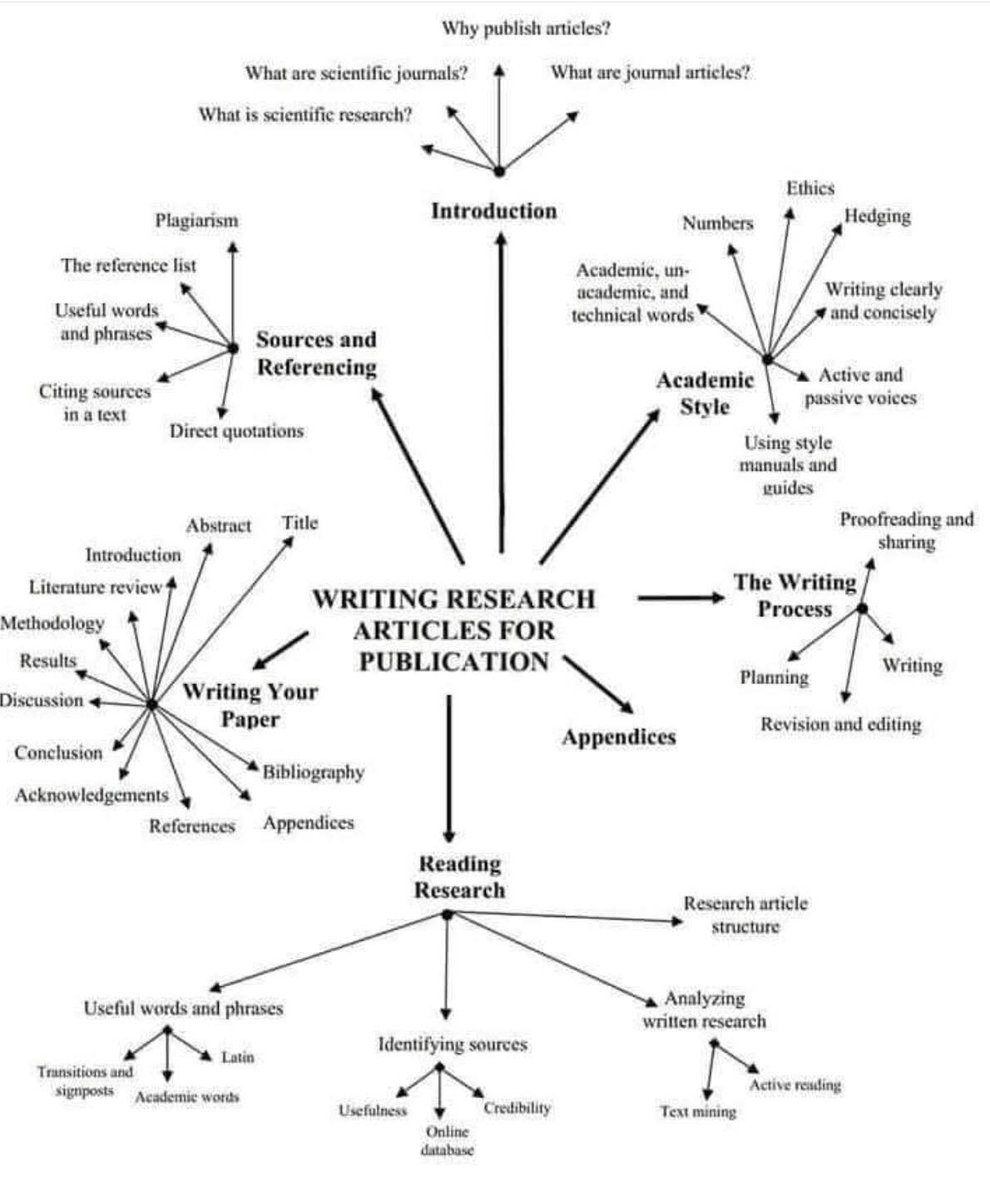
How to write a journal paper for publication?
Your paper should have the following 9 sections.
1. Abstract
2. Introduction
3. Literature Review
4. Methodology
5. Results
6. Discussion
7. Conclusion
8. Acknowledgements
9. References
Don't upgrade to the $100 Claude plan (yet).
These 21 hacks make the $20/month plan enough:
1. You upload PDFs raw. One page = 3,000 tokens.
Fix: Paste the text into a Google doc. Download as .md format. Under 200 tokens.
2. You build files inside Cowork too early.
Fix: Plan in Chat first. Move to Cowork only when you know exactly what you want.
3. You write 500-word prompts that reload.
Fix: Write 29 words instead: "I want to [task] to [goal]. Ask me questions using AskUserQuestion."
4. You say "redo the whole thing" to fix section 3.
Fix: "Only redo section 3. Keep everything else. No commentary. Just the output."
5. You send 3 separate messages for 3 tasks.
Fix: One message, three tasks. "Summarize this, list the points, suggest a headline."
6. You type "No, I meant," stacking on the history.
Fix: Click 'Edit' on your original message. Fix it. Regenerate.
7. You rewrite prompts from scratch every time.
Fix: Keep a prompt library. Same structure, swap the variable.
8. You use Opus for a simple grammar check.
Fix: Sonnet for quick tasks. Save Opus + Extended Thinking for deep work.
9. Your about-me file is 22,000 words (too long).
Fix: Trim to under 2,000 words. End sessions with "Write a session-notes .md."
Paste my .md file prompt: https://t.co/LyV7fegv4c
10. You never restart & keep stacking long chats.
Fix: When Cowork goes sideways, click "Restart the conversation from here" on an earlier message.
11. You never summarize before things get long.
Fix: Every 15-20 messages → summarize, copy the brief, start a fresh session.
12. You use Projects for recurring files.
Fix: Use Projects. Upload once. Every chat inside references it without re-burning tokens.
13. You dump 50 files into Cowork "just in case."
Fix: Only include what this task needs. Zero folders for quick tasks like email drafts.
14. You keep 3 topics in 1 chat. Claude re-reads all.
Fix: New topic = new chat. Always. Dead context is dead tokens.
15. You leave search & connectors on by default.
Fix: Default everything off. Turn features on per task, not per account.
16. You manually run the same report every week.
Fix: Use /schedule. "Every Monday at 7am, create my weekly briefing."
17. You let Claude Code explore your whole repo.
Fix: Be specific. "Build a bar chart from this CSV. Save as chart .png."
18. You skip Personal Preferences & waste setup.
Fix: Settings → Personal Preferences. Set your tone and style once.
19. You type lazy prompts like "make it better."
Fix: Speak your prompts with wispr .ai. Richer context in one shot.
20. You burn your whole limit in one morning.
Fix: Claude runs on a rolling 5-hour window. Split it.
21. You use Claude for things it can't do.
Fix: Know your tools. Images → Gemini.
Real-time search → Grok.
To download my exact .md files:
1. Go to https://t.co/psB7XxAv8w.
2. Subscribe for free. Open my welcome email.
3. Hit the automatic reply button inside.
4. Go to the Notion link in the second mail.
5. Copy-paste prompts, too.
In vitro activity of β-lactams (amoxicillin piperacillin, imipenem, meropenem and ceftobiprole)against contemporary Enterococcus faecalis clinical isolates France
Amox: 100% S
PiP: 91% S
MER: 97.5% S
MER: 75.5% S
Cefto: 86% S
https://t.co/FSKSKQXooU
340B was pitched as patient help. Hospitals turned it into a profit center—buy low, charge high, hide behind charity status. Time for accountability.
https://t.co/F9hYcFbFSv
Some of the largest hospital systems are using loopholes to claim “rural” status to access benefits meant for small, underserved, rural communities.
At New York-Presbyterian, eight campuses are classified this way...even in the middle of Manhattan.
There aren’t any farms on East 68th Street.






![rubenhassid's tweet photo. Don't upgrade to the $100 Claude plan (yet).
These 21 hacks make the $20/month plan enough:
1. You upload PDFs raw. One page = 3,000 tokens.
Fix: Paste the text into a Google doc. Download as .md format. Under 200 tokens.
2. You build files inside Cowork too early.
Fix: Plan in Chat first. Move to Cowork only when you know exactly what you want.
3. You write 500-word prompts that reload.
Fix: Write 29 words instead: "I want to [task] to [goal]. Ask me questions using AskUserQuestion."
4. You say "redo the whole thing" to fix section 3.
Fix: "Only redo section 3. Keep everything else. No commentary. Just the output."
5. You send 3 separate messages for 3 tasks.
Fix: One message, three tasks. "Summarize this, list the points, suggest a headline."
6. You type "No, I meant," stacking on the history.
Fix: Click 'Edit' on your original message. Fix it. Regenerate.
7. You rewrite prompts from scratch every time.
Fix: Keep a prompt library. Same structure, swap the variable.
8. You use Opus for a simple grammar check.
Fix: Sonnet for quick tasks. Save Opus + Extended Thinking for deep work.
9. Your about-me file is 22,000 words (too long).
Fix: Trim to under 2,000 words. End sessions with "Write a session-notes .md."
Paste my .md file prompt: https://t.co/LyV7fegv4c
10. You never restart & keep stacking long chats.
Fix: When Cowork goes sideways, click "Restart the conversation from here" on an earlier message.
11. You never summarize before things get long.
Fix: Every 15-20 messages → summarize, copy the brief, start a fresh session.
12. You use Projects for recurring files.
Fix: Use Projects. Upload once. Every chat inside references it without re-burning tokens.
13. You dump 50 files into Cowork "just in case."
Fix: Only include what this task needs. Zero folders for quick tasks like email drafts.
14. You keep 3 topics in 1 chat. Claude re-reads all.
Fix: New topic = new chat. Always. Dead context is dead tokens.
15. You leave search & connectors on by default.
Fix: Default everything off. Turn features on per task, not per account.
16. You manually run the same report every week.
Fix: Use /schedule. "Every Monday at 7am, create my weekly briefing."
17. You let Claude Code explore your whole repo.
Fix: Be specific. "Build a bar chart from this CSV. Save as chart .png."
18. You skip Personal Preferences & waste setup.
Fix: Settings → Personal Preferences. Set your tone and style once.
19. You type lazy prompts like "make it better."
Fix: Speak your prompts with wispr .ai. Richer context in one shot.
20. You burn your whole limit in one morning.
Fix: Claude runs on a rolling 5-hour window. Split it.
21. You use Claude for things it can't do.
Fix: Know your tools. Images → Gemini.
Real-time search → Grok.
To download my exact .md files:
1. Go to https://t.co/psB7XxAv8w.
2. Subscribe for free. Open my welcome email.
3. Hit the automatic reply button inside.
4. Go to the Notion link in the second mail.
5. Copy-paste prompts, too.](https://pbs.twimg.com/media/HIDFFMcb0AAMalG.jpg)


