Retailers spend trillions on discounts every year and write almost all of it off as a sunk cost.
Make the discount right transferable, back it with a reserve layer, and that same spend stops vanishing. It starts circulating.
A discount right is not money. That sounds like a technicality until you trace what each one actually does.
Money settles obligations. You can pull it out of a bank, convert it from a stablecoin, swap it for something else entirely. A discount right does none of that. It changes the price a customer pays at the moment of purchase, and then it's gone. The sale still happens between buyer and seller. The voucher only adjusts the amount.
Retailers have handed out £10-off vouchers for decades. That part is nothing new. What's new is that a discount right can now move. From one holder to another, across merchants, through a network.
The discount isn't the invention. The transferability is.
And once discount rights can move freely, they stop being marketing tools and start behaving like economic infrastructure.
We break the full distinction down slide by slide, drawn straight from our whitepaper. Swipe through 👇
Every loyalty programme tells customers their points have value. But a reward that can't move isn't value, it's the illusion of it.
A transferable discount right keeps working in your favour. A locked one sits trapped until it quietly disappears.
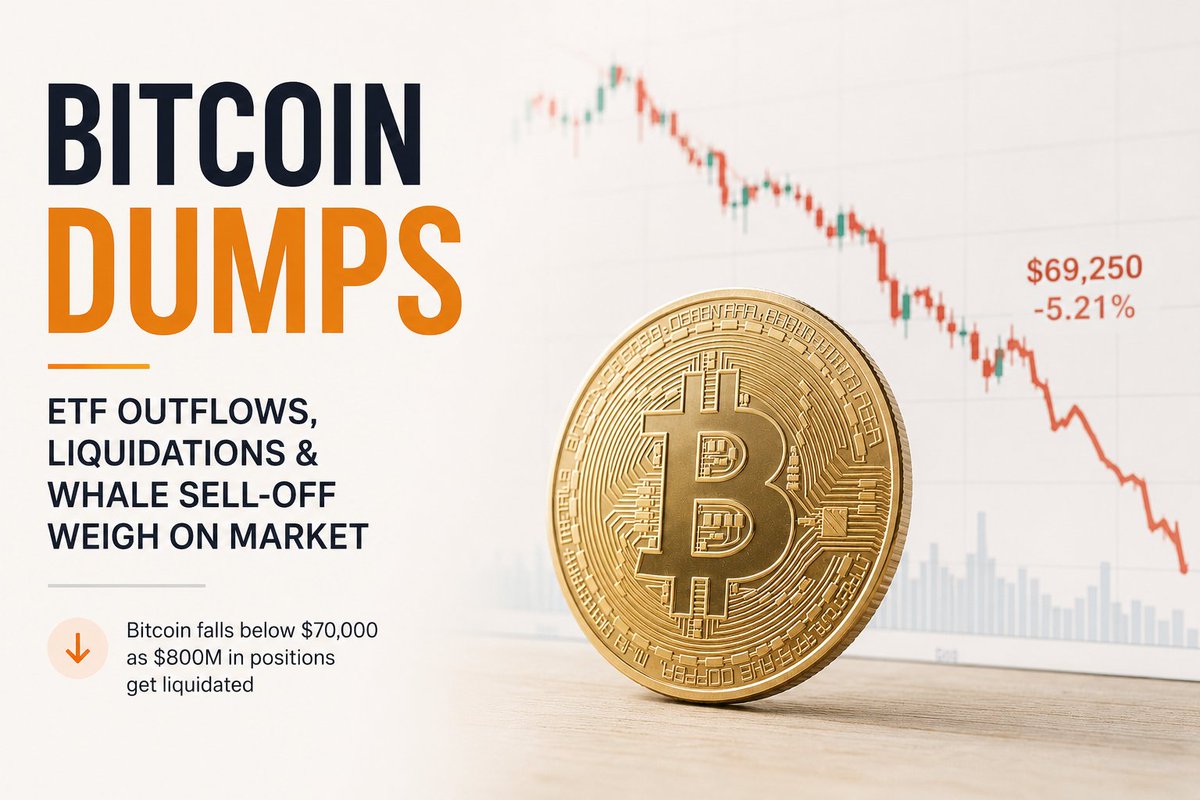
bitcoin:native Slides as Market Faces Wave of Selling Pressure
Bitcoin experienced a sharp decline over the past two days, falling below key support levels and triggering widespread liquidations across the crypto market.
The selloff appears to be driven by a combination of factors. Spot Bitcoin ETFs have seen significant investor outflows, reducing one of the market's strongest sources of demand. At the same time, large holders have been taking profits, while concerns over potential Bitcoin sales linked to the Mt. Gox repayment process have added uncertainty.
As prices fell, leveraged traders were caught offside. More than $800 million worth of crypto positions were liquidated, accelerating the decline as forced selling pushed prices even lower.
Despite the drop, analysts note that the current correction resembles a market deleveraging event rather than a fundamental crisis. Bitcoin remains well above levels seen earlier in the year, and traders are closely watching whether buyers return around the $68,000–$70,000 range.
The coming days will be crucial. If ETF flows stabilize and market sentiment improves, Bitcoin could recover quickly. However, continued selling pressure may lead to further volatility across the broader cryptocurrency market.
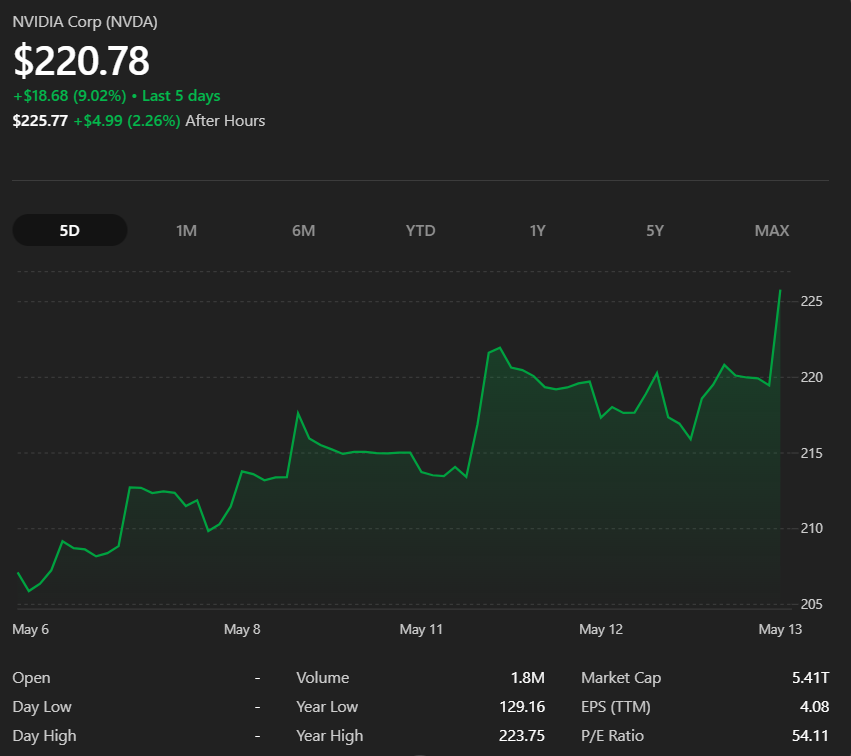
Michael Burry Bets Against the AI Boom
Famed investor Michael Burry is once again making headlines.
This time for betting against some of the biggest AI-related stocks in the market.
Recent filings from Burry’s firm, Scion Asset Management, show bearish positions tied to major artificial intelligence companies including NVIDIA and Palantir Technologies. He also reportedly increased exposure against semiconductor and tech-focused ETFs, signaling concerns that the current AI rally may be overheating.
Burry appears to believe that investor excitement around AI has pushed valuations too high, drawing comparisons to the dot-com bubble of the early 2000s. While he has not dismissed AI technology itself, his strategy suggests he expects some AI stocks to face sharp corrections if growth expectations fail to match reality.
The move has sparked debate across financial markets. Supporters argue that AI will continue transforming industries for years to come, while skeptics warn that many companies are being valued more on hype than actual earnings.
Despite Burry’s bearish stance, AI stocks remain among the market’s strongest performers in 2026, showing that investor confidence in the sector is still extremely high.
You think Burry's gonna be right this time?
$Bitcoin Breakout or Bull Trap?
For weeks, Bitcoin circled a familiar ceiling. Each rally toward $80,000 was met with selling pressure, pushing the price back down and reinforcing the idea that this level was a hard limit. Now, that ceiling has cracked—at least temporarily. Bitcoin has pushed above $80K, and the question dominating the market is simple: does this breakout signal the next leg of a bull run, or is it another false start?
The Anatomy of a Breakout
In technical terms, $80,000 wasn’t just a round number—it was a resistance zone. Traders had seen repeated rejections there, which meant many were positioned for history to repeat itself. When Bitcoin finally broke through, it triggered a chain reaction.
A key driver of the move was a short squeeze. Traders who had bet against Bitcoin near $80K were forced to buy back in as the price rose, accelerating the upward momentum. These squeezes often create sharp, fast rallies that can look stronger than they really are.
But this wasn’t purely a technical event. Underneath the surface, a more structural force is at play.
Markets are not purely rational. Round numbers like $80,000 act as psychological anchors. Traders cluster orders around them, media attention intensifies, and new participants are drawn in.
Despite the excitement, breakouts are not always what they seem. One of the most common patterns in volatile markets is the bull trap—a temporary move above resistance that quickly reverses.
Market Overview: Stabilizing, But Still Weak
Bitcoin is hovering around $65K–$68K, showing signs of stabilization after a rough Q1
Still down ~45–50% from its 2025 peak (~$126K) → market remains in a broader downtrend
Analysts are debating whether the market has bottomed or not
Some forecasts still expect long-term upside (even $150K targets), but short-term risk remains
👉 Takeaway:
- The market is not bullish yet, but no longer collapsing. It’s in a transition / accumulation phase
- Franklin Templeton is acquiring a crypto unit and launching “Franklin Crypto”
- More TradFi firms are expanding crypto teams, launching products (ETFs, funds), and preparing listings/mergers
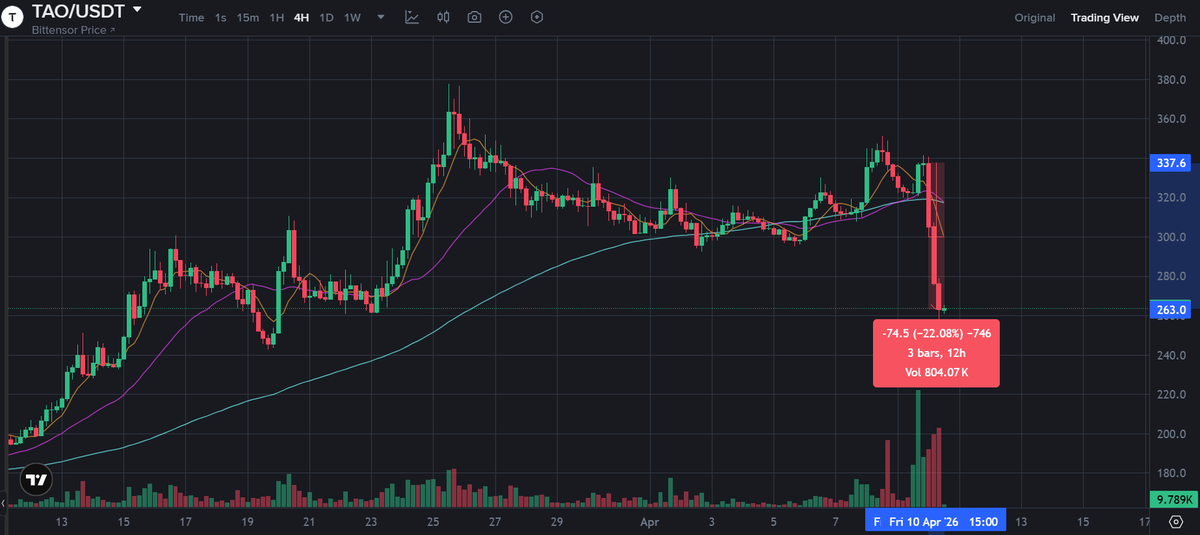
As of April 10, 2026, @opentensor TAO is down hard on the day. Bittensor’s TAO token plunged after a major shock hit confidence in the project: Covenant AI, a prominent team in the Bittensor ecosystem, announced it was leaving the network. That news appears to have rattled investors because it was tied to concerns around governance and centralization, two issues that matter a lot for a project built on the idea of decentralized AI.
The selloff was especially sharp because TAO had already rallied strongly in recent weeks. When a token rises fast, traders often pile in with short-term momentum bets. That makes the price more fragile. So when bad news hits, the drop can snowball as traders rush to lock in profits, cut losses, or get liquidated.
In other words, this was not just a normal dip. It looked like a mix of ecosystem-specific fear and an overheated market unwinding at the same time.
That does not necessarily mean TAO’s long-term story is over. Bittensor still has a strong narrative around decentralized AI, and the project remains one of the biggest names in the AI-crypto space. But in the short term, this crash is a reminder that narrative alone is not enough. Investors are now watching whether Bittensor can restore confidence, address governance concerns, and prove the ecosystem is still strong even after a high-profile exit.
For now, TAO looks like a project at a crossroads: still important, still promising, but suddenly under pressure.
$TAO
Crypto This Week
- Bitcoin stayed resilient
BTC traded mostly between $67K–$74K, showing stability despite global market uncertainty and rising oil prices. Analysts say reduced leverage and renewed ETF demand helped support prices.
- Major coins moved up this week
Bitcoin gained roughly 8%, Ethereum about 10%, and XRP around 4%, with traders watching for a possible breakout if resistance levels break.
- Altcoins are struggling
Around 38% of altcoins are near their all-time lows, as investors move capital into safer assets or major cryptocurrencies instead of smaller tokens.
- Big token unlock wave coming
Over $4.5 billion worth of tokens are scheduled to unlock this week, which could increase selling pressure on some projects.
- Institutional activity still strong
Bitcoin and Ethereum spot ETFs saw renewed inflows, showing institutions are still interested despite recent volatility.
- Regulation still uncertain
Discussions around new crypto regulations in the US and EU are ongoing, and stricter rules could reshape how crypto companies operate.
- Macro events affecting crypto
Global geopolitical tensions and rising oil prices are impacting financial markets, but crypto has remained relatively stable compared to previous shocks.
South Korea’s stock markets temporarily halted trading this week after a steep sell-off sparked by escalating conflict in the Middle East — particularly tensions between the U.S., Israel and Iran.
The country’s benchmark KOSPI index plunged more than 8% during morning trade, triggering circuit breakers that pause trading when losses become sharp enough to curb panic. Both the main KOSPI and tech-focused KOSDAQ markets were affected, seeing their biggest moves since recent volatility in 2024.
Investors have been dumping risk assets as geopolitical uncertainty pushes oil prices sharply higher and raises concerns about economic growth, especially for South Korea, which depends heavily on imported energy. Major tech companies like Samsung Electronics and SK Hynix also suffered large losses amid the rout.
The sharp drop reflects a broader fear-driven market reaction to the widening crisis, not necessarily changes in corporate earnings fundamentals.
What happened in crypto today
1. Bitcoin price dropped suddenly
Bitcoin fell about 4% in just two hours, going down to around $64,300 and losing all the gains it made over the weekend.
Because of this drop:
- Over 136,000 traders were liquidated
- Around $458 million was lost
Most losses came from traders betting the price would go up
This also caused fear in the market to rise sharply, showing traders are worried.
2. SEC gave good news for stablecoins
The US SEC said broker companies can count stablecoins as part of their capital, with only a small 2% reduction.
This is important because:
-It makes stablecoins more accepted in traditional finance
-It could help crypto integrate more with the financial system
3. Bitcoin mining company sold all its Bitcoin
Crypto mining company Bitdeer sold all of its Bitcoin holdings.
This could mean:
- The company wanted cash or they expected the price to fall?
Wishing you a joyful and prosperous Lunar New Year! 🧧✨
May the new year bring you success in your goals, happiness in your home, and good health throughout every day. May your path be filled with new opportunities, positive energy, and endless blessings.
Thank you for being part of my journey. Let’s welcome the new year with hope, strength, and fresh beginnings.
Happy Lunar New Year! 🎉
🚨 WE ARE LIVE ON XT EXCHANGE! 🚀🔥
$CLAT (Chatllat) is now officially listed & trading in the @XTexchange XT Innovation Zone (AI) ✅💜
🟢 Deposit Opens: Feb 07, 2026 — 08:00 UTC
⚡ Trading Starts: Feb 07, 2026 — 09:00 UTC
🔵 Withdrawals Open: Feb 08, 2026 — 09:00 UTC
This is a huge milestone for the Chatllat community with more visibility, stronger liquidity, and global access 🌍📈
Get ready… the momentum starts NOW 🚀
Start It Now:
Chatllat: https://t.co/6MI4NjvMyV
XT Exchange: https://t.co/OBqAivnumY
Trust Wallet Hack: What Happened and What Users Should Know
Recently, @TrustWallet was hit by a serious security incident that affected hundreds of users and led to millions of dollars in crypto losses. The issue did not come from users making mistakes or falling for simple scams. Instead, it came from a problem inside one of Trust Wallet’s official products.
What actually happened
The hack was linked to the Trust Wallet Chrome browser extension. A compromised version of the extension contained malicious code that secretly collected users’ recovery phrases. Once attackers had those phrases, they were able to access wallets and drain funds.
This was especially dangerous because the extension looked legitimate. Users downloaded or updated it normally, without realizing anything was wrong. Once a recovery phrase was exposed, attackers could empty the wallet completely.
Who was affected
Only users who used the Chrome browser extension during the affected version were at risk. The mobile app was not impacted, and users who did not interact with the compromised extension were safe.
Reports estimate that around 6 to 7 million US dollars worth of crypto was stolen. Assets included major coins such as Bitcoin and Ethereum, as well as other tokens.
Why this hack is serious
This was not a typical phishing attack where users click a fake link. It was a supply-chain attack, meaning malicious code was introduced into a trusted software update. These attacks are harder to detect and more dangerous because users trust official updates.
It also highlights a key risk of browser-based wallets. Since they interact directly with web pages and extensions, they are more exposed than hardware wallets or offline storage.
How Trust Wallet responded
After the issue was discovered, Trust Wallet released a patched version of the extension and urged users to update immediately. They also advised anyone who used the affected version to move their funds to a new wallet with a new recovery phrase.
Changpeng Zhao (CZ), the former Binance CEO, stated publicly that affected users would be reimbursed, which helped calm the situation and reduce panic across the community.
What users should do now
If you ever used the Trust Wallet Chrome extension during that period, the safest steps are:
Create a brand-new wallet with a new recovery phrase
Transfer all funds out of the old wallet
Revoke token approvals connected to the old wallet
Avoid reusing the compromised recovery phrase
For long-term storage, many security experts recommend using hardware wallets or limiting browser wallets to small balances only.
Bigger lesson for users
This incident is a reminder that even well-known wallets are not risk-free. In crypto, control comes with responsibility. Convenience tools like browser extensions are useful, but they also increase exposure.
The safest approach is to separate wallets by purpose. Use browser wallets for daily activity and DeFi interactions, and keep larger holdings in more secure storage.