Patent Inventor of Parallel Clipboard System (copy-paste chaos → sanity) | On a lifelong quest for the spiciest food that can still be eaten without calling 911
In 2017, NASA needed to orient Voyager 1 over 13 billion miles away.
Its attitude thrusters were degrading, so engineers sent a command to fire backup trajectory thrusters that had sat completely dormant since 1980.
After 37 years of disuse, did they fire successfully?
Charcoal, sizzle, perfection. 🔥🌮
��Grilled carne asada & scored sausage loaded with a fresh avocado-grilled pineapple salsa and topped with a fiery, emulsified chile de árbol sauce. Pure magic on a warm tortilla. 🤤
#CarneAsada #TacoTuesday #GrillLife #MexicanFood #StreetTacos
Stop fighting your clipboard.
Traditional OS clipboards force us into an endless loop of copy-overwrite-paste. Our patent-pending enterprise technology enables multi-item retention and structured routing, finally eliminating ‘alt-tab’ fatigue.
Better productivity, zero errors.
"See with original purity. Embrace with original simplicity. Reduce what you have. Decrease what you want." — Jonathan Star
Ever feel exhausted from trying to "do it all" or live up to artificial standards? Verse 19 cuts straight through the noise with a simple reminder: peace isn't about adding more—it's about stripping away pretense and overthinking.
Key takeaways for today: 🌿 Original Simplicity: Unclutter your mind and schedule by dropping performative habits. ❤️ Natural Goodness: Let real empathy guide your actions instead of forced rules or superficial expectations. 💡 Wanting Less: True abundance comes from lowering unnecessary wants, not collecting more stuff.
Reflection: What’s one obligation or desire you can drop today to make room for a little more ease? 🍃
#Taoism #TaoTeChing #LaoTzu #Simplicity #Mindfulness #InnerPeace #SlowLiving #PersonalGrowth
Congress must pass a new federal law on AI governance | Brookings https://t.co/uiISbp1pH8
🧵 Before Congress builds a new AI regulatory system, maybe there’s a question worth asking:
What can we learn from the last time government tried to regulate technologies it was still figuring out?
Not because regulation is automatically bad.
And not because Congress always gets it wrong.
But history does raise some interesting questions.
1️⃣ If AI audits and licensing get expensive, who handles that better?
A trillion-dollar company?
Or a startup, university lab, or open-source developer?
Could rules designed for safety accidentally make it harder for smaller competitors to survive?
2️⃣ What happens if regulators need the companies they oversee to explain how the technology works?
NIST has growing AI expertise, which is important.
But how independent can oversight really be if government falls too far behind the private sector technically?
3️⃣ Can the same government successfully push America to “win the AI race” while also being willing to slow AI development when safety concerns appear?
We’ve seen that kind of tension before in nuclear regulation.
Could AI create the same problem?
4️⃣ Some AI risks clearly involve national security.
But where should the line be?
Who decides when a model, source code, research paper, or capability becomes too dangerous to share?
And what kind of review should exist when government makes that decision?
5️⃣ What about federal preemption?
There may be good reasons for one national rule in areas like biological or cybersecurity threats.
But how do we make sure a narrow federal rule doesn’t eventually weaken state privacy, consumer, labor, or civil-rights protections?
6️⃣ And then there’s the opposite problem:
What if AI regulation gets split across the FTC, FDA, financial regulators, cybersecurity agencies, and everyone else?
One AI model can touch healthcare, finance, education, employment, cybersecurity, and more.
So who is actually in charge?
Maybe the real AI debate isn’t:
“Should we regulate AI?”
Maybe it’s:
“What kind of regulatory system are we building, and what unintended incentives are we creating along the way?”
Could regulation make AI safer?
Absolutely.
Could poorly designed regulation also strengthen the biggest companies, create government dependence on industry, blur agency responsibilities, or weaken existing protections?
Also possible.
That’s why the history seems worth discussing before the rules become permanent.
What should matter most in an AI law:
Safety?
Competition?
Open-source innovation?
National security?
State authority?
Technical independence?
Or some combination of all of them?
And perhaps the hardest question:
How do we regulate genuinely dangerous AI without accidentally building a system that protects today’s largest AI companies from tomorrow’s competition?
#AI #ArtificialIntelligence #AIGovernance #AIRegulation #TechPolicy #Congress #Innovation #OpenSource #BigTech
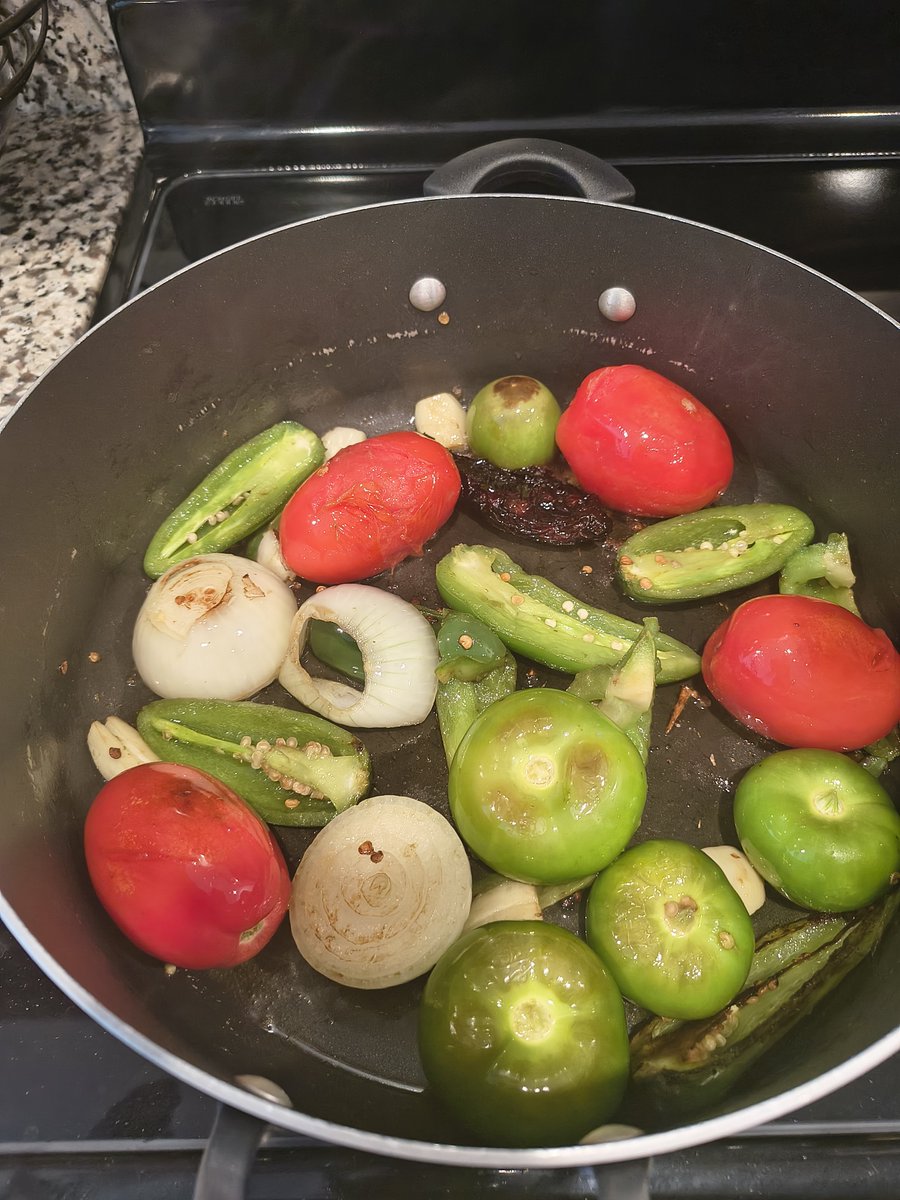
Another day, another controlled explosion in the kitchen 🔥
Roasted red tomatoes, tomatillos, onions, jalapeños, garlic + those sneaky Mexican dried chilies until they were borderline dramatic, then blended the whole smoky mess with a fistful of cilantro, salt, pepper, and lime.
I’m always on the hunt for the most insanely hot, flavorful salsa possible. My official measuring stick of success? If I start sweating within the first 30 seconds of the first bite… we have a winner.
Today’s batch is currently under evaluation. Wish me luck (and maybe a glass of milk).
Who else measures salsa quality by how fast it makes them cry? 🌶️💦
#HomemadeSalsa #SpicySalsa #HotSalsa #SalsaLovers #FreshSalsa #MexicanFood #HomemadeMexicanFood
#SpicyFood #HeatSeekers #ChiliHeads #BurnYourTastebuds #SweatTest #HotSauceLife #FireInTheKitchen
#RoastedSalsa #Jalapeno #DriedChilies #Cilantro #FromScratch #BlenderSalsa
#SpicyAdventures #FlavorBomb #SalsaMasterpiece #ControlledChaos #FoodieFun #SpicyLife
A patient left the hospital without the medication she was supposed to receive.
Not because anyone forgot the plan.
Because the plan kept traveling—copied forward, day after day—while the order that would have made it real never existed.
This is the quiet betrayal of ungoverned copy-and-paste in healthcare: language that looks current, authoritative, and complete can float free of action. The chart insists the intention is alive. The system never confirms whether that intention ever became an order.
We like to call these “copy-paste errors.” That label is too small.
The deeper failure is architectural. Clinical intent is allowed to move as text without any verification that the corresponding clinical act has occurred. The note advances. The reality does not.
This is precisely the moment when the patented Gemini data transfer platform becomes more than a technical curiosity.
It describes a system that can intercept the act of copying and pasting itself—holding multiple discrete items, retrieving them by unique identifiers, and supporting both sequential and selective paste behavior. In other words, it treats the clipboard not as an invisible conduit but as a controllable boundary.
Imagine that boundary in a clinical setting.
Before a phrase such as “VTE prophylaxis ordered” is allowed to land in a new note, the system pauses and asks the questions the human mind is too rushed—or too trusting—to ask every time:
Does a matching active order actually exist?
Is this plan still true?
Should this text be permitted, flagged, revised, or refused?
The patented Gemini data transfer platform points toward exactly this kind of governance layer: context-aware paste controls, policy enforcement, audit trails, time-to-live constraints, one-time paste, redaction, and direct form-fill pathways. Not as a replacement for clinical judgment, but as a safeguard for it.
Because in medicine, the most dangerous documents are not the ones that are wrong on their face.
They are the ones that feel finished while the underlying action remains unfinished.
We will not make patients safer by trying to ban copy-and-paste.
We will make them safer by refusing to let copied language outrun verified action.
The future of clinical safety may hinge less on what we write—and more on whether the systems that carry our words are required to prove that those words still mean something.
@NextScience So you’re telling me I’m 13.8 billion years old…
and I still can’t figure out how to fold a fitted sheet?
The universe really set me up for failure.
Ever wonder how much time developers burn just copying and pasting?
A study of expert programmers found they do it about 16 times every hour. Scale that across Microsoft’s 77,000 Product R&D people and a 50% reduction could free up roughly $535,000 in developer time every single day — around $139 million a year.
There’s already technology designed to help cut this kind of repetitive work significantly.
Kind of crazy how one basic habit can add up to that much, right?
Would you want tools that quietly reduced this for your team?
#Microsoft
#DeveloperProductivity #SoftwareEngineering #Productivity