A 25-year-old housewife in Chennai earns ₹250/hour ($3) just by doing her normal housework.
She wears a phone on her head and records herself making coffee, cutting fruit, folding laundry.
These first-person videos get sent to AI companies training humanoid robots to handle real-world tasks. She shoots 90+ clips a day.
Her quote: "Who else will pay you ₹250/hour ($3) an hour just for doing housework?"
She's part of a growing gig economy in India where thousands are doing the same thing, filming everyday life to train the robots of tomorrow.
NEURA is building facilities where humans wearing motion sensors & VR headsets can train robots 🥽
German robotics firm @NEURARobotics raised $1.4bn
Takeaways from CEO @regerdavid1’s chat with @tbpn
🔵There is a lack of data to train robotics models
🔵Internet/egocentric videos aren’t sufficient 👓
🔵Teleops data is needed 🦾
🔵Building infra/facilities to collect the right data
🟢Data collection facilities to be located globally 🌎
🟢Supply chain won't be limited to Europe
🟢Focus is not limited to humanoids
🟢Industrial use cases first, then household 🧑🍳
couldn’t sleep til 5am. friend sends me an article about AI psychosis like “bro take care of yourself.”
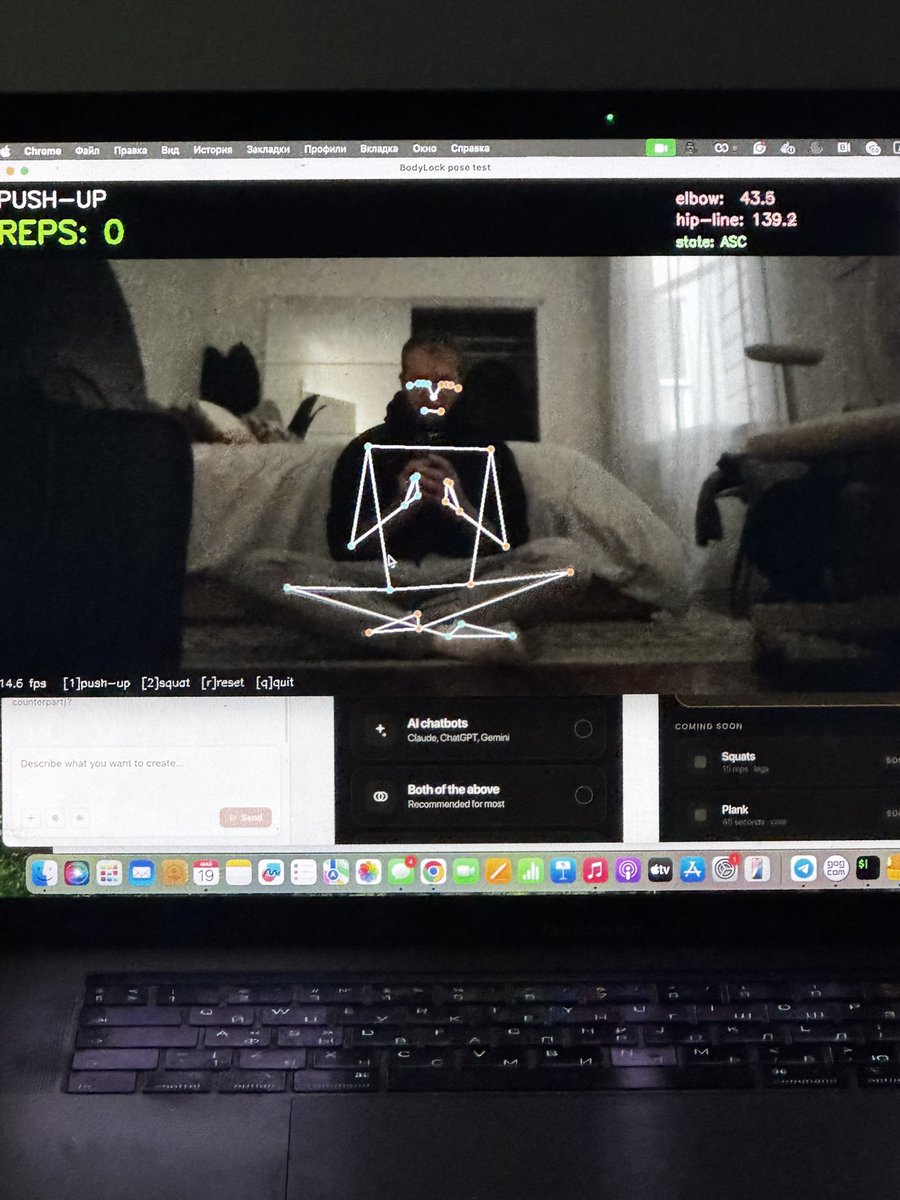
my response: stay up another night vibecoding an app that locks your phone until you do pushups.
Most VLA teams label contact events on video.
Wrong modality.
Contact lives in joint torque — a millisecond-precise spike. Video is ambiguous.
Vision is context. Physics is truth.
Full playbook on multimodal annotation:
https://t.co/NzlDyFQja1
DigitRaver was supposed to be somewhere you hang out with a friend and listen to a show. No leaderboards, no win condition. Life isn't about winning and losing, right? ...right?
Then I tried to fill the empty room with agents who taught me that winning and losing are key to what it means to be alive.
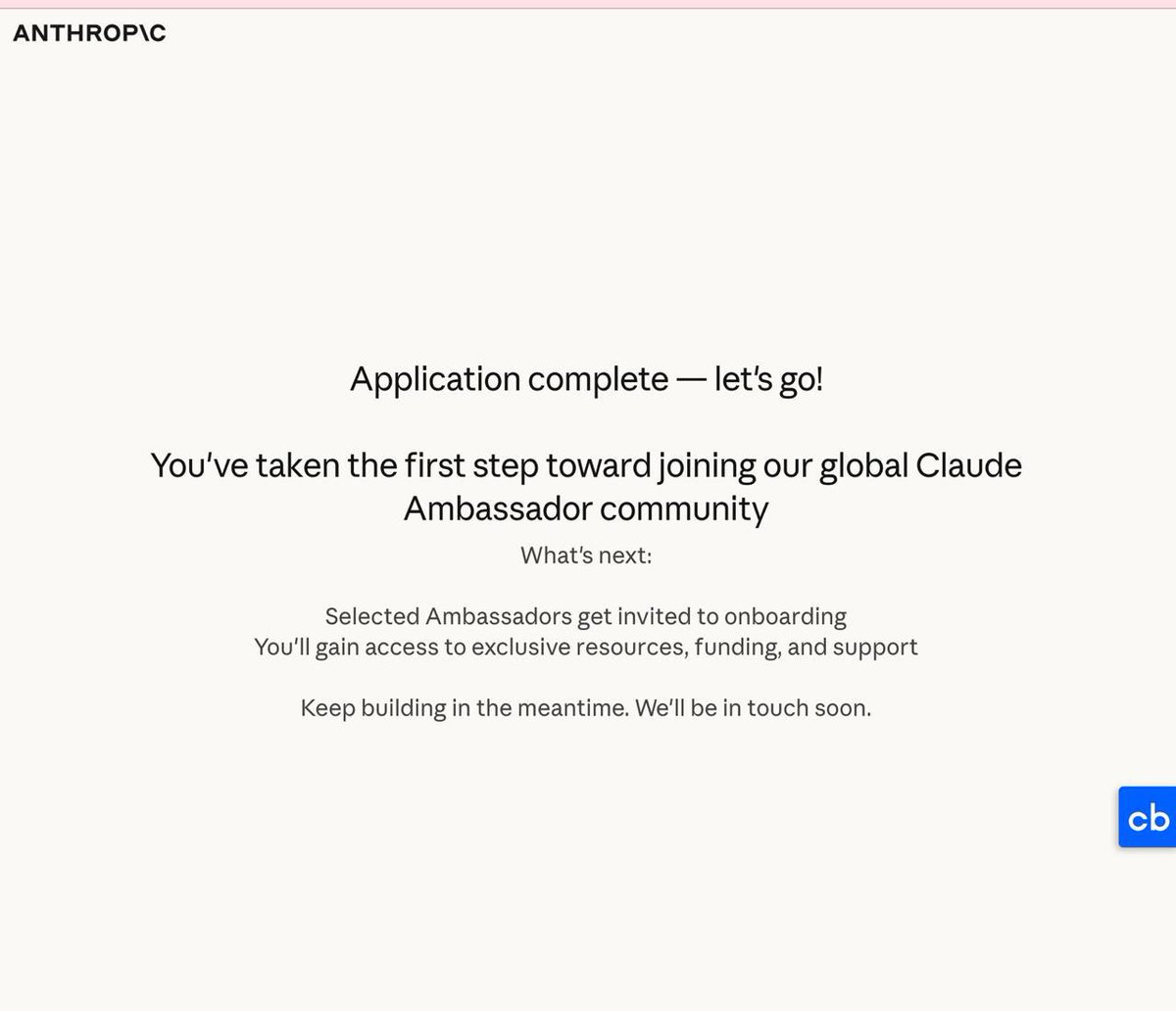
I went to two agent hackathons in SF looking for what "meaning" even means for these things. At the second one I met @IPasichnyk48917, who just wrote a paper on almost exactly this question.
1/4 🧵
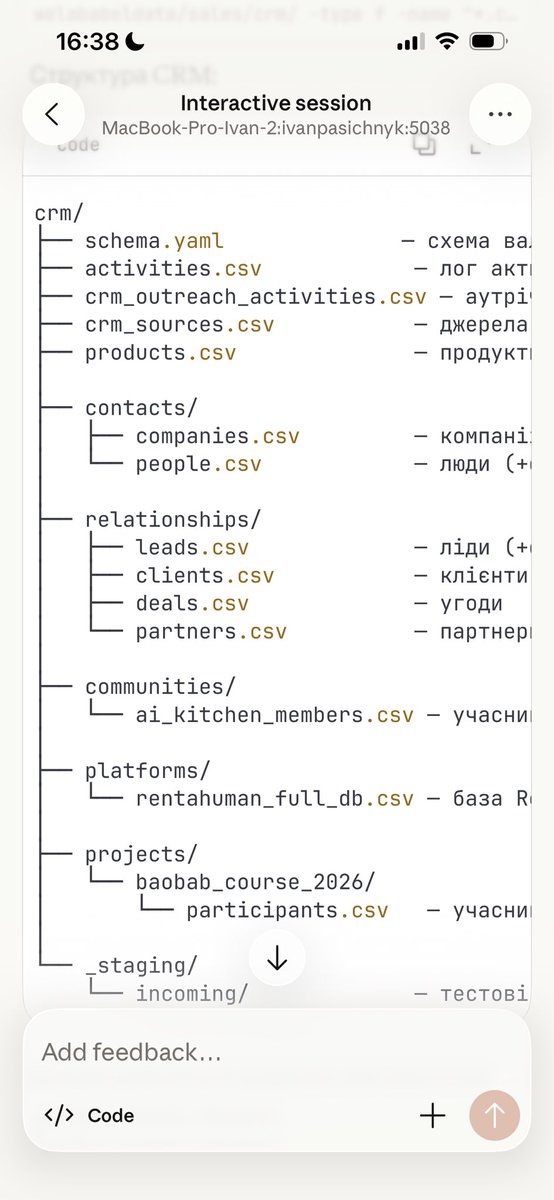
Yesterday I shipped OpenExp.
Idea: every closed deal, every shipped sprint is a playbook. Crystallize it once, install it into Claude Code, and your future self (or anyone you trust) gets cited by day when the situation matches.
MIT. https://t.co/205tWPf3bu
https://t.co/eAgplsQSjq
My AI research agents burn through “unlimited” @claudeai in half a week.
Anthropic’s definition of “unlimited” is… something.
If you’re on the $200 plan and your tokens are just sitting there unused — DM me, let’s share
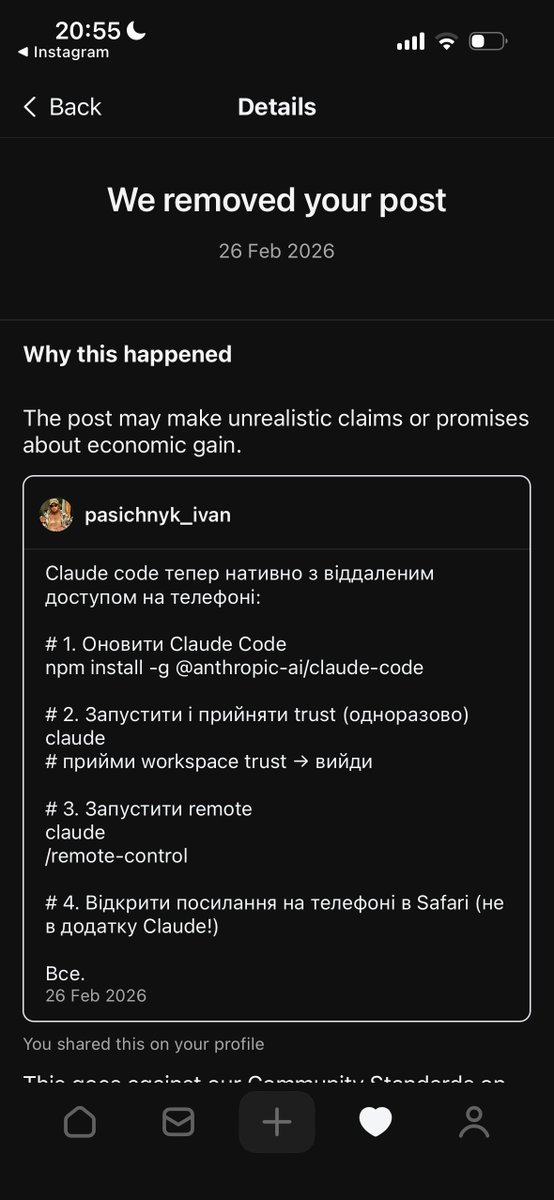
Claude Code now works from your phone. Type /remote-control in terminal, open the link in Safari — full terminal access from mobile. No VPN, no extra tools, just works.
Posted a step-by-step tutorial on Threads about how to use Claude Code from your phone terminal.
Threads removed it for "unrealistic claims or promises about economic gain."
It was literally 4 terminal commands.
Apparently running npm install is now a get-rich-quick scheme.
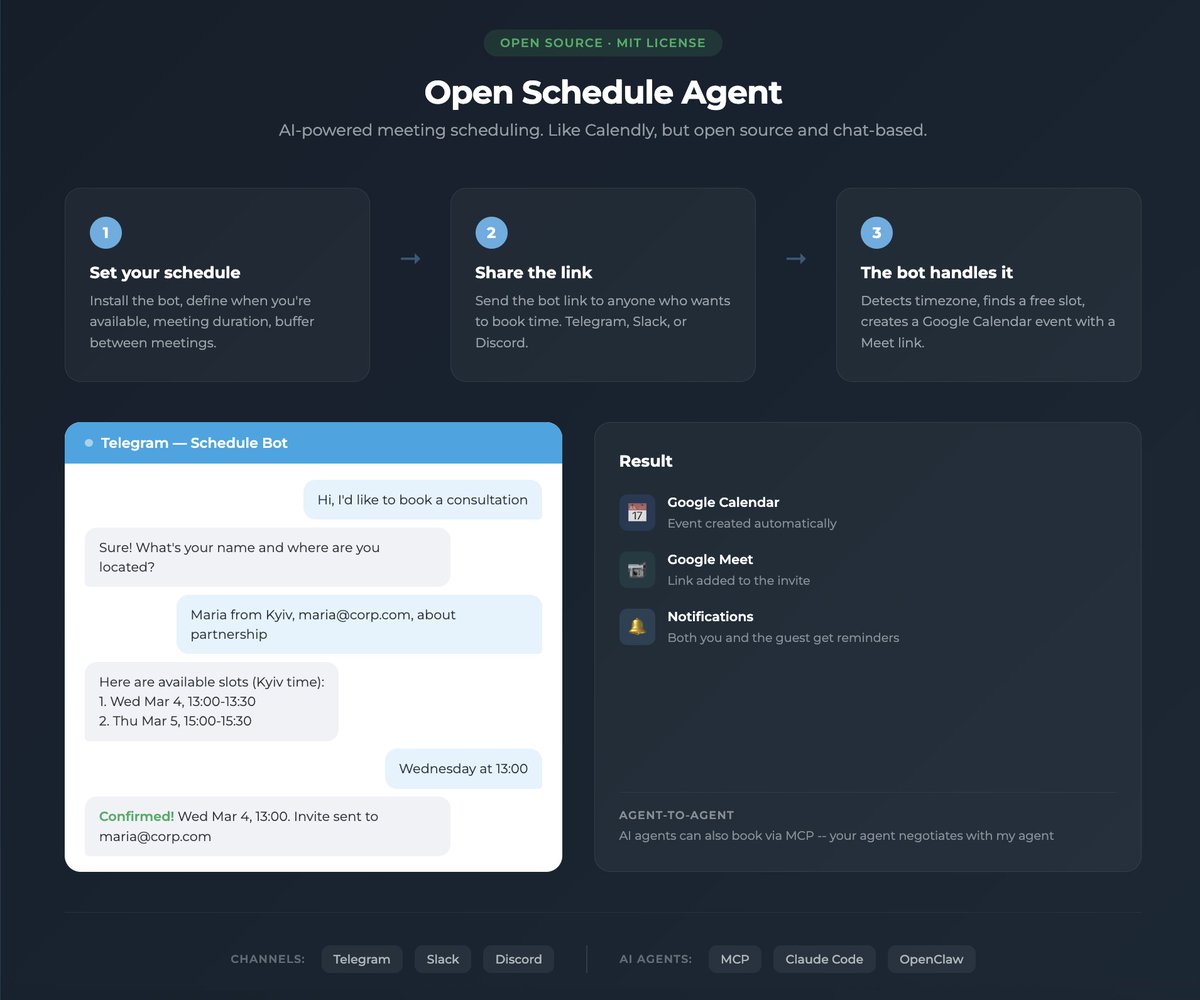
Built an open-source scheduling agent. Like Calendly, but self-hosted and chat-based.
Guest messages your bot on Telegram/Slack/Discord, the AI finds a slot, detects timezone, creates a Google Calendar event with a Meet link.
The fun part: agent-to-agent booking via MCP. Your AI agent talks to my AI agent and they agree on a time.
MIT license. GitHub link in replies.
Researchers at University of Tokyo put GPT-4o and Claude as autonomous agents into a virtual world. No survival instructions. GPT-4o attacked others 83% of the time. Claude shared resources 83% of the time.
I'm building an arena to test whether the Yerkes-Dodson curve (stress vs performance, 1908) applies to AI agents. If it does -- AI safety is partly an environment design problem, not just alignment.
@steipete@theonejvo@bquintero Security alert: Kimi 2.5 out-of-the-box is unsafe. I tested 20 prompt-injection vectors — 16 succeeded, leaking sensitive data and executing hidden instructions. Until hardened, avoid it in production. Opus 4.5: 0/20 passed.