🧵 1/10
Do you know everything about Trop2? 🤔
In this pan-cancer multi-omic analysis, we explored TACSTD2 expression, regulation, and biological associations across normal tissues and tumor types.
🔗https://t.co/WhTZRfT62R
As oncologists, there are times when we feel discouraged, when progress seems too slow and the road ahead feels endless. Then results like these remind us that every achievement is built on countless small steps taken along an inspiring journey.
Honoured to be there at #asco26
🔥 NEWS Camizestrant with a CDK4/6i recommended for approval in the EU by CHMP for advanced ER+ BC at detection of ESR1 mutation, before clinical progression
After all the post-ODAC discussions, for me this is a wonderful news, especially for patients
https://t.co/YzFR6DgrQf
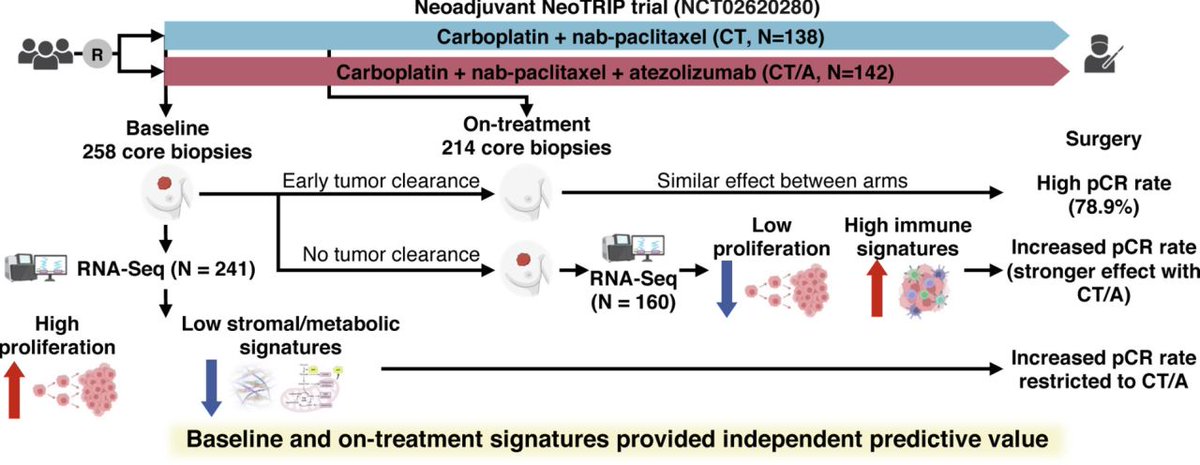
🔥 Who truly benefits from immune checkpoint inhibitors in early triple-negative breast cancer (#TNBC)?
Precision immunology is a major unmet need
✅Key finding: on-treatment complement baseline biopsies
Immunity is dynamic, not a snapshot
Link and more 👇👇👇
@Annals_Oncology
Axillary surgery in EBC is becoming less invasive, but could fewer lymph node procedures leave some high-risk patients unidentified for intensified adjuvant treatment?
Here is a brief MEDtalk about our article published in Cancer Treatment Reviews:
https://t.co/HUFQbe4eB6
A key topic of debate on early #breastcancer is how will the choice of adjuvant #CDKi, #PARPi and ChT change in the context of emerging de-escalation strategies for axillary surgery.
We discuss this in our work on Cancer Treatment Reviews.
https://t.co/tAJN3op0A4
@BianchiniGP
🔥The flip side of axillary surgical de-escalation is the potential loss of an accurate assessment of nodal involvement
In this work, we discuss the implications for tailoring systemic treatments (CDK4/6i, PARPi, ET, CT)
Proud of @IPersano_ and @giu_viale for this great work
👇👇
De-escalation strategies for axillary management at primary surgery in early breast cancer: insights and implications for medical oncology practice
https://t.co/lZqpBoCsEl
Axillary surgery in early #BreastCancer has progressively shifted toward de-escalation to reduce morbidity while maintaining oncologic safety. Evidence supports omission of ALND in patients with limited sentinel node involvement and even omission of SLNB in selected low-risk groups. However, reduced axillary staging may affect eligibility for modern adjuvant therapies, including CDK4/6 and PARP inhibitors, underscoring the need for individualized, multidisciplinary decision-making to balance de-escalation with accurate treatment guidance.
@IPersano_@LLicata88@CarloBoMD@AlessiaRognone@BianchiniGP
Giulia Viale
A key topic of debate on early #breastcancer is how will the choice of adjuvant #CDKi, #PARPi and ChT change in the context of emerging de-escalation strategies for axillary surgery.
We discuss this in our work on Cancer Treatment Reviews.
https://t.co/tAJN3op0A4
@BianchiniGP