📢1/10 Out on @Nature our work ‘Spatial predictors of immunotherapy response in triple-negative breast cancer’ https://t.co/MF273qqST0 lead by @HRazaAliLab and myself
👉To work, immunotherapy requires certain immune cell types, in proper functional state and spatial context
🧵👇
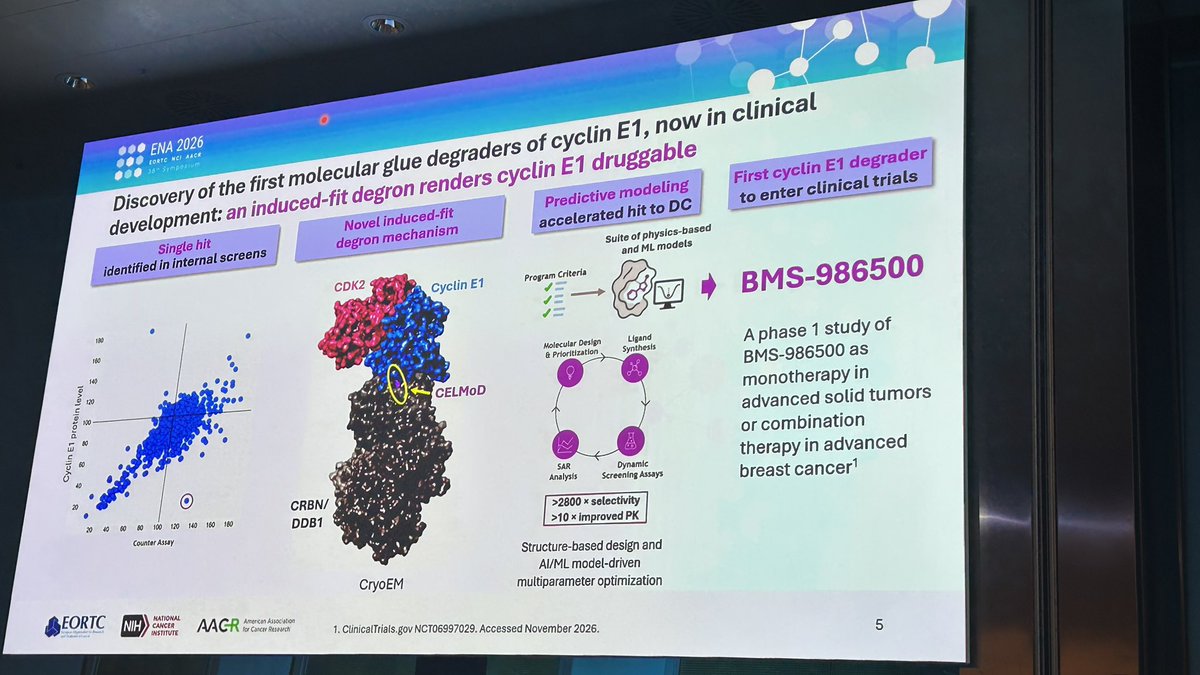
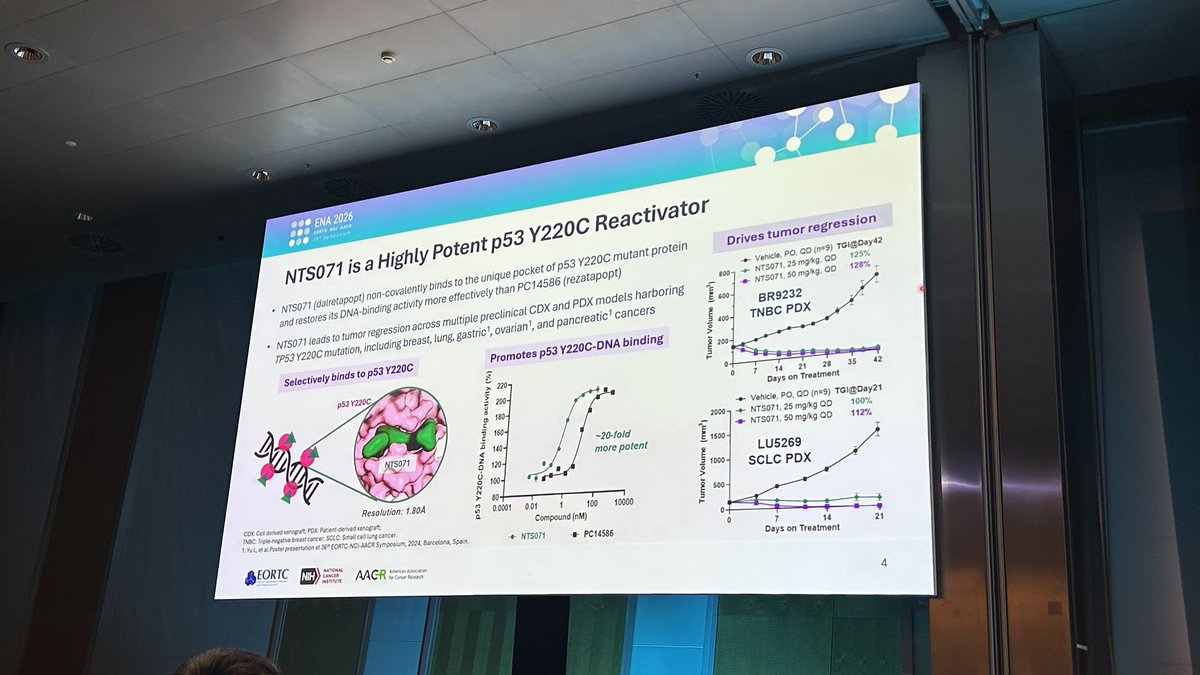
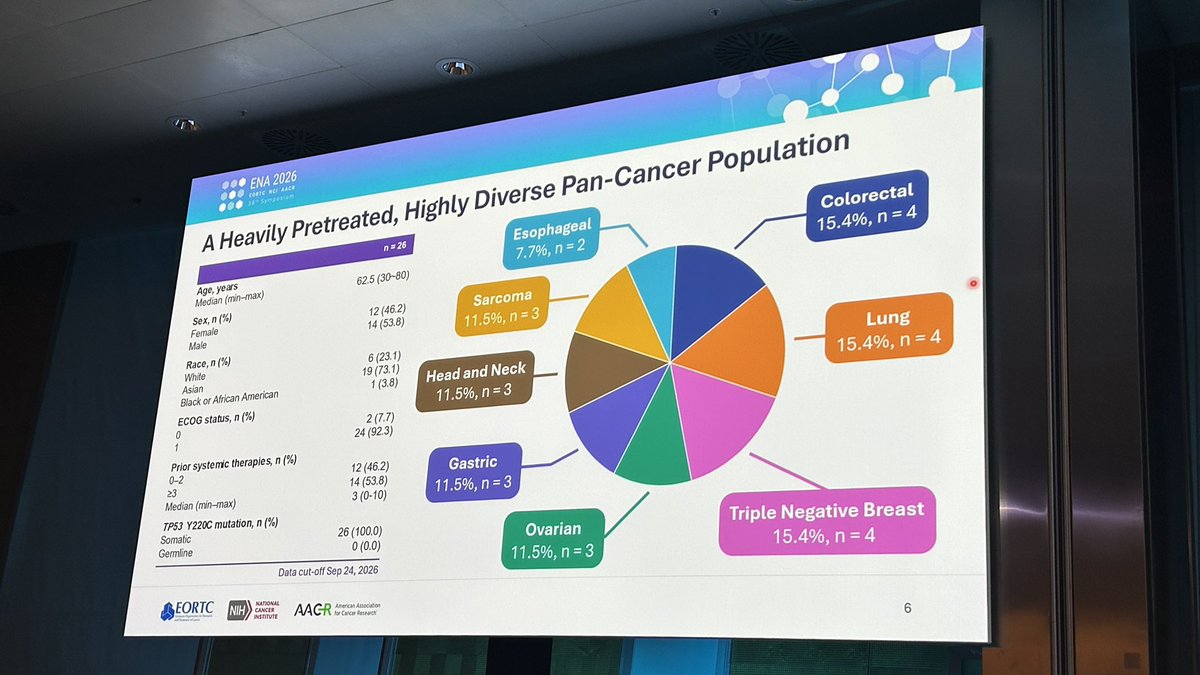
🚀 Remarkable moment at #ENASymp26! @EORTC@theNCI@AACR
I hope you appreciate the SHAPE of this waterfall plot! 📊 compared to 9 months ago at AACR, it is wider and deeper!
With 61 pts and 18.3-mo median follow-up, we're seeing striking depth and breadth of tumor responses with daraxonrasib + GnP in 1L metastatic PDAC.
🌟 5 confirmed complete responses (8.2%)!
That's approximately 1 in 12 patients.
As pancreatic cancer oncologists, we rarely see complete radiographic responses in metastatic disease. Seeing this was genuinely astonishing!
🎯 ORR 60.7% 💪 DCR 90.2%
And the durability is remarkable!
⏳ Median PFS: 12.8 months (longer than the mOS of standard chemo 11.1 months)
💜12-month OS: 76.6% (3 out of 4 participants were alive at 1 year mark)
For a disease where standard chemotherapy has historically achieved median PFS of ~5–7 months, these early findings are striking.
Randomized confirmation remains essential.
🚀 Proud to lead MSK's participation in the global Phase 3 #RASolute303 trial as we await pivotal results!
💜 Deepest gratitude to our patients and families and to all co-authors, investigators, research nurses, coordinators and the incredible Revolution Medicines team.
This is TEAM SCIENCE! 🙌
#PancreaticCancer #KRAS #ENA2026 @CpcrMsk@MSK_DeptOfMed@MSKCancerCenter
Gulam Manji, Nilo Azad, Erkut Borazanci, Joel Hecht, Ben Musher, @DavendraSohal John Strickler, Mark O’Hara, Alexander Spira, Gregory Botta @VaiaFlorou@aparna1024 Gabby Chiorean, Wells Messersmith, Shubahm Pant, Steve Choi, Andrea DeYoung, Hina Patel, Yan Zheng, Brian Wolpin
@CNN before @BBC now
O gráfico do Financial Times mostra os países ricos sufocados pelo gasto com idosos, mas esconde o principal: eles estão quebrando porque insistiram no modelo errado de previdência.
Quando colocamos Brasil, Suécia, Austrália, Holanda e Chile na mesma mesa (como lembrou o @SchumpExplains), o jogo muda completamente.
Para quem não é da área, a diferença é simples:
1. Repartição (Brasil, França, EUA, Japão) = Caixa d'água sem reserva
O dinheiro descontado do seu salário hoje não é guardado: vai direto pagar quem já parou. Quando havia 8 jovens para cada idoso, funcionava.
Hoje, com famílias menores e gente vivendo até os 90 anos, a conta estoura. O governo só tem duas saídas: aumentar impostos ou cortar investimentos (obras, hospitais, escolas).
• França e Itália já gastam 13,7% a 16% do PIB só com pensões públicas.
• O Brasil, ainda demograficamente jovem comparado à Europa, já gasta quase 12% do PIB — um padrão de país rico envelhecido que trava nosso crescimento.
2. Capitalização (Austrália, Chile, Holanda) = Cofre individual
O dinheiro vai para uma conta no seu nome, é investido na economia e rende juros compostos por décadas. Na aposentadoria, você saca o seu próprio patrimônio, não o imposto do jovem que acabou de entrar no mercado.
• Austrália: Acumulou poupança privada acima de 130% do PIB, tirou Nota A no Global Pension Index 2026 e mantém o gasto público com aposentadorias abaixo de 4% do PIB.
• Holanda e Dinamarca (1º e 2º lugares no mundo em 2026): Combinam um piso básico estatal com fundos capitalizados que somam 150,9% do PIB (Holanda) e 198% do PIB (Dinamarca). Como os idosos vivem do retorno desses ativos, o orçamento do governo fica livre para investir.
• Chile: Derrubou o gasto público previdenciário para menos de 4% do PIB com a capitalização e criou um mercado de capitais forte, reforçando recentemente um piso solidário (PGU) para os mais pobres sem destruir a poupança individual.
3. Modelo Híbrido com trava automática (Suécia)
Nos anos 1990, a Suécia viu que ia quebrar e reformou tudo. Misturou capitalização financeira com uma trava matemática: se a população envelhece ou a economia desacelera, o reajuste das pensões freia sozinho para nunca gerar rombo no Tesouro. Segundo a OCDE, é um dos raríssimos países ricos onde o gasto público com aposentadorias vai cair até 2050.
Conclusão:
O problema que trava o Brasil e a Europa não é "cobrar pouco imposto". É matemática demográfica.
Na repartição, o envelhecimento vira um buraco negro fiscal. Na capitalização e nos modelos híbridos bem desenhados, cada geração financia a si mesma e deixa o Estado livre para investir no futuro.
Fontes: OCDE (Pensions at a Glance 2025 / Pension Markets in Focus 2025), Marsh & CFA Institute (Global Pension Index 2026) e Tesouro Nacional.
From @CNN to @BBC ! 🌍💜💜
As a pancreatic cancer specialist, I rarely see results like these in metastatic #PDAC.
8% CONFIRMED CR
12.8-month median PFS, which exceeds medial OS of standard chemotherapy (11.1 months) in this setting.
3 out of 4 (~76%) were alive at 12 months!
⏬ Deep responses and ⏪↔️⏩ durable disease control.
Grateful to our patients and incredible research teams! 🙏
https://t.co/W87LtHIbpn
Evidence on the mechanisms underlying ADC resistance continues to emerge.
A spatial transcriptomics study involving 13 patients with breast cancer treated with T-DXd suggests that not only HER2 expression levels but also its spatial distribution within the tumor may influence treatment response.
In HER2-low tumors, resistance was associated with pharmacokinetic barriers involving vascular accessibility, linker cleavage, and payload distribution. In HER2-positive tumors, EGFR/PI3K pathway activation appeared to play a more prominent role.
Despite the small sample size, these findings suggest that ADC resistance extends beyond target antigen loss. Tumor spatial architecture and intratumoral drug distribution may be equally important determinants of resistance.
https://t.co/ucnvIEGXeR
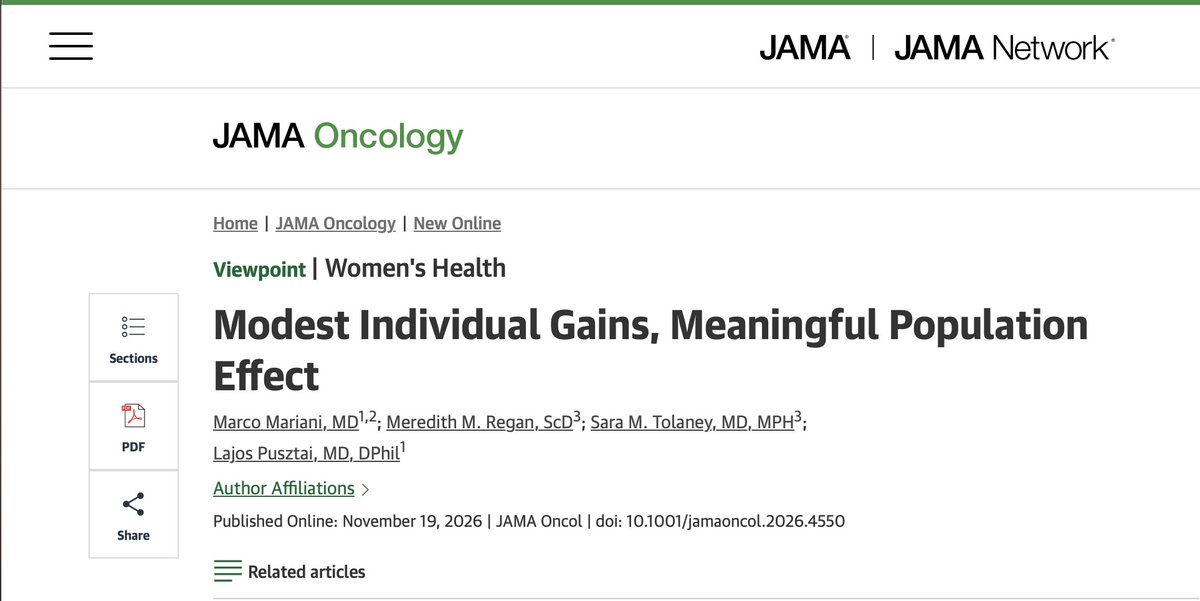
What does a relative effect (HR 0.70) mean when baseline risk is low? Small gains per patient, large gains at population level; but only if it’s affordable.
Our viewpoint on adjuvant giredestrant, in
@JAMAOnc
https://t.co/bT1e4StT1m
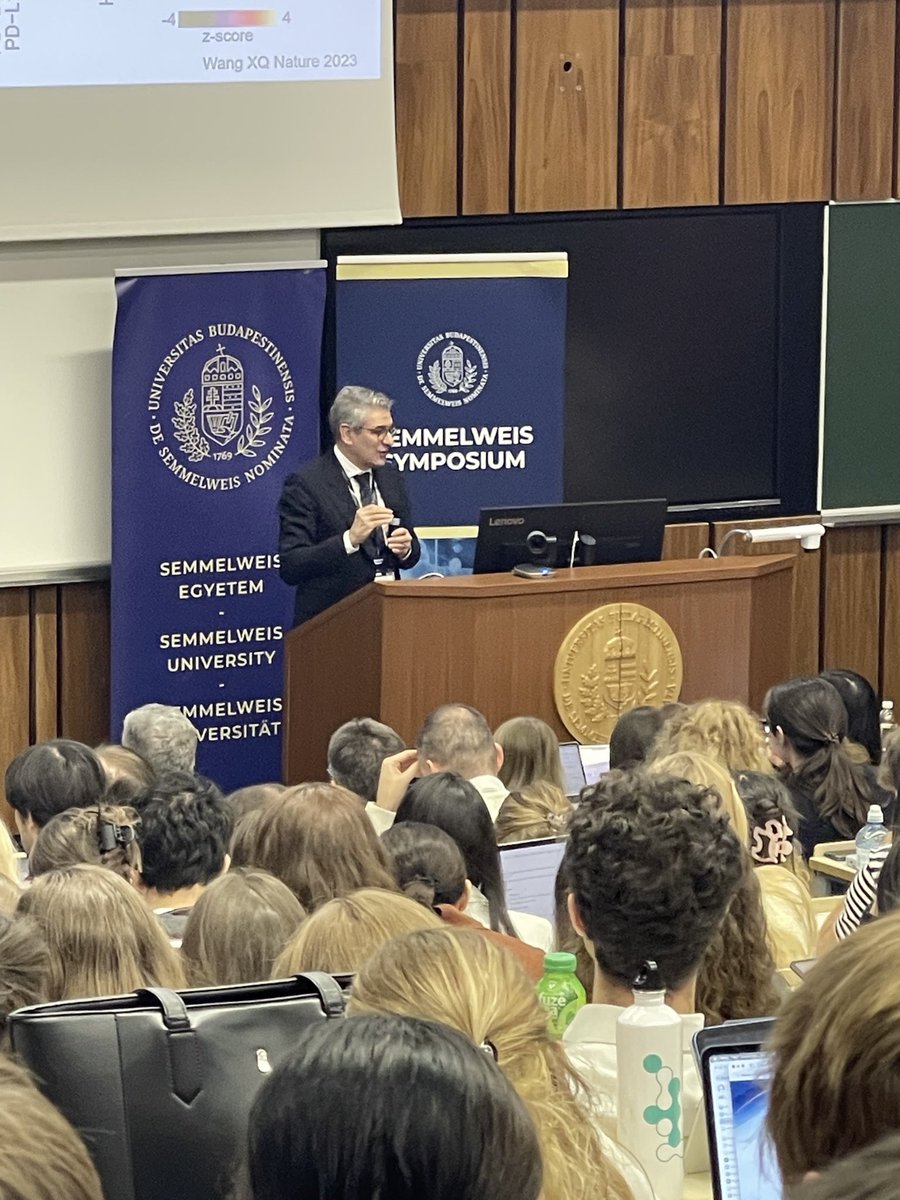
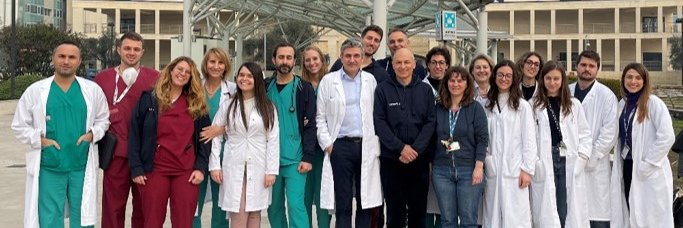
🔥 Honored to deliver a keynote on spatial and molecular biomarkers in breast cancer at #SemmelweisSymposium2026 in Budapest.
Great to join an outstanding scientific program (1665 registered) organized by my dear friend and brilliant scientist Balázs Győrffy!
@semmelweishu
Google published a system that writes full research papers end to end.
They call it “PaperOrchestra”
It is a multi-agent framework that completely automates the entire lifecycle of writing scientific papers.
Not just summarizing data. Not just drafting an abstract.
The whole thing. End-to-end.
They built a fully autonomous digital laboratory.. When you input a raw idea, a swarm of specialized AI agents takes over.
One agent acts as the lead researcher. Another conducts the exhaustive literature review. Another writes the methodology.
Then, a dedicated "reviewer" agent brutally critiques the work, forcing autonomous revisions before a human ever even sees the draft.
What used to take a team of PhDs six months of grinding can now be orchestrated in the background while you sleep.
But here is the trap nobody is thinking about.
The scientific peer-review system is already drowning.
Now, anyone with a laptop can spin up a swarm of agents to generate highly plausible, perfectly formatted, end-to-end research papers at scale.
The cost of producing scientific literature just dropped to zero.
And the feedback loop is officially closing.
If AI can independently research, write, and critique AI research... the human is no longer the driver
This is f*cking insane. Anthropic CEO Dario Amodei was asked what a kid finishing high school should do now. His answer:
"AI can do entry-level law work. It can do entry-level finance. It can do entry-level consulting
We can't deny that it will also eliminate jobs, and probably a large number of them"
In a few minutes he names which jobs go first and the one skill that keeps you in the game
His own prediction: 50 percent of entry-level white-collar jobs disrupted in the next 1 to 5 years
Prompts → Agents → AI Coworkers → Entry-Level Work Done By AI
Farming to factories took generations. This time AI hits every step of a career at once
His advice fits in one line: "Of course, learn to use AI"
The people who start this year won't be competing with AI, they'll be the ones running it
Everything below is free. Start today:
Anthropic - Prompt Engineering Interactive Tutorial: the fastest way to learn to direct a model
https://t.co/d7FixLnXsj
Anthropic Courses: from your first prompt to running agents
https://t.co/Cxvr3D4xmI
Anthropic Cookbook: real task recipes you can copy today
https://t.co/skYplltDhD
Microsoft - Generative AI for Beginners: 21 lessons, no degree required
https://t.co/34KoC0vHyJ
Microsoft - AI Agents for Beginners: build agents that do the entry-level work for you
https://t.co/Gph5MmVAKJ
Hugging Face - Agents Course: free and certified, start to finish
https://t.co/gOPGy3DZRs
Google Cloud - Generative AI: Google's own hands-on notebooks
https://t.co/LQWBAEu71u
OpenAI Cookbook: code for every common task
https://t.co/YS1k9aI4RR
https://t.co/EzDgtBMrWJ - Prompt Engineering Guide: the reference everyone links to
https://t.co/sfHv0eZ047
Andrej Karpathy - Neural Networks Zero to Hero: understand what is under the hood
https://t.co/nU6AOBlEnS
CrewAI: run a small team of AI workers
https://t.co/HIPwJdGnwd
Microsoft - AutoGen: put several agents on one job
https://t.co/vOJKRrqNQl
Awesome LLM Apps: hundreds of real builds to learn from
https://t.co/LaWj0pHOUr
https://t.co/ywXzOrdMEI - Short Courses: free 1-hour courses from the people who teach this
https://t.co/XHsCKIiA4j
Total cost: $0
You don't need another year of tuition to learn this. You need to start telling AI what to do
95% will graduate and compete with AI for the same entry-level job
The 5% who learn to run it this year will manage the agents doing that job
Save this and send it to someone graduating this year
Then read the full Graph Engineering guide below ↓
Molecular PET in lung cancer may reveal not only tumor location but also heterogeneity in targets such as EGFR, HER2, MET, and PD-L1 across metastases.
It could play an important role in future treatment selection, but its clinical benefit remains unproven.
https://t.co/pK4wBHZ1iN
TROP2 NMR score paper out on @NatureMedicine
Reminder:
NMR+ = lower ratio of [membrane/(membrane + cytoplasm)] = more TROP2 in the cytoplasm than membrane
Figure 👇 from #WCLC24 presentation was more informative with definitions, IMHO!
https://t.co/oTR4k1NDk5
Moving on to preventing cancer with vaccines
With today's @NEJM publication of the melanoma treatment vaccine success https://t.co/zXMF7IMuLA
The editorial notes the remarkable potential for vaccines to prevent cancer:
https://t.co/zXMF7IMuLA
"a vaccine against 25 recurrent mutational hotspots
in genes such as KRAS, BRAF, and PIK3CA could
target mutations found in more than 70% of
colorectal, pancreatic, uterine, and melanoma
skin cancers."
And @moderna_tx declares it's the future with an ongoing trial to prevent Lynch syndrome and more to come
https://t.co/7FlDrDmDJK,