Inside Quantum Technology is the leading source for actionable intelligence related to quantum computing, related technologies, and the evolving industry.
IQT NORDICS adds MICROSOFT as the 24 June Diamond Sponsor; Early Bird Savings end 29 April
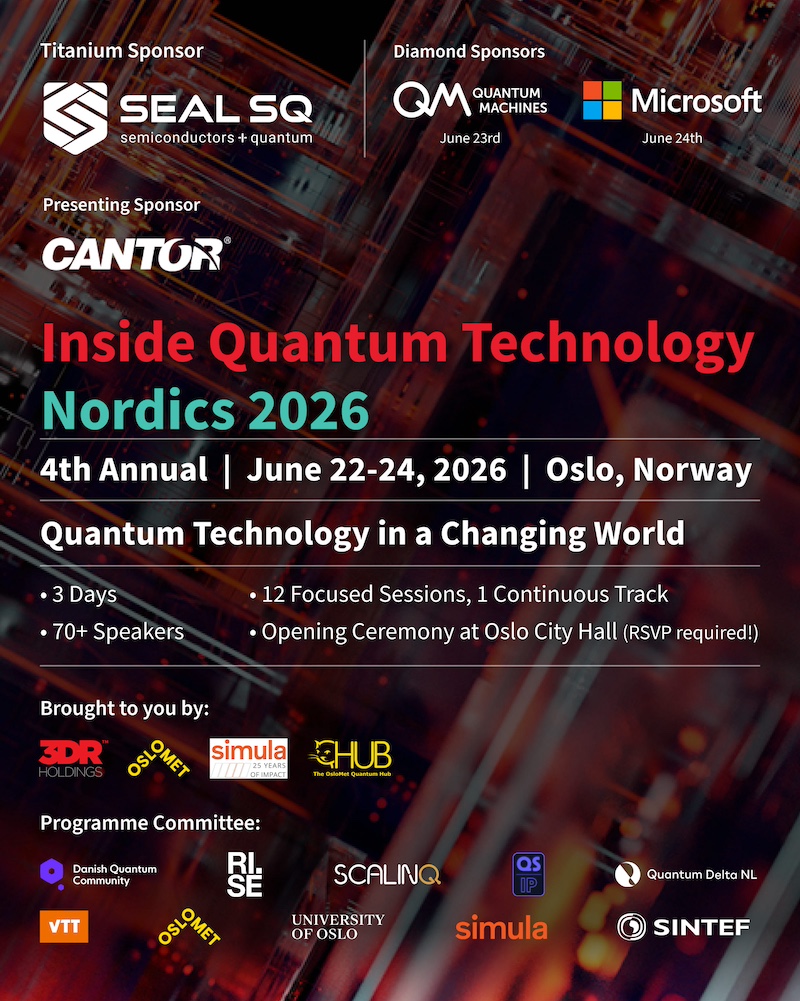
The IQT NORDICS team is pleased to announce that Microsoft has become the 24 June Diamond sponsor. Microsoft joins with Quantum Machines (23 June Diamond sponsor) and SealSQ as the overall Titanium sponsor. The addition of Microsoft takes the total of sponsors at the Oslo event to 35! See all of our sponsors and speakers at https://t.co/o87VFR7tNr.
The drone industry is entering a decisive phase — and security must evolve just as fast as innovation.
The recent partnership between @SEALSQcorp $LAES and Parrot to integrate post-quantum cryptography (PQC) into drones using the QS 7001 chip is not just a technological upgrade — it is a strategic necessity.
👉 https://t.co/kl7CtvbDpn
Why now?
Because drones are no longer simple flying devices. They are becoming autonomous, AI-powered digital infrastructure used in defense, agriculture, logistics, and critical inspections. This transformation dramatically increases their exposure to cyber threats.
At the same time, quantum computing is advancing rapidly. Traditional encryption methods will not hold. The risk is real: intercepted drone data today can be decrypted tomorrow — the so-called “harvest now, decrypt later” threat.
And the market context makes this even more urgent.
According to Grand View Research, the global drone market is expected to grow from $73 billion in 2024 to over $163 billion by 2030, driven by AI, autonomy, and new industrial use cases.
One of the most powerful trends is the rise of Drone-as-a-Service (DaaS):
→ Companies no longer need to own drones
→ They can access them on demand
→ This accelerates adoption across industries
But it also creates a new challenge:
How do you secure a shared, connected, autonomous infrastructure?
The answer is clear: security must be embedded at the chip level — and it must be quantum-resistant.
This is why integrating SEALSQ’s QS 7001 PQC chips into drones is so important today:
✔ It protects communications and identities
✔ It secures mission-critical data
✔ It ensures long-term resilience against quantum threats
✔ It builds trust in autonomous systems
We are moving toward a world where drones operate as part of critical infrastructure. In that world, trust is everything — and trust starts with security.
#Cybersecurity #Drones #PQC #QuantumComputing #AI #IoT #DaaS #Innovation #SEALSQ #Parrot
DENMARK LOVES IQT NORDICS 2026 (OSLO) JUNE 22-24 AS A DANISH PAVILION JOINS THE NETWORKING HALL
9 organizations under the auspices of Invest in Denmark and the Denmark Quantum Community are now part of the networking hall at IQT NORDICS in Oslo, Norway this June 22-24 at OsloMet University. The Danish Pavilion includes: Biolnnovation Institute, Copenhagen Quantum, Force Technology, Lizard Photonics, QPurpose, Quantum Foundry of Copenhagen, Qunasys, Rotonium, and Sparrow Quantum. IQT NORDICS now has 33 exhibiting organizations and several more are about to become part of the conference. The Norwegian event is clearly an endorsement of IQT NORDICS and the next iteration taking place in Copenhagen June 2027. Additional information: https://t.co/o87VFR7tNr.
—it has become a strategic necessity. Space is rapidly evolving into the backbone of global digital infrastructure, supporting communications, navigation, Earth observation, and increasingly the data flows that power AI-driven economies. Those who control this infrastructure will define the next era of sovereignty, security, and economic leadership.
At the same time, cybersecurity is shifting beyond terrestrial networks. As threats grow more sophisticated, trust must be anchored at the hardware level and extended into space. Satellites are no longer just transmission tools—they are becoming secure nodes in a global digital trust architecture. This transformation is essential in a world where data integrity, identity, and resilience are critical.
The next frontier is already emerging: the Quantum Internet. By connecting satellites as orbital nodes with terrestrial data centers, it becomes possible to create ultra-secure communication channels based on quantum principles. Integrating SEALQuantum nodes in space with ground-based infrastructure allows for end-to-end encrypted links that are inherently resistant to interception, enabling a new generation of sovereign, tamper-proof global networks.
The convergence of space, AI, blockchain, and quantum computing is creating a new paradigm. Space is not only a domain for data collection but also a platform for decentralized systems, enabling trusted machine-to-machine interactions and autonomous economic activity. In this context, satellites can serve as independent nodes for secure communication, computation, financial transactions, and in the near future, quantum-secured data exchange.
This is where the integration of https://t.co/hlrfZKc1Lx with @WISeKey, @SEALSQcorp , https://t.co/Ogl7nVHFmx, and https://t.co/pjJmYY9IbV becomes uniquely powerful.
Together, they form a fully integrated ecosystem where trust begins at the chip level, is secured through robust digital identity frameworks, transmitted via sovereign satellite infrastructure, and extended into a decentralized transaction layer—all designed to be resilient in the post-quantum era and ready to evolve toward quantum-secured communications. This is not a collection of independent technologies; it is a unified architecture built to secure the entire digital lifecycle—from device to satellite to data center.
The anticipated IPO of SpaceX—reportedly targeting a valuation that could exceed $2 trillion and aiming to raise tens of billions—has the potential to become one of the most significant financial events in the history of the space industry. Even ahead of a public listing, investor demand is already building through secondary marketplaces such as Forge Global and Hiive, where accredited investors seek early exposure.
Indirect investment channels are also expanding rapidly. Funds like The Private Shares Fund (PRIVX), ARK Venture Fund (ARKV.X), Tema Space Innovators ETF (NASA), and Baron Partners Fund (BPTFX) already provide structured access to private space leaders, while major public players such as Alphabet Inc. and Bank of America offer indirect exposure through strategic investments and ecosystem participation.
This wave of capital formation is not without risks—high valuations, volatility, and dependence on government contracts remain key considerations—but it signals something far more important: a structural shift in how global investors perceive space. What was once a niche sector is becoming a core pillar of the global economy.
In a world facing increasing geopolitical fragmentation, rising cyber threats, and the imminent disruption of quantum computing, such an approach is no longer optional. It is essential. The future will be defined by those who can ensure trusted connectivity, secure data flows, and technological independence across borders and domains.
Space is where this future is being built.
We must prepare to use fault-tolerant quantum computers effectively.
by Victor Peng, @PsiQuantum Interim Chief Executive Officer
https://t.co/PdwT0hc4kb
@SEALSQcorp TO LAUNCH INDUSTRY’S MOST COMPREHENSIVE QUANTUM VERTICAL STACK FROM SILICON ROOT OF TRUST TO DISTRIBUTED QUANTUM COMPUTING AND ORBITAL CLOUD
https://t.co/LLnXhB6XQo
The recent approval by the Senate committee of the quantum reauthorization bill with multiple amendments marks a significant acceleration of government-backed investment and coordination in quantum technologies in the United States. This is highly relevant for both @WISeKey and @SEALSQcorp because it confirms that quantum is no longer experimental—it is becoming a strategic, state-driven priority tied to cybersecurity, critical infrastructure, and technological sovereignty.
For SEALSQ, this reinforces the urgency of its post-quantum semiconductor strategy. Governments are clearly preparing for a future where current cryptography can be broken by quantum computers, and this creates immediate demand for quantum-resistant chips, secure elements, and embedded cryptographic solutions—areas where SEALSQ is already positioned with its work on CRYSTALS-Kyber and secure microcontrollers. The bill also signals increased funding for research, standards, and procurement, which can translate into partnership opportunities, public contracts, and alignment with U.S. and allied supply chains.
For WISeKey, the implications are equally strategic. As a provider of digital identity, PKI, and trust services, WISeKey sits at the application and infrastructure layers that will be directly impacted by quantum disruption. The legislation highlights the need to transition to quantum-safe identity ecosystems, secure communications, and trusted data exchange across governments and enterprises. WISeKey’s integration of hardware (SEALSQ), software, and satellite infrastructure (https://t.co/hlrfZKc1Lx) positions it uniquely to offer an end-to-end quantum-resilient trust platform, from chips to cloud to space.
More broadly, this policy move validates the concept of a quantum vertical stack, which both companies are actively building. It shows that future competitiveness will depend not only on isolated technologies but on fully integrated ecosystems combining hardware, cryptography, infrastructure, and services. It also underscores the geopolitical dimension: as the U.S. strengthens its quantum capabilities, Europe and other regions will accelerate their own efforts, creating a global race where trusted, sovereign, and secure solutions become critical differentiators.
this development is not just policy news—it is a market signal. It confirms that SEALSQ and WISeKey are aligned with one of the most important technological transitions of the next decade, and it strengthens their positioning as key players in securing the digital world against quantum threats while enabling new quantum-driven opportunities.
Read more: https://t.co/Kk9ktdjtsm
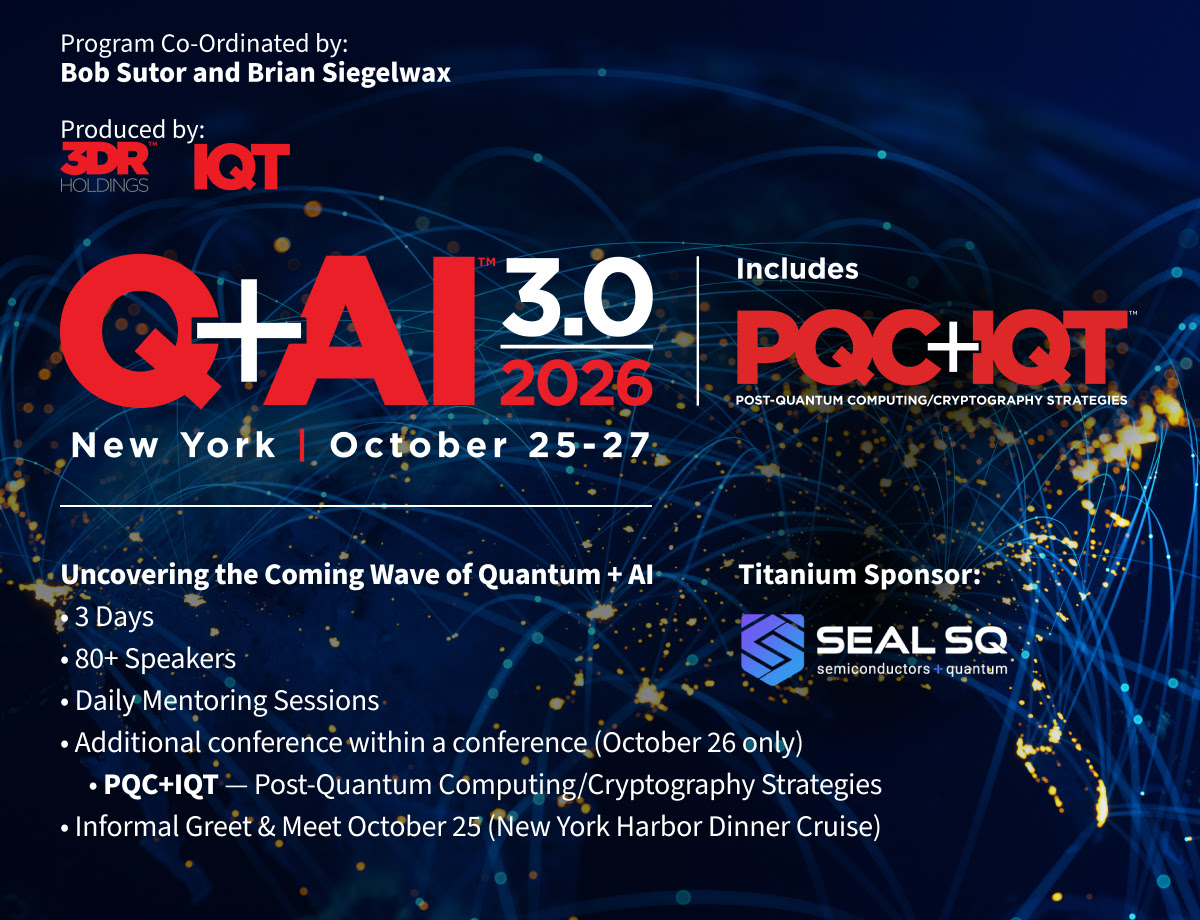
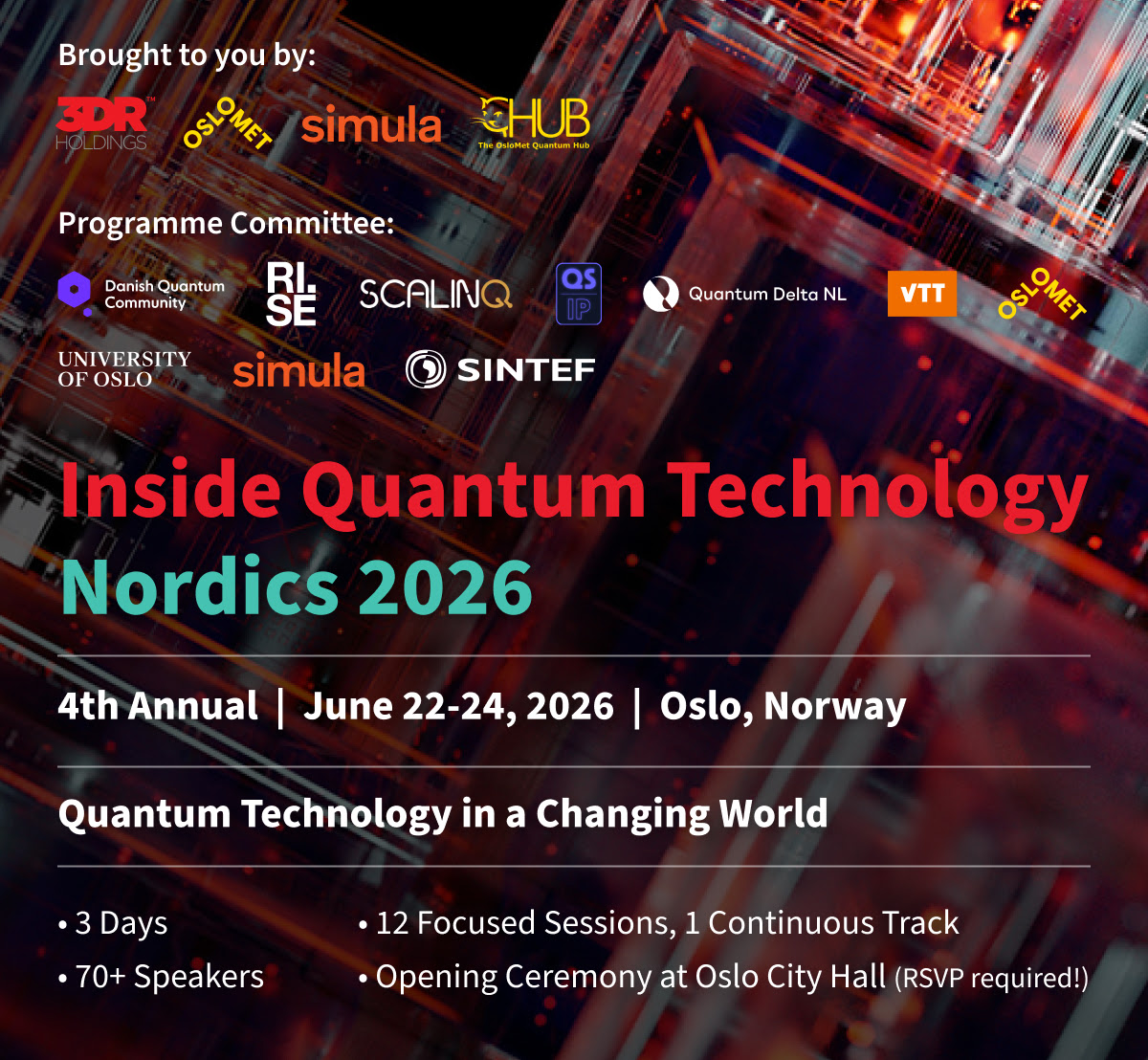
IQT Nordics 2026 takes place in Oslo, Norway, June 22-24, 2026.
Newly announced is SEALSQ's overall Titanium sponsorship of the IQT Nordics 2026 conference and Quantum Machines is now a Platinum sponsor.
Event info here: https://t.co/LkWi3eBQaH
#IQTNordics2026#QuantumTech
@SEALSQ is proud to serve as Titanium Sponsor of IQT Nordics 2026, taking place in Oslo, Norway, June 22–24, 2026, at OsloMet University in the heart of beautiful central Oslo.
https://t.co/LkWi3eBQaH
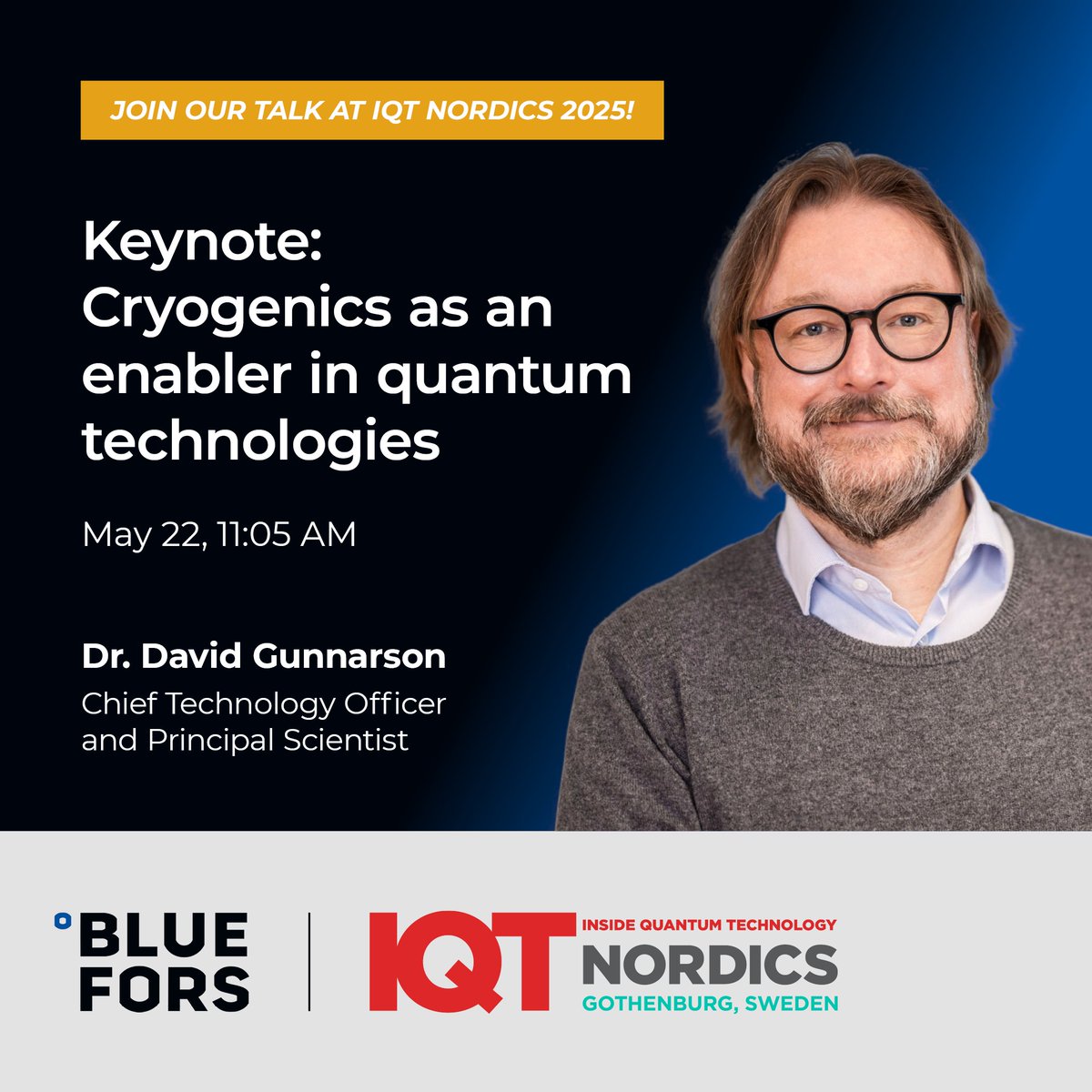
Next week, our CTO, Dr. David Gunnarsson, will be giving a keynote at #IQTNordics2025!
Meet our team booth 11 at the event and learn how Bluefors is making real-world, large-scale #quantumcomputing accessible today.
Read more: https://t.co/o5lJMO4H2V
#quantum#CoolForProgress
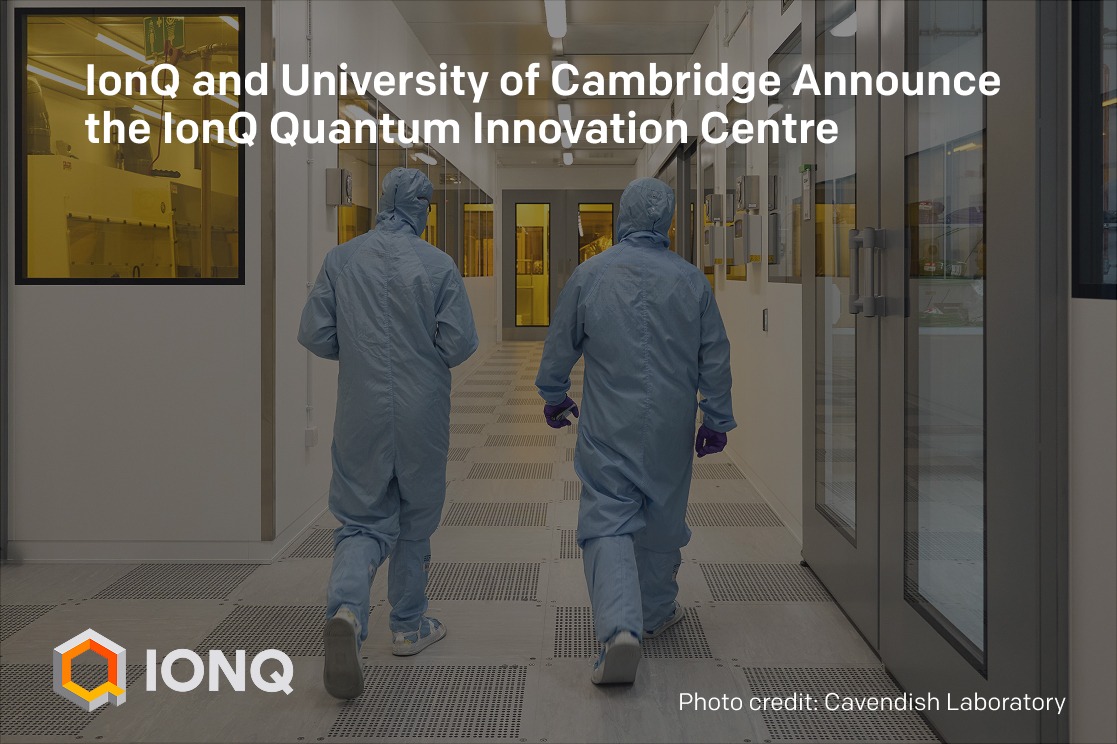
IonQ and the University of Cambridge are launching the IonQ Quantum Innovation Centre to accelerate the commercialization of quantum technology and expand collaboration between academia and industry.
The partnership will bring IonQ’s forthcoming 256-qubit system to Cambridge and support research across quantum computing, networking, sensing, and security.
https://t.co/2IaUzcKSL5
#QuantumComputing #Innovation #UKQuantum
Quantum computing will reshape cybersecurity sooner than many expect.
In Semiconductor Digest, SEALSQ's COO North America Loïc Hamon explains why the future of security must be anchored in hardware Root of Trust and quantum-resistant cryptography.
Read the full article: https://t.co/sM9OJOjzn3
#QuantumSecurity #PQC #SemiconductorSecurity #HardwareSecurity #Cybersecurity #laes