@unusual_whales Canada spent decades sending most of its crude south. Now it wants direct access to global buyers. That changes its bargaining position.
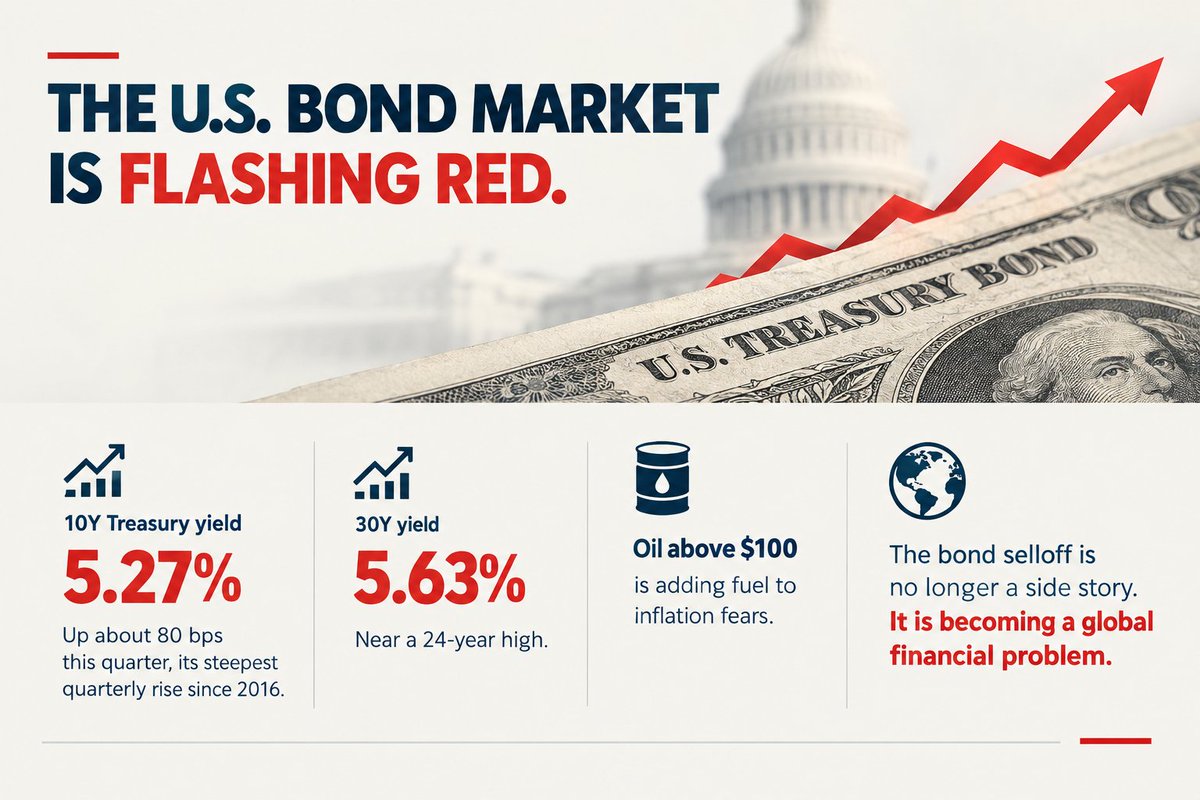
🇺🇸 U.S. bonds flashing red.
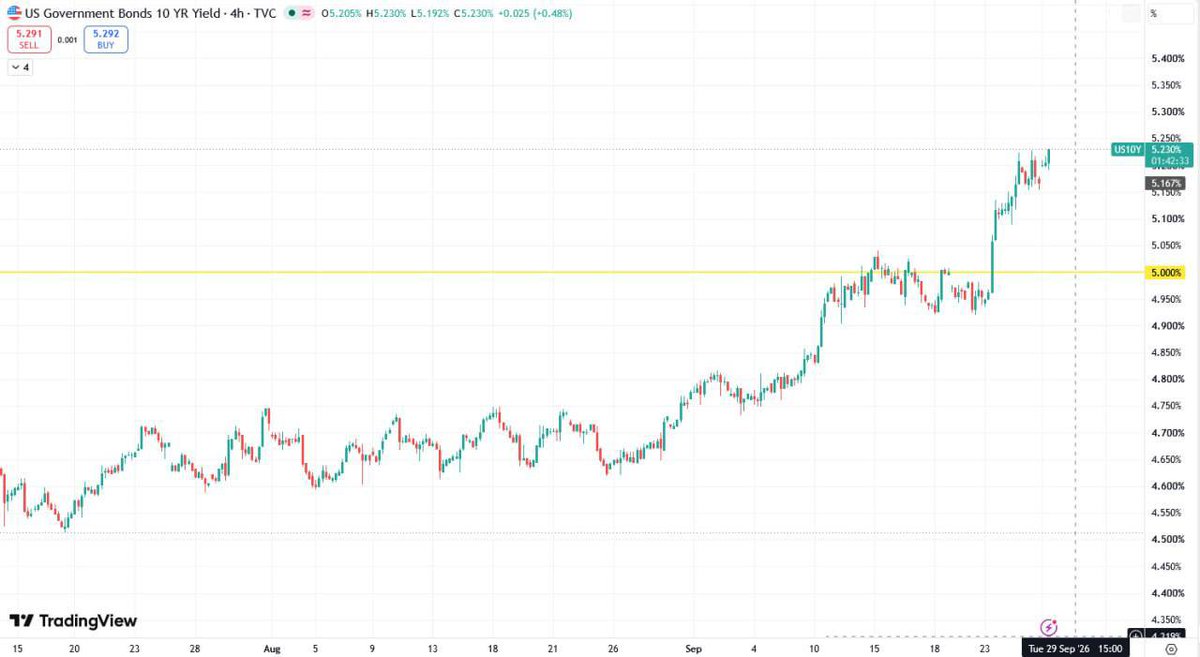
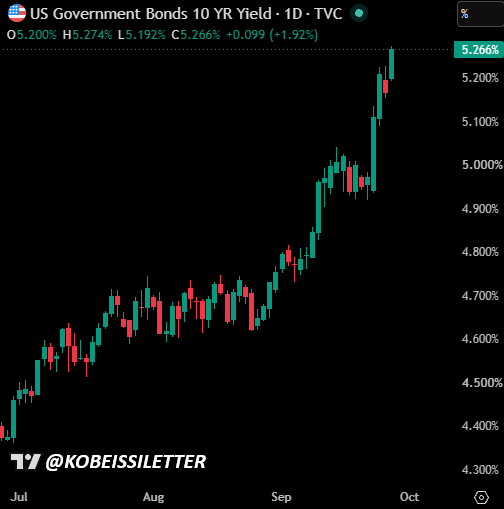
10Y: 5.27% (steepest quarterly jump since 2016)
30Y: 5.63% (near 24-year high)
Cause: oil above $100 + inflation fears
This selloff is no side story, it's driving global borrowing costs higher and raising real stability risks.
🇺🇸 U.S. bonds flashing red.
10Y: 5.27% (steepest quarterly jump since 2016)
30Y: 5.63% (near 24-year high)
Cause: oil above $100 + inflation fears
This selloff is no side story, it's driving global borrowing costs higher and raising real stability risks.
@byHeatherLong Trump can point to consumer spending all day. But if spending is rising 4.5x faster than income, that's not exactly a picture of household strength.
@awealthofcs You can't bomb an oil-producing region and then act surprised when oil, gasoline, inflation and interest rates go up. Markets don't care about campaign slogans
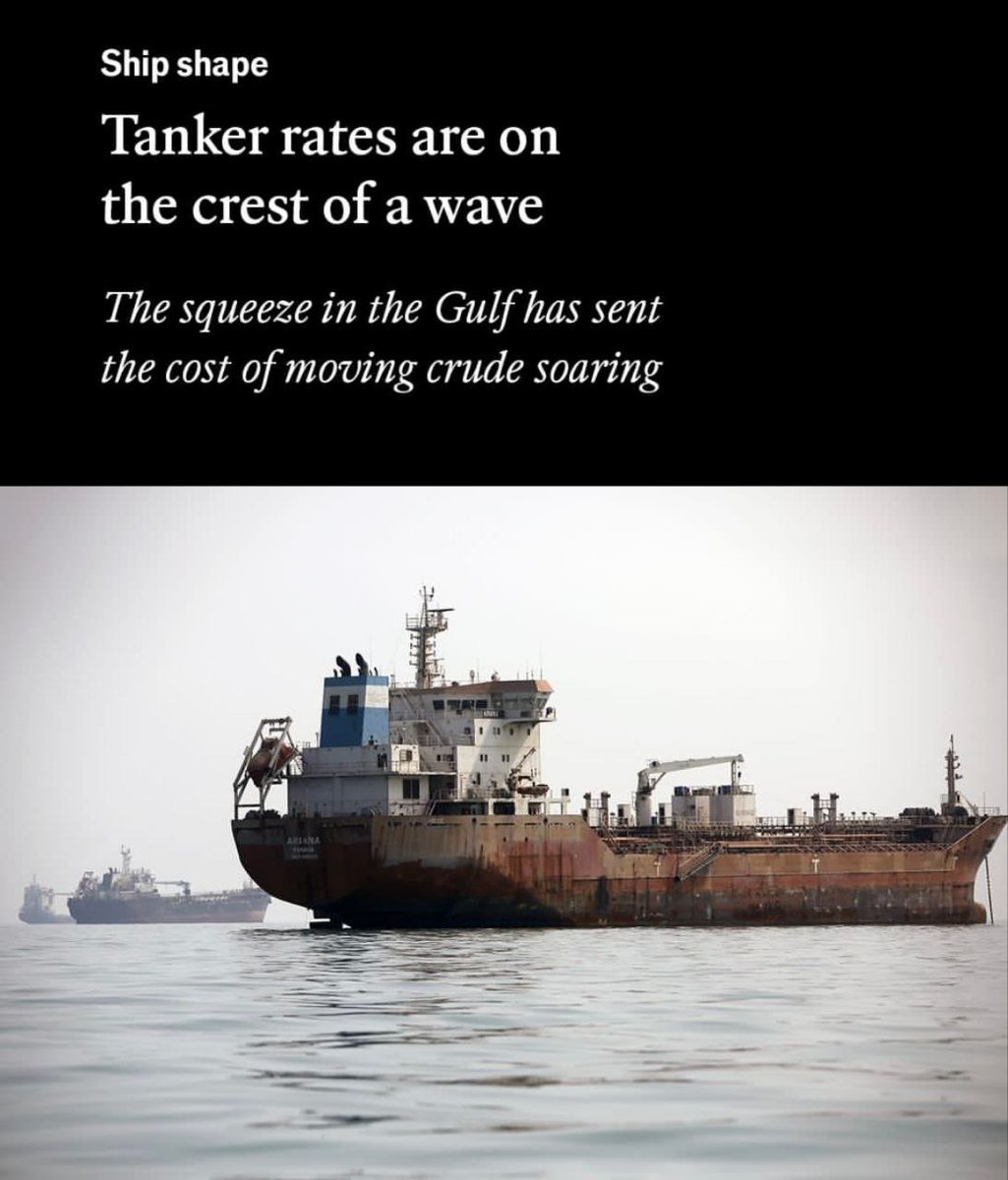
Tanker rates in the Gulf have surged sixfold.
Daily rates have reached around $650,000 more than 6× January levels and nearly 3× early September.
Even as oil flows recover, security risks, limited capacity and rerouting keep Gulf exports expensive.
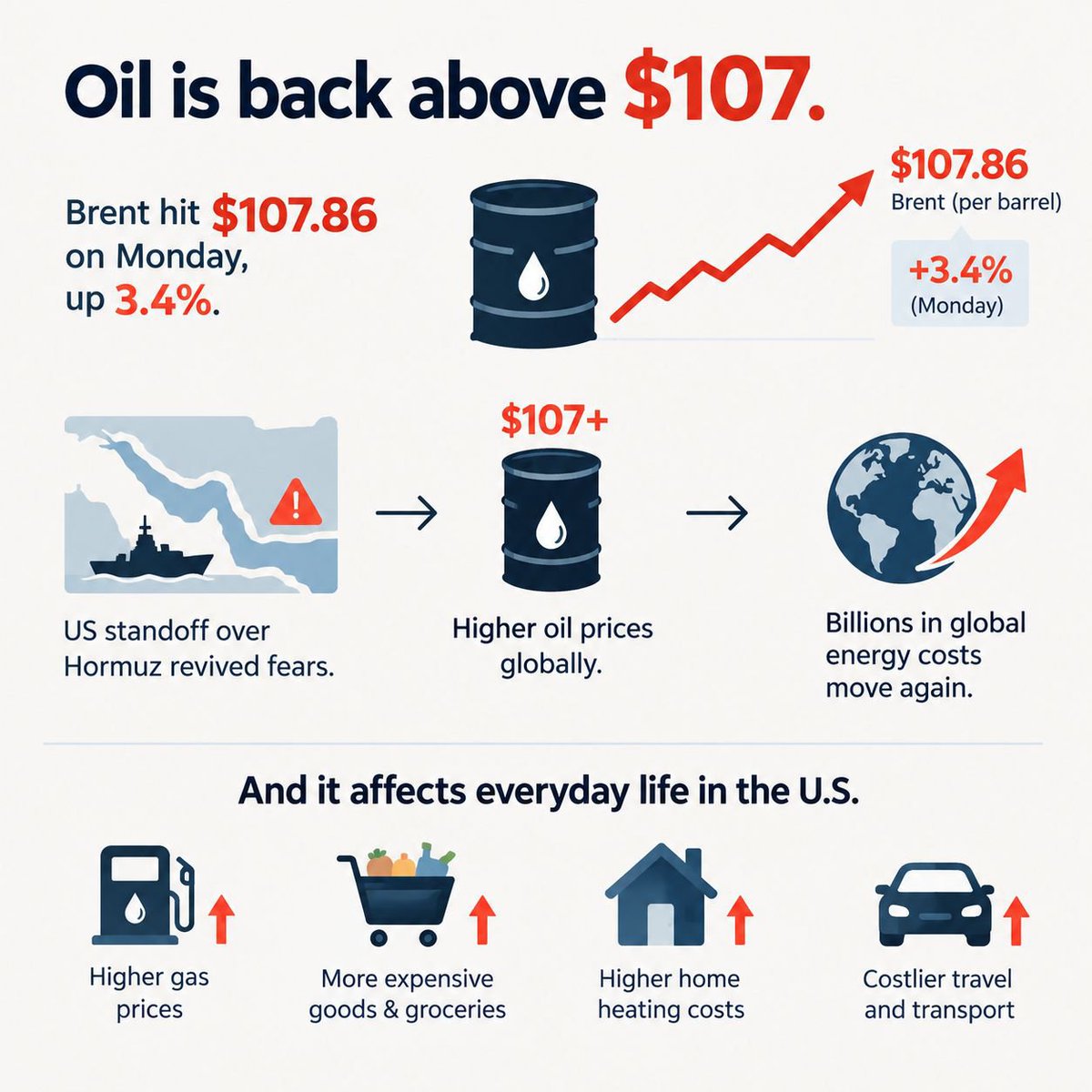
Oil is back above $107.
Brent hit $107.86 on Monday, up 3.4%, as the US standoff revived fears over Hormuz.
One diplomatic setback and billions in global energy costs move again
The 10-year U.S. Treasury yield has climbed to its highest level since 2007, signaling renewed pressure in global bond markets.
Higher Treasury yields could tighten global financial conditions and raise borrowing costs worldwide.
Another day, another 19-year high for the US 10Y Note Yield.
Now up to 5.27%, up +135 basis points since the low seen 6 months ago.
Where is the US Treasury?
Iran’s inflation picture is showing signs of improvement after 15 months, with liquidity growth slowing and year-on-year inflation declining in September.
The shift comes as Washington says its economic pressure campaign on Tehran is starting to deliver results.
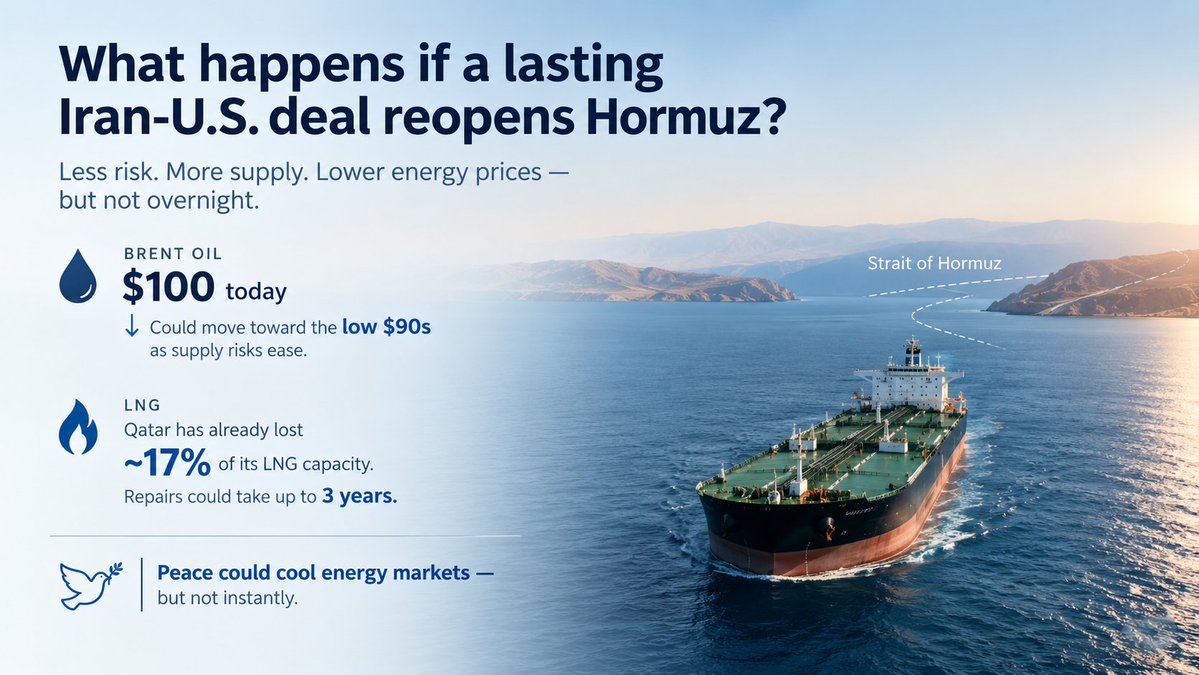
What happens if a lasting Iran-U.S. deal reopens Hormuz?
Brent is around $100 today.
A deal could push it toward the low $90s as supply risks ease.
But LNG: Qatar has already lost ~17% of its LNG capacity, with repairs potentially taking up to 3 years.
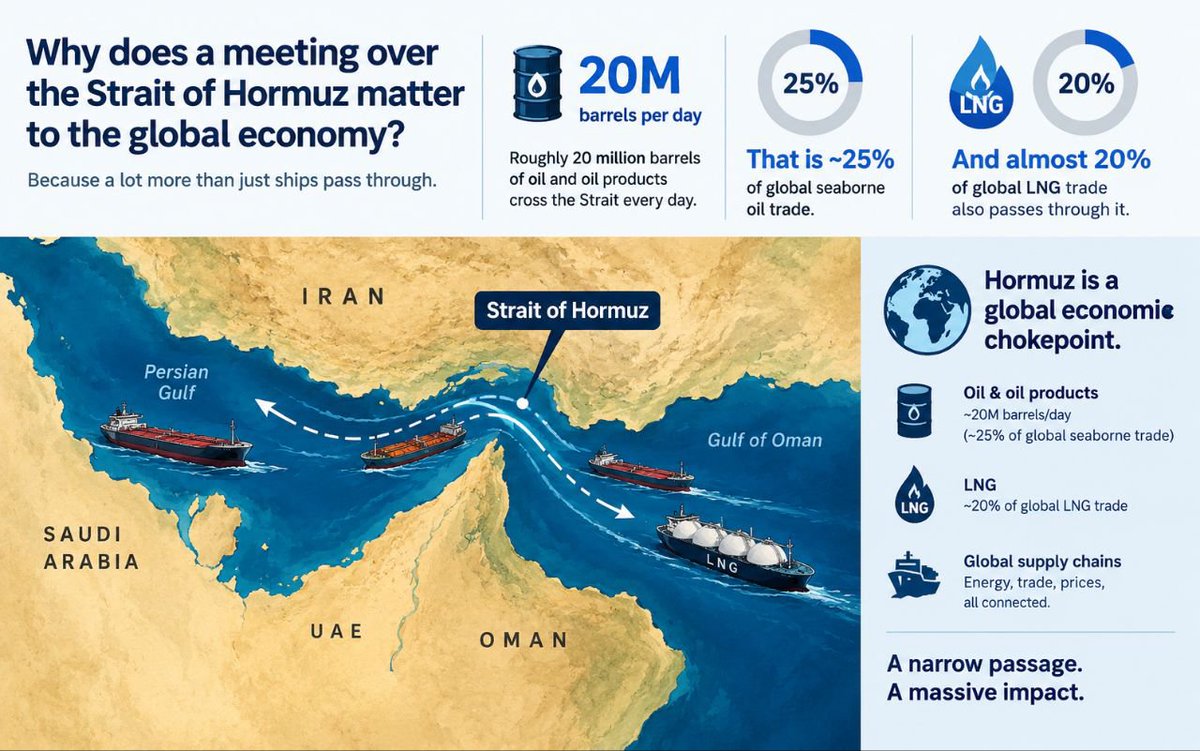
Why does a meeting over the Strait of Hormuz matter to the global economy?
Because roughly 20M barrels of oil and oil products cross the Strait every day.
That is ~25% of global seaborne oil trade.
And almost 20% of global LNG trade also passes through it.
The key to easing today’s oil and gas crisis is sitting in Iran.
Iran holds 12% of the world’s proven oil reserves and 16% of its proven natural gas reserves.
Its oil output could reach 3.8M barrels/day if sanctions were lifted.
Hormuz isn’t only hurting global oil markets.
Container traffic through the Strait has fallen 94%.
Qatar has lost 17% of its LNG capacity.
The Gulf economies are paying the price too.