@TNTJohn1717 Sure, I will start including you in my prayers. The Lord will breath on you. The coverings of the Lord will be around your ministry. You shall write about the ways of the Lord and not be tired. Many will hear the gospel of Jesus through your epistle and come to the knowledge
How Do I Live In The World But Not Be Of The World?
The Christian is not called to escape the world by hiding in a cave, joining a monastery, acting strange for the sake of being strange, or pretending ordinary life does not exist. The Lord did not save us and immediately remove us from the battlefield. In John 17, the Lord Jesus prayed to the Father and said, “I pray not that thou shouldest take them out of the world, but that thou shouldest keep them from the evil” (John 17:15). That verse is one of the clearest answers to the question. The believer is in the world by location, but not of the world by identity. He works here, lives here, raises children here, pays bills here, deals with sinners here, serves here, suffers here, witnesses here, and waits for the Lord here. But he does not belong to the world’s system. His citizenship, calling, affection, doctrine, hope, and Master are somewhere else.
The world in Scripture is not merely planet earth, trees, rivers, mountains, oceans, and sunshine. God made creation, and creation declares His glory. But “the world” as a spiritual system is something else. It is the organized order of fallen mankind under the god of this world, built on lust, pride, rebellion, covetousness, false religion, human wisdom, self-worship, and hatred of the true God. John says plainly, “Love not the world, neither the things that are in the world” (1 John 2:15). That command does not mean you must hate sunsets, honest labor, family meals, good music, children laughing, or lawful blessings. It means you must not love the world system that rejects God, corrupts truth, feeds the flesh, and tries to make this present evil age feel like home.
Living in the world but not being of the world requires Bible balance. Some Christians become so worldly that nobody can tell they belong to Christ. Others become so weird, bitter, isolated, and useless that they mistake social awkwardness for holiness. The Bible does not call us to either ditch. We are to be separate, but not useless. Holy, but not haughty. Engaged, but not entangled. Witnessing, but not conforming. Working, but not worshipping the world’s rewards. Loving souls, but not loving the system that blinds them. Paul said, “be not conformed to this world: but be ye transformed by the renewing of your mind” (Romans 12:2). That is the battlefield. The world wants to press you into its mold. God wants to transform you by truth.
Chapter One: Remember That You Belong To Christ, Not To This World
The first truth that must be settled is ownership. You cannot live rightly in the world until you know to whom you belong. The believer is not his own. “For ye are bought with a price” (1 Corinthians 6:20). That price was not silver and gold. It was the precious blood of Christ. A Christian does not belong to the world, to the flesh, to the devil, to the crowd, to the culture, to his own ambitions, or even to himself. He belongs to the Lord Jesus Christ. That fact must govern every decision, appetite, relationship, habit, and direction of life. The world will constantly tell you, “It is your life.” The Bible says, “Ye are not your own” (1 Corinthians 6:19).
This is why the Lord Jesus said of His disciples, “They are not of the world, even as I am not of the world” (John 17:16). That is not merely moral language. It is identity language. The believer’s origin, life, and calling are now connected to Christ. He has been born again. He has been translated out of the power of darkness and into the kingdom of God’s dear Son. He may still walk through the streets of this world, but he is no longer defined by it. The world may recognize his face, his job, his family, his past, and his earthly address, but heaven knows his true identity in Christ.
When a Christian forgets ownership, compromise becomes easy. He starts asking, “How close can I get to the world?” instead of “How can I glorify the One who bought me?” He starts asking, “Will people
@RepRileyMoore I really appreciate your love for Nigeria. Your love for Christian faith in Nigeria continue to ring bell of God's divine mandate for Nigeria. Thanks for all God to use you. God will continue to order your steps as you lead American to the path of righteousness.
They call Scripture primitive, yet it laid out isolation laws long before germ theory existed. In the 1800s, scientists like Louis Pasteur and Robert Koch demonstrated how disease spreads. But thousands of years earlier, Leviticus 13:46 commanded separation of the infected to protect the community.
That matters. This wasn’t guesswork or superstition. It was wisdom written into the text from the beginning. God didn’t just give spiritual truth. He gave instructions that preserved life, because He is the Author of life itself.
🚨🚨Today I published what is now my three-volume 1 Corinthians collection through VerseQuest Ministries.🚨🚨
This does not even include my earlier 1 Corinthians Chapter-by-Chapter series. That was a separate rightly divided essay study through each chapter. These three new works are more extensive, more detailed, and more premium in design and purpose.
The 1 Corinthians Verse-by-Verse Commentary is 2,630 pages and walks through every single verse. Each verse includes detailed study, review, printed KJV cross-references so the reader does not have to look them up, and an extensive summary/application section. This was the largest and most demanding work of the three.
The 1 Corinthians Lists of Sevens is 181 pages and gives seven doctrinal, devotional, practical, and spiritual observations for every verse in the book. These can be used as sermon outlines, Bible study outlines, family devotionals, teaching notes, personal study prompts, or simply as a way to slow down and draw more truth from each verse.
The Insightful Essays From the Book of 1 Corinthians is 651 pages of detailed, rightly divided essays. Each morning in our daily Bible study, I work through four verses, then draw one major essay idea from that section. Over time, that became a full essay collection covering the great doctrines, corrections, warnings, and practical truths found throughout 1 Corinthians.
Altogether, these three works total 3,462 pages of KJV Bible study on one book of the Bible.
I hope and pray the Lord uses them for His glory. 1 Corinthians is too important to neglect. It corrects false doctrine, exposes carnality, teaches church order, magnifies the cross, explains spiritual gifts, defends the resurrection, and shows believers how to live in a confused and compromised world.
As of today, this three-volume 1 Corinthians collection is free. I know most writers would probably not give away that much work after a full year of labor, but I felt compelled to make this one available because of how important this book is for the church today.
Scroll down to review them all 👇
Tomorrow, Lord willing, I begin 2 Corinthians.
#VerseQuest #KJV #BibleStudy #1Corinthians #ChristianDoctrine #RightlyDividing #PaulineEpistles #BibleBeliever
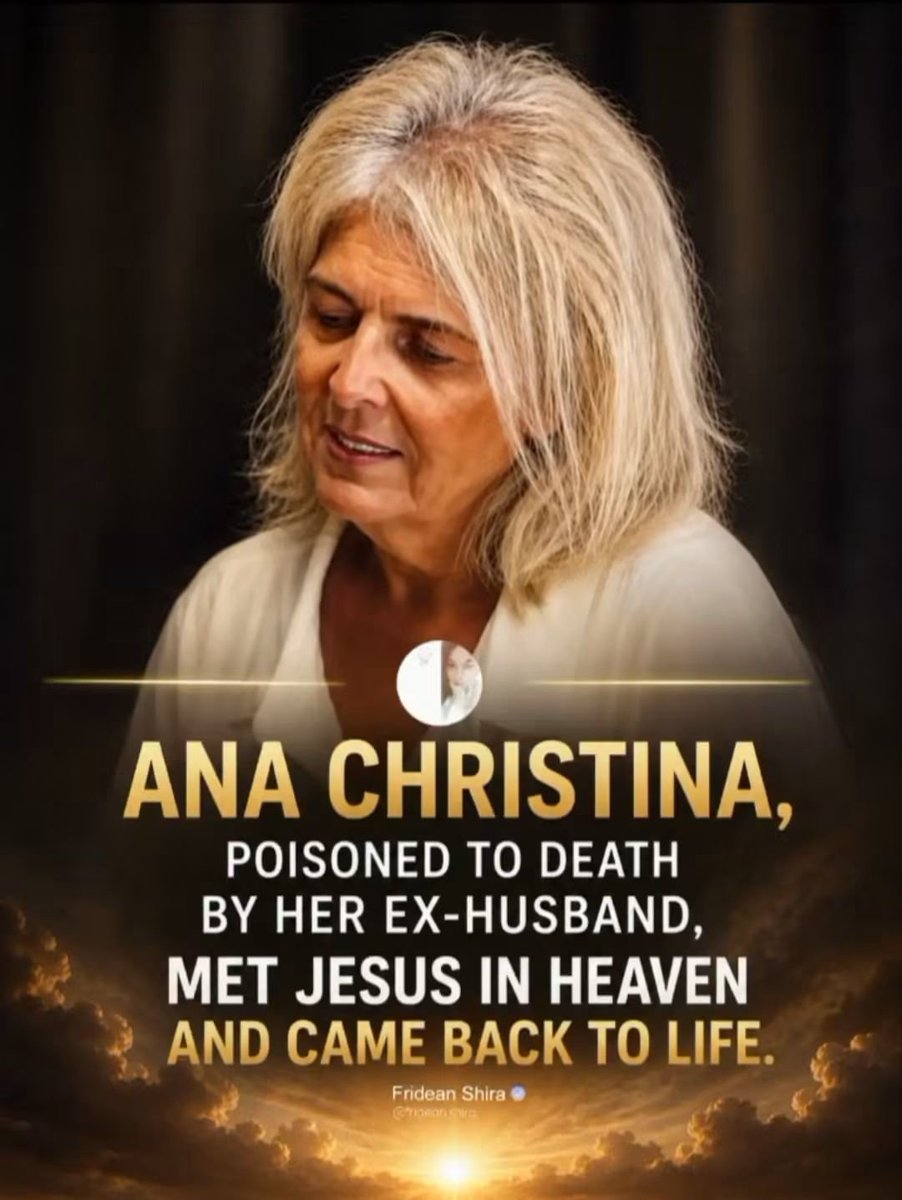
Ana Christina was raised as a Coptic Christian, but her faith would be tested in a way few could imagine.
She was deliberately poisoned by her husband, leaving her paralyzed, unable to breathe, and facing death. Medical reports later confirmed the presence of poison in her body. What appeared to be the end of her life became the beginning of an extraordinary encounter with God.
As she was dying, Ana experienced the guidance of the Holy Spirit, who led her through every moment of her suffering until Jesus Himself escorted her into Heaven. There, she encountered Jesus Christ, experienced overwhelming joy, and felt the undeniable presence of God.
But her story did not end in Heaven.
Ana miraculously survived and returned with a powerful message about God's love, the reality of Heaven, and the transforming power of forgiveness. Despite the betrayal and suffering she endured, she chose to forgive the husband who tried to kill her.
Today, Ana shares her testimony around the world and tells her remarkable story in her book, My Sweet Encounter with Death. Her journey is a powerful reminder that God's love is greater than pain, betrayal, and even death itself.
"Heaven is real. Jesus is alive. And God's love is beyond anything we can imagine."
Simon Peter Never Became Simon Pope
Passage: 2 Peter 1:1
“Simon Peter, a servant and an apostle of Jesus Christ…”
Peter opens his second epistle with a sentence that ought to embarrass fifteen centuries of Roman mythology. “Simon Peter, a servant and an apostle of Jesus Christ.” That is the Holy Ghost’s identification tag. That is Peter’s own signature line. That is the apostle’s self-description before God, before the churches, before the scattered believers, before the false teachers he is about to expose, and before every religious system that would later try to use his name as a crowbar to pry open the door to spiritual tyranny. Peter does not say, “Simon Peter, supreme pontiff.” He does not say, “Simon Peter, vicar of Christ.” He does not say, “Simon Peter, head of the church.” He does not say, “Simon Peter, prince of bishops.” He does not say, “Simon Peter, monarch of the visible church, ruler of all Christians, and holder of the keys to everybody’s salvation.” He says he is “a servant and an apostle of Jesus Christ.” That one verse is a stick of dynamite under the papal throne.
Now watch how simple the Bible is when men leave it alone. Peter is not confused about who he is. The Holy Ghost is not confused about who Peter is. The verse is not vague. Peter gives you his name, his humility, his office, and his Master. He is Simon Peter. That reminds you he is a real man with a real past, not a marble statue with candles around his toes. He is a servant. That places him under authority, not over the whole church as some universal religious monarch. He is an apostle. That gives him true divine commission, not an invented Roman office passed down through an alleged succession line. He belongs to Jesus Christ. That means Christ is the source, Christ is the Lord, Christ is the Head, Christ is the Saviour, Christ is the authority, and Christ is the glory. Rome looked at that and said, “Wonderful, now let us build a religious empire around Peter that Peter never asked for, never claimed, never taught, and never authorized.” That is not Bible doctrine. That is religious identity theft.
The issue is not whether Peter was important. Of course he was important. Only a fool would deny Peter’s apostolic prominence. He preached at Pentecost in Acts 2. He was used in Acts 10 to open the door to Cornelius. He was part of the inner circle with James and John. He saw the Lord’s majesty on the holy mount. He wrote Scripture by inspiration of the Holy Ghost. He had real authority. But Bible authority is not papal authority. Apostolic authority is not Roman monarchy. The keys in Matthew 16 are not a golden ticket to build Vatican City. Peter’s role in Acts is not permission for later bishops to crown themselves as universal rulers. A man can be a true apostle without becoming a pope. A man can be mighty in the early chapters of Acts without becoming the head of Christ’s Body. A man can receive a commission from Christ without creating a priestly empire. Peter was a servant and an apostle of Jesus Christ. Simon Peter never became Simon Pope.
Chapter One — Peter’s Own Introduction Sinks the Papal Ship
The best witness against the papal Peter is the real Peter. That is what makes this so devastating. We do not have to begin with church history, councils, medieval politics, papal scandals, forged documents, or religious traditions stacked like rotten boards in a damp basement. We can begin with the Bible. Peter introduces himself by inspiration of the Holy Ghost, and his introduction contains nothing that Rome later built around him. If the papal office were the central visible authority of Christianity, if Peter were the supreme head over all believers on earth, if Peter held an office that would continue through successors as the necessary government of the church, then 2 Peter 1:1 would be a strange place to forget it. Yet Peter says nothing about being pope because Peter was never pope.
The papal system depends on importing
🚨‼️This chart shows that Korah’s revolt was not a righteous stand for fairness, but a direct rebellion against the order God Himself had established in Israel. It helps your followers see that spiritual pride often hides behind religious language, and that challenging God’s appointed leadership is not just resistance to men, but resistance to the Lord’s arrangement.
🚨‼️This chart examines J. D. Hall as a cautionary case in discernment ministry. It recognizes that he did expose real compromise, woke drift, seeker-sensitive downgrade, and doctrinal weakness in evangelicalism.
But the main warning is that the watchman must also watch himself. Public disqualification, controversy-driven polemics, harsh exposure culture, anti-dispensational rhetoric, and weak right division can turn a discernment ministry into its own danger.
The lesson is simple: discernment is needed, but it must stay under the King James Bible, personal qualification, humility, and rightly divided truth. Test every watchman by the Book.
What Does It Mean To Be Clothed In Righteousness?
To be clothed in righteousness is one of the richest pictures in the Bible, because God does not present fallen man as merely uninformed, underdeveloped, unlucky, misunderstood, or needing a little moral improvement. God presents fallen man as naked, guilty, exposed, ashamed, filthy, and unable to cover himself properly before a holy God. That begins in Genesis. Adam and Eve sinned, their eyes were opened, and they knew they were naked. Then they did what sinners have been doing ever since: they tried to cover themselves with something of their own making. “And they sewed fig leaves together, and made themselves aprons” (Genesis 3:7). There is the first religion of human works. Fig-leaf theology. Man-made covering. Human effort. Something green, temporary, dying, and insufficient wrapped around a guilty sinner trying to stand before God. That is religion without blood. That is morality without redemption. That is man trying to hide what only God can cover.
The Bible’s answer to man’s nakedness is not better fig leaves. It is God’s righteousness. Isaiah said, “all our righteousnesses are as filthy rags” (Isaiah 64:6). Not our sins only. Our righteousnesses. The very best thing fallen man can produce in the flesh is still unclean before God. That is a hard truth, and religion hates it. Religion wants to believe man can stitch together enough good deeds, ceremonies, sacraments, law-keeping, charity, sincerity, baptismal water, church membership, confessions, penance, rituals, reformations, and moral improvements to make himself acceptable. The Bible says the whole pile is filthy rags. You do not cover a sinner with a dirty rag and call him ready for glory. A man needs righteousness he did not manufacture, holiness he did not produce, acceptance he did not earn, and a covering God Himself provides.
To be clothed in righteousness, therefore, means to be covered before God with a righteousness that comes from God, is found in Christ, is received by faith, and is not produced by the works of the flesh. The saved man is not standing before God in his own spiritual wardrobe. He is accepted in the beloved. He is made righteous in Christ. He is justified freely by grace. He is covered by the blood and clothed in a righteousness that answers the demands of God’s holiness. But the Bible also speaks of practical righteousness in the believer’s walk, because a man who has been clothed positionally in Christ should not live like he belongs to the naked shame of the old life. There is imputed righteousness for salvation, and there is practical righteousness in service. Confuse those two, and you will either become a legalist trying to earn salvation or a carnal fool pretending righteousness does not matter.
Chapter One: Man’s First Covering Was Man-Made And Insufficient
The first clothing lesson in the Bible comes immediately after the fall. Adam and Eve sinned, and the first thing they realized was their nakedness. “And the eyes of them both were opened, and they knew that they were naked” (Genesis 3:7). Before sin, there was innocence. After sin, there was shame. That is not a small detail. Sin exposes. Sin strips. Sin makes man hide. Sin makes man afraid of the voice of God. The modern world laughs at guilt and tries to medicate shame, rename shame, celebrate shame, or explain shame away, but Genesis tells the truth. When man sins against God, something is wrong inside him, and he knows he needs a covering.
Their solution was fig leaves. They sewed them together and made aprons. That is man’s first religious act after sin: self-covering. No blood. No sacrifice. No divine provision. Just human hands sewing dying leaves around guilty bodies. That is the entire history of religion in picture form. Man trying to cover sin with works. Man trying to cover guilt with morality. Man trying to cover rebellion with ceremony. Man trying to cover corruption with culture.
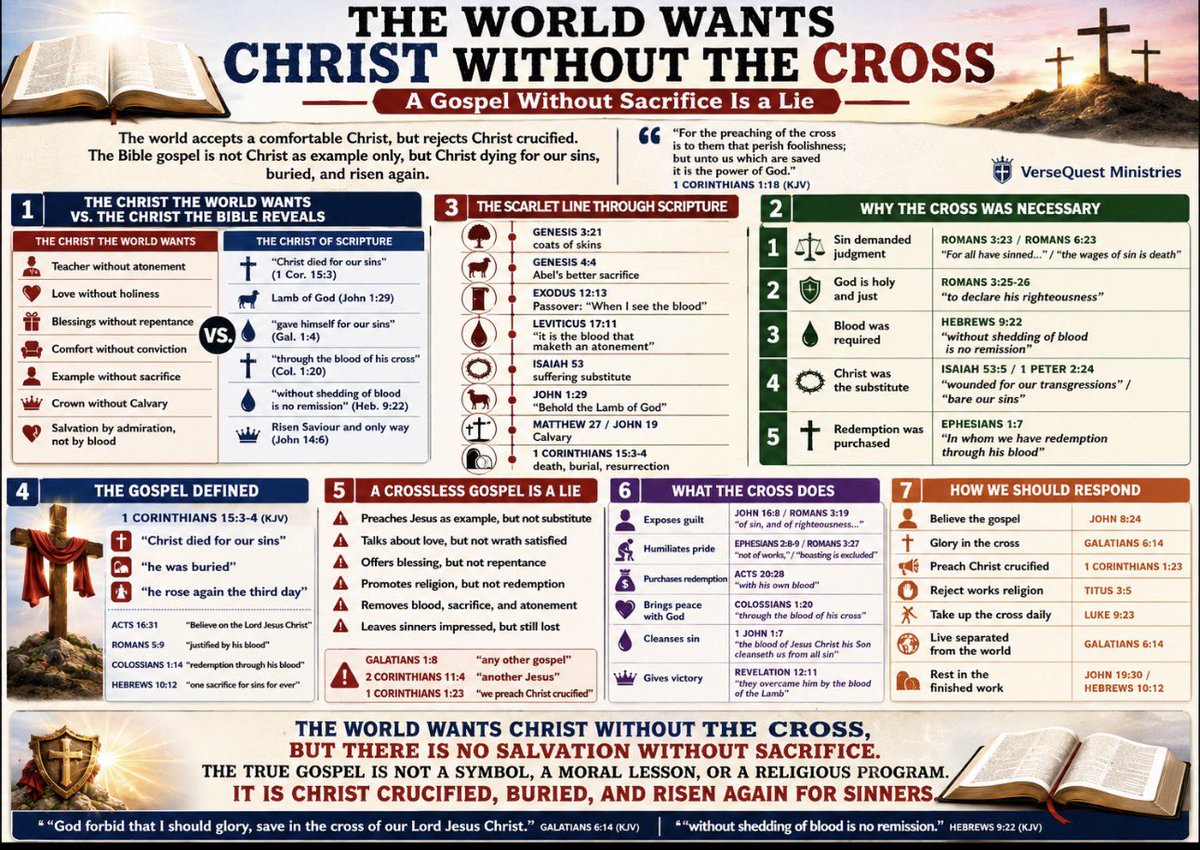
🚨‼️This chart exposes the world’s false idea of wanting Christ without Calvary. The Bible gospel is not a moral lesson, religious program, or comfortable message—it is Christ crucified, buried, and risen again for sinners. Without the cross, the blood, and the sacrifice, there is no salvation.
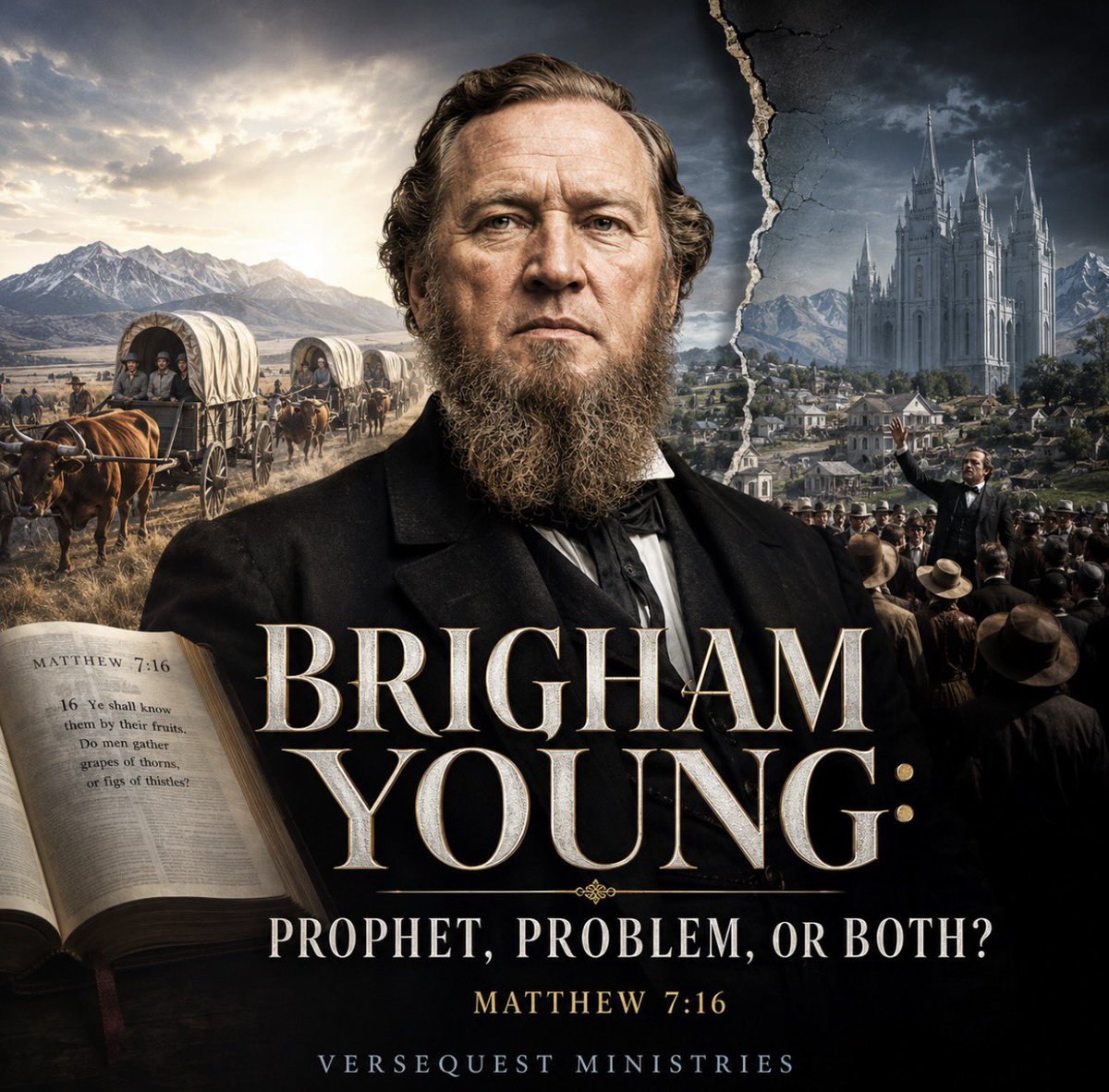
The Adam-God Doctrine: When Mormon Prophets Contradict Mormon Prophets
Scripture Pivot: Isaiah 43:10
“Ye are my witnesses, saith the LORD, and my servant whom I have chosen: that ye may know and believe me, and understand that I am he: before me there was no God formed, neither shall there be after me.” - Isaiah 43:10
Introduction
The Adam-God doctrine is one of the clearest train wrecks in Mormon prophetic history because it forces the question Mormonism does not want to answer plainly: what happens when one Mormon prophet teaches something that later Mormon prophets reject? That is not a small disagreement over minor wording. That is not a harmless historical curiosity. That is not a dusty footnote only scholars care about. That is a direct hit on the Mormon claim of prophetic guidance. If Brigham Young stood as a prophet, seer, and revelator, and taught doctrine concerning Adam, God, creation, fatherhood, worship, and divine identity, then those teachings must be judged. If later LDS leaders reject or distance themselves from that doctrine, the Mormon is stuck between two horns of a dilemma: either Brigham Young taught false doctrine as a prophet, or later leaders rejected truth that a prophet taught. Either way, the prophetic system is in trouble.
Isaiah 43:10 does not leave room for theological gymnastics. The LORD says, “before me there was no God formed, neither shall there be after me.” That is a straight, clean, sharp Bible statement. No God before Him. No God after Him. No chain of gods. No progressing deities. No Adam promoted into the identity of God. No man becoming the God to whom others must bow. The God of the King James Bible is eternal, self-existent, uncreated, unformed, and unmatched. Adam, by contrast, is a created man, formed from the dust, placed in the garden, commanded by God, deceived through Eve, fallen by transgression, judged, and made the head of a dying race. Adam is not God. Adam is not the eternal Father. Adam is not the object of worship. Adam is the first man through whom sin and death entered the world. Christ is the last Adam who brings life.
The Adam-God doctrine exposes the danger of leaving the Bible for living prophets. Once a religious system says the written word is not enough, and that living authority must guide, interpret, restore, revise, and expand doctrine, the people are trapped in a shifting authority structure. Yesterday’s prophet may become today’s embarrassment. Yesterday’s “deep doctrine” may become today’s “not official.” Yesterday’s thunder from the pulpit may become tomorrow’s historical problem. That is why the King James Bible believer does not need Joseph Smith, Brigham Young, or any later LDS prophet to define God. The Bible has already spoken. “Before me there was no God formed, neither shall there be after me.” That one verse burns the Adam-God doctrine to ashes before the discussion even gets warmed up.
Chapter One: Isaiah 43:10 Destroys the Mormon God-Making System
Isaiah 43:10 is a doctrinal cannon pointed directly at Mormon theology’s weakest wall. The LORD says, “before me there was no God formed, neither shall there be after me.” A child can understand that. Before God, no God formed. After God, no God formed. Beside Him, no rival deity, no divine race, no ladder of exalted beings, no celestial line of gods, no Adam stepping into deity, no men becoming gods in the Mormon sense. The verse does not say, “There are many gods, but I am the one assigned to this world.” It does not say, “There were gods before me, but you need not worry about them.” It does not say, “There shall be gods after me, but I am currently your God.” It says what it says, and Mormonism cannot honestly digest it.
Peter’s Mailbag Was Jewish Before Rome Stole the Envelope
Key Passage: 1 Peter 1:1
“Peter, an apostle of Jesus Christ, to the strangers scattered throughout Pontus, Galatia, Cappadocia, Asia, and Bithynia,”
The first verse of 1 Peter is not a decorative opening line. It is the address label on the envelope, and a man had better read the address before he starts stealing the mail. The Holy Ghost did not begin this epistle with fog. He did not say, “Peter, supreme bishop of all Christendom, to the Roman Catholic Church spread throughout the world.” He did not say, “Peter, the first pope, writing from his universal throne to establish a sacramental empire.” He said, “Peter, an apostle of Jesus Christ, to the strangers scattered.” That is clear enough to bother anybody with a religious system to protect. Peter’s mailbag was Jewish before Rome ever got its hands on the envelope. The letter is addressed to scattered strangers, and that language is not Roman machinery, Protestant generality, or Gentile replacement theology. It is Bible language with Jewish dust on its sandals. If God names the recipients, then the first act of honest Bible study is to believe the recipients are who God said they are.
The danger of wrong mail is that wrong mail produces wrong doctrine. If a man takes a letter written to scattered Jewish believers and treats it like a Roman church manual, he will twist the priesthood, the stones, the suffering, the salvation language, the judgment language, the baptism passage, the household passages, and the end-times emphasis. He will start reading Peter as though Peter is Paul, then he will read Peter as though Peter is Rome, then he will wonder why his doctrine is crooked. The Bible believer has no business doing that. God gave us three groups in 1 Corinthians 10:32: “the Jews,” “the Gentiles,” and “the church of God.” When a man refuses those distinctions, he walks into the Bible with a paint roller and smears everything one color. That might make denominational charts easier, but it makes Bible doctrine a mess. Peter is not writing a general church manual to erase Israel. Peter is writing to strangers scattered, elect according to the foreknowledge of God, living among Gentiles, suffering under pressure, and waiting for the revelation of Jesus Christ.
That does not mean 1 Peter is useless to the Body of Christ. God forbid. “All scripture is given by inspiration of God, and is profitable” according to 2 Timothy 3:16. The Body of Christ can learn from every word in 1 Peter. We can learn about the precious blood of Christ, the incorruptible word of God, the sincere milk of the word, the example of Christ in suffering, the command to be ready always to give an answer, the danger of the devil as a roaring lion, and the comfort of casting all care upon God. But learning from the letter is not the same as stealing the address. Application is not interpretation. A man can learn from a letter written to someone else without pretending his name was on the envelope. The problem comes when religious systems take Peter’s Jewish mail, remove the address, stamp Rome on it, and then build a doctrine that God never mailed to them.
Chapter One
The opening words “to the strangers scattered” should immediately send a Bible student back through the Old Testament and into the Jewish setting of dispersion. Jews scattered among the nations are not a new idea in Peter. Israel’s disobedience, exile, chastening, and future regathering are woven all through the prophets. God warned Israel repeatedly that national disobedience would bring scattering among the nations, and He also promised that He would not forget His people in their scattering. So when Peter writes to “strangers scattered,” a Bible believer should not pretend the phrase dropped out of the sky as a generic nickname for all Christians everywhere. It has a Bible background. The scattered condition belongs naturally to Israel’s story,
🚨‼️This chart shows why the devil hates the blood of Christ: it exposes sin, answers guilt, silences the accuser, and secures eternal redemption. Religion can counterfeit many things, but it cannot counterfeit the sinless blood of the Lamb. The blood still cleanses, redeems, justifies, and gives the believer victory through Jesus Christ.
🚨 TRUTH BOMB: RFK JR. JUST TORCHED THE VACCINE SCHEDULE LIE — AND FAUCI’S WHOLE HOUSE OF CARDS IS COLLAPSING!
For years they smeared him as crazy for saying it out loud: Not ONE of the 72 mandated childhood vaccines was ever properly safety-tested against a true inert placebo.
Fauci and the establishment defended the system anyway. Billions in profits for Big Pharma. Zero real liability. Zero long-term safety data. Meanwhile chronic disease, autism (now 1 in 31), ADHD, and neurological issues in our kids have skyrocketed.
RFK Jr. never backed down. He kept fighting while they lied, censored, and profited.
Now the truth is out in the open — and with President Trump in the White House and RFK Jr. running HHS, the reckoning has finally arrived. No more hidden data. No more poisoned generation. Real transparency. Real accountability.
This is the medical swamp they never wanted drained.
Parents — your children were the experiment.
How much longer until every last one of them answers for it?
How Do I Keep My Heart Soft In A Hardened World?
A hardened world has a way of trying to harden the Christian with it. You can see enough sin, betrayal, foolishness, hypocrisy, cruelty, false doctrine, spiritual laziness, online venom, church nonsense, family disappointment, political madness, and plain old human stupidity that your heart starts building a shell around itself. At first you call it wisdom. Then you call it discernment. Then you call it “just being realistic.” But somewhere along the way, if you are not careful, you stop grieving and start sneering. You stop praying and start mocking. You stop warning with tears and start swinging with pride. You stop feeling the burden of souls and begin treating people like categories, enemies, annoyances, or arguments to win. That is a dangerous place for a Christian to live.
The Bible never commands the believer to be soft toward sin, soft toward false doctrine, soft toward the devil, soft toward another gospel, or soft toward rebellion against God. A soft heart is not a weak head. A tender spirit is not doctrinal compromise. Jesus Christ was “meek and lowly in heart” (Matthew 11:29), but He also called Pharisees hypocrites, cleansed the temple, rebuked unbelief, and said, “I am the way, the truth, and the life” (John 14:6). Paul could weep over enemies of the cross and still wish accursed any preacher of another gospel. A soft heart is not sentimental mush. A soft heart is one that remains responsive to God, broken over sin, burdened for souls, quick to repent, able to forgive, teachable under Scripture, and tender toward what God says should matter.
The danger is that we live in a world where hardness looks like strength. People boast about having no feelings, no mercy, no patience, no tears, no fear of God, no concern for souls, and no shame. The world calls that power. The Bible calls it a problem. Ephesians 4:18 speaks of Gentiles “being alienated from the life of God through the ignorance that is in them, because of the blindness of their heart.” Romans 2:5 warns about “hardness and impenitent heart.” Hebrews 3:15 says, “To day if ye will hear his voice, harden not your hearts.” A hard heart is not a badge of strength. It is spiritual scar tissue. The Christian must be strong in doctrine but tender toward God; firm against error but humble under the Book; separated from the world but not cold toward souls; bold in truth but not dead inside.
Chapter One: Keep Your Heart Soft By Staying Under The Authority Of The Word
The first way to keep your heart soft in a hardened world is to stay under the authority of the word of God. A heart gets hard when it learns how to hear Scripture without trembling. That is one of the most dangerous conditions a believer can ever reach. A man can read chapters, quote verses, defend the King James Bible, argue doctrine, post truth, and still have a heart that no longer bends when God speaks. The Bible is not given merely to provide ammunition for arguments. It is given to search, cut, cleanse, correct, feed, rebuke, comfort, and govern the believer. “Is not my word like as a fire? saith the LORD; and like a hammer that breaketh the rock in pieces?” (Jeremiah 23:29). If the heart is getting hard, it needs the hammer of the word.
Yesterday was my final day as Director of National Intelligence. I declassified and released never-before-seen documents exposing the truth about Fauci directing millions of US taxpayer dollars to fund dangerous gain-of-function research at the Wuhan lab, worked with the Intelligence Community to suppress the truth about his actions and hide the virus’ lab-leak origins, and lied to Congress while under oath in 2024. It’s time you know the truth. Go to https://t.co/tVwWp0TxZ4 to see for yourself.