Many thanks to the JVIR Editorial Board for the countless hours they dedicate each year. We also want to extend special appreciation to our Co‑Editors‑in‑Chief, Charles E. Ray Jr., MD, PhD, FSIR, and Brian F. Funaki, MD, FSIR. #VolunteerAppreciationWeek https://t.co/GvjDftnlmC
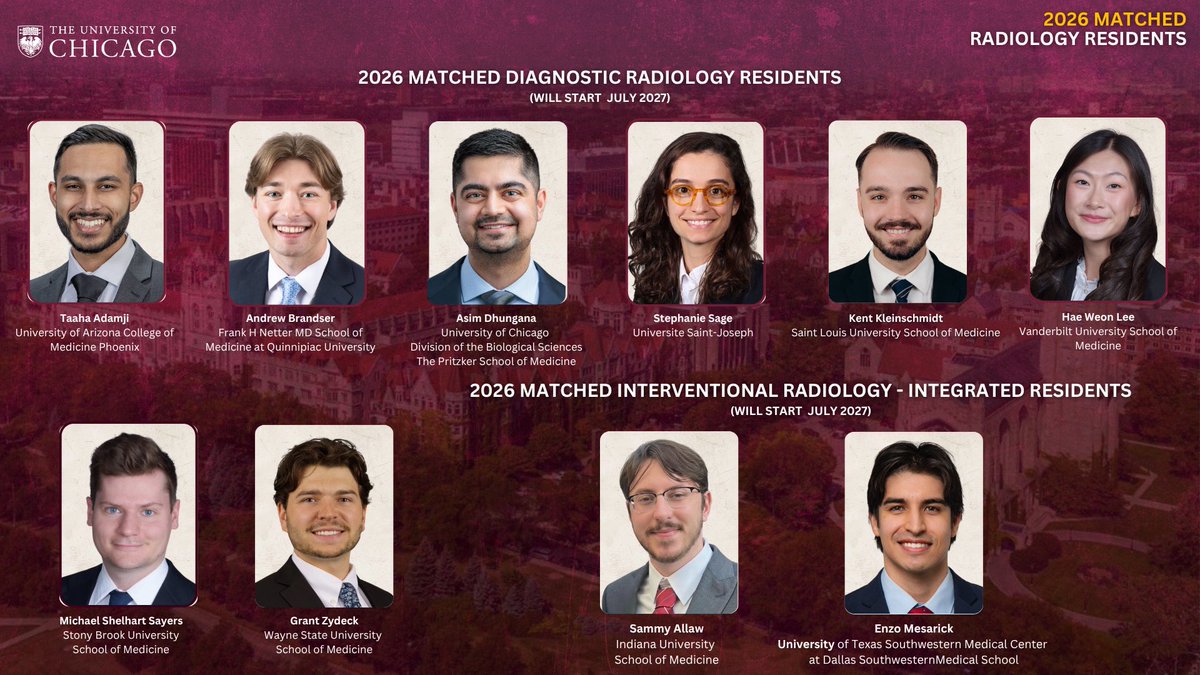
Congratulations and welcome to the UChicago radiology family! Can’t wait to have you all join in 7/2027! Don’t hesitate to reach out if you need anything between now and then!
@UChicagoRADS@UChicagoIR#Match2026#RadRes#IR
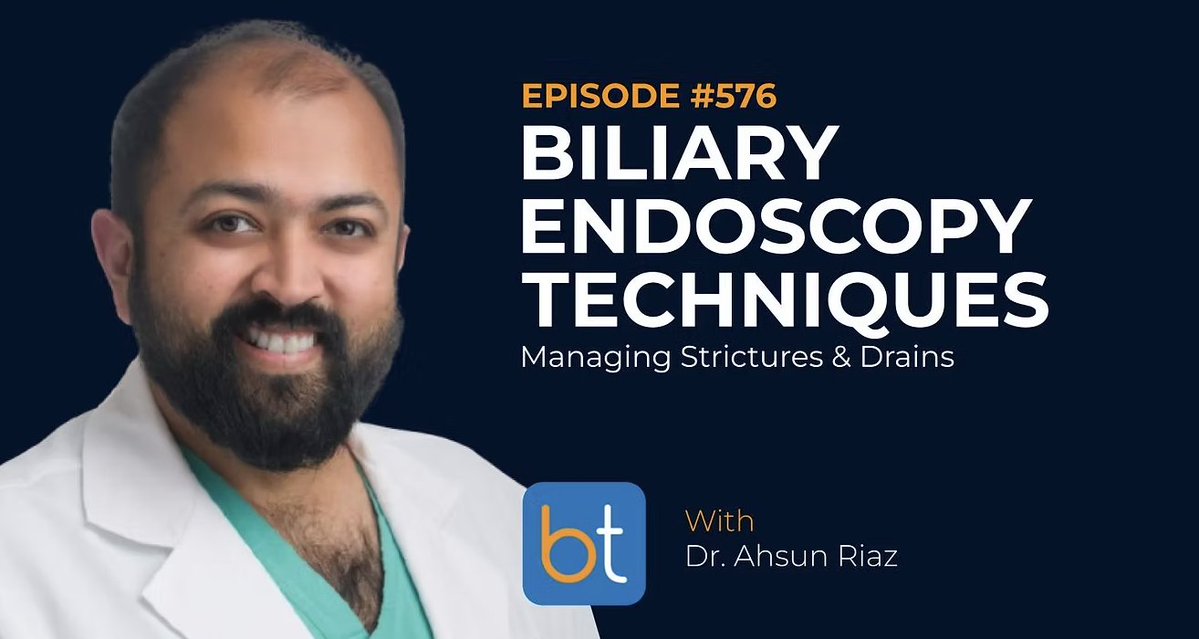
Are your biliary drain patients getting the follow up care they need? How can you use biliary endoscopy?
Tune in to find out best practices from @AhsunR and @NorthwesternIR 's hepatobiliary service, tips for long term management, and insight into innovative endoscopic techniques.
What are your best pearls?
Watch: https://t.co/k9wsgL7z16
#VI576 #iRad #VIR #FutureRadRes #Hepatobiliary
@beckcj@LessneVIR@CHICKVIR@medravi@johnsmirnMD
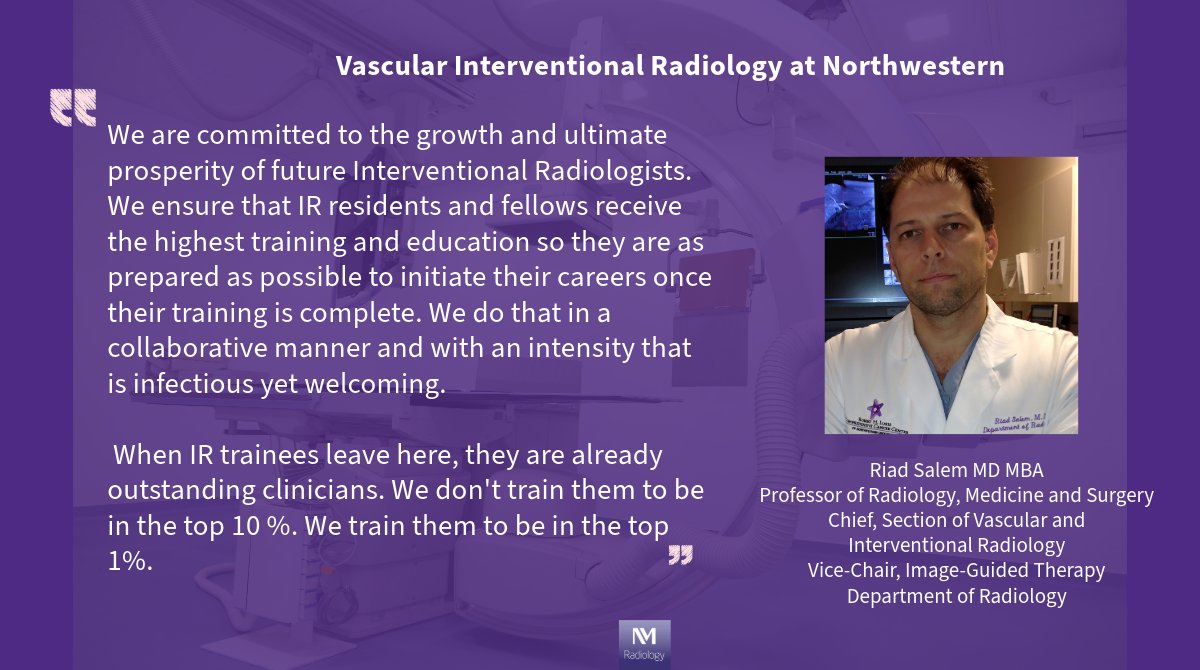
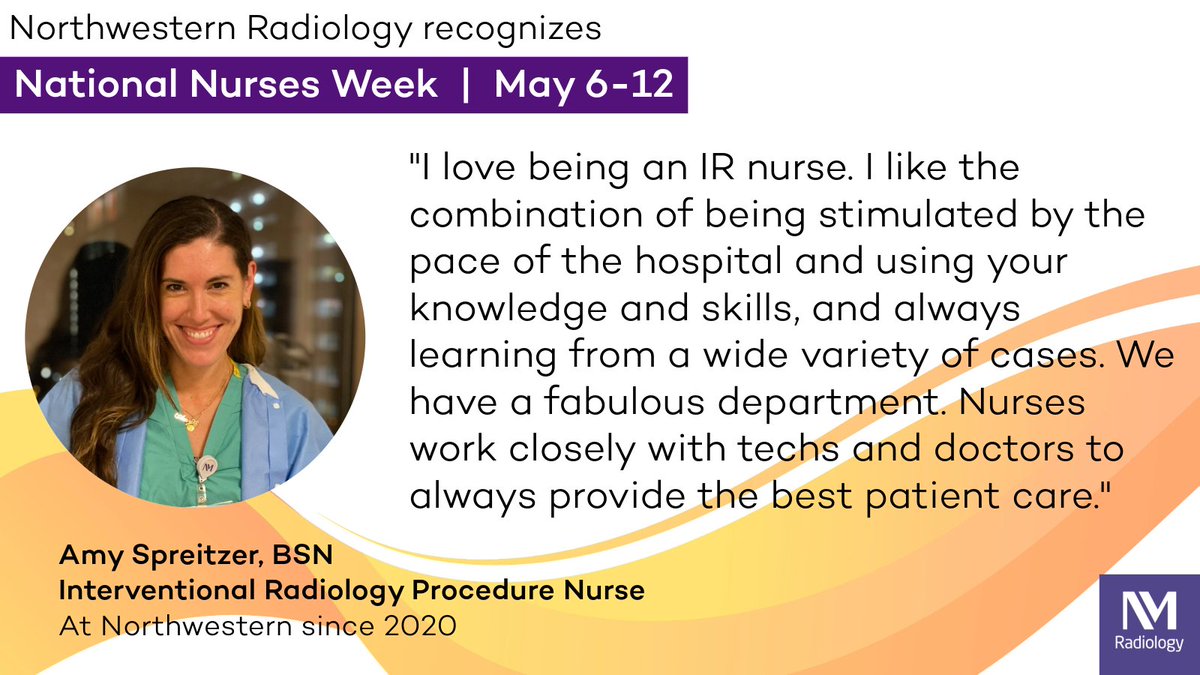
It's Nurses Week (May 6-12) and we celebrate with profiles of the nurses of Northwestern's radiology divisions. Amy Spreitzer enjoys the variety of experiences. #NursesWeek#NursesDay#ThankYouNurses
In March we're featuring our Interventional Radiology and Image-Guided Therapy research. Matthew Anatalek is working on the AI system that will improve liver cancer diagnoses and treatment. #imageguided#interventions#AI
We report our multicenter experience in using either Y90 Radiation Segmentectomy (RS) or Ablative External Beam Radiation Therapy (EBRT) as initial treatment for Solitary Hepatocellular Carcinoma.
https://t.co/Sq1w1v2k9h
PURPOSE: Prospective data evaluating RS and EBRT has been challenging to obtain.
PATIENTS:
Solitary, treatment naïve, HCC ≤ 8 cm.
86 patients (RS [100% glass]: 58; EBRT [43% proton]: 28).
EBRT treated older patients (median 76 vs 66 years, p < 0.001), larger tumors (median 3.7 vs 2.4 cm, p < 0.001), and higher ECOG (p = 0.02).
RS treated more patients with ≥ grade 3 fibrosis (p < 0.001) and subsequent liver transplant (48% compared to 11%).
These disparities prevented a significant matched comparison.
TREATMENT: RS = median 638 Gy single compartment MIRD, SA 703 Bq, PD 18,200/cc.
EBRT = 50 Gy (range: 39–67.5) and BED 100 Gy (range: 84–100). SBRT 71% (5 fractions), 29% received 15 fractions.
OUTCOMES:
Censored for liver transplant.
mRECIST CR achieved in 97% of RS and 82% of EBRT patients (p = 0.02).
Median time to CR was 1 month (95% CI: 0.9–1.1) after RS and 7 months (95% CI: 6–7) after EBRT (p < 0.001).
Targeted tumor complete pathologic necrosis in liver transplant patients: RS = 76% and EBRT = 33%.
1-year LC was 97% (RS) and 93% (EBRT) (p = 0.80).
1-year PFS was 87% (RS) and 80% (EBRT) (p = 0.26).
1- and 2-year OS was 88% and 85% (RS) vs 84% and 59% (EBRT) (p = 0.34).
CONCLUSION:
RS and EBRT are effective for solitary HCC, but used in different patients. Treatment should be determined via multidisciplinary discussion.🧩
@SIRspecialists@SIO_Central@ASTRO_org@AASLD@ESMO@BCLC_group
#Y90 Radiation Segmentectomy has expanded access to curative intent therapy for many patients with early stage #HCC who are not candidates for resection or thermal ablation. 🧩
https://t.co/7QQtzSeAwf
Thank you to @UChicagoMed for highlighting our work on GAE as a minimally invasive treatment for patients suffering from knee osteoarthritis - hoping this critical study will help place GAE within treatment guidelines 🙏🏽 #irad 🦴
https://t.co/razkEsiaFP
SIR is pleased to announce that Charles E. Ray Jr., MD, PhD, FSIR, past president of SIR, and Brian F. Funaki, MD, FSIR, past chair of the SIR Annual Scientific Meeting, have been selected as the incoming co-editors-in-chief of @JVIRmedia. Read the full announcement: https://t.co/HbTVtxxUI8










![BeauToskichMD's tweet photo. We report our multicenter experience in using either Y90 Radiation Segmentectomy (RS) or Ablative External Beam Radiation Therapy (EBRT) as initial treatment for Solitary Hepatocellular Carcinoma.
https://t.co/Sq1w1v2k9h
PURPOSE: Prospective data evaluating RS and EBRT has been challenging to obtain.
PATIENTS:
Solitary, treatment naïve, HCC ≤ 8 cm.
86 patients (RS [100% glass]: 58; EBRT [43% proton]: 28).
EBRT treated older patients (median 76 vs 66 years, p < 0.001), larger tumors (median 3.7 vs 2.4 cm, p < 0.001), and higher ECOG (p = 0.02).
RS treated more patients with ≥ grade 3 fibrosis (p < 0.001) and subsequent liver transplant (48% compared to 11%).
These disparities prevented a significant matched comparison.
TREATMENT: RS = median 638 Gy single compartment MIRD, SA 703 Bq, PD 18,200/cc.
EBRT = 50 Gy (range: 39–67.5) and BED 100 Gy (range: 84–100). SBRT 71% (5 fractions), 29% received 15 fractions.
OUTCOMES:
Censored for liver transplant.
mRECIST CR achieved in 97% of RS and 82% of EBRT patients (p = 0.02).
Median time to CR was 1 month (95% CI: 0.9–1.1) after RS and 7 months (95% CI: 6–7) after EBRT (p < 0.001).
Targeted tumor complete pathologic necrosis in liver transplant patients: RS = 76% and EBRT = 33%.
1-year LC was 97% (RS) and 93% (EBRT) (p = 0.80).
1-year PFS was 87% (RS) and 80% (EBRT) (p = 0.26).
1- and 2-year OS was 88% and 85% (RS) vs 84% and 59% (EBRT) (p = 0.34).
CONCLUSION:
RS and EBRT are effective for solitary HCC, but used in different patients. Treatment should be determined via multidisciplinary discussion.🧩
@SIRspecialists @SIO_Central @ASTRO_org @AASLD @ESMO @BCLC_group](https://pbs.twimg.com/media/Gl15d5CW8AELbFq.png)


