Great new blog by my @ITIFdc colleague @patrickgrady_ on the EU Kids Act, arguing the regulation risks pushing children off the online communities they depend on without giving them viable alternatives.
Another country follows in Australia's footsteps. But, according to the BMJ, 85% of Australian youth are still on social media despite the ban. Are we really still doing this?
📅 THIS WEDNESDAY, Oct. 28 @ 1 PM ET:
XR can create immersive experiences, but technology alone doesn't ensure effective learning.
Join ITIF and @XRAssociation for a webinar that examines how educators combine XR with reflection, discussion, and assessment to improve instruction.
RSVP below ⤵️
https://t.co/xMRxjvUeva
Pew's vision for broadband doubles down on issues policymakers should be fixing: perpetual subsidies, unnecessary mandates, and policies that favor certain technologies.
@thejoekane argues states should instead prioritize competition, private investment, and consumer choice. https://t.co/glmp3QEHDg
📅 THIS WEDNESDAY, Oct. 28 @ 1 PM ET:
From nursing simulations to hazardous workplace training, XR enables realistic practice in safe environments.
Join ITIF and @XRAssociation to explore how immersive learning can benefit students and workers.
Register for the webinar👇
https://t.co/9MnfXwVvyL
Unlocking Indonesia’s AI potential requires policies that encourage innovation, strengthen digital trade, and create opportunities for economic growth.📈
Last week, ITIF President @castrotech joined the U.S.-Indonesia Digital Trade and AI Cooperation Forum, hosted by @USASEANBusiness, to discuss how Indonesia can foster an innovation-friendly AI ecosystem.
Key findings from my and my coauthors' report:
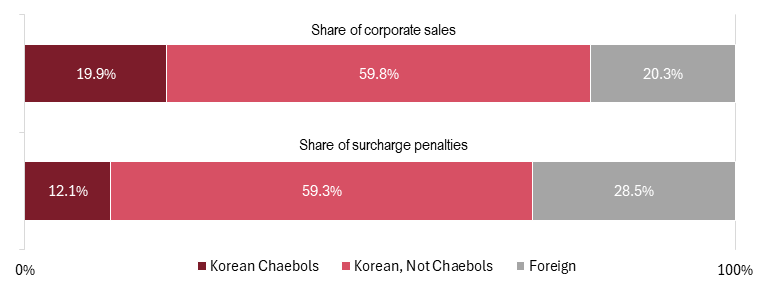
Despite foreign firms and chaebols both accounting for around 20 percent of corporate sales in South Korea, foreign firms’ share of 2016-2025 surcharge penalties is 28.5 percent while chaebols’ share is 12 percent. (1/6)
📚 Join XRA and @ITIFdc on Weds, October 28 for a conversation on the real-world impact of XR in education.
Register today to learn how XR can deliver value for institutions, educators, and students: https://t.co/lPTGGwkhHQ
Are fears of AI-driven human extinction overshadowing the risks of slowing innovation? 🤔
In an interview with @Chosun, ITIF President @castrotech explains why policymakers should focus on accelerating AI development while strengthening safety measures, rather than slowing technological progress.
🔗 Read the interview:
https://t.co/B593BtjFVB
📅 NEXT WEDNESDAY, Oct. 28 @ 1 PM ET:
How can immersive technologies transform teaching and learning? 📕
Join Ricky Holm(CM&D), Mansi Pagare(@Bismarck_State), and Fenway Powers(Mary Ann Mavrinac Studio X) for a webinar on immersive education, moderated by @XRAssociation's Stephanie Montgomery and ITIF's @alexitif.
Register here ⤵️
https://t.co/217wtFoswp
It was a pleasure moderating @ITIFdc's webinar, Korean Competition Policy and the U.S.-Korea Relationship this morning, feat. @nigelcory@econwags and Prof. Dae-Sik Hong.
If you're interested in the topic, I encourage you to watch the recording here:
https://t.co/PyVOlHKsam
1/3 AI demand is squeezing memory supplies for phones, cars and other electronics. @sjezell and I explain in our new @ITIFdc article how Washington can respond. Reserving chips for one industry simply shifts scarcity to others.
👇
https://t.co/aZCjEAbhUw
Restricting high-skilled immigration doesn't just hurt foreign workers. It also limits American companies' access to global talent & threatens U.S. competitiveness.
As ITIF President @castrotech explains on @NDTV, attracting the world's best & brightest benefits American workers & businesses alike. ⤵️
📢 WATCH NOW: New data raises questions about South Korea’s antitrust enforcement of US tech firms. What are the consequences for US-Korea ties & what should policymakers do?
Join @nigelcory, @econwags, @jack_g_nicastro, & Dae-Sik Hong ⬇️ https://t.co/3TfxlzV2CC
Super excited to moderate this @ITIFdc webinar on the role the Korea Fair Trade Commission plays in the broader U.S.-Korea relationship.
If you're a fellow data nerd, you'll be interested in listening to @econwags and me discuss a decade of newly compiled KFTC enforcement data!
Tomorrow at 9 AM ET, @ITIFdc hosts a panel discussion with international experts on U.S.–Korea economic relations, and how policymakers in both countries should respond to KFTC enforcement activity. CCIA’s Chief Economist, Trevor Wagener, will discuss CCIA Research Center’s latest study on the “KFTC’s Uneven Hand.” More info here: https://t.co/i6SFOdaCHC
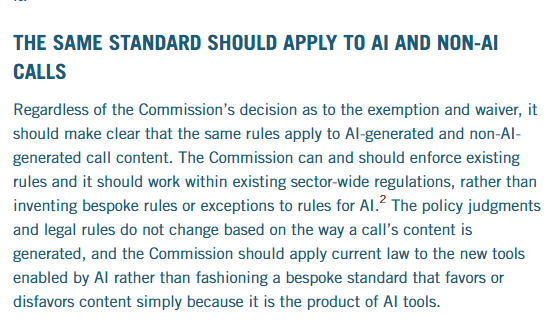
This is right, but as @ITIFdc explained, the fact that they're AI-generated shouldn't matter. @FCC should just apply the law which reaches the pro consumer outcome, rather than flirt with content-based exemptions from TCPA that the Supreme Court has found unconstitutional.
4/4 What should Washington and Seoul do next? Join @econwags, @nigelcory, Dae Sik Hong, & @jack_g_nicastro tomorrow at 9:00 AM ET for a webinar on the report's findings and what they mean for U.S.–Korea economic relations.
Register ASAP: https://t.co/CiEARqp0sg
1/4 South Korea’s competition regulator, the KFTC, imposed fines on American firms averaging 21 times those on Korean firms in 2016–2025, a new ITIF report finds.
Three U.S. tech companies accounted for 96.5% of American penalty amounts.
3/4 South Korea should apply existing competition laws fairly and reconsider expanding platform regulation. The report backs a broader Section 301 investigation to seek policy changes. Reforms could help avoid retaliation and preserve cooperation amid competition with China.