1. Parallel Work Manager
Paste to Claude: "I need to complete these tasks simultaneously: [list tasks]. Spawn agent teams: assign each task to a separate agent, coordinate between them, report progress from all agents, merge results when done. Run them in parallel."
The S&P 500 just made history over these last 11 days…
We just experienced the 10’th highest 11 day return on record within the last 15 years.
$SPY has officially gone full lockout rally mode, & even achieved a new ATH today at $700.
From here we see $718 before a substantial dip occurs.
Save this for later…
@WallStreetMav It'll be just like in Charlie and the Chocolate factory where the Dad who was replaced by a robot at the beginning gets a job at the end performing maintenance on the robots that replaced him.
Hi! Join me in buying, selling, and holding crypto with SoFi. You'll get $25 when you use this link to open an account and make a purchase of $50 or more—and you'll get to access crypto currencies on a federally regulated platform with the safeguards of a bank. https://t.co/qTu2dKg1l2
AI agent–enabled coding is quietly becoming the new SDLC.
Software development just had its biggest shift since the GUI.
Planning.
Coding.
Testing.
Deployment.
Agents are starting to handle all of it.
Here’s the shift most engineers haven’t noticed yet 👇
Old model: SDLC
• sequential phases
• human-driven execution
• testing happens after development
• changing requirements break timelines
Everything moves step → by → step.
New model: ADLC (Agent-Driven Lifecycle)
• agents write, refactor, and test code
• multiple tasks run in parallel
• requirements evolve dynamically
• feedback loops happen in real time
Instead of a pipeline…
You get a live development system.
6 major shifts happening right now
1️⃣ Driver
Human execution → Autonomous agents
2️⃣ Planning
Fixed scope → Evolving goals & PRDs
3️⃣ Development Speed
Sequential handoffs → Parallel sub-agents
4️⃣ Testing
Post-development QA → Continuous testing
5️⃣ Adaptability
Mid-cycle chaos → Real-time re-planning
6️⃣ Feedback Loop
End-of-project retros → Live monitoring
Some early signals are already here.
According to agentic coding reports:
• teams at Wiz and CRED doubled execution speed
• large-scale repos are being modified autonomously
• complex implementations completed in hours instead of days
How engineers should adapt
1️⃣ Start with one agent
Automate testing first.
2️⃣ Learn to write clear PRDs
Agents execute exactly what you define.
3️⃣ Introduce parallel sub-agents
Break one large task into smaller workstreams.
4️⃣ Review outcomes, not every line of code
5️⃣ Build live feedback loops
Agents should detect issues before you do.
The future of software development isn’t just faster coding.
It’s agent-driven systems building software.
#AI #AIAgents #SoftwareEngineering #SDLC #GenAI #AIEngineering
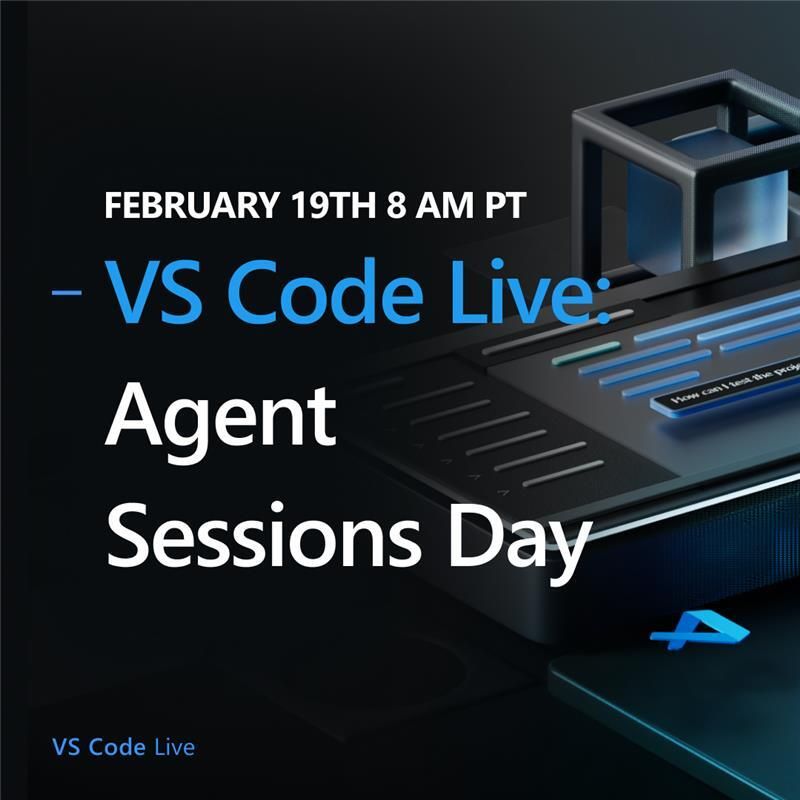
Agent Sessions Day is TOMORROW! An event dedicated to multi-agent development in @code - with live coding, insights from the product team, and some surprises ✨
🔔 Set notifications on YouTube: https://t.co/SuHsFvu913
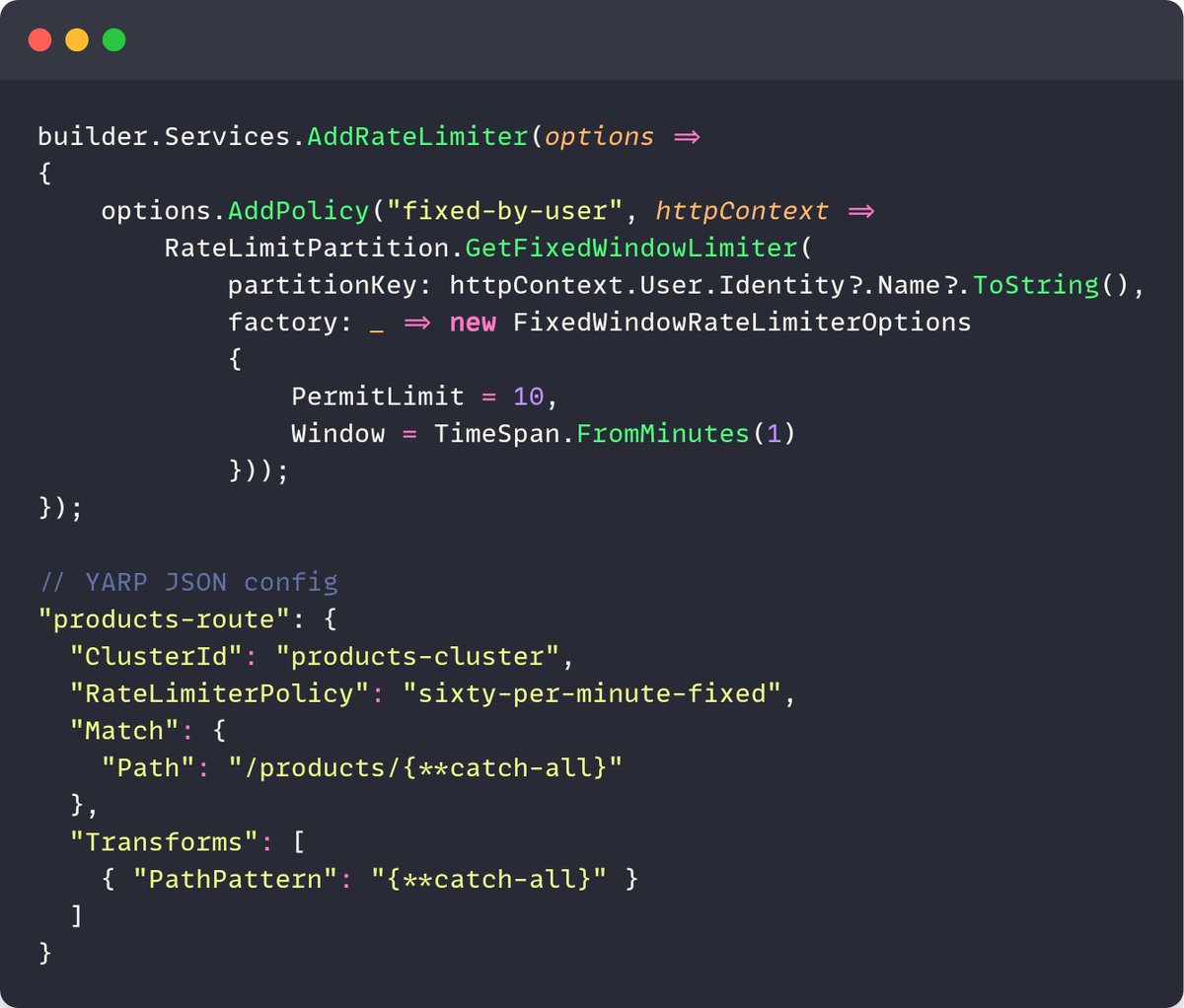
You can apply .NET rate limiting on your reverse proxy.
This will take care of rate limiting in a distributed scenario.
It does put more pressure on the proxy memory, so be mindful of this.
But isn't it amazing how flexible .NET is?
We can implement pretty much anything.
SpaceX just filed with the FCC to launch up to 1M satellites designed to function as solar-powered orbital data centers creating massive AI compute capacity in space.
Elon wants to use Starship’s low launch costs and laser-linked satellites to scale AI compute without stressing Earth’s power grid.
Stop calling DateTime.UtcNow in business logic.
This line looks harmless… and it’s the reason your tests are a mess.
Here’s the trap:
- DateTime.UtcNow > user.SubscriptionEnd
Seems harmless, right?
But the moment you try to test this logic, you realize the problem:
- You can’t control DateTime.UtcNow
- Your tests become flaky or complicated
- Business rules are tied to infrastructure
There are better ways:
1. Inject DateTime as a parameter — simplest, great for small methods
2. Introduce an IClock interface — more scalable, and test-friendly
By inverting the dependency on time, you make your domain logic:
✅ Easier to test
✅ More deterministic
✅ Separation of concerns
Next time you write a time-based condition, stop and ask:
“Will I need to test this?”
If the answer is yes, extract the clock.
---
Do you want to simplify your development process? Grab my Clean Architecture template here and save 7 days of development time: https://t.co/2I8gRJcDre
💡 .NET keeps getting simpler.
This .NET Conf session shows off dotnet run file.cs — run a C# file directly, no project required. Perfect for quick experiments, teaching moments, automation scripts, and tiny utilities. (cont) https://t.co/FehkTQNg9E