Today, India takes a defining step in its civil nuclear journey, advancing the second stage of its nuclear programme.
The indigenously designed and built Prototype Fast Breeder Reactor at Kalpakkam has attained criticality.
This advanced reactor, capable of producing more fuel than it consumes, reflects the depth of our scientific capability and the strength of our engineering enterprise. It is a decisive step towards harnessing our vast thorium reserves in the third stage of the programme.
A proud moment for India. Congratulations to our scientists and engineers.
NEWS | In #Assam, Zubeen Garg’s songs are a shared language, connecting parents and children, grandparents and grandchildren, neighbors and strangers alike.
From the haunting tenderness of Mayabini in the 1990s to the nationwide sensation of Ya Ali in 2006, and from Bihu folk beats to modern Assamese hits, every song carries emotions that transcend words.
Even if you don’t understand the lyrics, you can feel the longing, the joy, the heartbreak, the very pulse of life in his voice.
#ZubeenGarg [1/4]
#ZubeenGarg Assam lost its last icon.
An Obituary: Zubeen Garg (1972–2025)
With the passing of Zubeen Garg, Assam has lost not just a beloved artist but the last Assamese icon of this millennium. Icons are born when history and circumstance collide to make one individual the face of a people, their longings, their griefs, and their joys. After Bhupen Hazarika, it was only Zubeen who carried that impossible burden. He was not merely a singer—he was a phenomenon, an attitude, a bridge between the old soul of Assam and its restless new generation.
Zubeen came at a time when Assam was bruised and fragmented, yearning for voice and visibility. His music, his raw irreverence, his stubborn independence gave people something to rally around. He sang for the silences, for the streets, for the river islands, and for those who had lost faith that their language and culture could ever find mass resonance again.
He was a contradiction—fragile yet fearless, unpredictable yet dependable in the way only true artists are. He could make the air tremble with his voice in an intimate hall, or roar like the Brahmaputra before lakhs in an open ground. His presence was never just performance—it was communion.
After Zubeen, there will be singers, celebrities, influencers. Some will have immense popularity. Some may even become national names. But they will not be icons in the way Zubeen was. The age of icons has ended because icons are not manufactured; they are born of cultural turning points, of shared hardship, of collective memory. Assam will love many artists in the years to come, but the singular electricity, the embodiment of a people’s heartbeat—that chapter has closed with him.
For those of us who lived in Zubeen’s time, he will remain a reminder that Assam could still dream in its own voice. For those who come later, he will be a myth, a legend retold in songs and stories. For his family and loved ones, an irreplaceable absence. For Assam, an eternal icon.
Zubeen Garg was the last Assamese icon of this millennium. His music will echo long after the microphones fall silent, because he gave us not just songs, but a sense of who we were.
Members of the North East United Football Club, who won the President’s Cup of the Durand Cup Tournament, 2025, called on President Droupadi Murmu at Rashtrapati Bhavan.
The President handed over the President’s Cup trophy to Shri John Abraham, Owner of the North East United Football Club. Captain of the winning team, Shri Redeem Tlang, Vice Chiefs of Army, Navy, and Air Force, members of Durand Football Tournament Society, Durand Cup Organising Committee, and other dignitaries were present on the occasion.
The Durand Cup Tournament highlights the enduring legacy of the Indian armed forces in nurturing football and strengthening national unity.
Wikipedia is so ironic. We wanted to give a voice to the voiceless, but what emerged was one of the most effective organs of Establishment propaganda in history.
With profound sorrow I confirm that Air India Flight 171 operating Ahmedabad London Gatwick was involved in a tragic accident today. Our thoughts and deepest condolences are with the families and loved ones of all those affected by this devastating event.
At this moment, our primary focus is on supporting all the affected people and their families. We are doing everything in our power to assist the emergency response teams at the site and to provide all necessary support and care to those impacted.
Further updates will be shared as we receive more verified information. An emergency centre has been activated and support team have been set up for families seeking information.
- N. Chandrasekaran
Chairman, Air India
Homi Bhabha
R Chidambaram,
PK Iyengar,
MR Srinivasan,
VS Arunachalam,
Raja Ramanna,
K Santhanam
K Subramanyam (Jaishankar father)
Every Indian should thank these people for the Indian nuclear weapons program. The ultimate guarantor of India's security and integrity.
POV: #Bihu Assamese society has always been syncretic by culture.
To put Bihu into a narrow definition of a “spiritual dharmic festival” is odd if not preposterous.
At best, Bihu is an agrarian festival.
If a Hindu celebrates Bihu as a sacred religious festival, then Bihu will be religious to him. If an Assamese celebrates Bihu as অসমীয়া জাতীয় জীৱনৰ আয়ুস ৰেখা” then Bihu is a regional festival belonging to all Assamese.
Just like if an Assamese Brahmin has a Lagun Diyoni and wears the sacred thread marking Brahmins all over India, then it is a traditional celebration of only the Brahmin caste among Hindus.
I am a Koch Sanatani Hindu, and my identity is marked by a syncretic tribal pagan Hindu way of life.
My ancestors did not wear Lagun, although they were Hindu kings. Neither did my fellow royal clans of Sutia, Ahoms, Dimasa, Kosari etc.
My people have ruled ancient Kamrupa and beyond by the sword, not by religion. Therefore we have arrived into a modern definition of Assamese that embraces all Jatis and Janajatis, irrespective of religion.
The Assamese find no trouble understanding what is religious and what is cultural. Bihu is culture, Bihu is region, Bihu is geography, Bihu is heritage.
For an Assamese Hindu, we celebrate Bihu culturally albeit with Hindu markers like going to a Naamghar(specifically Hindu), observing Guxai Bihu (specifically Hindu). But we don’t do any Puja on Bihu (a distinctive pan India Hindu tradition, that maybe practised by some Brahmin Guxai caste, but not all Assamese Hindus).
It is generally agreed among the living Assamese that Bihu is celebrated in different ways by all Assamese.
For the Brahmin CM of Assam to say that Bihu is a Sanatani Hindu festival is absolutely preposterous. It is like saying Region equals Religion.
I am a practicing Sanatani Hindu and a Koch Rajbonshi Assamese. I do not allow my Chief Minister to speak like a Brahmin only without incorporating his Assamese cultural identity.
He may import South Indian priests for his personal salvation as a Brahmin in his very public activities, but he may not use our Bihu as a political weapon to minimise our tribal roots and heritage inherent in our Bihu.
বিহু আমাৰ জাতীয় উৎসৱ । জয় আই অসম।
This is the Queen's Stepwell in Gujarat, India, built nearly 1,000 years ago.
It's incredible, but it isn't unique — India is filled with hundreds of stepwells just like it.
Here is the story of the world's most extraordinary underground architecture...
Who is Truly Assamese? The Jhumoir Binandini Controversy
I’ve been reading the negative comments on social media regarding the Jhumoir Binandini like
"This doesn’t look Assamese," "It doesn’t represent my culture," and "Baganiya"—and I’ve been reflecting on them a lot.
I may not be an expert on Jhumoir dance or the tea garden community, but one thing is clear: we, as a society, often argue over who is truly Assamese.
Some say it’s about your name, some say it’s the dialect you speak, and others believe it’s how much you know about literature. But what we miss is the most important part—the willingness to assimilate into the greater Assamese society.
The obsession with "who is Assamese and speaking Assamese in a designated way" is why we’ve lost the use of a common language in many Northeast states, especially Arunachal, where now Hindi is the lingua franca. If you speak Hindi in MP or UP, no one will judge you for speaking it "wrong" or tell you you're not really Hindi.
But here in Assam, it’s different. We’ve created barriers instead of bridges. Jhumoir Binandini is not just a dance—it’s a celebration of assimilation, a reminder of how the tea community, despite their different origins amid colonial exploitation, has embraced Assamese culture, adding their own to make us all richer.
If we can't celebrate this, that's okay. But we need to move past the idea that if it's not what I grew up with, it’s not my culture.
Assam’s strength has always been its diversity, and the more we embrace it, the stronger we become.
“Even the most beautiful of days eventually have their sunsets”.
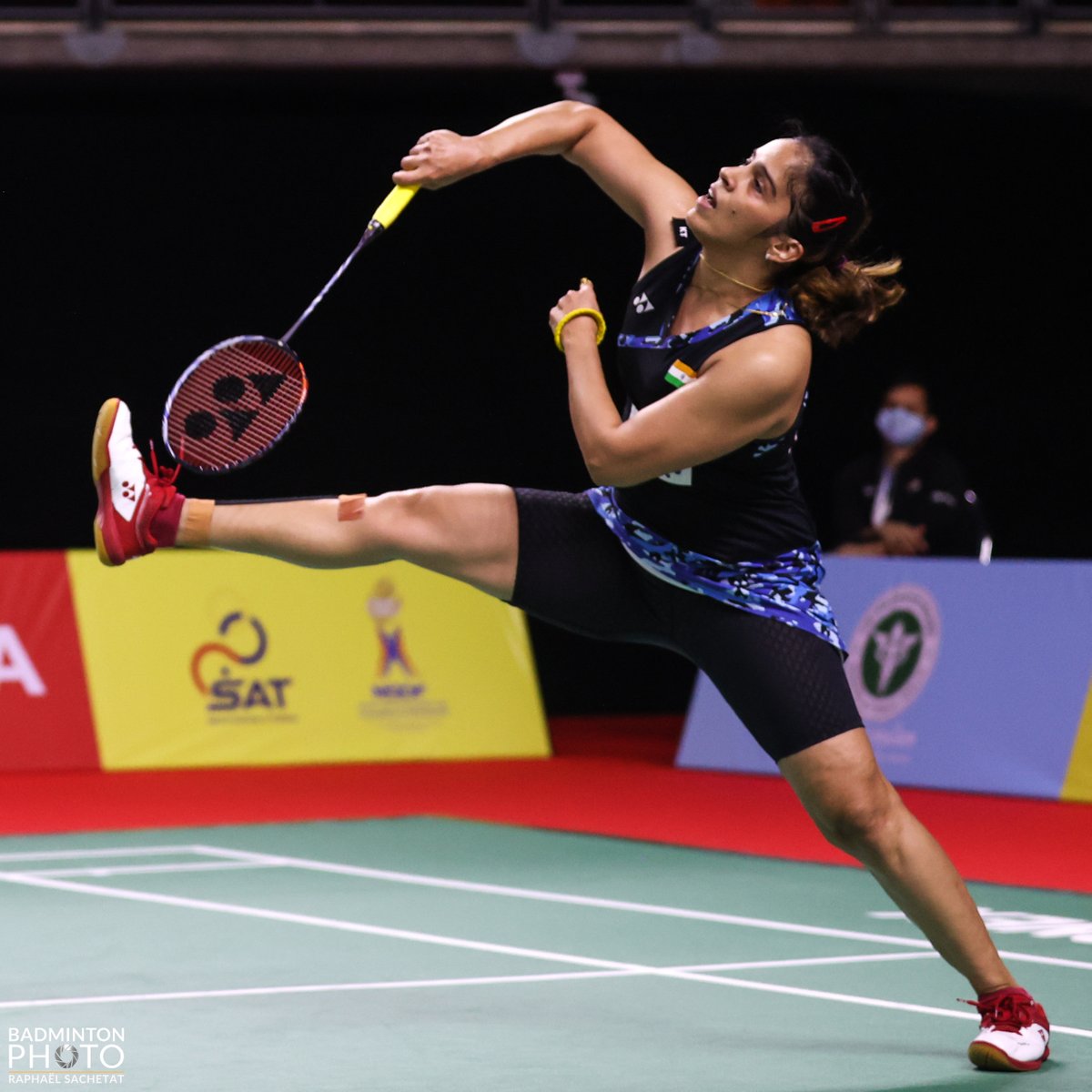
Whilst not yet officially retired, Saina Nehwal has been struggling with arthritis and hasn’t played a competitive match for over 18 months now. It therefore seems unlikely she will be able to make a comeback to extend her outstanding career. But Saina (which means shining) will leave a remarkable legacy.
Like Billie Jean King, the former tennis player and winner of a staggering 39 Grand Slam titles, who probably did more to enhance and promote women’s sport globally than any other athlete in history, Saina made such an impact that she, along with a handful of other female athletes including Karnam Malleswari (weightlifting) and Mary Kom (boxing) helped change perceptions of women’s sport in India.
Saina not only created interest and inspired mass participation of badminton within her home country, her results made others also believe success was possible, and not just for female players. H S Prannoy credited her mindset for a change in all Indian players when facing tougher opponents.
And what a mindset Saina had. That never say die attitude, the absolute refusal to give up on a rally. Happy to admit she wasn’t the most talented player, Saina built her game on hard work and mental toughness. Attributes which took her to world number 1, Olympic Bronze, 2 world championship medals, and 2 Commonwealth Games Gold medals.
Of course, there had been highly successful players before Saina, such as Prakash and Gopichand, but she was the player who inspired a badminton revolution in her home country. Now India has 12 men’s, and 14 women’s singles players ranked in the top 100 in the world – more than any other country.
Saina may not be an active player anymore, but with the #BWFWorldTour moving on to the #IndiaOpen next week, it’s only appropriate that her contribution and influence on Indian #badminton is recognised. Saina’s success stimulated a change in attitudes, a belief that success was possible for other Indian players … across all disciplines.
The sun may have set on the beautiful “day” of Saina Nehwal, but the legacy is without doubt still shining brightly.
📷@badmintonphoto


![guwahatiplus's tweet photo. NEWS | In #Assam, Zubeen Garg’s songs are a shared language, connecting parents and children, grandparents and grandchildren, neighbors and strangers alike.
From the haunting tenderness of Mayabini in the 1990s to the nationwide sensation of Ya Ali in 2006, and from Bihu folk beats to modern Assamese hits, every song carries emotions that transcend words.
Even if you don’t understand the lyrics, you can feel the longing, the joy, the heartbreak, the very pulse of life in his voice.
#ZubeenGarg [1/4]](https://pbs.twimg.com/media/G1SFAy9WcAAT8XS.jpg)