I shipped my first Chrome extension 🚀
Mock My Ad helps media buyers preview ads on websites.
I’m not a developer, but AI helped me turn an idea into a published product.
Domain expertise + AI is a powerful combination.
https://t.co/ciaWGkvLVb
#AdTech#Programmatic
The average CEO cannot tell you the difference between an automation and an AI agent.
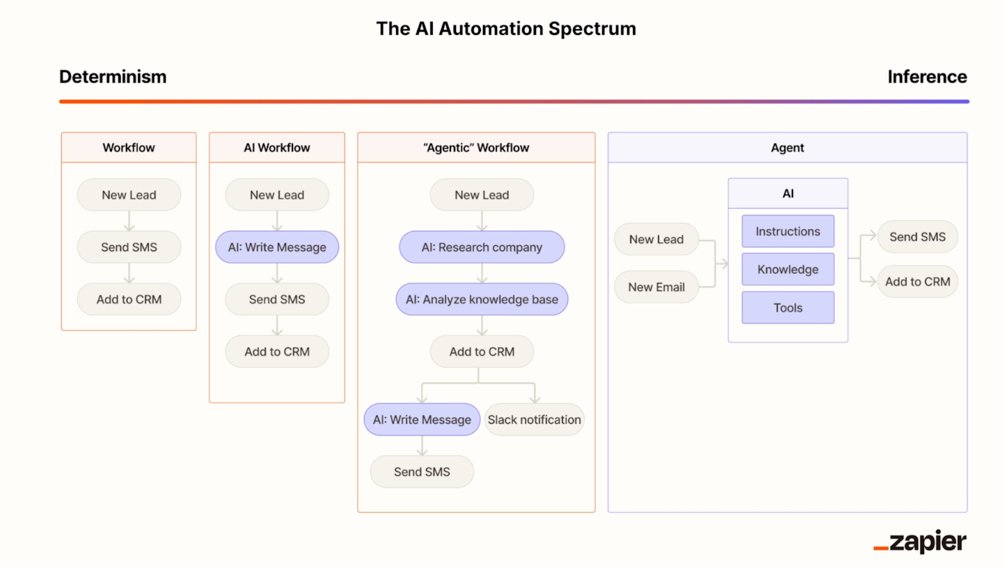
This breakdown (h/t @wadefoster) makes it glaringly obvious.
An automation is anything that requires no-trust decision making (if this, then that).
An AI agent is anything that requires some-trust decision making.
The most powerful workflows that I’m seeing businesses use today are neither pure automations nor pure agents.
They’re agentic workflows.
Agentic workflows get the leverage of AI (read: intelligent decision making) that deterministic software never offered. But they also have the predictability of automations, where the cost of error is too high.
Knowledge work will continue to get pushed further right on this spectrum as the technology improves, but today living in the middle is often the sweet spot.
Meet Gigi, your agency’s next media manager for the Amazon DSP.
Gigi has been trained on our team's collective experience of over 20 years in @AmazonAds
Over the past year, we've been working with media managers at retail media agencies to understand how they spend their time. We then deconstructed all the tasks that consume the most time and are the least strategic, and created a set of agentic workflows and automations so media managers can focus on developing expertise in the service of their clients.
We are building the AI media manager. Our first product is an AI media manager for the Amazon DSP, and it is purposely built for agencies.
Check out the new Gigi here: https://t.co/Czx3415vmA
Launch blog post here: https://t.co/mbiPPvRYF1
Mid-level isn’t “in the middle”-it’s at the core.
It’s a label often tossed around-not quite C-suite, not entry-level-but here’s the reality: mid-level professionals are the lifeblood of a company.
They are the ones building products, driving deals, solving problems, and laying the foundation for success.
The C-suite might take the spotlight, but it’s your work that makes the wins possible.
If your C-suite isn’t bragging about their mid-level, then they’re simply in it for themselves - not what’s best for the company.
Just remember. You are the core.
Adtech’s reoccurring problem, we have too many “thought leaders” who mistake speaking for thinking.
Lots of agreement, very little actionable strategy. Few contrarian thinkers.
Sharing a few tips on how to show incrementality of your programmatic campaigns in TTD:
-basic geo lift - nothing special, good old way to measure incremental impact of your campaign;
-*IBI lift study - lift in search of certain keywords that you apply to IBI pixels;
-*website channels lift - you can create a separate pixel for each channel (i.e. organic/direct/paid search etc), assign it to your campaigns and ask TTD reps to run a study for you. This study can show impact of your campaign on a specific channel (i.e. your campaign impacted lift in paid/organic search
@The_OxKing 100%. Programmatic is such a strong channel when purchased correctly. The problem is that it’s often purchased by novices that don’t know the industry and just do what they’re told.
TTD is up 24% over 5 days and LiveRamp is down 18%. Why?
No doubt many reasons that are beyond me. But here's a marketing observation:
TTD has a better story that is especially resonant with investors who are reacting to industry trends.
A story should do two things: differentiate the company from competitors and galvanize its audience.
TTD's story, as reflected in their earnings call transcript, is crystal-clear: Marketing value is shifting to the premium internet (a term we, btw, just invented), and we are the most effective portal to the premium internet. The walled gardens are peddling trash and grading their own homework. Our competitors on the open web are consistently performing worse than us bc they've been slower to embrace retail media / CTV and have less scale. Marketers, our customers, are facing unprecedented pressure, and we are the primary lever they need to pull to survive.
(I'm not commenting on the accuracy of this; I'm saying it's a coherent and compelling story.)
LiveRamp, meanwhile, mentions a "story" four times in their earnings call. But the closest thing they offer to a story is that their identity solutions, especially via partnership with Google's PAIR, drive performance. CEO Scott Howe mentions being "a little bit more aggressive in terms of the return on ad spend story that we're sharing with the market." ROAS isn't a story; it's a metric.
In the absence of a sweeping story that helps investors understand the market in a way that positions LiveRamp's success as inevitable, the impression someone walks away with, having read the earnings call transcript, is that LiveRamp's sales cycles are getting longer, its customers are already wary to make new identity investments, and Google's recent announcement on cookie deprecation is only going to exacerbate that problem. LiveRamp ends up sounding far from inevitable or mission-critical. It sounds like an option that, yes, delivers results (eg ROAS) but that marketers may hesitate to act on given secular trends.
In short, TTD's story positions it at the forefront of the entire digital advertising industry and sows doubt about its competitors, even Google and Meta. LiveRamp's story (or lack thereof) does nothing to differentiate it (they're pretending their competitors don't exist) and positions it as vulnerable to industry trends.
Marketing matters.
EXCLUSIVE | The Trade Desk alerted buyers earlier this week of plans to no longer monetize Yahoo’s video after it alleged the publisher had been consistently misrepresenting the inventory as in-stream. https://t.co/tDlLvXylOC