For a century before steam, ships went where the wind let them. This video uses the CLIWOC database: more than 250,000 noon positions copied from Dutch, British, Spanish and French ships' logbooks between 1750 and 1855. First every voyage is folded into a single year, so the fleets move with the seasons. Then the tracks build up into the full century.
The routes are wind routes. Ships bound for the Cape swung far west towards Brazil to get round the calms and the southeast trade winds, then ran east before the westerlies. Dutch ships for Batavia followed the Brouwer route through the Roaring Forties before turning north to Java. British ships fill the Indian Ocean on their way to India and China, and Spanish ships head for the Río de la Plata and the Caribbean.
Day 5 of #30DayMapChallenge : Sight.
In 9th-century Byzantium, nine hilltop fires carried a warning of Abbasid raids from the Taurus frontier to Constantinople. My best-scoring reconstruction: 646 km, about 84 minutes by fire. A courier needed about 4.5 days.
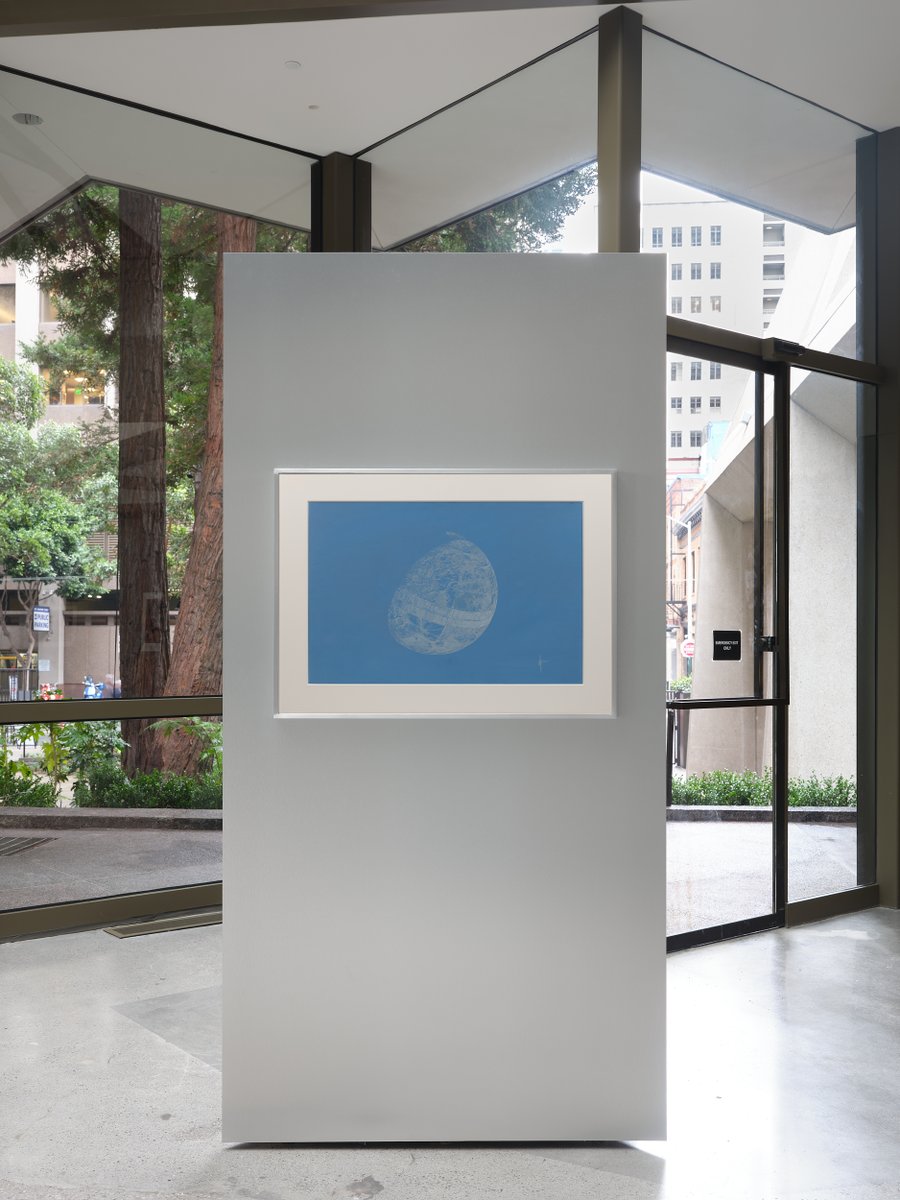
A quiet poem about the hope of human advancement. This concept came to Mead as he routinely gazed at the moon as it lingered in the daylight sky over his home in Capistrano, California. Look once and it is a ghost moon in hushed blue. Look closer and its equator is humming — automated factories have been hollowed into a continuous industrial band circling its surface. What we see is a moon transformed into a vast production center, built to move industry away from Earth so that the planet might recover.
Moon 2000
1979
Gouache on board
Syd Mead: Future Pastime
Transamerica Pyramid Annex Gallery
535 Washington St., San Francisco
Weds-Sun, 11am-6pm
On view through December 17
https://t.co/tCMK8qt7Da
New Illustration by Ted Nasmith
"The Road to Lorien", gouache on board, 24 x 15". It's the latest private commission. It's a challenge as a scene due to a lack of any reference to snow, despite that they were emerging from Moria onto the mountains in the dead of winter.
⬇️
This animated map shows how snow and ice expand across the Northern Hemisphere during winter and retreat as temperatures rise in spring and summer. The enormous seasonal transformation of our planet is mesmerising to watch. Source: https://t.co/ZLGtwfN6lj
En ce jeudi 22 octobre 2026, la boutique vous invite à (re)découvrir cette représentation de “Notre-Dame de Paris en chantier (au Moyen Âge)” par Jean-Claude Golvin. ⚒️
Imprimé sur commande, le dessin est au format paysage et proposé dans les dimensions 70 x 100 cm.
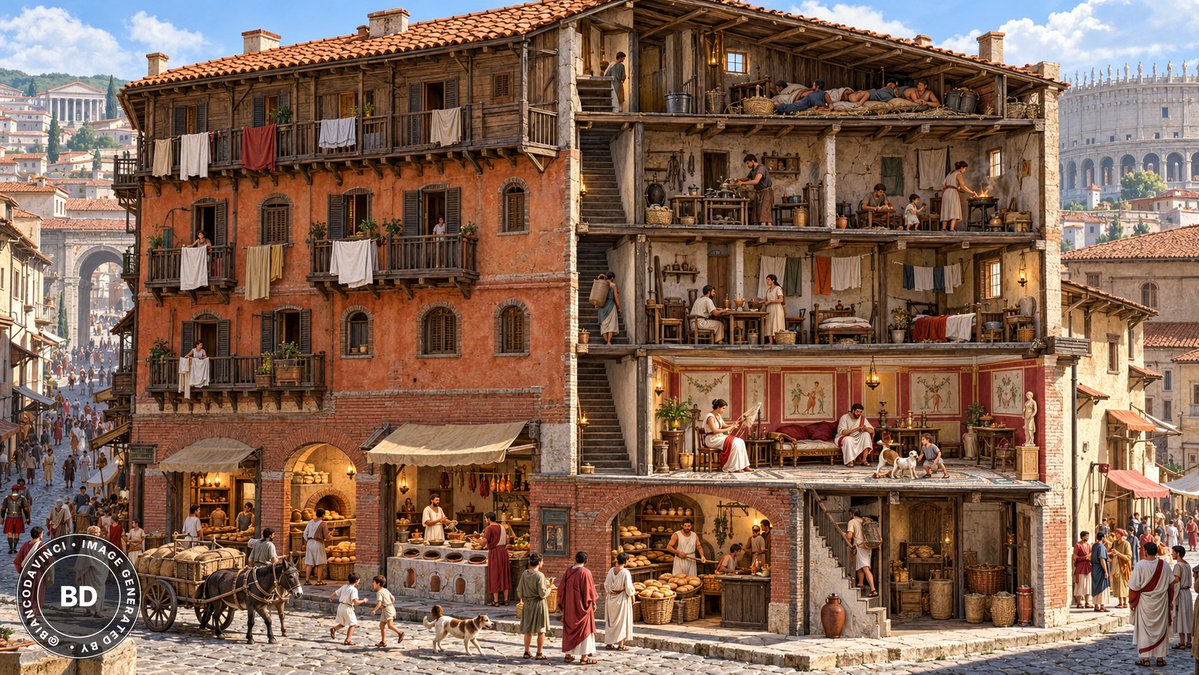
Most people in ancient Rome lived in rented apartments.
Today, a 1,900-YEAR-OLD Roman apartment block is still standing in Rome, at the foot of the Capitoline Hill.
Records from the 4th century say the city had about 46,000 apartment blocks, called “insulae.” In comparison, there were fewer than 2,000 private houses.
Some of these buildings were so tall that Augustus banned anything higher than 70 Roman feet (about 20 meters). Later, Emperor Trajan lowered the limit to 60 Roman feet.
The floors worked the opposite way from today. Shops were on the ground floor, and rich tenants lived on the first floor. The higher you went, the cheaper the rent and the worse the living conditions: there was no running water, there were fewer windows, and there were a lot of stairs to climb.