we live on a planet where trees warn each other of danger through a fungal network. Where octopuses dream.
Where elephants return to the bones of the deceased and stand over them in silence. Where bees use dance to communicate where to fly and where the flower is.
Where crows remember the faces of people who were cruel to them and pass this memory to their children.
Where ants build cities. Where cats purr at a frequency that accelerates the healing of bones.
Where, after a forest fire, the first thing the earth does is grow flowers.
Being 43 is wild. People your age are living completely different lives.
Some are grandparents. Some are raising toddlers. Some are newly divorced. Some are newly engaged. Some haven’t slept in three years. Some are in St. Tropez posting Aperol spritzes from a yacht.
Some look 25.
Some look like they personally remember the invention of Tupperware.
Nobody got the same assignment.
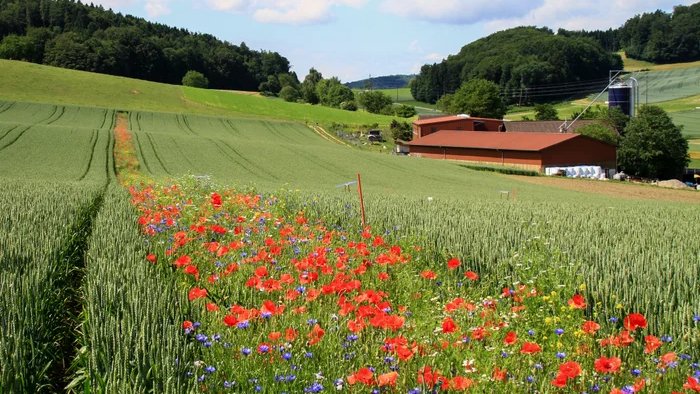
Farmers have figured out that the cheapest pesticide is a strip of flowers.
When you plant wildflowers through a crop field, not just around the edge but in strips running through the middle, you get ladybugs, lacewings, hoverflies, and parasitic wasps living in the field instead of visiting it.
They eat the aphids, the caterpillars, and the mites for free, all summer long.
In controlled trials, fields with tailored flower strips had leaf-beetle numbers 40 to 50% lower and crop damage cut by around 60%, enough to drop below the threshold where spraying was even considered worth it.
The flowers attract a standing army to our fields.
We spent decades engineering chemicals to kill the insects eating the crop, when the insects that eat those insects would have worked for the price of seed.
Well, when a child is conceived, the DNA split is 50/50 from both parents. Except for one small detail: mitochondrial DNA. It’s passed down only through the mother and never through sperm.
Which means something interesting: all living humans can trace their mitochondrial line back to one woman, not one man.
And every daughter born continues passing that same line forward.
Happy Mother’s day
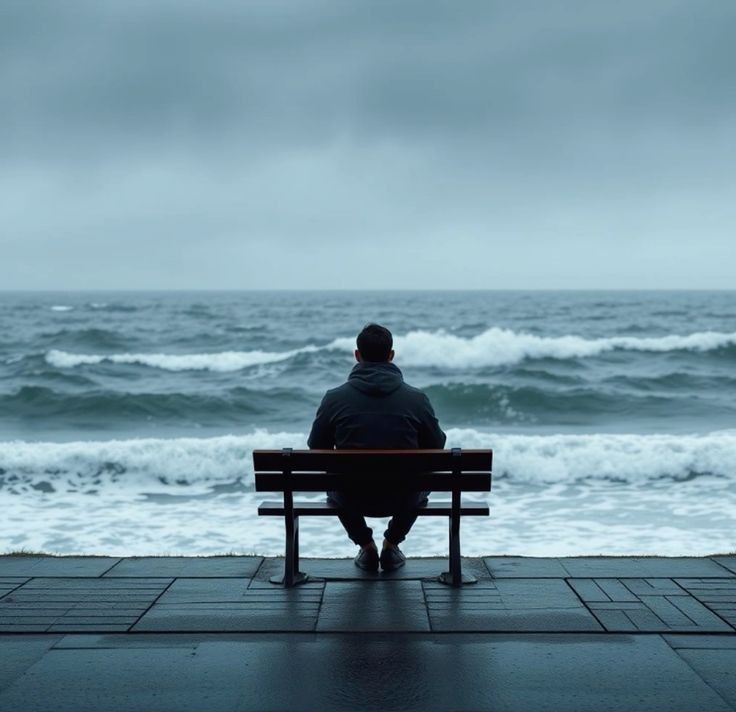
Normalize a boring life. Go to bed early, read long books, drink tea, regulate your nervous system, spend time alone, take walks without headphones, eat simple food, shrink your circle, and turn down the noise. Peace will look boring to people addicted to chaos, but that’s the point. Life doesn’t have to be loud to be meaningful, and it doesn’t have to be public to be powerful. Sometimes the magic is in being unreachable, rested, focused, and quietly becoming someone nobody can disturb.
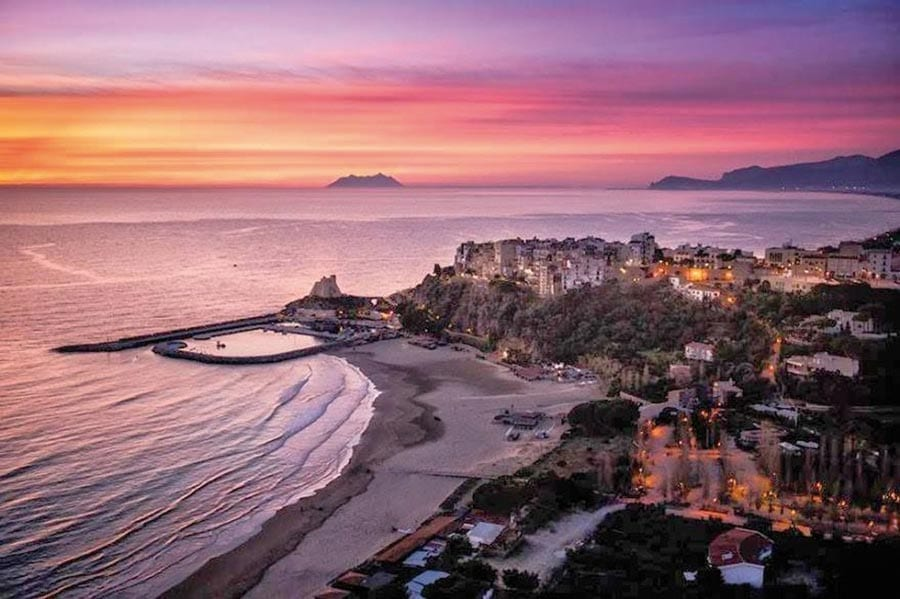
I'm Italian. Greece has been my second country for years.
The Greeks I know rarely spend their summers on the cruise islands. Not Santorini. Not Mykonos. Not Crete. Not Rhodes.
They take the ferry from Piraeus to islands the world hasn't found, or drive into a continental mainland that foreign lists never mention.
Greece is the most layered civilization in Europe.
10 underrated places where the kafeneio is real, the ouzo is local, and history isn't behind glass.
🧵
The older I get, the more I believe happiness lives in the ordinary. Pets. Plants. A quiet morning coffee. Blue sky. Cotton clouds. Birds singing. The gentle breeze through the trees. A clean, cosy house. Good food. Good hearted simple poeple. So much of life’s beauty is quiet, gentle, and already here. And somehow, one of the sweetest feelings is knowing I get to wake up and meet it all again tomorrow.
This is a monarch butterfly migration arriving in the oyamel fir forests of central Mexico. None of these butterflies has ever been here before.
Their great-great-grandmothers left this exact grove in March. By July those grandmothers were dead. The butterflies you're watching are four to five generations downstream, born somewhere between Texas and Ontario, and they just flew up to 3,000 miles to a tree none of their parents ever saw.
The brain doing the navigation is smaller than a grain of rice.
The mechanism is a sun compass time-compensated by a circadian clock running in the antennae. Cut the antennae and the monarch loses orientation within hours. The clock corrects for the sun's position drifting across the sky as the day moves. Add iron-bearing magnetite particles for magnetic field detection on cloudy days, and a 0.5 gram insect is running redundant inertial guidance.
The destination is more specific than the navigation.
They cluster on a few dozen oyamel fir groves in the Sierra Madre at 9,000 to 11,000 feet. The microclimate has to sit between 32 and 41°F. Below freezing kills them. Above 41°F burns the fat reserves they need to survive five months without feeding. The right band exists a few hundred meters thick on a few specific mountains. Outside it, the migration ends.
One generation each year is built differently from the rest. Summer monarchs live two to six weeks. The fall generation lives eight months. It postpones reproduction, fattens up, and carries the entire round trip in a single body.
The map is genetic. Nobody has fully decoded how.
A monarch hatched in a backyard in Toronto in September has never seen a mountain, never smelled a fir, never met an ancestor. It flies south for ten weeks, picks the right peak, and lands on the tree its bloodline has been returning to for tens of thousands of years.
The forest knows the families that come back.
I'm from Central Italy.
The Italians I know rarely spend their weekends in the hotspot cities.
Not Florence. Not Rome. Not Siena. They drive an hour east, or south, to towns no foreign list ever mentions.
Central Italy is the most concentrated cluster of beauty in the world.
9 underrated towns where the piazza is yours, the trattoria is real, and the Renaissance still feels personal.
🧵
29 EUROPEAN CITIES WORTH EVERY SINGLE PENNY:
1. Lisbon, Portugal — Hills, trams, pasteis de nata and sunsets over the Tagus river.
2. Prague, Czech Republic — Gothic towers, cobblestone streets and beauty at every single turn.
3. Budapest, Hungary — Parliament on the river, thermal baths and a nightlife that surprises everyone.
4. Dubrovnik, Croatia — Walled city above a perfect blue sea. Exactly as beautiful as every photo.
5. Seville, Spain — Flamenco, tapas, orange trees and the most passionate city in all of Spain.
6. Porto, Portugal — Wine cellars, tile facades, iron bridges and a river full of character.
7. Valletta, Malta — Baroque streets, fortress walls and a tiny capital punching far above its weight.
8. Kotor, Montenegro — Medieval walls curling up a mountain above the most beautiful bay in Europe.
9. Ghent, Belgium — Medieval towers, canal walks and a student energy Bruges completely lacks.
10. Tallinn, Estonia — Best preserved medieval old town in Europe and cold in all the right ways.
11. Ljubljana, Slovenia — A tiny capital with a castle, a river and a charm that gets under your skin.
12. Olomouc, Czech Republic — Baroque fountains, university energy and none of the Prague crowds.
13. Sintra, Portugal — Royal palaces in a forest above the Atlantic that look borrowed from a dream.
14. Bergen, Norway — Colorful wooden houses, fish market, seven mountains and fjords around every bend.
15. Plovdiv, Bulgaria — Roman ruins, bohemian old town and a cafe scene that rivals any in Europe.
16. Mostar, Bosnia — One bridge rebuilt after war. A city that chose beauty over bitterness.
17. Matera, Italy — Stone city carved into a ravine. Nine thousand years of continuous human life.
18. Chefchaouen, Morocco — Not Europe but close enough. A blue city in the mountains near Spain.
19. Sarajevo, Bosnia — Four cultures, one city, unimaginable history and the best burek you will eat.
20. Split, Croatia — A Roman palace that became a city. People live inside ancient walls right now.
21. Cesky Krumlov, Czech Republic — A tiny town inside a river bend with a castle that owns the skyline.
22. Gdansk, Poland — Gothic brick, amber shops, a rebuilt old town and a port city full of pride.
23. Bratislava, Slovakia — Small, walkable, underrated and only an hour from Vienna or Budapest.
24. Riga, Latvia — Art Nouveau architecture, a medieval old town and Baltic energy all its own.
25. Noto, Sicily — Baroque buildings in honey colored stone that glow gold every single afternoon.
26. Skopje, North Macedonia — Strange, fascinating, full of statues and completely unlike anywhere in Europe.
27. Timișoara, Romania — Beautiful squares, multicultural history and the city where a revolution began.
28. Tartu, Estonia — Small university city with big thinking and an energy Tallinn gets all the credit for.
29. Shkodër, Albania — Gateway to the Alps, Ottoman old town and Europe at its most raw and real.
In case you forgot:
We live on a planet where whales sing songs that travel for miles. Where trees can recognize their own offspring and protect them underground. Where dolphins give each other names and where lightning can create glass in the sand. Where horses can read human emotions. Where rain has a smell before it even arrives and where the ocean can glow in the dark. A planet where the stars we see might not even exist anymore.
🚨: Scientists using satellite and seismic data have discovered that Earth produces a puzzling pulse every 26 seconds, often described as its "heartbeat."
EARTH MAY ITSELF BE A LIVING BEING!
UNUSUAL🚨: Scientists discover that silence regenerates the brain─ being in complete silence for at least 2 hours a day can stimulate the creation of new brain cells, especially in regions linked to memory and learning.
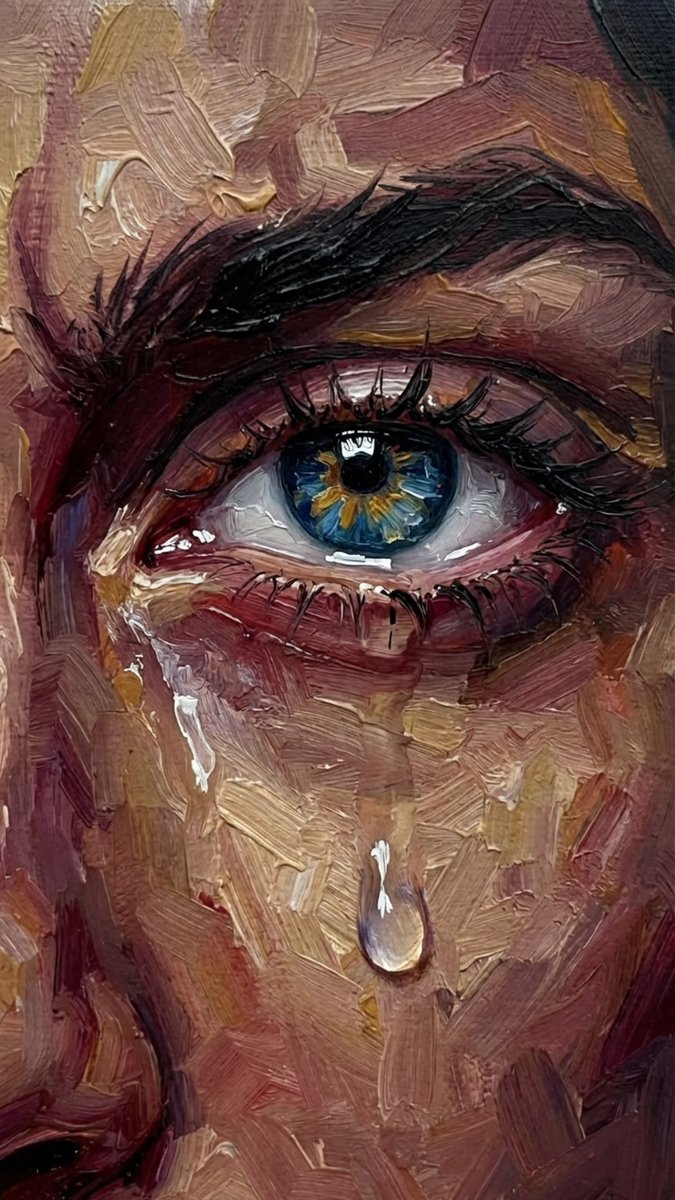
YOUR TEARS CONTAIN A NATURAL PAINKILLER 6 TIMES STRONGER THAN MORPHINE. AND YOU WERE TRAINED TO HOLD THEM BACK.
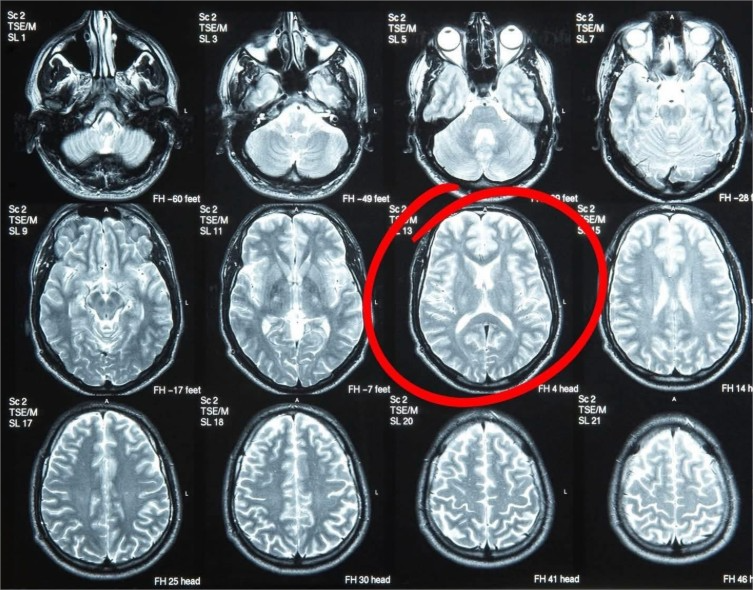
In 2006, researchers at the Pasteur Institute in Paris discovered a molecule in human tears called leucine-enkephalin. It is an endogenous opioid. Your body manufactures it. It binds to the same receptors as morphine. It is six times more potent.
Every time you cry, your body is not breaking down. It is self-medicating.
Dr. William Frey at the University of Minnesota proved that emotional tears have a completely different chemical composition than reflex tears. When you cry from cutting an onion, the tears are mostly water. When you cry from grief, stress, or pain, the tears contain cortisol, adrenaline, prolactin, and leucine-enkephalin. Your body is literally flushing stress hormones out through your eyes and replacing them with its own painkiller.
People who cry regularly have lower blood pressure, lower cortisol levels, and stronger immune function than those who suppress tears. This has been measured.
Men are told crying is weakness. Women are told it is emotional instability. Children are told to stop. An entire species trained to suppress the one biological mechanism designed to flush poison from the body and replace it with medicine.
You have a pharmacy behind your eyes. It activates automatically when you need it most. It costs nothing. It requires no prescription. And for your entire life, you were told to shut it off.
The next time your body tells you to cry, let it. It knows exactly what it is doing.
~ MedBedsTechnologyNews
✨🙌🏽💫
WHAT ICU NURSES KNOW ABOUT THE LAST HOURS OF LIFE THAT FAMILIES ARE NEVER PREPARED FOR:
1. Hearing is the last sense to go. Many patients can hear everything being said in the room long after they appear unconscious. Nurses know this. Most families do not act like it.
2. The body does not shut down all at once. It withdraws blood and oxygen from the extremities first, working inward toward the heart. The cold hands and feet you notice are the body making a final decision about what to protect.
3. A sudden, unexpected improvement in energy and alertness hours before death is not a good sign. Nurses recognize it immediately. Families almost always mistake it for recovery.
4. The sound called the death rattle is not pain. It is simply the throat relaxing and losing muscle control. But no amount of medical explanation prepares a family for hearing it for the first time.
5. Most people do not die during the night. The body has a biological rhythm and many deaths occur in the early hours of morning, between 3am and 5am, when the nervous system is at its lowest.
6. Patients often wait. Nurses have watched people hold on for days until a specific person arrives, or a specific word is spoken, or permission is quietly given to let go. It happens too consistently to be coincidence.
7. The words "we did everything we could" are sometimes true and sometimes the most painful half-truth a family will ever receive without knowing it.
8. Families who are not present at the moment of death carry guilt that no counselor fully resolves. Nurses see this guilt begin forming in real time and cannot always stop it.
9. The face relaxes completely at the moment of death in a way that is impossible to describe until you have seen it. Nurses say it looks like the person finally put something down they had been carrying for a very long time.
10. Many ICU nurses privately believe that the most painful deaths are not the ones with the most physical suffering. They are the ones where the patient dies surrounded by family members who are fighting with each other.
11. The thing families almost never say, but almost always should, is simply this: it is okay to go. Those four words, spoken out loud, do something that medicine cannot explain and nurses have witnessed more times than they can count.
12. Nurses grieve too. They learn the names, the histories, the family dynamics, and the small personal details of every patient. They cry in break rooms, in parking lots, and on drives home. Then they walk back in the next morning and do it all over again, because someone has to, and they chose to be that person.
Your body replaces 98% of its atoms every year. Within five years, every single one is swapped out. The you from 2021 is physically gone. Not "mostly gone." Gone. The atoms that used to be your face are now part of the air, the ocean, somebody else's lunch.
Oak Ridge National Laboratory proved this in 1953. Your skin right now is about a month old. Your liver, six weeks. Your stomach lining regrows every five days. Your skeleton is completely different from ten years ago. A few atoms do stick around for life, buried in some brain cells, in parts of your heart, and in your tooth enamel. Scientists at the Karolinska Institute in Sweden tracked them using leftover radiation from 1950s nuclear bomb tests. The oldest surviving piece of "you" lives in your brain, your heart, and your teeth.
Your brain is also erasing you. On purpose. A neuroscientist named Ron Davis at Scripps Research found that the brain has cells that release dopamine, the same chemical you feel after a good meal or a win, and use it to dissolve memories. When his team shut these cells off in test animals, they remembered twice as much. The chemical behind your best feelings is the same one shredding your past, and it never stops running.
Ebbinghaus proved this back in 1885. You lose about half of everything you learn within one hour. A 2020 study from Baycrest's Rotman Research Institute had people live through a real experience and then checked how much they kept. At best, about a quarter. 75% of the details of your own life are being actively wiped by the organ that is supposed to be keeping track of it all.
The universe is 13.8 billion years old. Squeeze all of it into one calendar year, with the Big Bang on January 1st, and humans show up at 11:52 PM on New Year's Eve. Your whole life, every birthday and breakup and boring Tuesday, lasts 0.17 seconds on that calendar. Not even long enough to blink.
Stars will keep burning for about a hundred trillion more years, then the fuel runs out and the lights go off everywhere. The last things left will be black holes, places where gravity is so strong not even light can escape. Even those slowly leak away over a number of years so large you would need a hundred zeros to write it. After the last one is gone, nothing is left. No light, no warmth, nothing bumping into anything else, ever again. The universe reaches total stillness and stays there. Forever.
Brian Cox once described the window where life can even exist as one-thousandth of a billion billion billionth, billion billion billionth, billion billion billionth of a percent of the universe's total run time. You are in that window right now. Built from borrowed atoms, running on a brain shredding its own records, here for a fifth of a second on a cosmic calendar that ends in permanent silence. Anyway, hope your Tuesday is going alright.