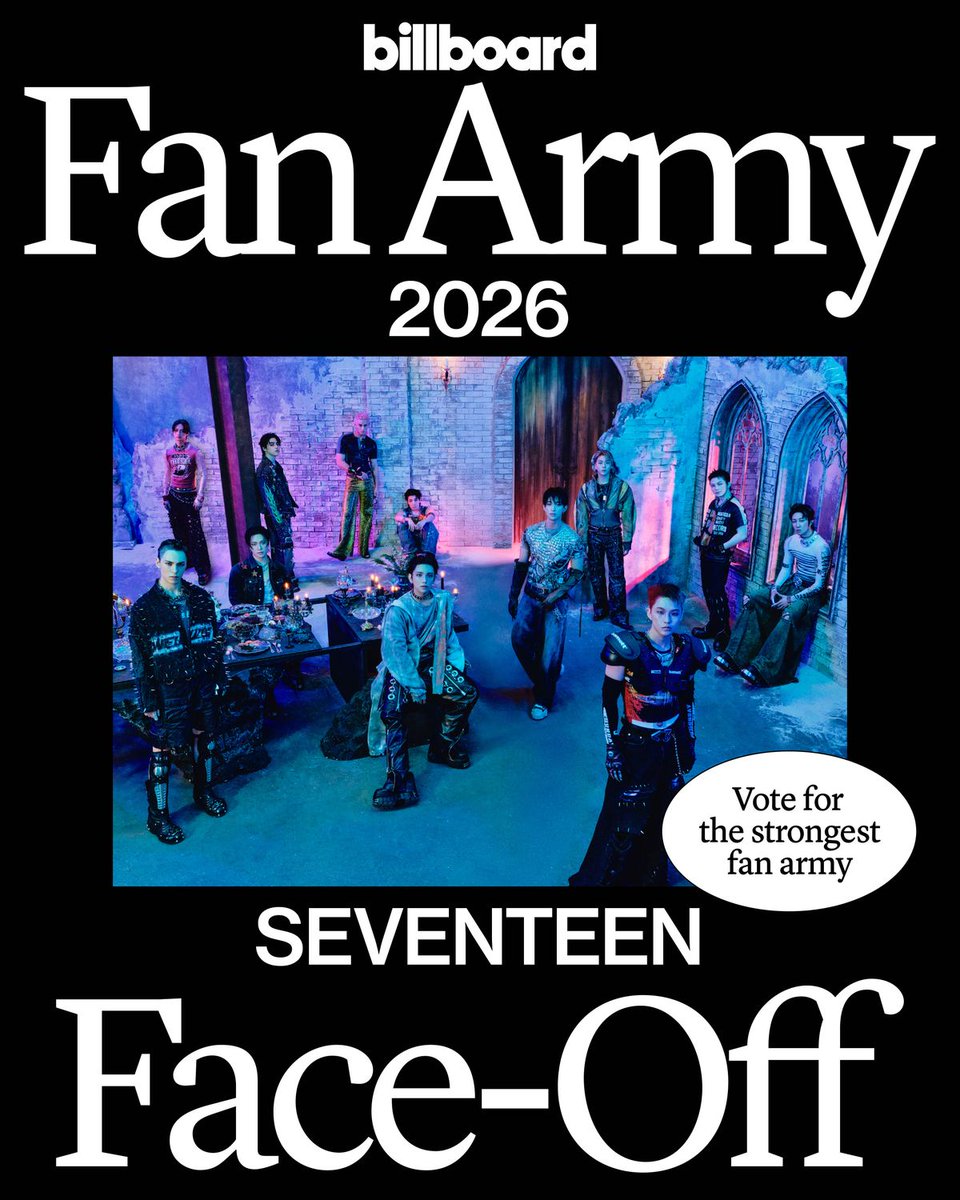
[📢] FAN ARMY FACE-OFF 2026
CARATs, our diamonds shine brightest when we stand together!
Let's fill every vote with the same love and dedication the members have always given us.
Vote whenever you can, share the link with your fellow CARATs, and remind everyone to join. This is our chance to show the strength, unity, and love that define our fandom.
For SEVENTEEN. For CARATs. Let's make it to Round 3! 💎💖
❗ Round 2 voting is open until July 29.
🔗: https://t.co/V9JwbgRsT5
#BBFanArmy2026 #세븐틴 #SEVENTEEN @pledis_17
@ShanYin0@kchartsmaster Okay, your fandom and your fave are the only original ones and have all the musical knowledge in the world. Nice??? Now, go ahead sue the producer.
I'm not a music critic nor am I Korean, but as a person who genuinely enjoys trot, let me tell you something:
If you've heard one trot song, every other trot song will sound familiar. And no, it's not just you it's actually built into the genre on purpose.
Here's why (with receipts):
1. The endless "ppongjak" beat
Trot runs on a steady 2-beat (later 4-beat) rhythm called *ppongjak* (뽕짝) the name literally comes from the "kung-jjak kung-jjak" sound you hear underneath the melody.
That constant oom-pah pulse is why your brain instantly links every trot song together.
Source: Namuwiki, "트로트" entry
2. The 5-note scale (Yona-nuki)
Most trot melodies lean on a pentatonic scale called Yona-nuki (요나누키) a 7-note scale with the 4th and 7th notes removed.
Fewer notes = fewer melodic paths, so songs naturally loop back to similar shapes.
Source: Kwon Jeong-gu, "트로트의 왜색논쟁 연구 –요나누키와 미야코부시 음계를 중심으로–," Korean Music Research (한국음악연구), vol. 72, 2022, pp.5-29
3. Kkeokk-gi vocal bends
Even when the notes differ, singers apply the same technique: *kkeokk-gi* (꺾기) sharp pitch bends and cracking vibrato on the high notes..
It's literally what separates trot vocals from K-pop vocals.
Source: https://t.co/QwRckDZ27r / Ministry of Culture, Sports and Tourism (https://t.co/1RY5ecxsB9)
4. Built for karaoke (noraebang) & festivals
Trot is made for instant connection, regional events, karaoke bars, older crowds singing along after one listen. No weird chord changes, no complicated structure. Short intro, quick verse, big chorus, done.
TL;DR: Trot sounds similar because it relies on a classic formula a 2/4 Ppongjak beat, 5-note scales, and Kkeokk-gi vocals to make every song instantly catchy.
That predictability isn't a flaw; it's the whole point!
@xenomother8@ShanYin0@kchartsmaster I gave it a listen and Daesang’s song sounds different than both the songs. I don’t know why you people accusing him of plagiarism.
@tlqkf_math Let’s be honest, it’s not some new kind of hand pose. Here’s another poster from a show about trot music, where he is doing the exact same pose(in the second pic) which can be mean that its a normal pose trot artist make.But go ahead with your baseless claims.


![CaratLandPH's tweet photo. [📢] FAN ARMY FACE-OFF 2026
CARATs, our diamonds shine brightest when we stand together!
Let's fill every vote with the same love and dedication the members have always given us.
Vote whenever you can, share the link with your fellow CARATs, and remind everyone to join. This is our chance to show the strength, unity, and love that define our fandom.
For SEVENTEEN. For CARATs. Let's make it to Round 3! 💎💖
❗ Round 2 voting is open until July 29.
🔗: https://t.co/V9JwbgRsT5
#BBFanArmy2026 #세븐틴 #SEVENTEEN @pledis_17](https://pbs.twimg.com/media/HN5fVX-a0AAAONd.jpg)


![realfromis_9's tweet photo. [📺] #스프
부사장님도 놀란 프로미스나인의 발표 실력ㅣ프나상사 EP2
🖇️ https://t.co/GqknDAXtoI
#fromis_9 #프로미스나인
#스튜디오프로미스나인 https://t.co/M1bBJTpGfr](https://pbs.twimg.com/media/HN5qmNTaQAAcrpe.jpg)
![CaratLandPH's tweet photo. [📢] FAN ARMY FACE-OFF 2026
CARATs, our diamonds shine brightest when we stand together!
Let's fill every vote with the same love and dedication the members have always given us.
Vote whenever you can, share the link with your fellow CARATs, and remind everyone to join. This is our chance to show the strength, unity, and love that define our fandom.
For SEVENTEEN. For CARATs. Let's make it to Round 3! 💎💖
❗ Round 2 voting is open until July 29.
🔗: https://t.co/V9JwbgRsT5
#BBFanArmy2026 #세븐틴 #SEVENTEEN @pledis_17](https://pbs.twimg.com/media/HN5fVX_bAAE8giO.jpg)