An interdisciplinary center for research, education, and outreach at the University of Illinois Urbana-Champaign. Cosmology | Gravity | Nuclear | High Energy.
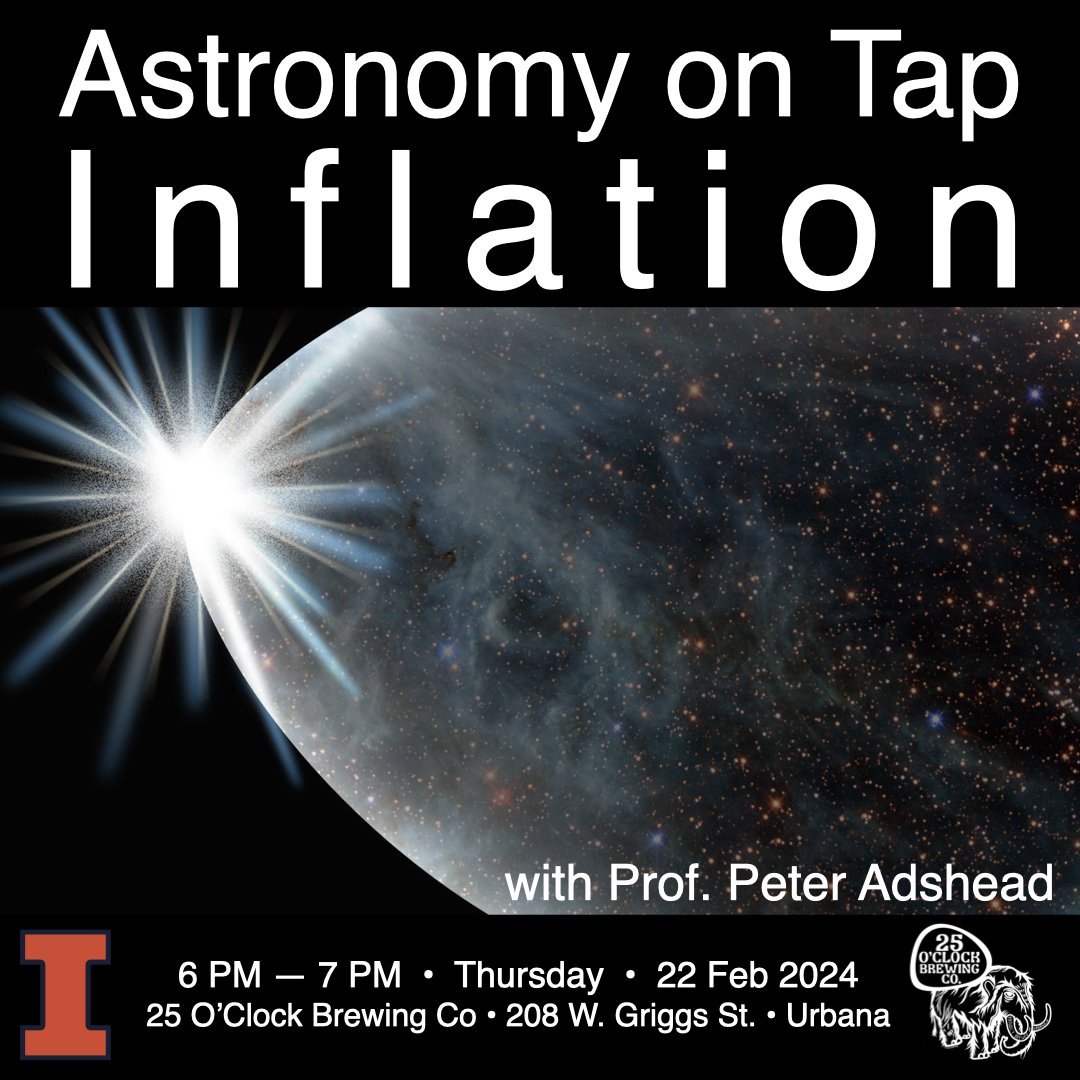
THIS THURSDAY! Astronomy on Tap is back with a talk from Professor Peter Adshead, and as always all are welcome to join in the discussion about our universe 💫
See you there!
@IllinoisCASU@AstroOnTapCU
New from @ehtelescope today: image of M87*, one year later. Our own Michi Baubock says "This result is particularly exciting, because it’s unusual to be able to make predictions like this in astronomy—usually timescales are too slow for human lifetimes." https://t.co/OLfYwh2XbM
Thanks to all who joined us for this week's Saturday Physics for Everyone lecture from Professor Nico Yunes! Many things were asked and answered about our current knowledge of the universe, and refreshments and physics demonstrations were enjoyed by all! 😁💫
Researchers in Ikenberry Chair in Physics and in Astronomy Charles Gammie’s group at Illinois contributed to the latest Event Horizon Telescope (EHT) collaboration paper, which investigated resolved circularly polarized light measurements from M87*. 1/2
On October 28th, there will be a 30th anniversary celebration of Saturday @PhysicsIllinois for Everyone at @uofigrainger's Loomis Lab, with a days worth of events that are free and open to the public.
https://t.co/aDDvcLwyel
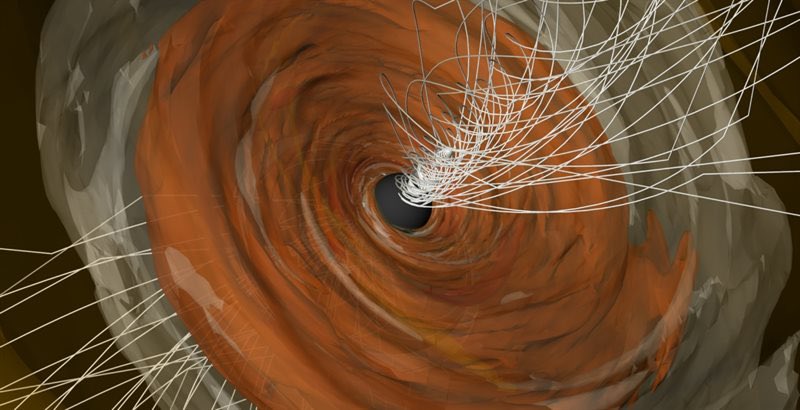
A mathematical formalism for studying quasinormal gravitational-wave modes from coalescing black holes provides a tool for testing modifications to general relativity.
Read https://t.co/L2MsiPf2Ye
#PRXjustpublished
New paper day! Congrats @THEPKW on your paper appearing in @PhysRevX this morning! "Perturbations of Spinning Black Holes beyond General Relativity: Modified Teukolsky Equation" Check it out: https://t.co/ox7xKhrW1J
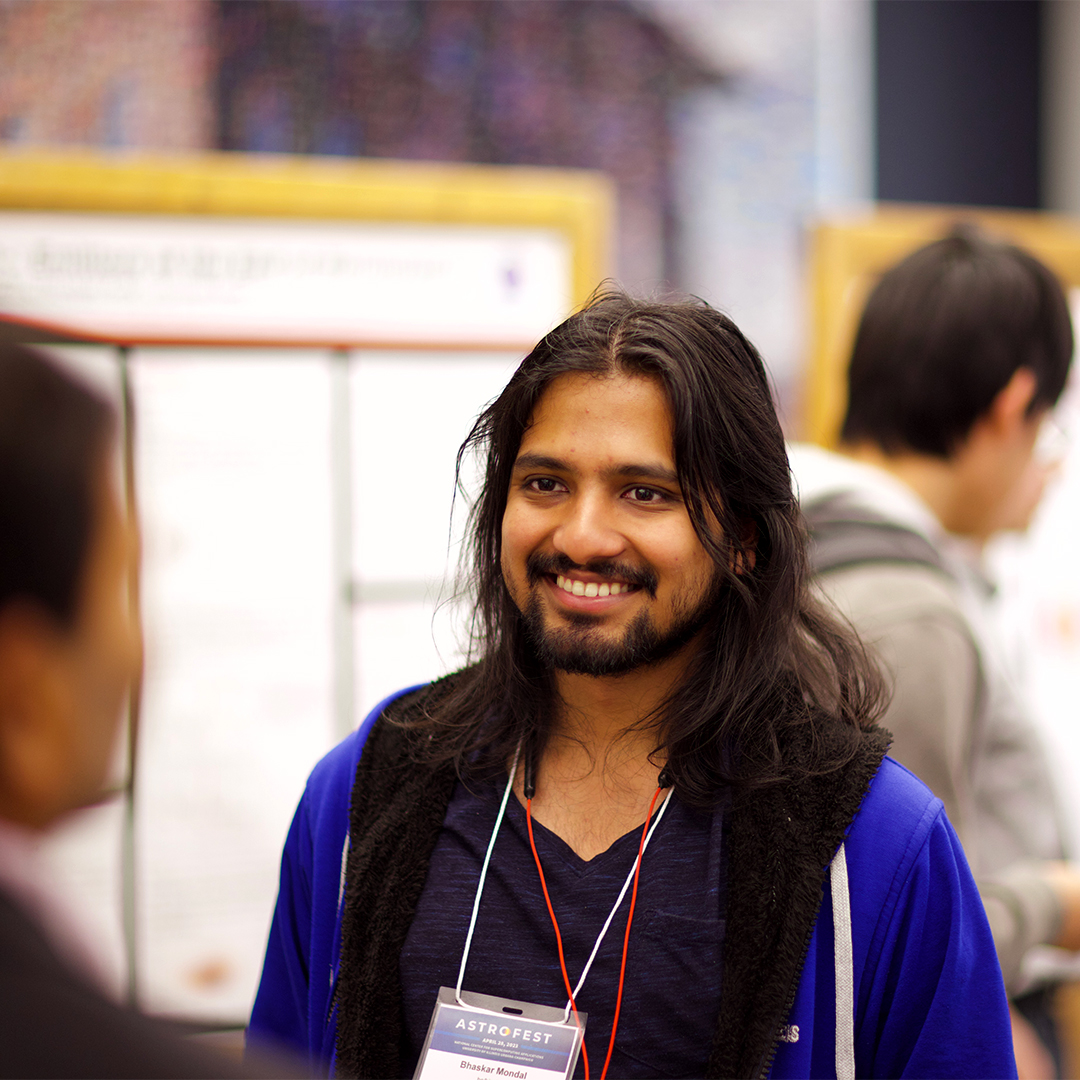
Thank you to everyone who joined us for AstroFest 2023! ✨
This NCSA, CAPS and ICASU-sponsored event enabled researchers to showcase their work, encouraged cross-disciplinary collaboration and brought together the #ILLINOIS communities that drive these astrophysical efforts.
#ILLINOIS researchers found an exploded star can pose more risks to nearby planets than previously thought.
This newly identified threat involves a phase of intense X-rays that can damage the atmospheres of planets up to 160 light-years away. ▶️ https://t.co/ESCTRQrTPH
New Paper Day! https://t.co/KHWRhnZxUv I'm especially happy to see this one out in the world both scientifically (an idea I've been trying to implement for a long time) and because it involves contributions from my new research group at UIUC!
#ILLINOIS has announced its $50 million commitment to support @NCSAatIllinois services for campus researchers.
This will fund the Illinois Computes pilot program, among many other technological resources and services across the three campuses. ▶️ https://t.co/IdVasfgZZS
First MUSES collaboration paper! 🎉We're excited to be part of this collaboration with @PhysicsIllinois@NCSAatIllinois and partner institutions around the world. Learn more about MUSES here: https://t.co/j06jb1TJZW
[2303.17021] Rajesh Kumar, Veronica Dexheimer, Johannes Jahan et al.: Theoretical and Experimental Constraints for the Equation of State of Dense and Hot Matter https://t.co/ihF9btHbqE https://t.co/8s9WwAhzPG
The @UofIllinois Observatory, led by @AstroIllinois, has left many starstruck for 127 years. Join Bryan Dunne, UIUC professor of astronomy and director of the Observatory, as he explains the remarkable past of the building and its historical telescope.
https://t.co/wwEauJ1a1s
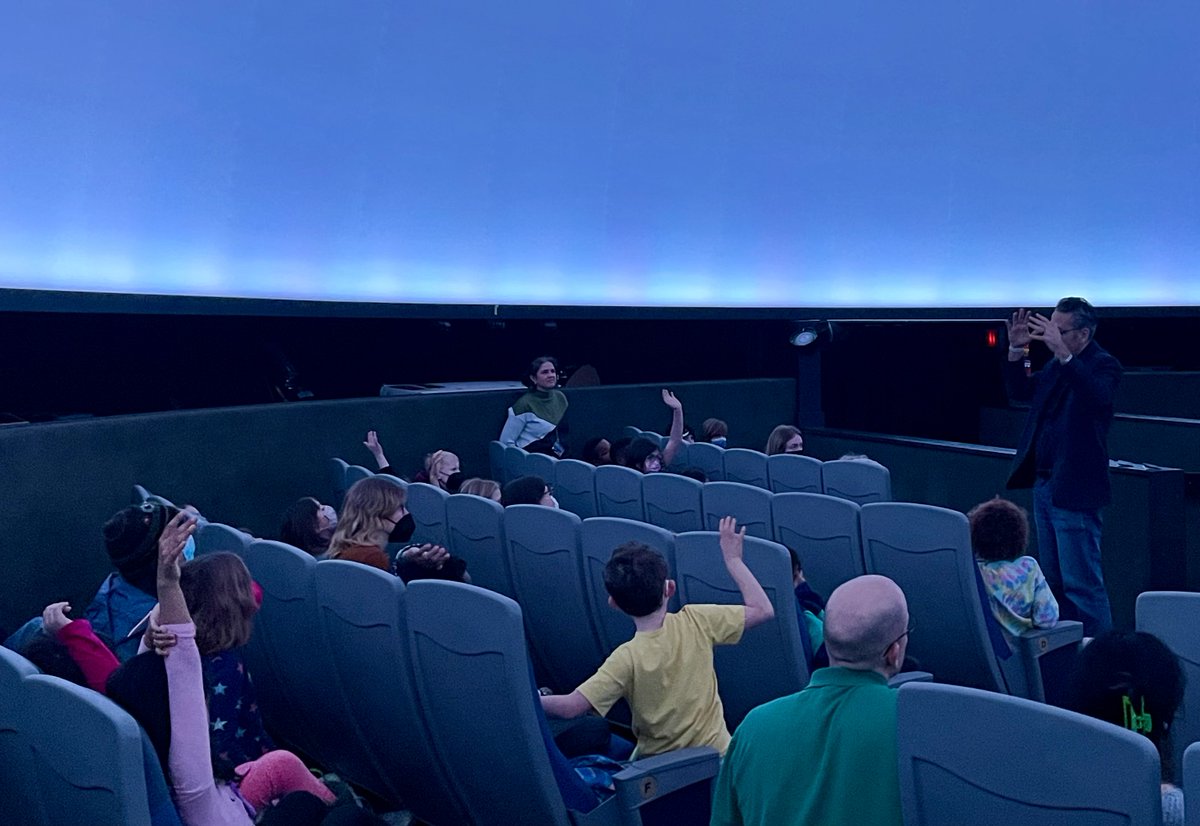
This group of K-3 graders challenged @PhysicsIllinois Prof Nico Yunes with great questions at @StaerkelPlanet yesterday. What would happen if Earth fell into a black hole? How could a black hole be destroyed? What IS the sun, really?