Dr. Pratosh at IISc Bengaluru tells his students that rapid advances in AI are commoditizing intellectual labour.
He raises an unsettling question: if companies stop recruiting on campus in the next 5–10 years—even at India’s top universities—what will the purpose of a university education be ?
A must watch video for everyone in tech
Anthropic engineer:
"99% of people use Claude Code like Google, and only 1% are running swarms of self-learning Claude agents
I'm running 100+ agents in a loop. I have Chief agent, PM agents - they manage the whole team"
in a 30-minute workshop, an Anthropic engineer revealed how to get max value from Claude Code at min. cost
this is worth more than another $500 vibe-coding course
watch today, then read how to build self-improving agentic systems with Fable in the article below
Andrej Karpathy’s 1-hour Stanford lecture on AI engineering is one of the best explanations I’ve seen of how AI systems actually work.
The progression is simple:
10% → LLM
30% → Prompt
50% → Agent
70% → Loop
100% → Graph
The key takeaway:
AI engineering isn’t just about writing better prompts.
It’s about building systems around models — giving them context, memory, tools, feedback loops, and data flows.
“Delete everything, keep Graph.”
Definitely worth watching if you’re building with AI agents.
Watch → Bookmark it
Don't waste 2 years learning to become an AI agentic engineer in 2026.
Andrew Ng, the godfather of AI, gave the complete playbook to become one from scratch.
1 hour course. Free:
• 00:00 - AI agent basics
• 12:12 - AI Agentic workflows & design patterns
• 53:27 - Practical tips for building AI agents
• 1:20:30 - self-improving AI agent loops
• 1:30:19 - multi-agent AI systems
I watched it last night.
Halfway through, I realized I could get into Anthropic in weeks, not years.
Bookmark now. Watch it. Then build your own AI agent
500 agents shouldn't be running all day. they should spin up for the exact window a task needs, finish it, and disappear until the next trigger.
the bigger the swarm gets, the less any single agent matters.
what matters is the system wiring them together.
100 agents can form up to 4,950 possible pairwise connections.
500 = 124,750.
when a real signal lands, it spins up the whole workforce:
1 trigger
→ 100–500 Kimi agents
→ 5 live data feeds
→ up to 4,000 steps
→ verified artifact
and that's before you add:
sources → claims → memory → tool calls → contradictions → retries
so the architecture has to fold all of that activity into one shared state, continuously.
more agents just buys you more raw compute.
the graph is the only thing standing between 124,750 possible connections and pure noise.
Harness vs. Graphs, clearly explained!
a harness is great, and most people think it is the whole thing:
retries, timeouts, a sandbox, a log, the context it assembles before every call.
all of that is real work, and all of it wraps exactly one call.
run it a hundred times and you have one call, made very safely, a hundred times.
Graph engineering fixes this by moving the decision up a layer: not how safely one call is made, but which calls exist to be made at all.
you need both, and here is the sentence that resolves the whole confusion:
the harness is everything around one call. the graph is everything between them.
↳ around one call: retry, timeout, sandbox, log, assemble the context, hand back a result
↳ between calls: split, fan out, merge, gate, send back
Prompts → Context → Harness → Loops → Graphs
the harness does not go away when you build a graph.
it moves under each node, and now there are five of them, each wrapping a call you would never have made by hand.
the trick is knowing which layer a failure belongs to.
turn a piece off and run it again. if the call still works, it was the harness. if the wrong step runs at all, it was the graph. people spend weeks hardening a harness around a node that should not have existed.
one thing to know before you scale it.
most of what people call their agent is a harness with a chat box on it.
↳ it retries, it times out, it logs, it assembles context, it holds one call up beautifully
↳ it has never once decided that a second call should exist, and that is the entire difference
that last one catches careful people. a harness that never fails is not evidence the system is right. it is evidence one call went well, which is the smallest possible claim.
and the one that eats whole nights: a harness cannot save you from the wrong step running. you can retry a bad decision three times with a clean log and perfect isolation, and all you bought was three copies of it.
below i have quoted my full guide on graph engineering. it covers the three topologies, the verifier patterns, and where the gate should actually open.
save this and read it below ↓
i'm leaking my entire coding agent setup...
a free github repo just killed your ai coding bill completely
it runs the best local models your machine can actually handle, plugged straight into claude code, codex, hermes, and openclaw
[here is how you set it up:]
1. npm i -g magnitudedev/cli
2. magnitude setup
3. you are done
it profiles your chip, memory and bandwidth, then ranks the models that actually fit with estimated tok/s
save and bookmark this no matter what
Anthropic just dropped the best 1-hour workshop on how to build with AI in 2026: from one prompt to Agentic Loops
00:26 - The end of prompting
16:57 - Self improving Loops
25:27 - 1 engineer, 5-person output
36:25 - Building your first Loop
This 1-hour watch replaces any $500 AI engineering course.
Watch it, then try your first Loop with the step-by-step guide below.
Google just released free 2-hour course on full Graph & Loop engineering: 1 prompt → 100 agents → loops → graphs from 0% to 100%:
0% → 0:35 - Graph engineering from scratch
30% → 31:17 - build your first agents graph
45% → 43:40 - run hundreds agents in parallel
75% → 1:04:58 - Loop engineering: route, check, repeat
100% → 1:30:09 - self-improving graphs that work while you sleep
most people keep stuffing instructions into one agent - the real upgrade is a graph that routes, checks, and rebuilds the workflow at runtime
learn graph from Google, ship your first - then unlock the complete system design below ↓
Andrej Karpathy:
"Prompting is going away.
Delete everything, keep Graph."
In 1 hour he shows how to build Graphs, and why it's the only thing that will be left standing at the end.
Anyone can build an agent, almost no one builds the Graph that runs them.
Watch it, then read the full guide on Graphs below.
Neil Movva (@neilmovva) started his career at Nvidia, working on GPUs and kernels, and has an unusually deep understanding of inference, from software to chips to power.
We spend a lot of time on each of those layers, how they connect, and where the important tradeoffs are.
What makes this conversation special is how detailed it is (like a 401-level class), yet Neil makes it remarkably clear and easy to follow.
Today he runs Sail Research, a company building infrastructure for agents to make tokens as cheap as possible.
We discuss:
- Latency versus throughput
- Why there are no bad chips, only bad pricing
- The end of kernel engineering
- Buying chips and power no one else wants
- New chip architectures
- Nvidia lore + his contrarian view of the company
- Open source and the frontier labs
I learned a ton. Enjoy!
TIMESTAMPS
0:00 Intro
0:38 Building a “Token Factory”
4:21 The Future of Background Agents
13:09 Nvidia and the GPU Stack
23:27 Chips, Memory, and Transformers
36:14 The Future of AI Training Data
44:32 Chip Scarcity and Compute Arbitrage
52:44 Reinventing the AI Data Center
59:01 Power and the “Scavenger Strategy”
1:10:10 Open vs. Closed AI
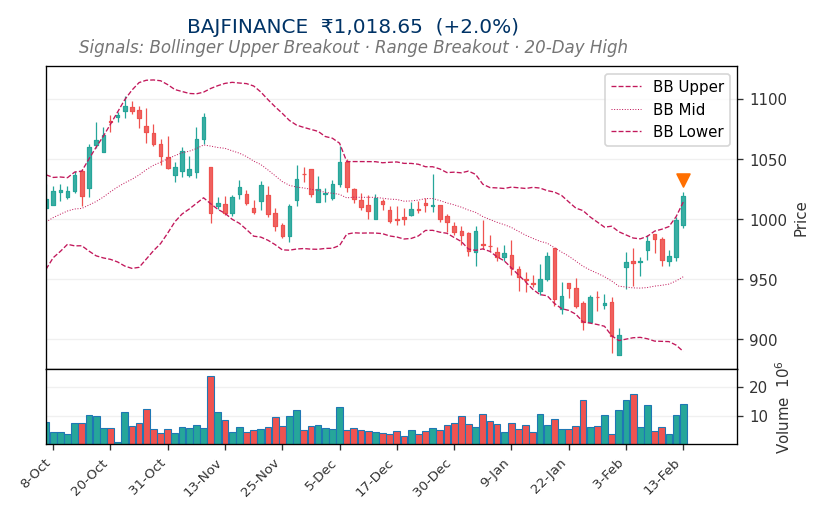
🔔 Market Recap: Feb 13 - NIFTY: 25,471 (-1.3% 🧨🔽)
RISK-OFF DAY AS IT MELTS, METALS BLEED
🔽 Nifty 50 slips 1.3%, Bank Nifty off 0.9%
🔽 IT index tanks 5% on AI, global worries
🔽 Metals under pressure: HINDALCO, NATIONALUM, HINDZINC slide
🔼 EICHERMOT, BAJFINANCE, HAL shine on stock-specific news
🔼 Defence, autos, exports in focus on tariff, Rafale tailwinds
#StockMarket #NIFTY50
📊 More → https://t.co/P9QqKZSlHb
On a serious note: Gurugram is done. Like you can’t imagine. The first bloke to ruin this was @mlkhattar and @NayabSainiBJP just can’t manage this situation. The @BJP4India needs some serious introspection. They’ve been running this state for 11 years now. You can’t blame Nehru.